St. Thomas de Cantilupe, Bishop of Hereford
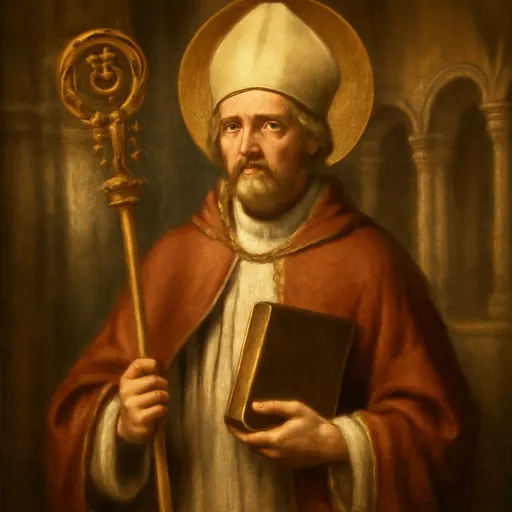
St. Thomas de Cantilupe (about 1218–1282), also called St. Thomas of Hereford, was a scholar, Chancellor of England and Bishop of Hereford who died near Orvieto while traveling to plead his case before the pope. Nearly five hundred miracles were recorded at his tomb, and Pope John XXII canonized him in 1320. His feast is August 25, and his shrine stands in Hereford Cathedral.
Who was St. Thomas de Cantilupe?
St. Thomas de Cantilupe, often called St. Thomas of Hereford, was a thirteenth-century English bishop, scholar and statesman. He was born about 1218 at Hambledon in Buckinghamshire into one of the great Norman families of England, the son of William de Cantilupe and Millicent de Gournay. He died on August 25, 1282, in Italy, on his way home from the papal court, and he was canonized in 1320. After St. Thomas Becket at Canterbury, no shrine in medieval England drew more pilgrims than his at Hereford.
He is the rare saint who was excommunicated by his own archbishop in the last year of his life, and the story of how he went to Rome to clear his name is part of why Hereford still loves him.

The life of St. Thomas de Cantilupe
Scholar and chancellor
Thomas was raised under the care of his uncle, Walter de Cantilupe, Bishop of Worcester, and studied at Oxford and then at Paris. While still a student he attended the Council of Lyons in 1245 and was made a papal chaplain. Back at Oxford he taught canon law, and in 1262 he was elected chancellor of the university.
England was then torn by the Barons' War between Henry III and the reforming barons led by Simon de Montfort. Thomas sided with the barons and in 1263 argued their case at Amiens before St. Louis IX of France. After the king's defeat at Lewes, Thomas was named Chancellor of England on February 22, 1265. The Catholic Encyclopedia says he gained wide renown for his judicial wisdom and fairness. When Simon de Montfort was killed at Evesham that summer, Thomas lost the office and went abroad, lecturing on theology and Scripture in Paris until 1272.
Bishop of Hereford
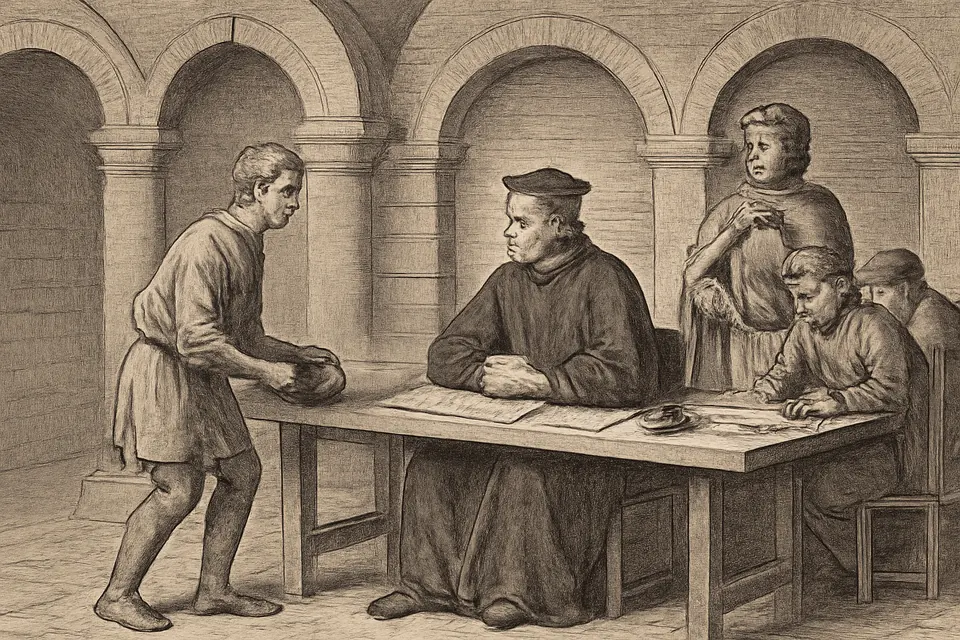
He returned to teach at Oxford and attended the Second Council of Lyons in 1274. In June 1275 he was chosen Bishop of Hereford and was consecrated on September 8 that year. He was a strict, hardworking pastor. He visited his parishes, insisted that absentee clergy provide good vicars, reformed the clergy and religious of his diocese, and defended the lands and rights of his church against powerful neighbors. He is said to have had red hair and a temper to match, and he once made a local lord who had raided the bishop's cattle do penance before the high altar.
The quarrel with Archbishop Pecham
His firmness brought him into conflict with John Pecham, Archbishop of Canterbury, over how far the archbishop's authority reached into the diocese of Hereford. At the Council of Reading in 1279 Thomas led the bishops who resisted Pecham's policy. The quarrel grew personal, and in 1282 Pecham excommunicated him.
Thomas would not accept the sentence in silence. In March 1282 he set out to put his case before Pope Martin IV, traveling by way of Paris, Nîmes and Genoa, and reached the papal court at Montefiascone, near Orvieto, in August. Dean Michael Tavinor of Hereford writes that the pope received him well. But the long journey and the summer heat were too much for a man in his sixties. He fell ill with a fever and died on August 25, 1282.
The miracles of St. Thomas of Hereford
His body was divided, as was common for those who died far from home. His flesh was buried at the monastery of San Severo outside Orvieto, his heart went to the canons of Ashridge in Hertfordshire, and his bones were carried back to Hereford by his loyal successor, Bishop Richard Swinfield.
On Maundy Thursday, April 3, 1287, the bones were moved to a new stone tomb in the north transept, and almost at once the miracles began. The first recorded was the healing of Edith, the wife of an ironmonger, who suffered from madness. The tomb-keepers wrote down nearly five hundred miracles between 1287 and 1312, seventy-one of them in April 1287 alone. Many were children and adults said to have been restored to life after drowning, smothering or hanging: a Tewkesbury boy who fell into a cask of beer, a London child found drowned in a rain barrel. The crew of a Gascon wine ship caught in a storm in the Irish Sea prayed to him and the storm passed. A Cornish knight bent a penny over his falcon, crushed under a horse, and the bird recovered on the road home.
When papal commissioners came in 1307, they listed the offerings around the tomb: 170 silver ships and 41 of wax, 129 silver and 1,424 wax images of people or their limbs, 108 crutches, 97 nightgowns, and much more. They heard witnesses in London and Hereford from July to November 1307. These miracles are approved in the sense that they were formally examined for his canonization. Pope John XXII canonized Thomas at Avignon on April 17, 1320, calling him in the bull "the very jewel of bishops."

Symbols of St. Thomas de Cantilupe in art
St. Thomas is shown as a bishop in miter and vestments with a crosier, sometimes with a book for the scholar and canon lawyer. The surest sign is his family's coat of arms: three gold leopards' faces with fleurs-de-lis coming out of their mouths, on a red field. The diocese of Hereford took these arms for its own, so you will see them on Hereford Cathedral, on church furnishings and on school badges. Medieval images often paired him with St. Thomas Becket, the other great English Thomas. In a church in the Welsh Marches, a bishop beside a shield of leopards' heads is almost certainly him.
His shrine and feast day
In 1349 his relics were moved into a grander shrine in the Lady Chapel. That shrine was destroyed at the Reformation, but the first tomb in the north transept was left standing and has been restored as a place of prayer. Catholic families hid his relics; in 1610 a priest named William Ely had them carried through Hereford by night to ask the saint's help against the plague. His skull later surfaced at the abbey of Lamspringe in Germany and was brought to Downside in 1881. A shin bone is at Holywell in North Wales, and smaller relics are at Belmont Abbey and in the shrine at Hereford.

We keep his feast on August 25, the day of his death. Hereford also remembers him on October 2 and on October 25, the anniversary of the translation of his relics, and the cathedral marked the seven hundredth anniversary of his canonization in 2019–2020.
Prayer to St. Thomas of Hereford
We have no traditional prayer to St. Thomas de Cantilupe from a source we can cite here. His life gives us much to pray for. Let us ask him to intercede for bishops and pastors who must stand firm for their people, for students and teachers of law, for all who are treated unjustly, and for parents whose children are in danger.
St. Thomas of Hereford, pray for us.
Frequently asked questions
Who was St. Thomas de Cantilupe?
An English nobleman and priest of the thirteenth century who taught canon law at Oxford, served as chancellor of the university and, in 1265, as Chancellor of England, and was Bishop of Hereford from 1275 until his death in 1282.
When is the feast day of St. Thomas of Hereford?
August 25 in the Roman Martyrology, the day he died. Hereford Cathedral also honors him on October 2 and on October 25, the anniversary of the translation of his relics.
Why was St. Thomas de Cantilupe excommunicated?
Archbishop John Pecham of Canterbury excommunicated him in 1282 after a long dispute over the archbishop's jurisdiction in the diocese of Hereford. Thomas set out for Rome to appeal, was received kindly by Pope Martin IV, and died on the journey home.
Where are the relics of St. Thomas de Cantilupe?
His first tomb survives in the north transept of Hereford Cathedral. After the Reformation his relics were hidden by Catholic families; his skull is kept by the monks of Downside, a shin bone is at Holywell in Wales, and smaller relics are at Belmont Abbey and at Hereford.
Keep exploring
Sources
- Edwin Burton, "St. Thomas of Hereford," The Catholic Encyclopedia, vol. 14 (1912). Birth at Hambledon, his chancellorship from February 22, 1265, consecration on September 8, 1275, and canonization on April 17, 1320
- Michael Tavinor, "St Thomas of Hereford: A Life to Remember," Belmont Abbey (2019). The journey to Montefiascone, the division of his remains, the 1287 translation, the miracle numbers and shrine inventory of 1307, the bull of canonization, and the later history of the relics
- Roman Martyrology 2004, August (GCatholic). August 25 entry
- British Pilgrimage Trust: Hereford Cathedral. The restored first tomb, the relic on loan from Stonyhurst and the cathedral's three feast days