St. Germain de Talloires, Benedictine Prior and Hermit of Lake Annecy
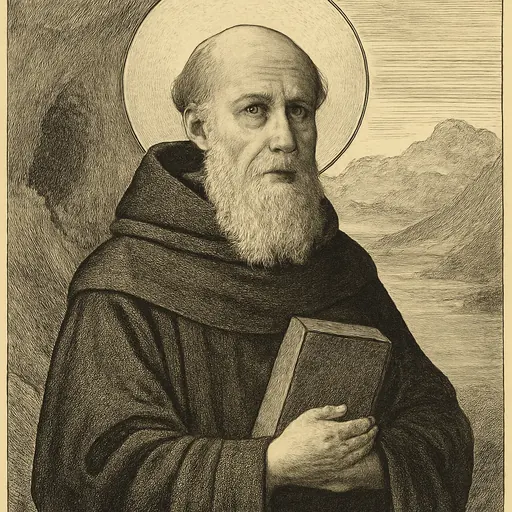
St. Germain de Talloires was a Benedictine monk of the eleventh century, the first prior of the monastery of Talloires on Lake Annecy in Savoy, who ended his life as a hermit in a cave above the lake. St. Francis de Sales enshrined his relics in 1621, and Pope Leo XIII confirmed his cult in 1889. His feast is October 28.
Who was St. Germain de Talloires?
St. Germain de Talloires was a Benedictine monk of the eleventh century who helped found the priory of Talloires on the eastern shore of Lake Annecy, in Savoy, became its first prior, and then left it to live as a hermit in a cave on the cliffs above. His hermitage has drawn pilgrims for centuries. St. Francis de Sales enshrined his relics there in 1621, and Pope Leo XIII confirmed his ancient cult in 1889. We keep his feast on October 28.
He is not to be confused with the far better known St. Germain of Paris or St. Germanus of Auxerre, who were bishops centuries earlier.
We should be honest from the start: almost everything we know about Germain's life comes from local tradition written down long after his death. The Italian reference work Santi e Beati, in its historical-critical note, says plainly that the dates of his birth and death are uncertain and that the details of his hermit life cannot all be checked against documents from his time. What is well documented is the devotion to him.
The life of St. Germain de Talloires
A student from the north
French tradition, as told by Nominis, the saints' calendar of the French bishops' conference, says Germain was born at Montfort in Flanders, near Mechelen, and studied theology in Paris. The lord of Menthon, whose castle stood on the east shore of Lake Annecy, is said to have engaged him as tutor to his son Bernard, the future St. Bernard of Menthon, founder of the famous hospices in the Alpine passes that bear his name. Germain, the story goes, went back to Paris with the boy to guide his studies.
First prior of Talloires
Germain became a monk of the Benedictine abbey of Savigny, near Lyon. Tradition links the founding of the priory of Talloires to King Rudolf III of Burgundy and Queen Ermengarde about 1018, and Germain is remembered as its first prior. The Roman Martyrology calls him an abbot and says he "founded and governed the priory of Talloires," remarkable for his love of solitude.
The hermit of the cliff
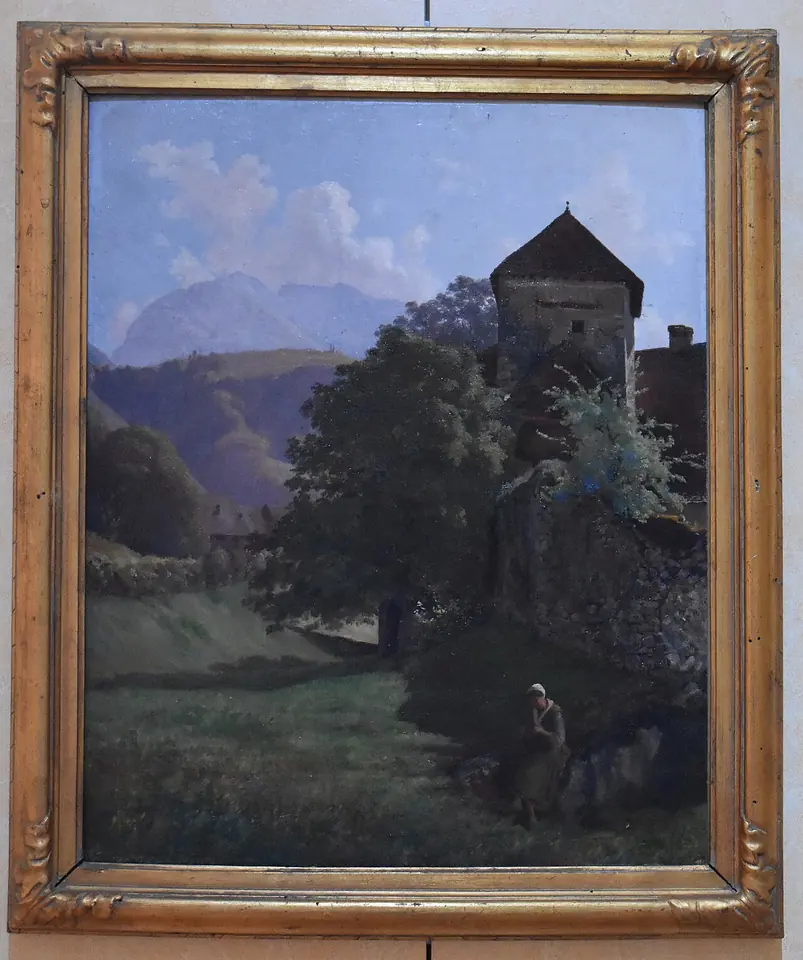
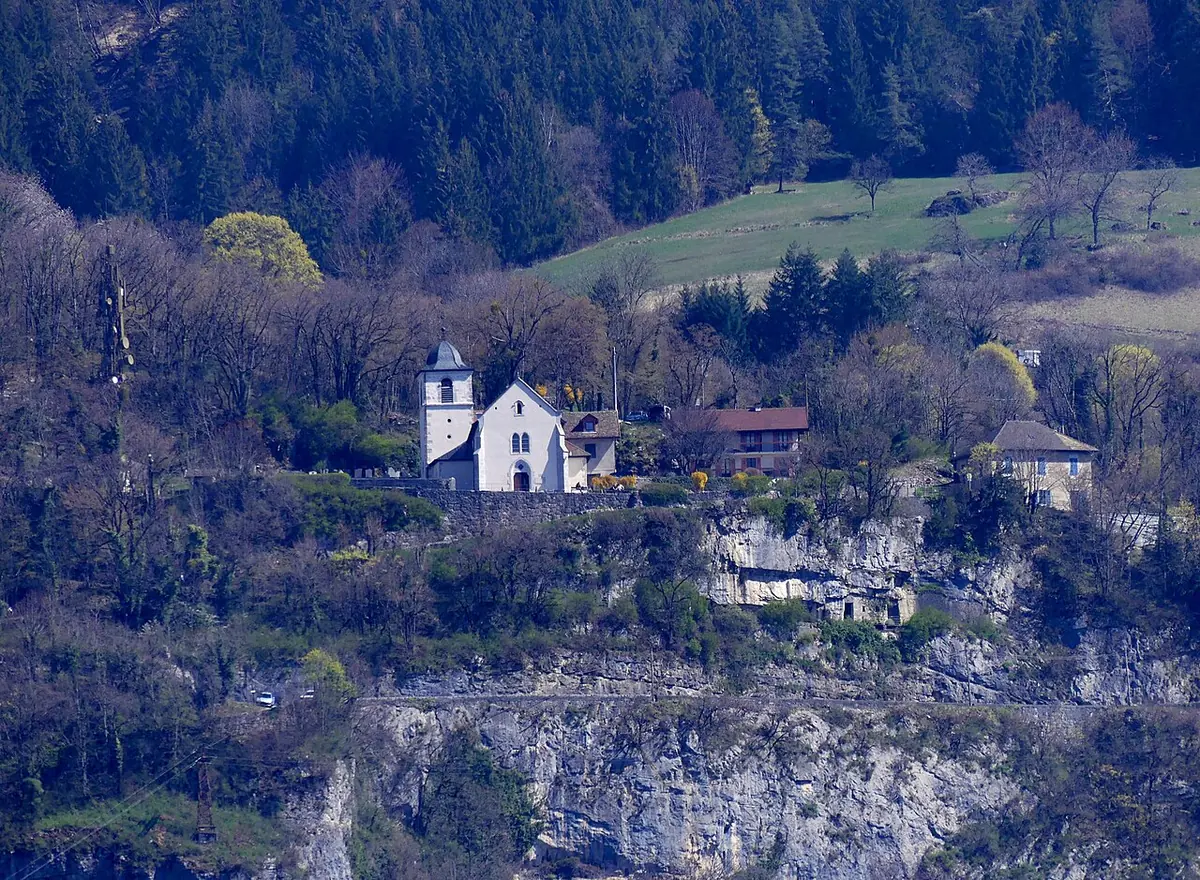
When his work at the priory was done, Germain withdrew to a cave in the limestone cliffs above Talloires, high over the lake. According to the traditional account, he still came down to join his brothers for the Divine Office, keeping both solitude and community. Tradition also gives him a very long life, past a hundred years by some accounts, which no record can confirm. He died in the eleventh century, at a date no one now knows.

Miracles and devotion
No single miracle of his is recorded in a source we could verify, and we will not invent one. Santi e Beati reports, from nineteenth-century testimony, that the people of the region invoked him for bodily ailments and especially for the illnesses of children, and climbed to his hermitage to ask his help. The graces they reported belong to this traditional devotion; we know of none that was formally examined.
The great moment in the history of his cult came on October 28, 1621. St. Francis de Sales, bishop of Geneva, came up to the hermitage, set the place in order and placed Germain's relics in a new casket. The relics were placed again in the restored chapel on October 29, 1838, and once more in 1857. On May 9, 1889, Pope Leo XIII confirmed the ancient cult, an equivalent canonization that recognized centuries of veneration rather than opening a modern cause.

Why St. Germain de Talloires is honored
He has no formal patronage. In Savoy he is loved as a local saint and a model of the monk who gives his work to the community and his heart to God in silence. Families of the Annecy region traditionally brought sick children to his hermitage. See our patron saints page for patrons of particular needs.
Symbols of St. Germain de Talloires in art
There is no fixed tradition of images of him, and old portraits are rare. When he is shown, look for:
- The black Benedictine habit: the dress of a monk of St. Benedict's Rule, which he followed at Savigny and Talloires.
- A cave or a little hermitage: his retreat in the cliff above the lake.
- A book: the scholar from Paris and the teacher of young Bernard of Menthon.
- Lake and mountains: the setting of Lake Annecy, which makes him easy to recognize in local images.
Feast day and the hermitage
The Roman Martyrology keeps him on October 28; at his hermitage the feast has also been celebrated on October 29. The Ermitage Saint-Germain still stands on its ledge above Talloires-Montmin, with its chapel near the old cave and a wide view over Lake Annecy, and pilgrims still climb to it. Find other saints of the season on our feast days page.
Praying with St. Germain de Talloires
We know of no traditional English prayer to him. The French Lectionnaire Emmaüs prints a short text attributed to him: "When you have accomplished what the Lord proposed for you to do, seek neither glory nor even satisfaction. What He proposes still is that you join Him where He is, in the silence of His prayer, in the evening, alone on the mountain." (Our translation. The lectionary does not say where the text comes from, and no writing of his is known to survive from the eleventh century, so we offer it as a meditation in his spirit.) Let us ask St. Germain to pray for us, and for all sick children.
Frequently asked questions
Who was St. Germain de Talloires?
A Benedictine monk, probably from Flanders, who was the first prior of the priory of Talloires on Lake Annecy in the eleventh century and later lived as a hermit in a cave on the cliffs above it.
When is the feast of St. Germain de Talloires?
October 28 in the Roman Martyrology. Locally it has also been celebrated on October 29.
Was St. Germain the tutor of St. Bernard of Menthon?
Tradition says so: that Germain studied in Paris and was hired by the lord of Menthon to teach his son Bernard. It is a cherished local story, but no document from the time confirms it.
Where are the relics of St. Germain de Talloires?
At the Ermitage Saint-Germain, the chapel built over his hermitage above Talloires. St. Francis de Sales placed them in a new casket in 1621, and they were set in the restored chapel in 1838.
Keep exploring
Sources
- San Germano di Talloires, Abate - Santi e Beati. The Roman Martyrology entry, the historical-critical evaluation, the 1621 visit of St. Francis de Sales, the 1838 and 1857 placements of the relics, the 1889 decree and local invocation for illness (in Italian)
- Saint Germain de Montfort - Nominis (Conférence des évêques de France). The French tradition of his origin at Montfort, his studies in Paris and his role as tutor of Bernard of Menthon (in French)
- Sancti: canonizations of Pope Leo XIII - GCatholic. Lists the equivalent canonization of May 9, 1889