St. Joseph Marchand

St. Joseph Marchand (1803 to 1835) was a French priest of the Paris Foreign Missions Society who served the Christians of southern Vietnam and Cambodia, was arrested in Saigon and put to death for the faith near Hue on November 30, 1835. He refused to step on the cross. He is one of the Vietnamese Martyrs, canonized in 1988, and a patron of missionaries.
Who was St. Joseph Marchand?
St. Joseph Marchand was a French missionary priest who gave six years to the Christians of southern Vietnam and died for the faith near the imperial city of Hue in 1835. He is one of the 117 Vietnamese Martyrs canonized by Pope John Paul II in 1988. His death was among the cruelest of all of them, and he went to it after refusing, again and again, to trample on the cross.
The Vietnamese Christians he served gave him a Vietnamese name, Cha Du, "Father Du," and a priest of the southern mission later wrote his life in their language.
The life of St. Joseph Marchand
From the Doubs to the missions
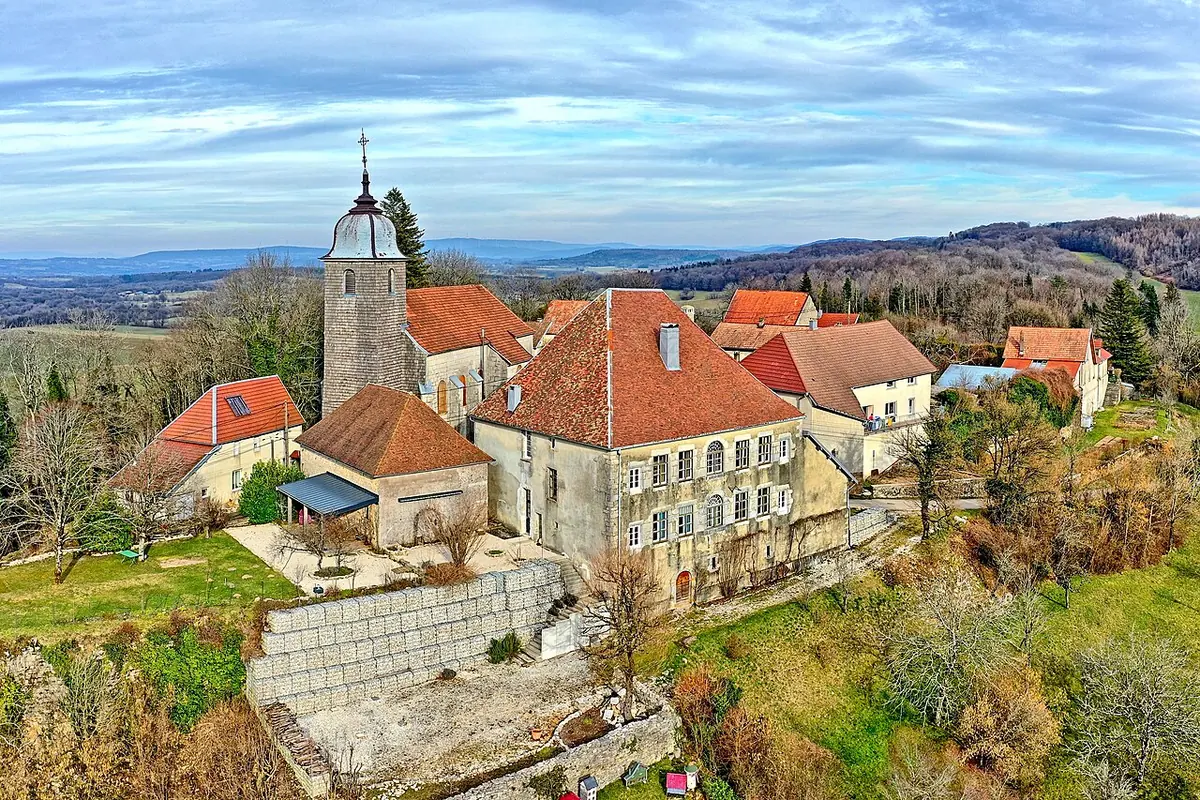
Joseph Marchand was born on August 17, 1803, at Passavant, a small village in the hills of the Doubs in eastern France. He studied at the church school of Orsans and the major seminary of Besançon. On Christmas Day 1828 he entered the seminary of the Paris Foreign Missions Society as a subdeacon. He was ordained a priest on April 4, 1829, and twenty days later he sailed for Cochinchina, the southern part of what is now Vietnam.
Six years in Cochinchina
He learned Vietnamese at the mission college of Lai-thieu, north of Saigon. Then he set out on long journeys to the scattered Christian communities of the Mekong provinces, Mi-tho, Vinh-long and Chau-doc, and went as far upriver as Phnom Penh, the capital of Cambodia. Back at Lai-thieu he taught a few students while caring for nearby villages, then made a second round of the same missions. Later he was given charge of the whole province of Binh-thuan.
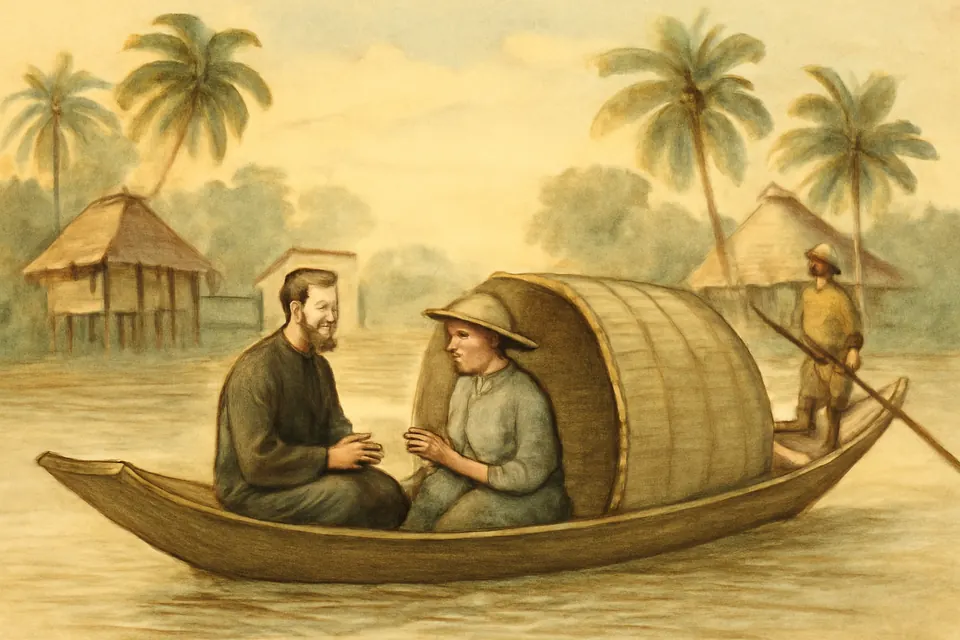
In early 1833 the emperor Minh Mang turned on the Church. Missionaries were hunted, and Marchand was driven out of Binh-thuan. He hid in one village after another in the south and finally took shelter near Mac-bac.
A prisoner of the rebels
That same year a revolt broke out in the south, led by Le Van Khoi. A rebel chief found Fr. Marchand and took him to Cho-quan, then shut him inside the citadel of Saigon. The rebels wanted the priest to urge the Christians to rise against the emperor. He flatly refused. For eighteen months he stayed inside the walls, caring for the few faithful who were held there with him.
When the royal army stormed Saigon on September 8, 1835, Marchand was arrested at once and accused of taking part in the rebellion. This is the hard irony of his story: the man who had refused to stir up a revolt was condemned as a rebel.
Trial and death near Hue
He was taken to Hue, the capital, imprisoned and questioned under torture. The judges could not make him confess to helping the rebels, and they had no real witnesses against him. So they turned to the question that mattered to them most. They ordered him to renounce the Catholic religion and to walk on the cross. He refused, and he was condemned.
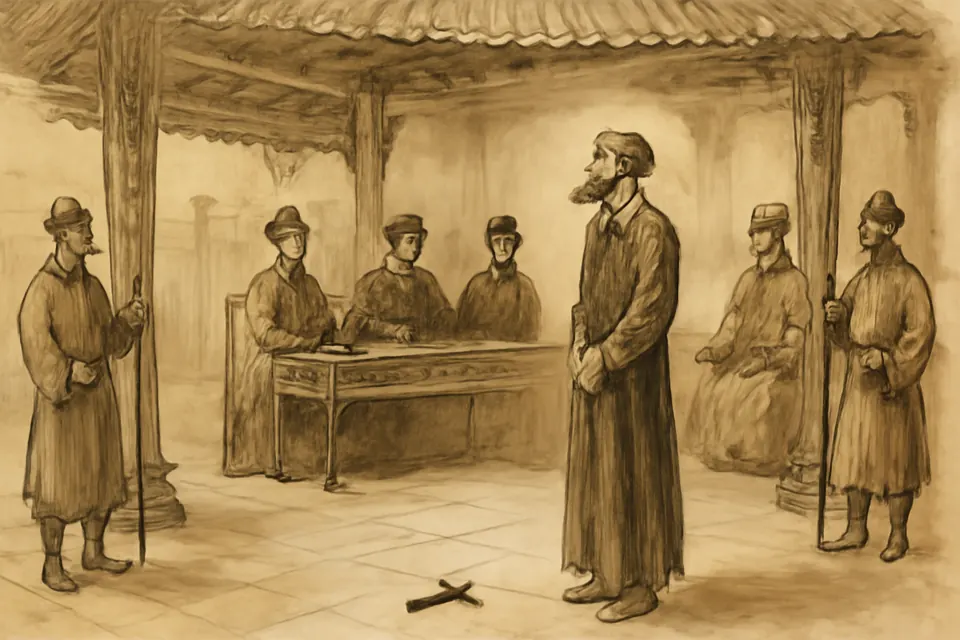
On November 30, 1835, at Tho-duc near Hue, he suffered the punishment the courts called the "hundred wounds," a slow execution. His body was thrown into the sea. His head was displayed for several days, then ground to dust and scattered on the sea as well. Nothing of him was left to bury. We honor him without a tomb.
Beatification, canonization and miracles
Pope Gregory XVI declared him Venerable on June 19, 1840, only five years after his death. Pope Leo XIII beatified him by the brief Fortissimorum virorum of May 7, 1900, and the solemn rite was held in St. Peter's on May 27, 1900. Pope John Paul II canonized him on June 19, 1988, together with the other Vietnamese Martyrs.
As a martyr, he was beatified on the proof of his martyrdom, without the need for a miracle. We know of no miracle formally approved through his intercession. What his life gives us is the plainer witness of a man who would not betray Christ, even to save himself from a terrible death.
Why St. Joseph Marchand is a patron of missionaries
Marchand spent his whole priesthood on the road, by boat and on foot, among people whose language he had to learn from the beginning. He went where the Christians were scattered and stayed with them when the persecution came. For that reason the Church in Vietnam and the Paris Foreign Missions honor him as a model for missionaries, alongside St. Théophane Vénard and St. Jean-Charles Cornay, who died in the same persecutions.
Symbols of St. Joseph Marchand in art
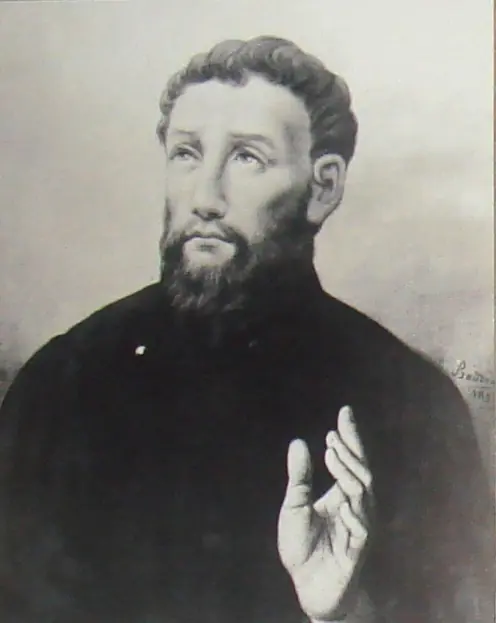
Very few images of him exist, and none was painted from life. The Paris Foreign Missions notes that its portrait of him was drawn from memory.
- A dark beard and black cassock: he is shown as a young bearded priest of the 1830s, as in the portrait on this page.
- A raised hand: the portrait shows him lifting his right hand, as if in blessing or in witness.
- The martyr's palm: the sign of a martyr, carried in group images of the Vietnamese Martyrs.
- The crucifix: a reminder that he refused to step on the cross.
You are most likely to meet him in paintings and statues of the 117 Vietnamese Martyrs, often standing among the French and Spanish missionaries at the side of the group, and in his home village of Passavant.
Feast day and prayer
We keep the feast of St. Joseph Marchand on November 30, the day of his death, and with all the Vietnamese Martyrs on November 24. The Church of Besançon, his home diocese, received its own office in his honor after the beatification, printed in 1902, which joined him with St. Isidore Gagelin, another French missionary martyred in Vietnam.
There is no traditional prayer written for St. Joseph Marchand alone. On his feast, Catholics pray the collect of the Vietnamese Martyrs from the Roman Missal, or simply ask him in their own words to pray for missionaries and for Christians who suffer for their faith. Let us ask him to obtain for us the courage he had before the judges in Hue: to stay faithful to Christ when it costs us something.
St. Joseph Marchand, pray for us.
Frequently asked questions
Who was St. Joseph Marchand?
A French missionary priest, born in 1803 at Passavant in the Doubs. Ordained in 1829 for the Paris Foreign Missions, he worked in Cochinchina (southern Vietnam) and Cambodia, was arrested after the fall of Saigon in 1835, and was executed near Hue on November 30, 1835, for refusing to renounce the Catholic faith.
When is the feast of St. Joseph Marchand?
November 30, the anniversary of his martyrdom. He is also celebrated with the 117 Vietnamese Martyrs on November 24.
How did St. Joseph Marchand die?
He was condemned to the slow execution the Vietnamese courts called the punishment of the hundred wounds, carried out at Tho-duc near Hue. His body and head were thrown into the sea, so no bodily relics of him remain.
When was Joseph Marchand canonized?
Pope Leo XIII beatified him in 1900, and Pope John Paul II canonized him on June 19, 1988, with the other Vietnamese Martyrs.
Keep exploring
Sources
- IRFA, Archives of the Paris Foreign Missions Society: 0375, Marchand Joseph (biographical notice). Birth, ordination and departure dates, his missions in Cochinchina and Cambodia, the Saigon citadel, the trial and death at Tho-duc, the 1840 and 1900 decrees, the 1902 Besançon office
- Pope John Paul II, Homily for the canonization of 117 Vietnamese martyrs, June 19, 1988 (Italian, vatican.va)