St. Philoumenos of Jacob's Well

St. Philoumenos of Jacob's Well (1913–1979) was a Greek Orthodox archimandrite from Cyprus who served in the Holy Land. As guardian of the monastery at Jacob's Well in Nablus, where Jesus spoke with the Samaritan woman, he was murdered in 1979. The Patriarchate of Jerusalem glorified him as a hieromartyr in 2009, and his feast is November 29.
Who was St. Philoumenos of Jacob's Well?
St. Philoumenos of Jacob's Well was a Greek Orthodox monk and priest from Cyprus who spent 46 years serving the holy places of the Holy Land. In 1979 he became guardian of the monastery built over Jacob's Well at Nablus, the well where Jesus asked the Samaritan woman for a drink (John 4). On November 29 of that year he was murdered in the monastery. The Patriarchate of Jerusalem glorified him in 2009 as a new hieromartyr, a priest who died a martyr's death.
We keep his feast on November 29.
The life of St. Philoumenos
Twin brothers from Cyprus
He was born on October 15, 1913, and baptized Sophocles. His family, the Hasapis, came from the village of Orounta in the Morphou district but lived in Nicosia. He had a twin brother, Elpidios, and OrthodoxWiki credits their grandmother Loxantra with forming both boys in the faith.
At fourteen the twins entered the Monastery of Stavrovouni, high on a mountain in Cyprus, and stayed about five years.

A monk of the Holy Sepulchre
The brothers then went to Jerusalem to finish their schooling. Elpidios later went to Mount Athos, and both became archimandrites. Philoumenos joined the Brotherhood of the Holy Sepulchre, the Greek Orthodox monks who guard the holy places for the Patriarchate of Jerusalem. He was ordained a priest and served in many places from 1933 on. His spiritual son, the monk Yeghia, wrote that "Father Philoumenos studied to become fluent in Arabic, both literary and conversational," and he preached to his Arabic-speaking flock in their own language.
Guardian of Jacob's Well
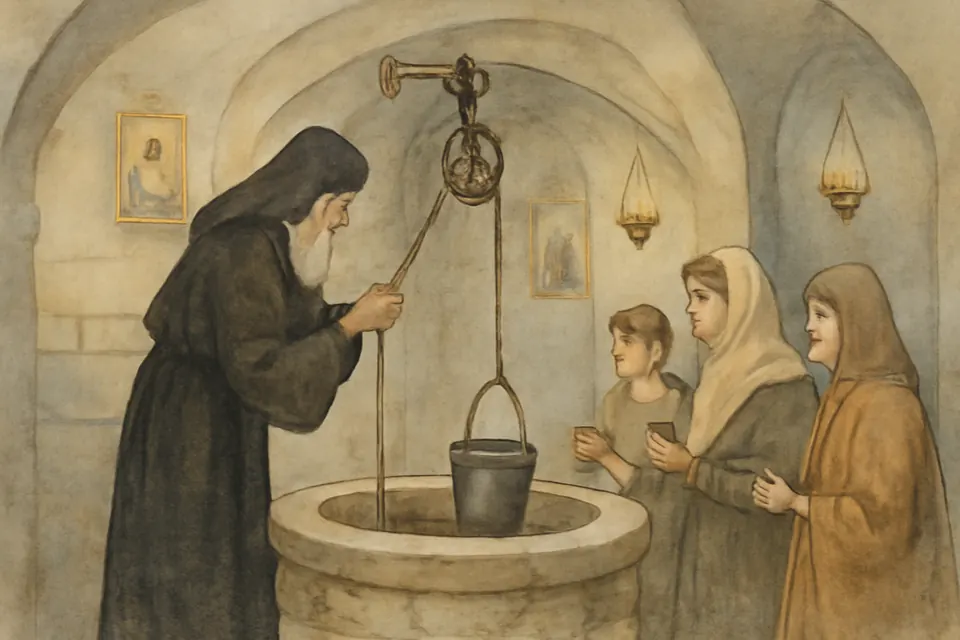
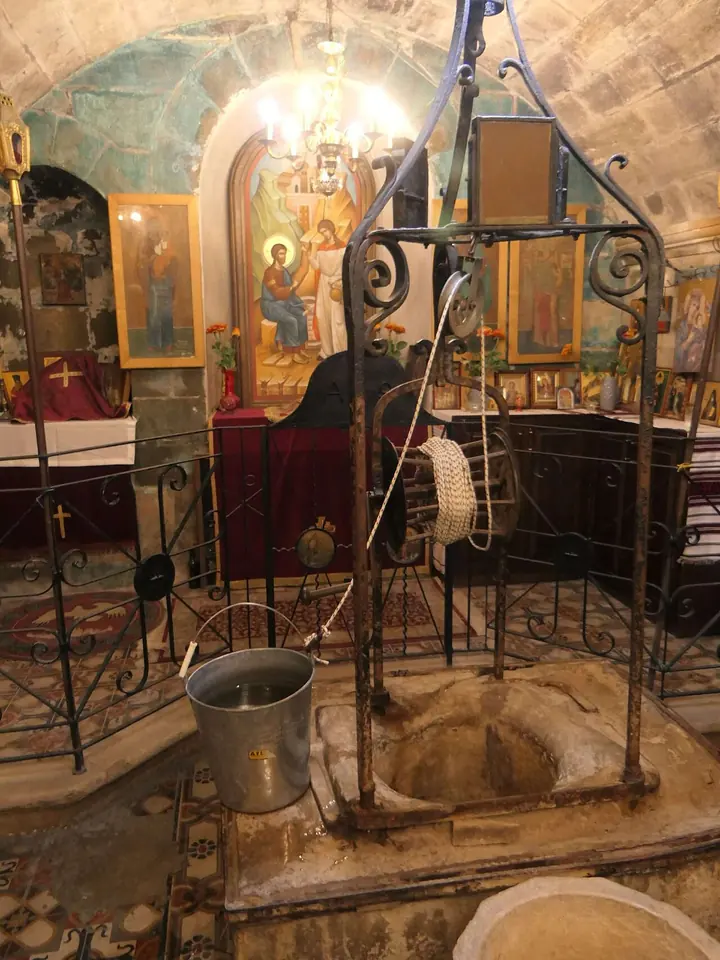
In 1979 the Patriarchate made him guardian of the monastery at Jacob's Well, near Nablus, the ancient Shechem. The well lies in a crypt beneath the monastery church. He kept the crypt chapel, served the Liturgy, welcomed pilgrims and drew water for them from the well.
Few places in the Holy Land are so plainly the place of a Gospel scene. Here Jesus, tired from his journey, sat on the well and asked a Samaritan woman for a drink, and then told her, in the words of the Douay-Rheims Bible:
Whosoever drinketh of this water, shall thirst again; but he that shall drink of the water that I will give him, shall not thirst for ever: But the water that I will give him, shall become in him a fountain of water, springing up into life everlasting. (John 4:13-14)
Philoumenos spent his last months keeping that well for the pilgrims who came to drink from it.
The martyrdom of St. Philoumenos
On November 29, 1979, an intruder threw a hand grenade into the monastery and then attacked Philoumenos with an axe as he tried to escape the fire. He died of his wounds. He was 66.
The killer was not caught at once. On November 17, 1982, a mentally ill man from Tel Aviv was arrested while again trying to break into the monastery. He confessed to this and other crimes, was found unfit to stand trial, and was committed to a psychiatric hospital. In the years after the murder, stories had spread blaming Jewish settlers. Historians David Gurevich and Yisca Harani examined those accounts in 2017 and found them false. The Church honors Philoumenos for his faithfulness unto death, and we pray for all who live in that troubled land.
The relics and the miracles of St. Philoumenos
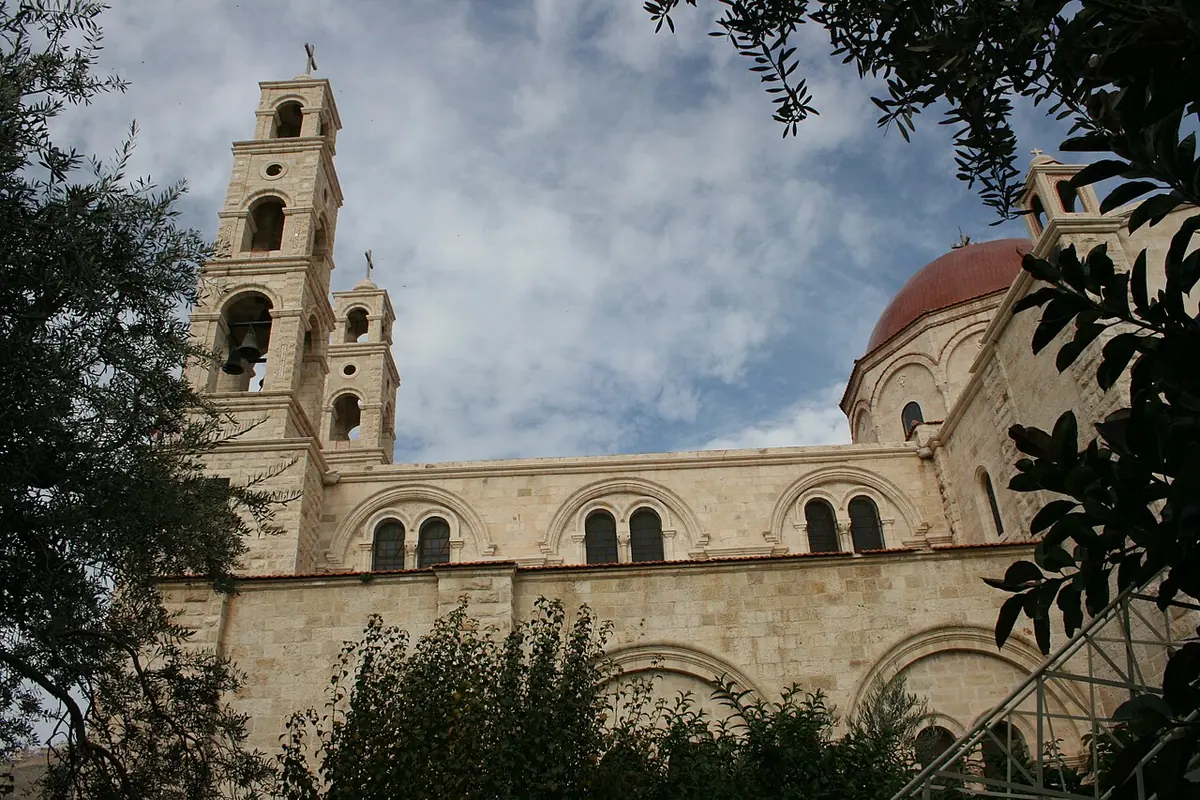
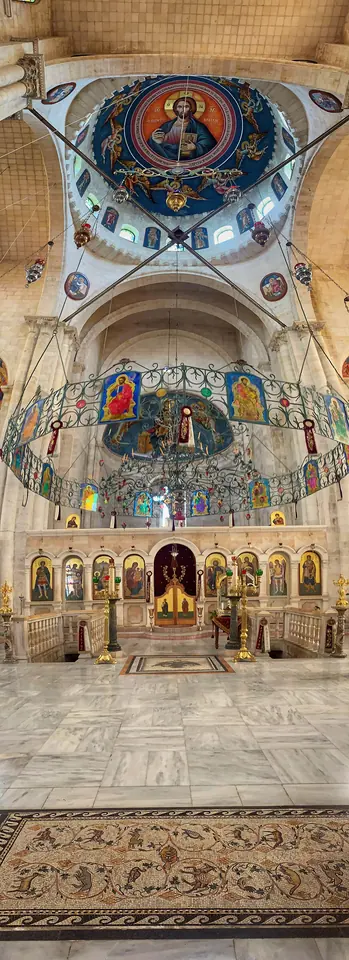
He was buried in the Orthodox cemetery on Mount Zion. Four years later, as Greek monastic custom requires, his grave was opened. Those present reported that his body was largely incorrupt. It was placed in a glass shrine in the chapel of the Patriarchate's seminary on Mount Zion. After his glorification the relics were carried back to Jacob's Well, where they rest today in the church where he gave his life.
Where the relics of St. Philoumenos of Jacob's Well are kept: see them on the relics map →
Glorification and feast day
The Holy Synod of the Patriarchate of Jerusalem decided to number him among the saints in 2009, and the decision was proclaimed at a Divine Liturgy at Jacob's Well on November 29, 2009, the thirtieth anniversary of his death. The Russian Orthodox Church added him to its calendar in March 2010. His feast is November 29; on the Julian calendar used in Jerusalem it is written November 16. Look for other saints of November on our feast days calendar.
Symbols of St. Philoumenos in art
Icons show him as a gray-bearded archimandrite in the black habit and cap of an Orthodox monk, holding the cross that Orthodox icons give to martyrs. To recognize him, look for the inscription with his name, Philoumenos, beside the figure.
Prayer to St. Philoumenos
The Orthodox Church honors him with its own hymns, an apolytikion, kontakion and megalynarion, sung in Greek at Jacob's Well and in Cyprus. There is no common English prayer to him. Let us ask St. Philoumenos to pray for the Christians of the Holy Land, for peace in Nablus and Jerusalem, and for all who keep watch over holy places. Holy Hieromartyr Philoumenos, pray to God for us.
Frequently asked questions
Who was St. Philoumenos?
A Cypriot monk, born Sophocles Hasapis in 1913, who entered Stavrovouni Monastery at fourteen with his twin brother, went to Jerusalem, joined the Brotherhood of the Holy Sepulchre and became an archimandrite. He spoke and preached in Arabic. In 1979 he was made guardian of the monastery of Jacob's Well, and he was killed there that November.
Who killed St. Philoumenos?
A mentally ill man from Tel Aviv. He was arrested in November 1982 trying to enter it, confessed, was found unfit to stand trial and was committed to a psychiatric hospital. Early rumors blamed other groups; researchers David Gurevich and Yisca Harani showed in 2017 that those accounts were false.
When is the feast of St. Philoumenos?
November 29, the day of his death. The Patriarchate of Jerusalem writes it as November 16 on the Julian calendar, which is the same day.
Where are his relics?
In the church at Jacob's Well in Nablus, where he died. They were first kept in a glass shrine in the chapel of the Patriarchate's seminary on Mount Zion in Jerusalem and were moved to Jacob's Well after his glorification.
Keep exploring
Sources
- OrthodoxWiki: Philoumenos (Hasapis) of Jacob's Well. His family, Stavrovouni, his Arabic preaching, the arrest of 1982, the exhumation and the move of the relics, and the dates of his glorification
- David Gurevich and Yisca Harani, "Philoumenos of Jacob's Well: The Birth of a Contemporary Ritual Murder Narrative," Israel Studies 22, no. 2 (2017). The investigation showing that the early accounts blaming settlers were false (as summarized by OrthodoxWiki)
- John 4:5-14, Douay-Rheims 1899 American Edition (BibleGateway)