St. Jacob of Serugh, the Flute of the Holy Spirit
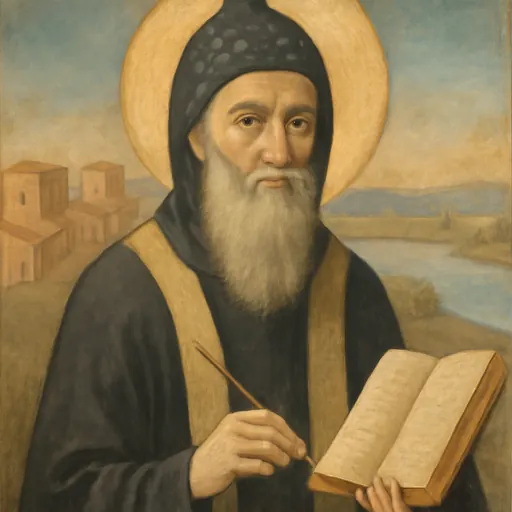
St. Jacob of Serugh (451–521), also called Mar Jacob of Sarug, was a Syriac bishop and the greatest poet-preacher of his age, honored as the Flute of the Holy Spirit. Tradition credits him with 763 metrical homilies on Scripture, the Mother of God and the saints. The Syriac Orthodox and Maronite churches keep his feast on November 29.
Who was St. Jacob of Serugh?
St. Jacob of Serugh, also called Mar Jacob of Sarug, was a Syriac bishop who lived from 451 to 521 in the country around Edessa, in what is now southeastern Turkey. He spent nearly his whole life as a country pastor, preaching the Scriptures in verse, and became bishop only in old age. The Syriac churches have loved his homilies for fifteen centuries. Like St. Ephrem before him, he is called "the Flute of the Holy Spirit."
The Catholic Encyclopedia gives his fuller title as "the flute of the Holy Spirit and the harp of the believing church." The Syriac Orthodox Church and the Maronite Church both keep his feast on November 29.

Our knowledge of his life is thin. Three short Syriac biographies survive, one by the scholar Jacob of Edessa in the seventh century, along with two panegyrics and a late biography. Most of what we know of his heart, though, comes from his own words.
The life of St. Jacob
A priest's son on the Euphrates
Jacob was born in 451 at Kurtam, a village on the Euphrates in the district of Serugh. His father was a priest. He studied at the famous School of Edessa, and his poetic gift showed early: the Catholic Encyclopedia notes that he wrote his first homily, on the chariot of God in the vision of Ezekiel, when he was only twenty-two.

Shepherd of a country district
For most of his life Jacob served as a periodeutes, a visiting priest-bishop for the rural churches of Haura in the district of Serugh. He traveled among the villages, preached, and wrote. In 502, when the Persian army invaded northern Mesopotamia, a chronicle of the time remembers "the respected Jacob, the periodeutes" sending letters of encouragement to the threatened cities, Edessa among them.
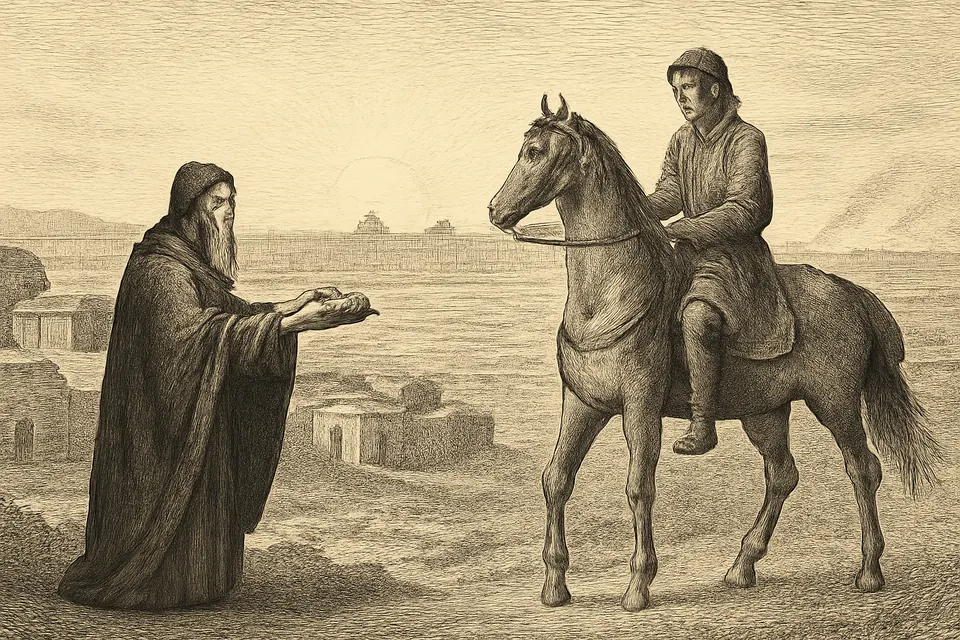
In 519 he also wrote to the Christians of Najran in southern Arabia, a persecuted community, to strengthen them in the faith.
Bishop at sixty-seven
In 519, at the age of sixty-seven, Jacob was consecrated bishop of Batnan, the chief town of Serugh, by Paul, bishop of Edessa. He served barely two years. He died on November 29, 521.
The homilies of St. Jacob
Jacob's great work is his memre, or metrical homilies, written in a twelve-syllable verse that the Syriac tradition still calls "Jacob's meter." These were sermons meant to be chanted aloud in church. The early sources number them at 763. According to the scholar Sebastian Brock, at least 380 survive, and more than half have been printed.
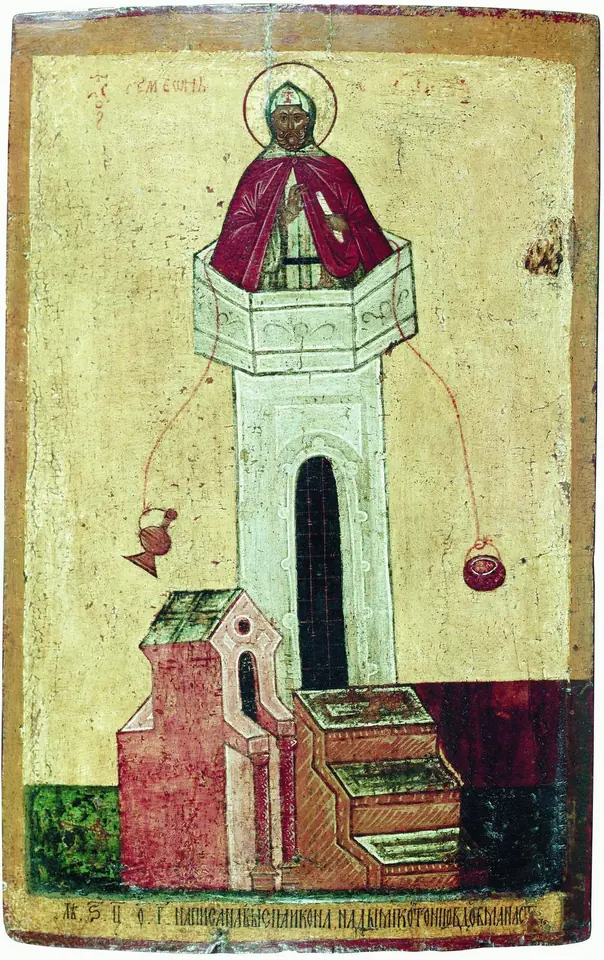
Most of them open the Scriptures with a poet's imagination: creation, the patriarchs, the prophets, the parables and the Passion. Others honor the saints. He wrote on St. Ephrem, on St. George, and on St. Simeon Stylites, the pillar saint who died near Antioch when Jacob was a boy. His six prose homilies follow the great feasts of the year, from the Nativity to the Resurrection, and 43 of his letters survive.
He wrote with special tenderness about the Virgin Mary, and his homilies on the Mother of God have been translated into English.
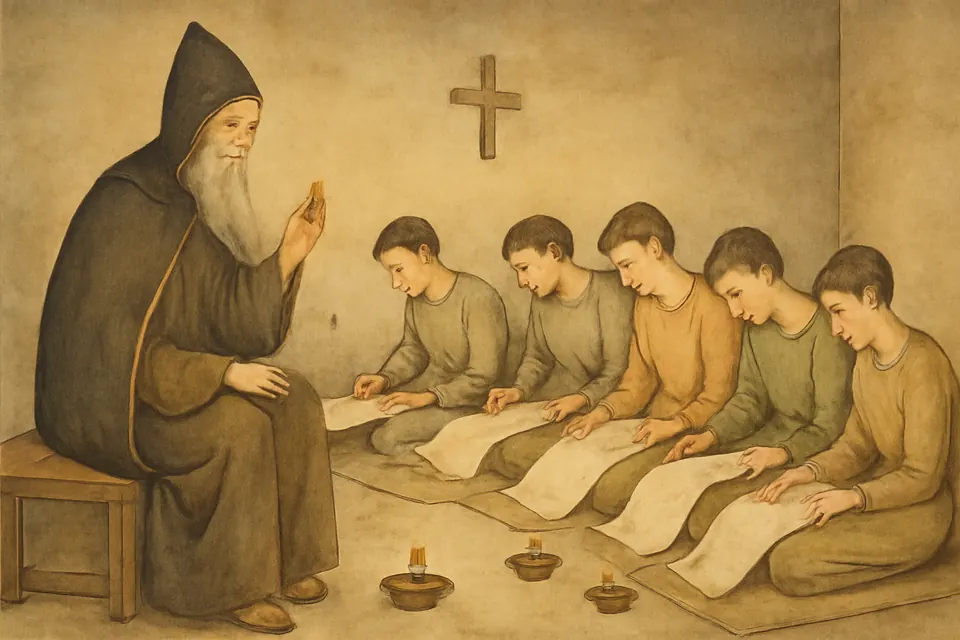
His homilies spread through the whole Christian East, into Armenian, Arabic, Ethiopic and Georgian. Some prayers in the Maronite rite of Baptism and several anaphoras (Eucharistic prayers) are also attributed to him, though scholars are not certain they are his.
Miracles and the faith of St. Jacob
No miracle stories of any weight have come down to us about Jacob. His holiness, as his own Church remembers it, is in his teaching. We should also be honest about one old question. In the eighteenth century the Maronite scholar Assemani argued that Jacob accepted the Council of Chalcedon. The Catholic Encyclopedia of 1910 disagreed, and Sebastian Brock writes that it is now known, from his letters, that he objected to the council. Brock describes a man who disliked the sharp arguments that followed it and preferred the poetry of symbol and paradox that he learned from Ephrem. His homilies have been read with love on both sides of that old divide, and the Maronite Church, in full communion with Rome, keeps his feast.
Symbols of St. Jacob of Serugh in art
Jacob is rarely painted in the West. In Syriac icons, look for:
- An elderly bishop with a long white beard in Syriac vestments.
- A pointed monastic hood, the dark hood worn by Syriac monks and bishops.
- A book or scroll, for his homilies.
- A flute, for his title, the Flute of the Holy Spirit.
He is often shown with St. Ephrem, the other Flute of the Spirit.

Feast day and prayer
The Syriac Orthodox and Maronite churches keep his memory on November 29. See our feast days calendar for other saints of the month.
No traditional prayer addressed to Jacob is in common use in English. The best way to honor him is to pray with him: read one of his homilies on the Mother of God or on the Nativity slowly, as a meditation, and then ask his intercession in the simple words the Syriac churches use for every saint: Holy Mar Jacob, pray for us.
Frequently asked questions
When is the feast of St. Jacob of Serugh?
November 29, the day he died in 521. Both the Syriac Orthodox Church and the Maronite Church remember him on that date.
Why is Jacob of Serugh called the Flute of the Holy Spirit?
The title, which he shares with St. Ephrem the Syrian, honors his gift as a poet. His homilies are written in verse to be chanted, and the Syriac tradition praises him as 'the flute of the Holy Spirit and the harp of the believing church.'
How many homilies did Jacob of Serugh write?
Tradition numbers them at 763, and Bar Hebraeus gives 760. At least 380 survive, and more than half have been printed. He also wrote six prose homilies for the great feasts and 43 letters.
Is Jacob of Serugh the same as Jacob of Nisibis?
No. Jacob of Nisibis was a fourth-century bishop who attended the Council of Nicaea and taught St. Ephrem. Jacob of Serugh lived about 150 years later, near Edessa, and is known above all as a poet.
Keep exploring
Sources
- Catholic Encyclopedia (1910): James of Sarugh. Born at Kurtam in 451, the three Syriac lives, his letters of 502 and 519, and his first homily on Ezekiel's chariot written at 22
- Gorgias Encyclopedic Dictionary of the Syriac Heritage: Yaʿqub of Serugh (Sebastian P. Brock). The 763 homilies, at least 380 surviving, consecration in 519 by Paul of Edessa, the date of death, and the November 29 feast in the Syriac Orthodox and Maronite calendars