St. Stephen the Younger, Monk and Martyr for the Holy Icons
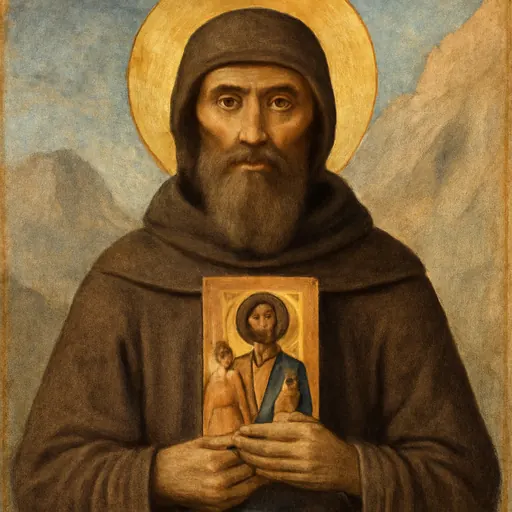
St. Stephen the Younger, also called St. Stephen the New, was a Byzantine hermit of Mount Auxentius near Chalcedon who refused to sign the iconoclast council of 754. After exile and eleven months in prison, he was dragged through the streets of Constantinople and killed in 764 or 765. We keep his feast on November 28, and the Church honors him as a martyr for the holy icons.
Who was St. Stephen the Younger?
St. Stephen the Younger was a monk of the eighth century who gave his life for the holy icons. Born in Constantinople about 715, he spent most of his life as a hermit on Mount Auxentius, a high hill on the Asian shore across from the city, today called Kayışdağı. When Emperor Constantine V ordered the Church to condemn the veneration of images, Stephen refused to sign. Exile, prison and a terrible death followed, and the Church has honored him ever since as one of the great confessors of the iconoclast age.
The East calls him Stephen the New, a second Stephen who, like the deacon in Acts, died at the hands of a crowd. He should not be confused with St. Stephen, the first martyr, whose feast is December 26.
Most of what we know comes from a Life written by Stephen the Deacon of Constantinople. Butler notes that it was written forty-two years after the martyr's death, early enough that the writer could still speak with people who had known him.
The life of St. Stephen the Younger
A child given to God
The Orthodox life says that his parents had two daughters and prayed for a son. When Stephen was born, his mother carried him to the church of the Mother of God at Blachernae and dedicated him to God there. The family loved the icons. When Leo III began to move against them, the parents left the capital for Bithynia, and at about sixteen the boy was placed under an old hermit named John on Mount Auxentius.
He stayed with John for more than fifteen years. His work in the early days was carrying the daily provisions up the mountain. When his father died, he went back to the city, sold what he had inherited and gave it to the poor. His mother and his sisters took the veil.
Hermit and abbot of the mountain
After John's death Stephen kept living in his master's cave, and other men came to learn from him. They built small cells scattered over the slopes, and the young monk, then about thirty, became their abbot. Butler, following the old Life, says he wore a sheepskin and an iron belt, copied books and made fishing nets to support himself and the poor.
In his early forties he handed the community over to a disciple and shut himself into a cell so narrow that he could neither lie down nor stand upright in it.

The council of 754 and the false charge
In 754 Constantine V gathered 338 bishops at Hieria and had them condemn the holy images. (The OCA life gives the number as 358.) Neither the pope nor the patriarchs of Alexandria, Antioch and Jerusalem took part. The emperor wanted the famous hermit's signature, and a patrician named Callistus climbed the mountain to get it. Stephen refused.
What could not be won by persuasion was tried by slander. The monk was accused of sinning with a widow named Anna, a noblewoman who had taken the veil near the mountain under his direction. Anna denied it under the lash and died soon afterward from what she suffered. Then a courtier was sent to beg for the monk's habit, and the emperor paraded him in the Hippodrome to stir up the crowd against monks. Soldiers burned the monastery and church on Mount Auxentius.
Exile, the pillar and the coin
Stephen was examined by iconoclast bishops and answered them so well that Callistus is said to have told the emperor, "My lord, we are overcome." He was sent into exile on the island of Proconnesus in the Sea of Marmara. His monks followed him there, and the Orthodox life says he took up the life of a stylite, praying atop a pillar.
Brought back to Constantinople in chains, he was questioned by the emperor himself. Butler and the Orthodox life tell the famous scene. Stephen took a gold coin stamped with the emperor's image and asked what a man would deserve who threw it down and trampled it. The court said he should be punished. If that is so, Stephen answered, how much greater is the guilt of those who throw into the fire the image of the King of heaven and of his saints? Then he threw the coin down and stepped on it.

Prison and death
He spent eleven months in prison with 342 monks and others held for the icons. The Orthodox life says the prison became like a monastery, with the hours of prayer sung each day. Crowds came to the walls to ask his prayers.
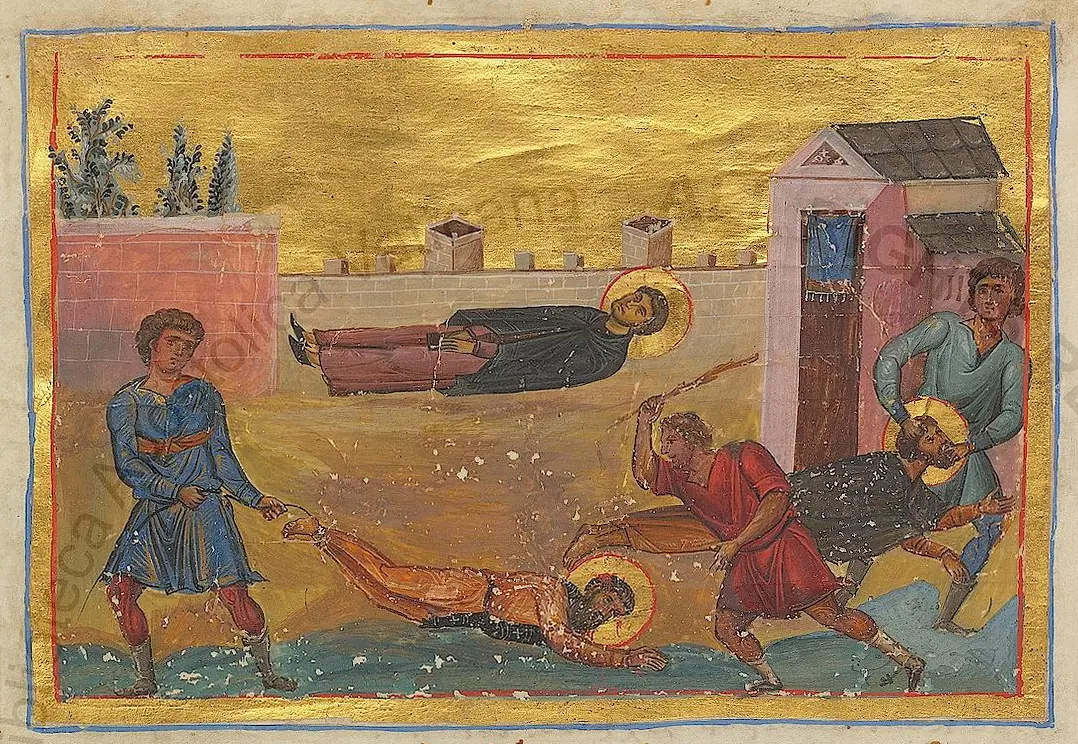
The emperor sent two brothers to beat him to death, but the story goes that they fell at his feet instead and reported their orders carried out. When Constantine learned the truth, a mob was stirred up against the monk. They dragged him out by the feet, through the streets of the city, and killed him with clubs and stones. His body was thrown into the pit where executed criminals were buried. Butler, following the chronicler Cedrenus, gives the year as 764; most modern accounts say November 28, 765.
The miracles of St. Stephen the Younger
The old Life credits him with healings and other wonders during his exile, and Butler says his miracles on Proconnesus "increased the reputation of his sanctity" and won new defenders for the icons. These are traditional: they come from the hagiography, not from any later inquiry.
The Orthodox life adds that on the morning after his death a fiery cloud stood over Mount Auxentius and a storm of hail fell on the capital. This too is traditional.
Symbols of St. Stephen the Younger in art
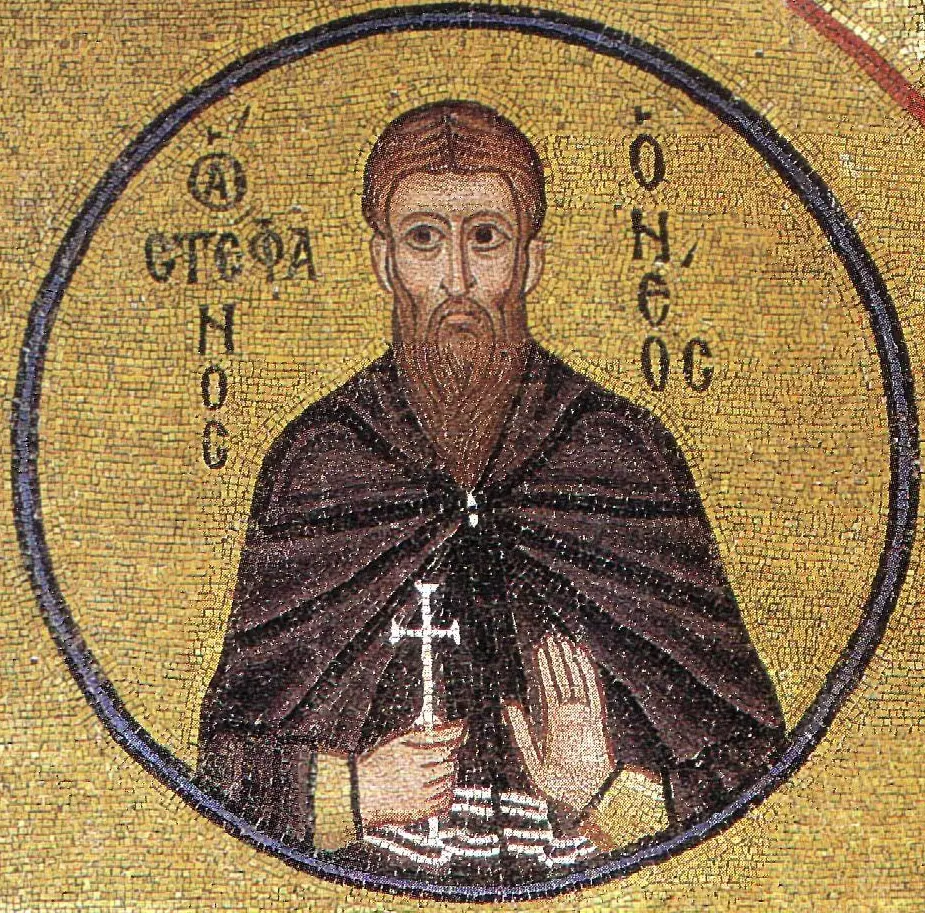
- Monastic habit and cowl: he is shown as a lean, dark-bearded monk in brown or black robes.
- An icon in his hands: many Byzantine and Russian icons show him holding a small image of Christ or of the Mother of God, the images he died for.
- Hand-cross: the sign of a martyr.
- The coin: rarely, he holds or points to the emperor's coin from his trial.
The Hosios Loukas mosaic on this page names him in Greek as "Stephen the New." In the Menologion of Basil II, his martyrdom is shown as he died, dragged by the feet before the city walls.
His feast day
We keep his feast on November 28. It is on the Roman Martyrology and in the Orthodox calendar, which calls him Monk-Martyr and Confessor Stephen the New. Iconoclasm ended in 787 at the Second Council of Nicaea and, for good, in 843, and the faithful who had suffered for the images were remembered with him. See other saints of the season on our feast days page.
Prayer to St. Stephen the Younger
The Orthodox Church in America gives this troparion (tone 4) for his feast:
Trained in asceticism on the mountain, / with the weapon of the Cross you destroyed the spiritual assaults of the hostile powers, all-blessed one; / Again you bravely prepared for combat / and slew Copronymus with the sword of faith; / for both struggles you have been crowned by God, monk-martyr Stephen of eternal memory.
Let us ask St. Stephen the Younger to pray for all who are pressed to deny what they believe, and for monks and nuns who keep watch in prayer for the whole Church.
Frequently asked questions
Who was St. Stephen the Younger?
A monk born in Constantinople about 715 who lived as a hermit and abbot on Mount Auxentius, across the water from the city. He refused to accept Emperor Constantine V's ban on icons and was put to death by a mob in 764 or 765. He is called "the Younger" or "the New" to set him apart from St. Stephen the first martyr.
When is the feast of St. Stephen the Younger?
November 28, in both the Roman Martyrology and the Orthodox calendar.
Why is he called Stephen the New?
Like the first martyr, St. Stephen of Acts 7, he died at the hands of a crowd and prayed for his killers. Byzantine Christians called him the "new" Stephen, and the West has usually said "the Younger."
What happened at his trial with the coin?
Asked whether he really thought that trampling an image meant trampling Christ, he took a coin bearing the emperor's portrait and asked what someone deserved who threw it down and stamped on it. The judges said such a man would be punished, and Stephen answered that dishonoring the image of the King of heaven was far worse.
Keep exploring
Sources
- Monastic Martyr and Confessor Stephen the New, Orthodox Church in America. The Orthodox life: his dedication at Blachernae, Mount Auxentius, the nun Anna, exile, the pillar, the coin, the 342 imprisoned elders and his death
- Monastic Martyr and Confessor Stephen the New, Troparion and Kontakion, Orthodox Church in America. Text of the troparion quoted on this page
- Alban Butler, The Lives of the Fathers, Martyrs, and Other Principal Saints, vol. 11 (November), 1842 edition. November 28: the Life by Stephen the Deacon written 42 years after his death, the narrow cell, the trial at Chrysopolis, exile to Proconnesus, and the dates 764 (Cedrenus) and 757 (Theophanes)