St. Gaetano Errico, Priest of Secondigliano and Apostle of the Confessional

St. Gaetano Errico (1791–1860) was a parish priest of Secondigliano, on the northern edge of Naples, who built a church to Our Lady of Sorrows and founded the Missionaries of the Sacred Hearts of Jesus and Mary. Pope Benedict XVI, who canonized him in 2008, praised him as a tireless confessor. We keep his feast on October 29.
Who was St. Gaetano Errico?
St. Gaetano Errico was a parish priest of Secondigliano, a working town just north of Naples, who spent forty-five years among his own people. He taught their children, heard their confessions for hours on end, built them a church in honor of Our Lady of Sorrows, and founded a congregation of priests, the Missionaries of the Sacred Hearts of Jesus and Mary, to preach missions and reconcile sinners. He died in 1860, and Pope Benedict XVI canonized him in 2008.
He is easy to confuse with two other saints. St. Cajetan of Thiene (Gaetano in Italian), the sixteenth-century founder of the Theatines, is a different man, and so is St. Gaetano Catanoso of Calabria, who died in 1963.
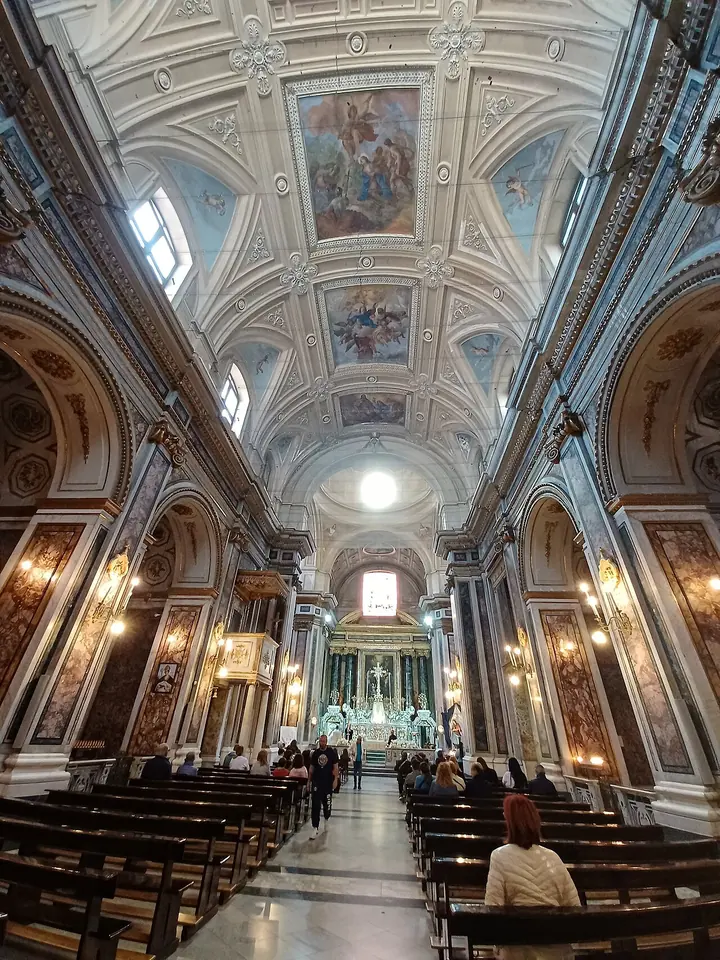
The life of St. Gaetano Errico
A pasta maker's son
Gaetano was born on October 19, 1791, the second of nine children of Pasquale Errico, who ran a small pasta works, and Maria Marseglia. At fourteen he asked to join the Capuchins and then the Redemptorists, and both turned him away as too young. In 1808 he entered the archdiocesan seminary of Naples, living at home and walking, the Vatican biography says, about eight kilometers each way. Cardinal Luigi Ruffo Scilla ordained him a priest on September 23, 1815, in the chapel of St. Restituta in Naples Cathedral.
Teacher, parish priest and confessor
For about twenty years he taught in the town school and served at the parish of Sts. Cosmas and Damian. His days were full of ordinary work: catechism for the children, visits to the sick, Mass, preaching. When cholera struck in 1836–37 and again in 1854, he stayed among the people, according to the Dizionario Biografico degli Italiani.
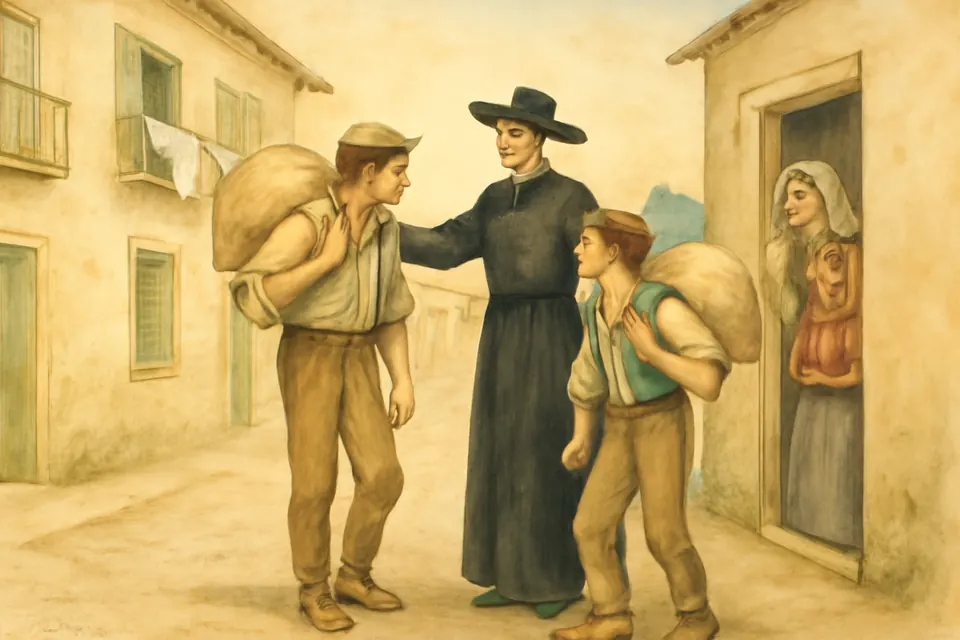
What people remembered most was the way he called them back to God. Benedict XVI, at the canonization, said that the street and the confessional were "the privileged places of this new Saint's pastoral action." Meeting someone on the street, he would give his usual invitation: "God loves you, when will we see each other?" The meeting he meant was in the confessional.
A church for Our Lady of Sorrows
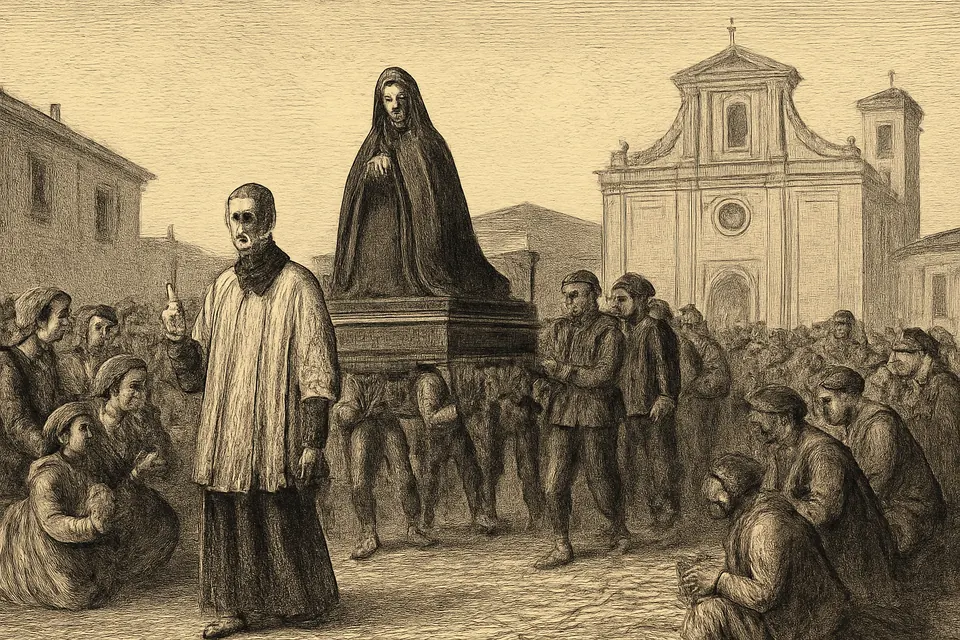
In 1818, during a retreat at the Redemptorist house in Pagani, Gaetano said that St. Alphonsus Liguori appeared to him and asked for two things: a church in Secondigliano for Our Lady of Sorrows, and a new congregation. It is his own account, and the Treccani dictionary is careful to present it that way. He bought land in 1822, announced the plan on Pentecost 1826, and the church was blessed on December 9, 1830.
He then wanted a statue of the sorrowful Mother. The sculptor Francesco Verzella carved the face again and again until Gaetano was content; tradition says he exclaimed "It is so!" when he finally saw it. The statue reached Secondigliano in May 1835, and pilgrims have come to it ever since. Read more about this devotion on our Our Lady of Sorrows page.
The Missionaries of the Sacred Hearts
The first companions came in 1833, and the archbishop approved the congregation and its rule in 1836. Gaetano went to Rome more than once to win papal approval; Pope Pius IX signed it on August 7, 1846, and Gaetano was elected the first superior general. He asked his priests to preach missions and to be generous confessors. Benedict XVI quoted his advice to them:
God, who does not desire the sinner's death, is always more merciful than his ministers; thus may you be as merciful as you can be, so that you will receive mercy from God.
He fell ill with bronchitis in mid-October 1860 and died at Secondigliano on October 29. His last word to his missionaries, the Vatican biography records, was "Love one another and be very observant of our Rules." The town's verdict was simple: "A saint is dead."
The miracles of St. Gaetano Errico
Local memory kept many stories of healings, prophecies and help in hard times; Santi e Beati speaks of hundreds of popular fioretti, and they are reported or traditional accounts. Two healings were examined by the Church and approved. The first, the healing of Salvatore Caccioppoli, who suffered a perforated stomach wall in 1952, opened the way to his beatification on April 14, 2002. The second, the healing of Anna Russo in 2003, was accepted by Benedict XVI in 2007 for the canonization of October 12, 2008.
Why St. Gaetano Errico is honored as a confessor
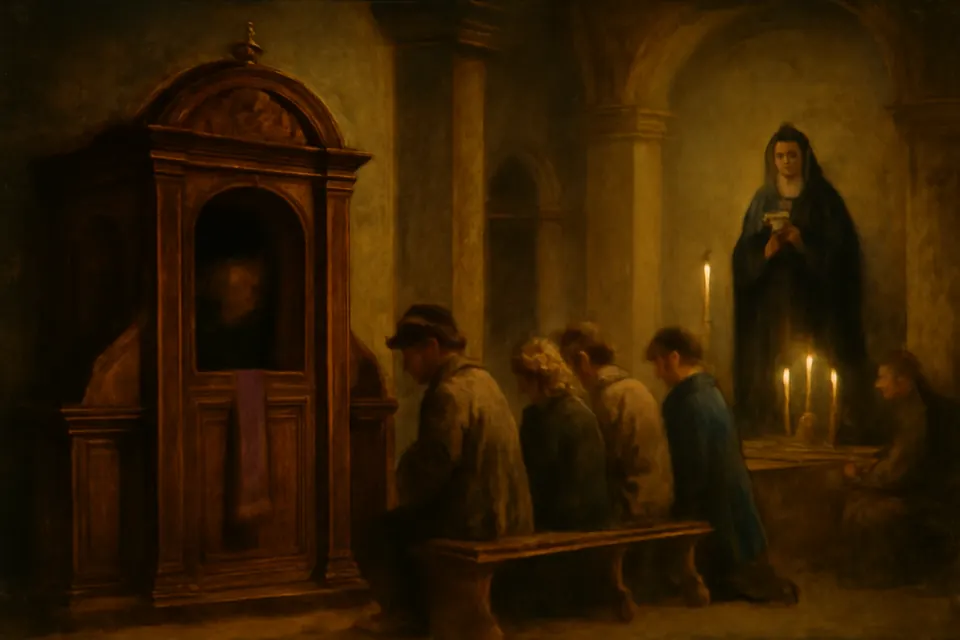
He has no formal patronage, but the Church has held him up for one thing above all: the ministry of reconciliation. Benedict XVI placed him among the "extraordinary priestly figures who tirelessly made the confessional the place for dispensing God's mercy." Priests who hear confessions, and anyone who has stayed away from the sacrament for years, can ask his help, as they would ask St. John Vianney or St. Leopold Mandić. See our patron saints page for others.
Symbols of St. Gaetano Errico in art
Images of St. Gaetano Errico are recent, made since his beatification, and they show him as he lived:
- Black cassock: the plain dress of a diocesan priest of nineteenth-century Naples.
- Book: the rule of his congregation, or the Gospel he preached.
- The two hearts: the Sacred Heart of Jesus and the Immaculate Heart of Mary, the hearts his missionaries are named for.
- Our Lady of Sorrows: sometimes shown beside him, recalling the church and statue he gave Secondigliano.
He is usually painted as an older, thin-faced man. A priest in a black cassock holding the two flaming hearts is almost always St. Gaetano Errico.
Feast day and where he is honored
We keep his feast on October 29. His body rests in the Sanctuary of Our Lady of Sorrows in Secondigliano, the church he built, beside the motherhouse of his missionaries. Find other saints of the season on our feast days page.
A prayer with St. Gaetano Errico
We know of no traditional English prayer to him with a citable origin. Let us take his own words as our prayer and ask his help: St. Gaetano, you told everyone you met that God loves them; pray for us, that we may not be afraid to come back to the mercy of the Father in confession, and pray for all priests who wait for us there.
Frequently asked questions
Who was St. Gaetano Errico?
A diocesan priest from Secondigliano, near Naples, who taught school, served his parish for decades, built the church of Our Lady of Sorrows and founded the Missionaries of the Sacred Hearts of Jesus and Mary, approved by Pius IX in 1846.
When is the feast of St. Gaetano Errico?
October 29, the day he died in 1860.
When was Gaetano Errico canonized?
Pope Benedict XVI canonized him in St. Peter's Square on October 12, 2008. Pope John Paul II had beatified him on April 14, 2002.
Where is St. Gaetano Errico buried?
In the Sanctuary of Our Lady of Sorrows (the Addolorata) in Secondigliano, the church he built, next to the motherhouse of his missionaries.
Keep exploring
Sources
- Gaetano Errico (1791-1860), biography (Holy See). His studies, ordination, the 1818 retreat at Pagani, the statue of 1835 and the approvals of his congregation
- Homily of Benedict XVI at the canonization of four blesseds, October 12, 2008. The quotations on mercy and the confessional
- ERRICO, Gaetano, Dizionario Biografico degli Italiani (Treccani). His work in the cholera epidemics of 1836–37 and 1854 (in Italian)
- San Gaetano Errico, Santi e Beati. His tomb in the Addolorata at Secondigliano (in Italian)