St. Valentine Berrio-Ochoa: Basque Dominican Bishop and Martyr of Vietnam

St. Valentine Berrio-Ochoa (1827–1861) was a Basque carpenter's son from Elorrio who became a Dominican missionary and, at thirty-one, vicar apostolic of Central Tonkin in Vietnam. Hunted in the persecution under Emperor Tu Duc, he was beheaded on November 1, 1861. He was canonized in 1988 with the Vietnamese Martyrs, whom we honor on November 24.
Who was St. Valentine Berrio-Ochoa?
St. Valentine Berrio-Ochoa was a Basque priest who became a Dominican, a missionary bishop in northern Vietnam, and a martyr at thirty-four. He was born in Elorrio, in the province of Biscay, on February 14, 1827, and baptized Valentín Faustino. He was beheaded for the faith at Hai Duong on November 1, 1861. Pope John Paul II canonized him on June 19, 1988, with the 117 Martyrs of Vietnam.
The people he served in Tonkin knew him by a Vietnamese name, Vinh. In his own Basque Country he is Balendin Berriotxoa, and Elorrio, where he rests, honors him as its own saint.
The life of St. Valentine
A carpenter's son in Elorrio
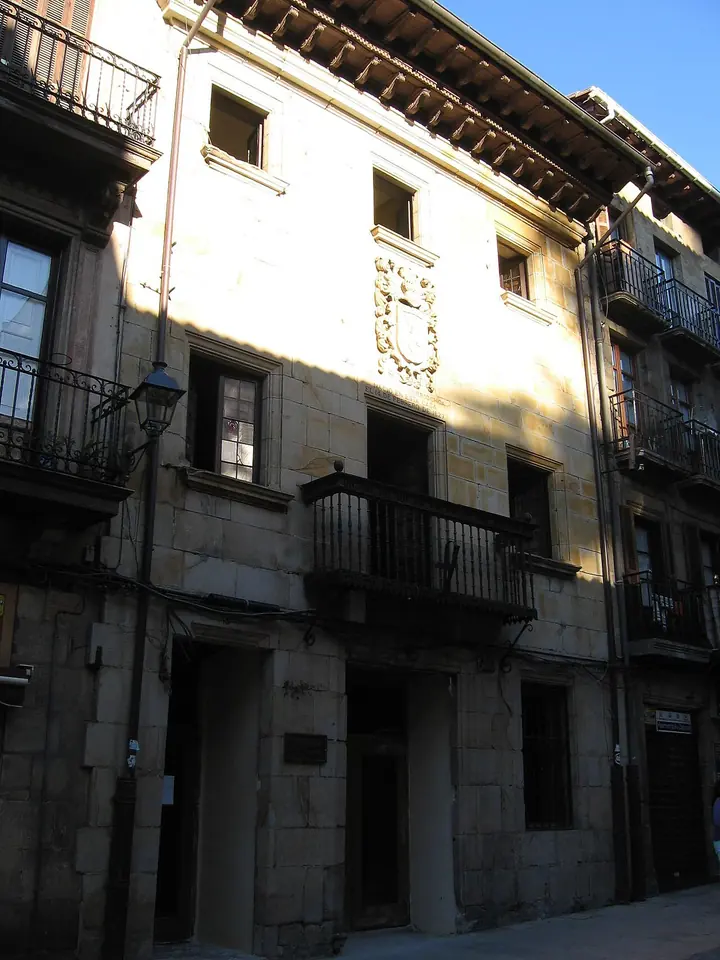
His father was a carpenter, and Valentine learned the trade in the family workshop. The Spanish Dominicans recall that as a boy he served Mass at the convent of Santa Ana, a house of Dominican nuns in Elorrio, and that he was known for his piety and his easy, cheerful nature.
He wanted to be a priest, but his family's money was short and his studies at the seminary of Logroño were interrupted. He persevered and was ordained on June 14, 1851. His early ministry was spent largely among working people, and those who knew him described him as "a man of prayer with a heart of burning charity."

A Dominican for the missions
Since boyhood he had read about the Dominican missionaries in Vietnam. Already a priest, he received the Dominican habit at Ocaña, near Toledo, in 1853, at the house where the Dominican province of the Holy Rosary trained friars for the Philippines and the Far East. He made his profession in November 1854. At the end of 1856 he was assigned to Tonkin, and after five months at sea he reached Manila in 1857.
Bishop in a time of persecution
Emperor Tu Duc was persecuting Christians and hunting foreign missionaries, whom he saw as agents of European powers. Valentine learned the language and preached, the Dominicans write, "barefoot, in the mud, and often in the dark of night." At the end of 1857 Rome named him titular bishop of Centuria and coadjutor to the vicar apostolic of Central Tonkin, the Dominican bishop Melchor García Sampedro, himself now a canonized martyr. Bishop García consecrated him on June 27, 1858. A month later, on July 28, García was martyred, and Valentine, not yet thirty-two, became the shepherd of the whole vicariate.
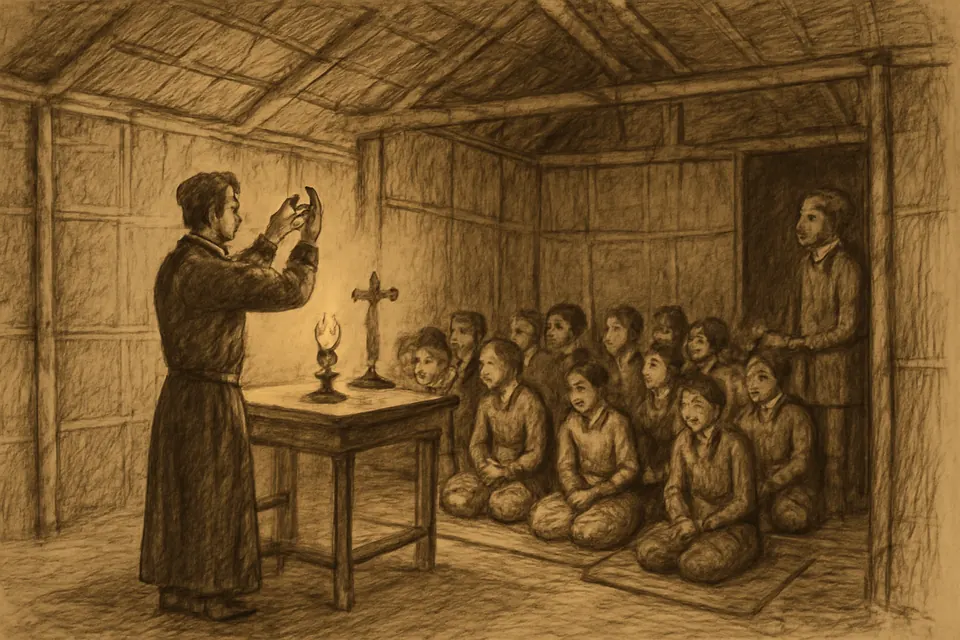
For three years he led his flock in hiding, moving from village to village, saying Mass at night, ordaining priests and strengthening catechists.
Martyrdom at Hai Duong
In the fall of 1861 the persecution grew worse. Valentine was betrayed and arrested and taken to Hai Duong, the provincial capital. He was questioned about his name, his years in the country and the bishop he worked with, Jerónimo Hermosilla, called Bishop Lien. He was locked in a small cage and urged to deny Christ. He refused, and on November 1, 1861, the feast of All Saints, he was beheaded together with Bishop Jerónimo Hermosilla and the Dominican priest Pedro Almató.
Beatification and canonization
Pope Pius X beatified the three Dominican martyrs among the Martyrs of Tonkin on May 20, 1906. On June 19, 1988, Pope John Paul II canonized him with 116 companions. In his homily the Pope counted among them eight bishops and greeted the Dominicans of the Holy Rosary Province, to whom many of the martyr bishops and priests belonged. As martyrs they were raised to the altars for the witness of their death; no individual approved miracle of St. Valentine is on record, and we know of no reported wonders from his life.
His tomb in Elorrio
In 1886 his remains were brought home by way of Manila and laid in the Basilica of the Immaculate Conception in Elorrio, where they rest in an altar tomb.

Symbols of St. Valentine Berrio-Ochoa in art
- The white Dominican habit and black cloak: his order.
- A bishop's miter: his office as vicar apostolic of Central Tonkin.
- The palm and a sword: his martyrdom by beheading.
- Chains: his imprisonment at Hai Duong.
Images of him in Elorrio and in Dominican houses usually show him as a young bishop in the habit, holding a palm.
Feast day and prayer
He died on November 1; the universal Church celebrates him with the Vietnamese Martyrs on November 24. See other saints of the season on our feast days page.
We have no traditional prayer to St. Valentine alone. On November 24 the Church's collect recalls that God kept Andrew Dung-Lac and his companions faithful to the Cross of his Son even to the shedding of their blood, and asks their intercession. Let us ask St. Valentine to pray for missionaries, for persecuted Christians, for the Church in Vietnam, and for priests who serve working people. St. Valentine Berrio-Ochoa, pray for us.
Frequently asked questions
Who was St. Valentine Berrio-Ochoa?
A Basque priest from Elorrio, Spain, who joined the Dominicans to go to the missions, was made bishop and vicar apostolic of Central Tonkin in 1858, and was martyred in northern Vietnam in 1861. The Vietnamese called him Bishop Vinh.
When is the feast of St. Valentine Berrio-Ochoa?
He died on November 1, 1861. The universal Church celebrates him with St. Andrew Dung-Lac and the other Vietnamese Martyrs on November 24.
When was he canonized?
Pope Pius X beatified him on May 20, 1906, and Pope John Paul II canonized him on June 19, 1988, among the 117 Martyrs of Vietnam.
Where is he buried?
His remains were brought home to the Basque Country in 1886 and rest in an altar tomb in the Basilica of the Immaculate Conception in Elorrio, his hometown.
Keep exploring
Sources
- Catholic-Hierarchy: Bishop St. Valentín Faustino Berrio Ochoa, O.P.. Birth, priestly ordination June 14, 1851, profession November 12, 1854, appointment December 28, 1857, consecration June 27, 1858, succession July 28, 1858, death November 1, 1861, beatification and canonization dates
- Dominicos (Order of Preachers in Spain): San Valentín de Berrio-Otxoa. Carpenter's son, altar boy at the Dominican nuns of Santa Ana, the habit at Ocaña, five months' voyage to Manila, preaching barefoot by night
- Pope John Paul II, Homily for the canonization of 117 Vietnamese martyrs, June 19, 1988 (in Italian). 117 martyrs including eight bishops; greeting to the Dominicans of the Holy Rosary Province
- Wikipedia (Spanish): Valentín de Berriochoa. Only source found for the return of his remains in 1886 and the altar tomb in Elorrio; it cites Solórzano's novena of 1995 and Basque press reports