Blessed Terence Albert O'Brien, Dominican Bishop of Emly and Martyr of Limerick
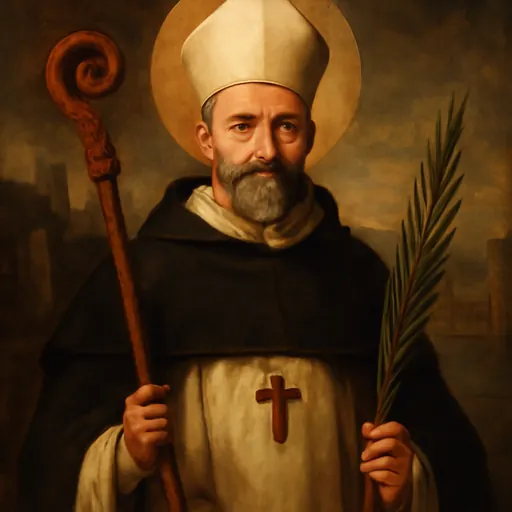
Blessed Terence Albert O'Brien (1600–1651) was an Irish Dominican from Limerick, twice prior of his community there, provincial of the Irish Dominicans and, from 1647, Bishop of Emly. When Henry Ireton's army took Limerick after a long siege in 1651, he was excluded from mercy, found nursing the plague-stricken, and hanged. Pope John Paul II beatified him in 1992. His feast is October 30.
Who was Blessed Terence Albert O'Brien?
Blessed Terence Albert O'Brien was a Dominican friar and bishop who gave his life in Limerick, the city where he was born. For thirty years he served the Church in Ireland through the hardest of times: as a young priest in a hired house, as prior and provincial of his order, and at the end as Bishop of Emly. When the Parliamentarian army under Henry Ireton took Limerick in October 1651, he was hanged in the city. Pope John Paul II beatified him in 1992 among the seventeen martyrs of Ireland, and we keep his feast on October 30.
The life of Blessed Terence Albert O'Brien
A Limerick boy in the Order of Preachers
Terence O'Brien was born in Limerick in 1600, into a family of the old O'Brien line. His uncle Maurice O'Brien was prior of the Dominicans in the city, and it was through him that the young man was received into the Order of Preachers. In religion he took the name Albert, after the great Dominican teacher St. Albert the Great.
The medieval Dominican priory of Limerick, founded by Donat O'Brien in the thirteenth century, had long been taken from the friars, so the community lived where it could. Brother Albert was sent to study at the Dominican house of St. Peter Martyr in Toledo, Spain. He spent eight years there, was ordained a priest, and came home to Limerick, where the friars were living together in a rented house.
Prior, provincial and bishop
He was elected prior of Limerick twice and once of Lorrha in Tipperary. In 1643 the Dominican chapter meeting at Kilkenny elected him provincial of the order in Ireland. He went to Rome for the general chapter of 1644, where he was made a Master of Theology, and he worked for the restoration of Dominican life and study at home.
The papal nuncio, Archbishop Rinuccini, wrote of him from Kilkenny in January 1646: "Father Terence, provincial of the Dominicans, is a man of prudence and sagacity." The nuncio pressed for him as coadjutor bishop of Emly, the old diocese just south of Limerick, and consecrated him himself late in 1647. He stood with the nuncio through the bitter divisions of those years and signed the bishops' declarations against Inchiquin's truce in 1648 and against Ormond in 1650.
The siege of Limerick
Ireton closed his siege lines around Limerick in the summer of 1651. Plague did more harm inside the walls than the guns did outside, and Myles O'Reilly's 1869 history records about eight thousand dead. The bishop urged the city to hold out. When Limerick surrendered on October 27, the articles of capitulation named twenty-four men excluded from mercy, and he was one of them.
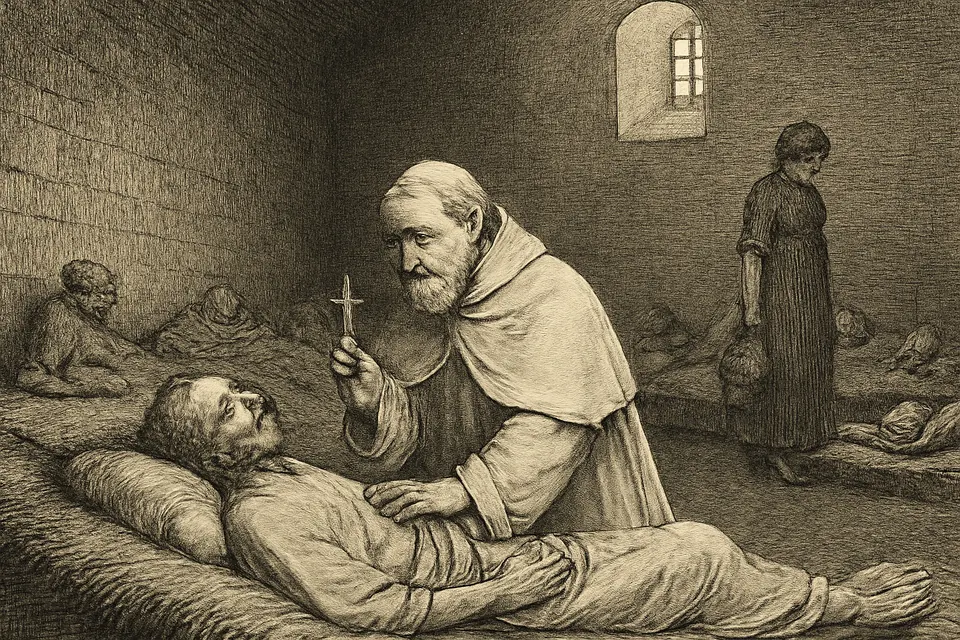
He did not hide. He went to the pest-house to care for the sick and to prepare himself for death, and that is where the soldiers found him. Brought before Ireton, he was told he would be tried by a court-martial. Asked whether he wanted counsel, he answered that all he needed was his confessor, and a Dominican, Father Hanrahan, was allowed to stay with him through the day and night before his death.
Martyrdom
He was hanged at Gallows Green. Father Hanrahan said he walked to the gallows as joyfully as to a feast. His contemporary, the Dominican writer De Marinis, recorded his last words to the weeping Catholics in the crowd, as O'Reilly gives them in English:
Hold firmly by your faith, and observe its precepts; murmur not against the arrangements of God's providence, and thus you will save your souls. Weep not at all for me, but rather pray that in this last trial of death I may, by firmness and constancy, attain my heavenly reward.
After his death his head was cut off and set on a spike at the river gate of the city.

Martyr and the stories told of him
The Church beatified him as a martyr, so no approved miracle was required. Two stories grew up at once. De Marinis wrote that the bishop's head on the bridge tower long seemed to drop fresh blood and stayed unchanged; this is traditional, recorded by his admirers and never examined. The Dominican histories also say that he summoned Ireton to answer before God's judgment seat, and Ireton died of the plague within weeks, in November 1651. That too is traditional, a story the persecuted Catholics of Ireland treasured. Patrick Moran, the future cardinal, wrote in the 1860s that the place of his martyrdom was still pointed out and honored by the Catholics of Limerick.
Symbols of Blessed Terence Albert O'Brien in art
Pictures of him are few and mostly recent. Look for these signs:
- The Dominican habit: white tunic and scapular under a black cloak, for the Order of Preachers.
- Miter and crozier: for his office as Bishop of Emly.
- The martyr's palm: the sign given to every martyr.
- A rope: sometimes shown in modern images of the Irish martyrs who were hanged.
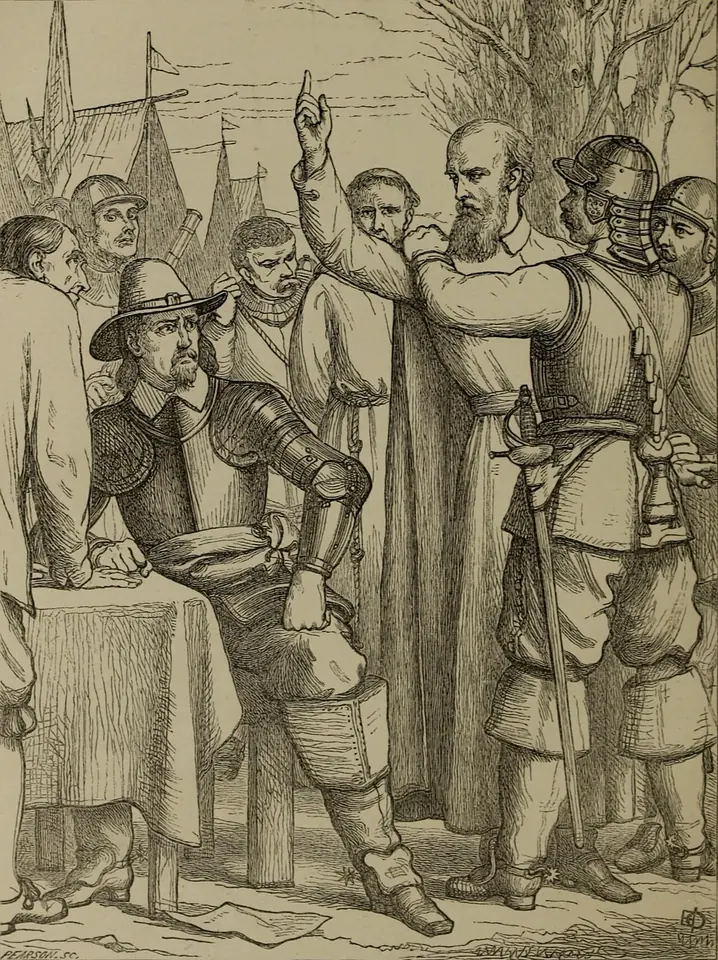
Henry Doyle's engraving above, made for Mary Frances Cusack's Illustrated History of Ireland in 1868, shows him standing before Ireton with his hand raised toward heaven. Its title calls him Bishop of Limerick, a common slip: he was bishop of Emly, taken at Limerick.
Feast day and prayer
We keep his feast on October 30. In Ireland he is also remembered on June 20 with Blessed Dermot O'Hurley, Blessed Margaret Ball and the other martyrs beatified in 1992. See more of Ireland's holy men and women on our Irish saints page and on the feast days calendar.
We have not found a traditional prayer to Blessed Terence Albert to reprint. Let us ask him to pray for the Church in Ireland, for the Dominican friars, for bishops who stay with their people in danger, and for all who nurse the sick in time of plague.
Frequently asked questions
Who was Blessed Terence Albert O'Brien?
An Irish Dominican friar born in Limerick in 1600. He studied at Toledo in Spain, served as prior in Limerick and Lorrha, was elected provincial of the Dominicans in Ireland in 1643, and was consecrated Bishop of Emly in 1647. He was hanged at Limerick after the city surrendered to the Parliamentarian army in 1651.
Why was Bishop Terence Albert O'Brien executed?
He had urged the city to hold out during Ireton's siege, and the terms of surrender named him among those excluded from mercy. A court-martial condemned him the day after he was found. The Church beatified him in 1992 as a martyr, one of seventeen who died for the Catholic faith in Ireland.
When is the feast of Blessed Terence Albert O'Brien?
October 30, the date of his martyrdom in modern calendars. Older accounts give October 31, 1651. In Ireland the seventeen martyrs beatified in 1992 are also kept together on June 20.
Where was Terence Albert O'Brien buried?
His body was not kept. After the hanging his head was cut off and set on a spike at the city's river gate, and no tomb or relics of his are known today.
Keep exploring
Sources
- Terence Albert O'Brien, Catholic Encyclopedia (1913), Wikisource transcription. Toledo, the priorships, the 1643 election, Rinuccini's recommendation, consecration as coadjutor of Emly, the declarations of 1648 and 1650, and the court-martial
- Myles O'Reilly, Memorials of Those Who Suffered for the Catholic Faith in Ireland (New York, 1869). Rinuccini's letter of 1646, the pest-house, his request for a confessor, his last words as De Marinis recorded them, the head on the bridge tower, and the tradition about Ireton
- John Paul II, homily for the beatification of seventeen Irish martyrs and others, September 27, 1992 (Italian). The beatification of the seventeen Irish martyrs