Blessed Chiara Badano, "Chiara Luce"
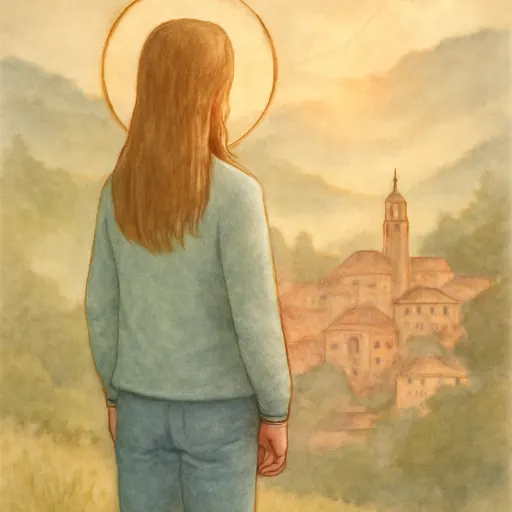
Blessed Chiara Badano (1971–1990), called Chiara Luce, was an Italian teenager from Sassello and a member of the Focolare Movement who met bone cancer at 17 with startling peace and joy, offering her pain to Jesus. She died at 18 on October 7, 1990. Pope Benedict XVI approved her beatification, which took place in Rome on September 25, 2010, and her feast day is October 29.
Who was Blessed Chiara Badano?
Blessed Chiara Badano was an Italian teenager from the village of Sassello, in the hills of Liguria, who belonged to the Focolare Movement and is known around the world as Chiara Luce. She was born on October 29, 1971. At 17 she learned she had a severe bone cancer, and for two years she offered every loss and every pain to Jesus, with a peace that astonished her doctors. She died at home on October 7, 1990, at the age of 18.
She was a girl like many others. She played tennis, went skating, loved the mountains and came alive at the sea, met her friends at the village café and failed a year of high school. That ordinariness is the point. Ten days after her beatification, Pope Benedict XVI told the young people of Sicily: "Her life was a short one but it is a wonderful message."
We keep her feast on October 29. Let us ask Blessed Chiara to pray for the young, and for everyone who is sick and afraid.

The life of Blessed Chiara Badano
A long-awaited only child
Chiara's parents, Ruggero and Maria Teresa Badano, married at 26 and waited eleven years for a child. Ruggero, a truck driver, prayed for one on his long trips, and asked again for the grace at a Marian shrine of their diocese. The Dicastery for the Causes of Saints names it: the Sanctuary of Our Lady of the Rocche at Molare. Their only daughter was born on October 29, 1971, and they took her as an answer from Our Lady.
"With her birth, we sensed in our souls that Chiara was not only our daughter, but first of all a daughter of God," her parents later wrote, and they tried to raise her with respect for her freedom. The foundation that keeps her memory says the family's faith rested more on example and love than on rules and scolding.

Her mother told a small story about her as a little girl. Asked to give some toys to poor children, Chiara said no: they were hers. A few minutes later her mother heard her sorting them into two piles, "this one yes, this one no," and then asking for a shopping bag. She was filling it with the new toys. "You can't give old toys to poor children!" she said.
At school she shared her snack with a poor classmate. When her mother began packing two snacks so she would have one for herself, she gave the second one away too.
The Focolare Movement
When she was about nine, in 1981, Chiara went with her parents to a Familyfest in Rome organized by the Focolare Movement, founded in wartime Trent by Chiara Lubich. She discovered there that God loves each person immensely, and she joined the Gen, the movement's young people. Her parents joined too.
On the day of her First Communion she was given a book of the Gospels. She called it a "magnificent book" and wrote that she wanted to make it the purpose of her life: "As it is easy for me to learn the alphabet, so it must be to live the Gospel." At a Gen congress in June 1983 she wrote to Chiara Lubich that she had rediscovered "Jesus Forsaken," the Christ who cried out on the cross, "My God, my God, why have you forsaken me?" Learning to love Him in every sorrow is the heart of the Focolare spirituality, and it became the heart of Chiara's life.

An ordinary teenager
The stories her family and friends tell are small ones. At about eleven she came home from a meeting without her watch. She had put it in the basket for the "communion of goods," the movement's collection for the poor. Soon afterward her grandfather, not knowing any of this, gave her money to buy a watch. "Mom, my watch came back," she said.
She visited an old woman named Speranza at the village rest home, combing her hair, washing her face and making her bed. In his beatification homily, Archbishop Angelo Amato told of a young man in Sassello, Cesare, who was mentally disabled and was kept at a distance in church because he sang loudly and off key. When Chiara's mother didn't move to sit beside him at Mass, Chiara asked her, "Didn't you move? Jesus was in Cesare." When Chiara died, Cesare came to her body, took off his cap, kissed her feet and prayed the rosary alone.
Some of her classmates teased her and called her "Sister" because she went to Mass on weekdays. She had to move to Savona for the classical high school, which she found hard, and she failed a year after misunderstandings with a teacher. She had a teenage crush that faded. When a friend asked whether she talked to her friends about Jesus at the café, she said no. "I don't have to talk about Jesus," she told her mother. "I have to give Him." And how? "First of all by listening, by the way I dress, but above all by the way I love."
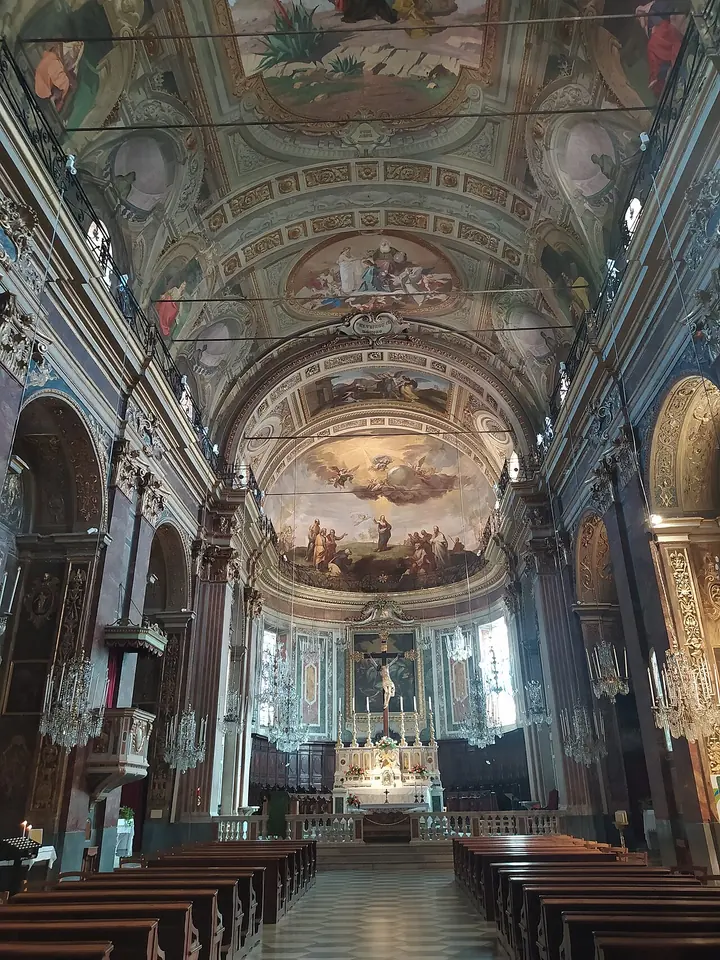
The racket falls
In the summer of 1988, Chiara was 17 and playing tennis with friends when a stabbing pain in her left shoulder made her drop her racket. The doctors first thought of a cracked rib. When the pain did not go away, a CT scan at the hospital of Santa Corona in Pietra Ligure showed an osteogenic sarcoma, one of the most aggressive bone cancers, which had already spread.
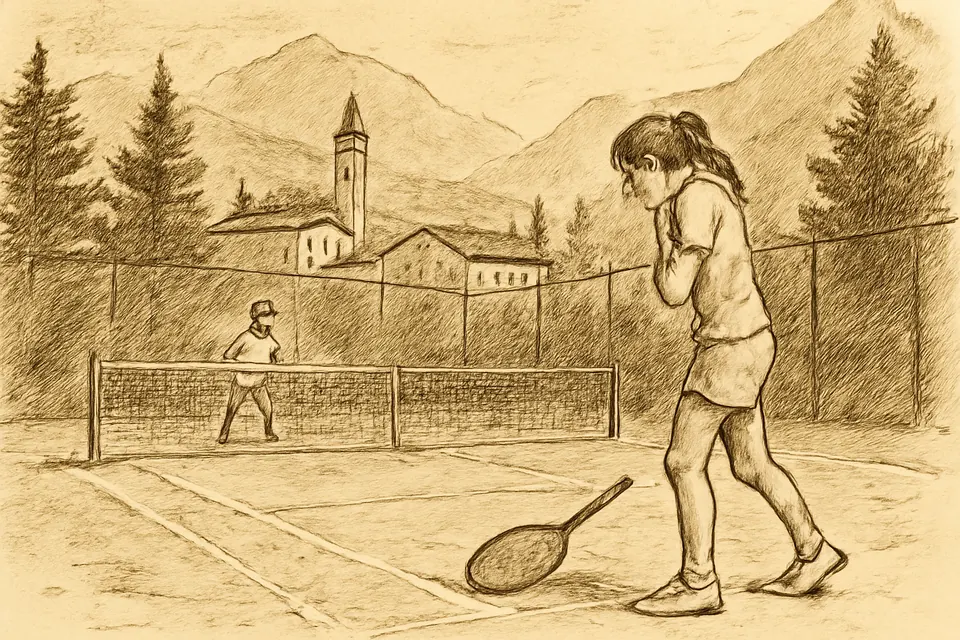
She was admitted to the Molinette hospital in Turin on February 7, 1989, and operated on there on February 28. Waking from the surgery, she said, "If you want it, Jesus, I want it too." She wrote a note to Our Lady: "Heavenly Mother... I ask you for the miracle of healing; if this is not part of His will, I ask you for the strength never to give up."
Twenty-five minutes
A few weeks later a doctor at the Regina Margherita children's hospital in Turin told Chiara plainly how serious her illness was. Her father went with her. Her mother, kept in bed by phlebitis, waited at a window and watched her come back slowly in her green coat, hands in her pockets. Chiara walked in, said, "Don't talk now," twice, and lay down on the bed with her eyes closed.
Her mother watched the clock. After twenty-five minutes Chiara turned to her with her usual smile and said, "Mom, now you can talk." Maria Teresa understood that her daughter had said her yes to God in suffering, as she had said it so often in joy. "Chiara took twenty-five minutes to say her yes," she said, "but she never looked back."
"The Lord has given me wings"
The chemotherapy soon took her hair and then the use of her legs. Archbishop Amato quoted her words: "I don't have legs anymore, and I loved riding my bike so much, but the Lord has given me wings."
As the pain grew she refused to increase the morphine. "It takes away my clarity," she said, "and I can only offer Jesus my pain." After one terrible night in the hospital her mother found her pale and exhausted. "Everything, Mom, everything," Chiara told her. "But you know, I didn't waste anything, not even this much pain," and she pinched her thumb and forefinger together. "I offered everything to Jesus."
Chiara Lubich wrote to her through her illness, and gave her a new name. "'Chiara Luce' is the name I have thought of for you; do you like it? It is the light of the Ideal that conquers the world." Luce means light.
Giving everything away
She went on loving the people around her. A nurse remembered that when visitors came during a treatment, Chiara asked them to wait and then saw them anyway, tired as she was: "It doesn't matter, Jesus is waiting outside." She gave the money she received for her eighteenth birthday, 1,300,000 lire, to a friend, Gianfranco Piccardo, who was leaving for Benin to dig wells for drinking water. "I don't need it," she said. "I have everything."
On Valentine's Day 1990, bedridden, she wanted her parents to go out to dinner alone. When her mother said it was too late to get a table, Chiara took the phone book, called until she found a restaurant in Albissola Marina, and booked it. "Look into each other's eyes," she told them, "and don't come home before midnight." She was teaching them to be a couple again without her. "Remember, Mom," she had said, "before me there was Dad."
"Now I have nothing healthy left," she said near the end, "but I still have my heart, and with that I can always love."
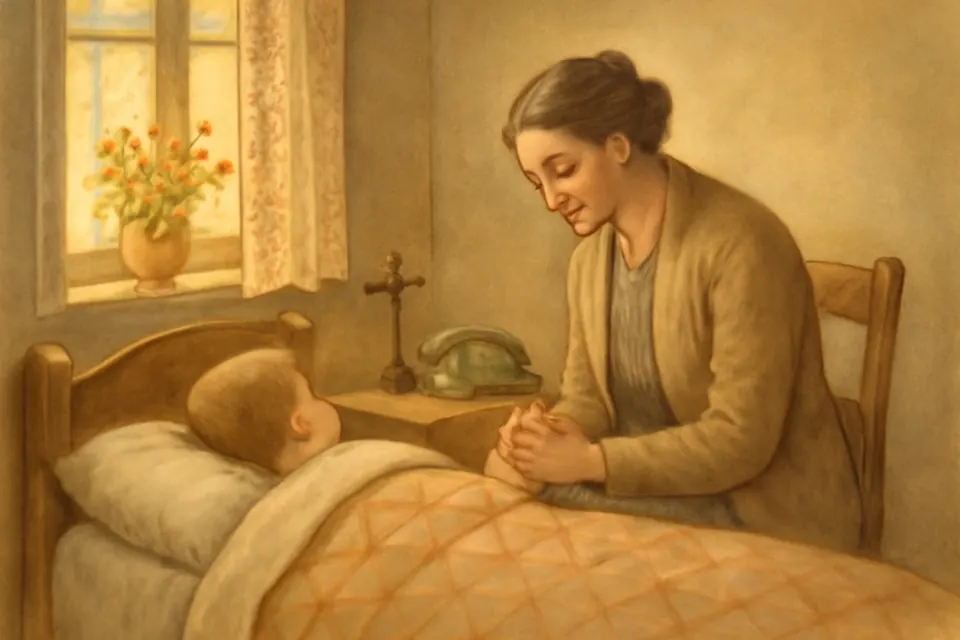
Preparing for the wedding
The assistant priest, Don Lino, brought her Communion every day; it was the moment she waited for. As she felt the end coming, Chiara planned her funeral as if it were a wedding, because she would be going to meet her Bridegroom. With her friend Chicca she chose the songs. She chose her dress too: white, like a bride's. She asked her mother to sing loudly when the coffin came into the church, "because I'll be singing with you from there," and told her: "When you dress me, you must keep saying: now Chiara sees Jesus."
On October 5 she said goodbye to the many friends who came to the house, especially the young. Cardinal Bertone later quoted what she told her mother: "Young people are the future. You see, I can't run anymore, but I would like to pass the torch to them, like at the Olympics. Young people have only one life and it's worth spending it well."
She died at dawn, at 4:10 in the morning of October 7, 1990. Her last words were to her mother: "Mamma ciao! Sii felice perché io lo sono." "Bye, Mom! Be happy, because I am." Her father, on the other side of the bed, asked whether that was for him too, and she nodded with a smile. Her corneas, the one part of her body the cancer had not touched, were donated, and two young people received the gift of sight.
Bishop Livio Maritano of Acqui celebrated her funeral in a church packed with hundreds of young people. Chiara Lubich sent a telegram: "Let us thank God for this luminous masterpiece of His."

The miracle and the beatification of Chiara Badano
Word of Chiara spread quickly after her death, and young people began coming to her tomb. Bishop Maritano, who had known her, decided in September 1998 to open her cause. "It seemed to me that her witness was significant especially for young people," he said. The diocesan inquiry began in Acqui in 1999 and went to Rome the next year. Pope Benedict XVI declared her Venerable on July 3, 2008, recognizing that she had lived the Christian virtues to a heroic degree.
The approved miracle was the healing of a boy from Trieste struck by an extremely severe, fulminant meningitis. His doctors had given him 48 hours to live. After prayer for Chiara's intercession, he recovered suddenly. After examination in Rome, on December 19, 2009, Pope Benedict XVI authorized the decree recognizing the miracle "attributed to the intercession of the Venerable Servant of God Chiara Badano, Laywoman."
Chiara was beatified on September 25, 2010, at the Sanctuary of Our Lady of Divine Love in Rome, in a Mass celebrated by Archbishop Angelo Amato, prefect of the Congregation for the Causes of Saints, with her parents present. The foundation counted more than twenty thousand people from more than seventy countries. The next day Cardinal Tarcisio Bertone, the Secretary of State, celebrated the Mass of thanksgiving at the Basilica of St. Paul Outside the Walls.

Speaking to young people and families in Palermo on October 3, 2010, Pope Benedict XVI asked: "How could a 17 or 18-year-old girl live her suffering in this way, humanly without hope, spreading love, serenity, peace and faith? This was obviously a grace of God, but this grace was prepared and accompanied by human collaboration as well: the collaboration of Chiara herself, of course, but also of her parents and friends." He had met her parents in Rome, and he said they were witnesses that "their daughter was overflowing with God's light."
Chiara's cause for canonization is open. In 2020 the bishop of Acqui named a new postulator, Fr. Giovangiuseppe Califano, OFM, who is studying graces reported since 2010. A further miracle obtained through her intercession after her beatification must be approved before she can be declared a saint.
Why young people and the sick pray to Blessed Chiara
The Church has not formally named Chiara the patron of anything, and her feast is a local one. But the faithful have adopted her, as they do with every blessed whose story touches them.
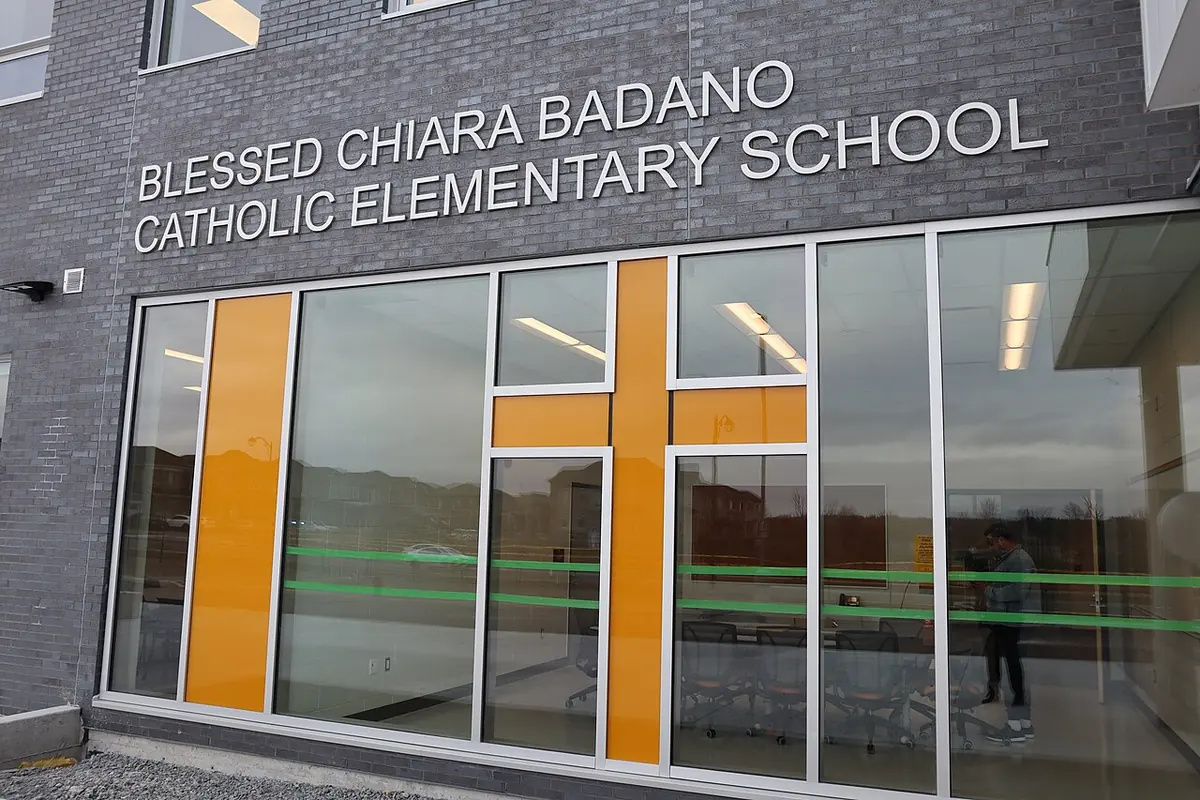
- Young people and teenagers. She was a teenager when she died, and she wanted, in her own words, to pass the torch to the young. Pope Benedict held her up to young people as a model, and she is one of the young saints and blesseds most often named at youth gatherings. Schools, youth centers and parishes around the world now bear her name.
- The sick, and especially people with cancer. She lived with osteosarcoma for two years and offered her suffering with love. People facing cancer, and the parents of sick children, ask her to pray for them. See also our pages on the patron saints of cancer patients and a prayer for someone with cancer.
Symbols of Blessed Chiara Badano in art
Chiara died in 1990, so she has no traditional symbols the way older saints do, and her image has not been settled by centuries of painters. Most pictures of her are based on photographs taken in her teens, and at her beatification a large image of her was unveiled before the crowd. Her family and the Chiara Badano Foundation guard the use of her photographs and her name closely and do not allow them to be sold, which is why this page does not reproduce her portrait photographs. When artists paint her, a few elements return again and again:
- Light. The name Chiara Lubich gave her, Luce, is the key to almost every image of her. Pictures surround her with sunlight or give her bright eyes; the foundation's own motto is "Life, Love, Light."
- The smile. Looking at a photograph of her, Chiara Lubich wrote that her eyes held not just simple joy but "the light of the Spirit." The doctors who treated her used words like "unnatural" and "incredible" for her serenity.
- The Gospel book. Her First Communion gift, the "magnificent book" she wanted to live.
- Jesus Forsaken. The crucified Christ in the moment of his cry to the Father, whom she chose, in the language of the Focolare, as her spouse.
- The torch. For her wish to pass the torch to young people "like at the Olympics."
- The bridal white dress. For the way she prepared for death as for her wedding day.
If you see a modern image of a young woman with long hair and a radiant smile, sometimes with a racket, a guitar or a book of the Gospels, it may well be Chiara Luce.
Feast day, tomb and places of Blessed Chiara Badano
October 29
The Church keeps her memorial on October 29, her birthday. In Sassello the day is the main celebration of the year, organized with the parish and the foundation, and it is the only day her family home and her small bedroom are opened to visitors. The foundation explains that the room is not a museum but part of her mother's home.
Sassello and her tomb
Chiara loved her village; when it snowed she called it "my little Switzerland." She rests in the Badano family's small chapel in the village cemetery. Before she died, she said she wished that anyone who came to the cemetery and wanted to bring her a little flower, "even a wildflower," could do so.

Her family asks visitors to keep the tomb simple: no objects left behind, only a note in the box on the door, and a gift to good works in place of anything else. The foundation states plainly that there are no relics of Blessed Chiara and there will be none. Groups can ask the foundation to arrange a talk from someone who knew her, and Mass can be arranged at her parish church, the Santissima Trinità.
Around the world
In 2011 her parents set up the Chiara Badano Foundation to care for her memory. Ruggero Badano has since died; Maria Teresa still follows the letters and prayer intentions that come in. The first small church dedicated to Blessed Chiara was opened at Bohicon in Benin on December 27, 2010, and the first parish in her name was opened in rural India in 2015.
Prayer to Blessed Chiara Badano
The Chiara Badano Foundation distributes a prayer card asking her intercession. This is its text in Italian, word for word:
O Padre, sorgente di ogni bene, ti rendiamo grazie per l'ammirevole testimonianza della Beata Chiara Badano. Animata dalla grazia dello Spirito Santo e guidata dall'esempio luminoso di Gesù, ha creduto fermamente nel tuo immenso amore, decisa a ricambiarlo con tutte le forze, abbandonandosi con piena fiducia alla tua paterna volontà. Ti preghiamo umilmente: concedi anche a noi il dono di vivere con te e per te, mentre osiamo chiederti, se rientra nel tuo volere, la grazia... per i meriti di Cristo, nostro Signore. Amen
In our own plain English translation: O Father, source of every good, we thank you for the wonderful witness of Blessed Chiara Badano. Moved by the grace of the Holy Spirit and guided by the shining example of Jesus, she believed firmly in your immense love and resolved to return it with all her strength, abandoning herself with complete trust to your fatherly will. We humbly pray: grant us too the gift of living with you and for you, as we dare to ask you, if it is your will, for the grace of... (name your request) through the merits of Christ, our Lord. Amen.
You can also pray simply in her own words. "If you want it, Jesus, I want it too." Or in the words she used to comfort her mother near the end: "Mom, trust in God; then you have done everything." Let us ask Blessed Chiara Luce to pray for the young people we love, for the sick, and for the grace to say our own yes.
Frequently asked questions
Who was Blessed Chiara Badano?
An ordinary Italian teenager from the mountain village of Sassello who loved tennis, swimming, music and her friends, joined the Focolare Movement at nine, and lived her last two years with osteogenic sarcoma, a bone cancer, in such peace and love that visitors left her room comforted. She died at 18 in 1990 and was beatified in 2010.
Why is she called Chiara Luce?
Chiara Lubich, the founder of the Focolare Movement, gave her the name "Luce," Italian for light, in a letter during her illness, calling it "the light of the Ideal that conquers the world." People who visited her spoke of the light in her eyes.
When is Blessed Chiara Badano's feast day?
October 29, her birthday. She died on October 7, 1990, the memorial of Our Lady of the Rosary. On October 29 the foundation that keeps her memory holds the main celebration in Sassello, and her family home is opened to visitors that day only.
What miracle led to Chiara Badano's beatification?
The sudden healing of a boy from Trieste with fulminant meningitis, who had been given 48 hours to live. After the Church's medical and theological examination, Pope Benedict XVI authorized the decree recognizing the miracle on December 19, 2009.
Is Chiara Badano a saint?
Not yet. She is a blessed. Her cause for canonization is open, under the postulator Fr. Giovangiuseppe Califano, OFM, and a second miracle obtained through her intercession after her beatification must be approved before she can be canonized.
What is Blessed Chiara Badano the patron saint of?
The Church has not named her patron of anything. Young people, teenagers and people living with cancer pray to her because she was young, sick and full of faith, and because before she died she said she wanted to pass the torch to the young.
Where is Chiara Badano buried?
In her family's small chapel in the cemetery of Sassello, in the hills of Liguria above Savona. Her family asks pilgrims not to leave objects there but to write a note for the box on the door, and to give to good works instead.
What were Chiara Badano's last words?
"Mamma ciao! Sii felice perché io lo sono": "Bye, Mom! Be happy, because I am." Her father asked if that went for him too, and she nodded with a smile.
Keep exploring
- Patron saint pages
- Cancer
- Feast-day calendar
- Saints remembered in OctoberSaint of the day
- More
- Saints A to ZPatron saints A to ZExplore every section
Sources
- Dicastery for the Causes of Saints: Chiara Badano (biography, beatification homily of Card. Angelo Amato, and Card. Tarcisio Bertone's thanksgiving homily). Her note to Our Lady, the morphine, the stories of Cesare, Signora Maria and the Benin wells, the corneas, the torch, quoted
- Holy See Press Office: Promulgation of decrees of the Congregation for the Causes of Saints, December 19, 2009. The miracle decree
- Benedict XVI, Address to young people and families, Palermo, October 3, 2010. Quoted
- Fondazione Chiara Badano: Life. Her parents' eleven years of waiting, the toys, the watch, Nonna Speranza, the diagnosis, the twenty-five minutes, Valentine's Day, her death and funeral
- Fondazione Chiara Badano: Light. The cause, the Venerable decree, the healing in Trieste, the beatification, the first church in Benin and the parish in India
- Fondazione Chiara Badano: FAQ. No relics, the tomb, her room, the postulator and the official biography
- Fondazione Chiara Badano: prayer card (Preghiera). The prayer for her intercession, quoted
