St. Asterius of Amasea
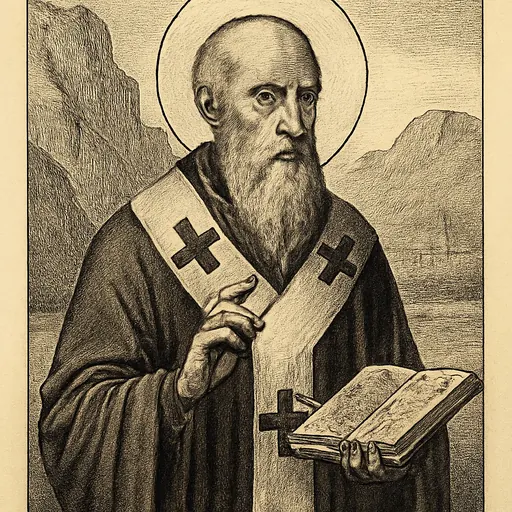
St. Asterius of Amasea (about 350–410) was a lawyer who became bishop of Amasea in Pontus, in what is now northern Turkey. About sixteen of his sermons survive, vivid and practical, and his description of a painting of St. Euphemia's martyrdom was read twice at the Second Council of Nicaea in 787 in defense of holy images. We keep his memory on October 30.
Who was St. Asterius of Amasea?
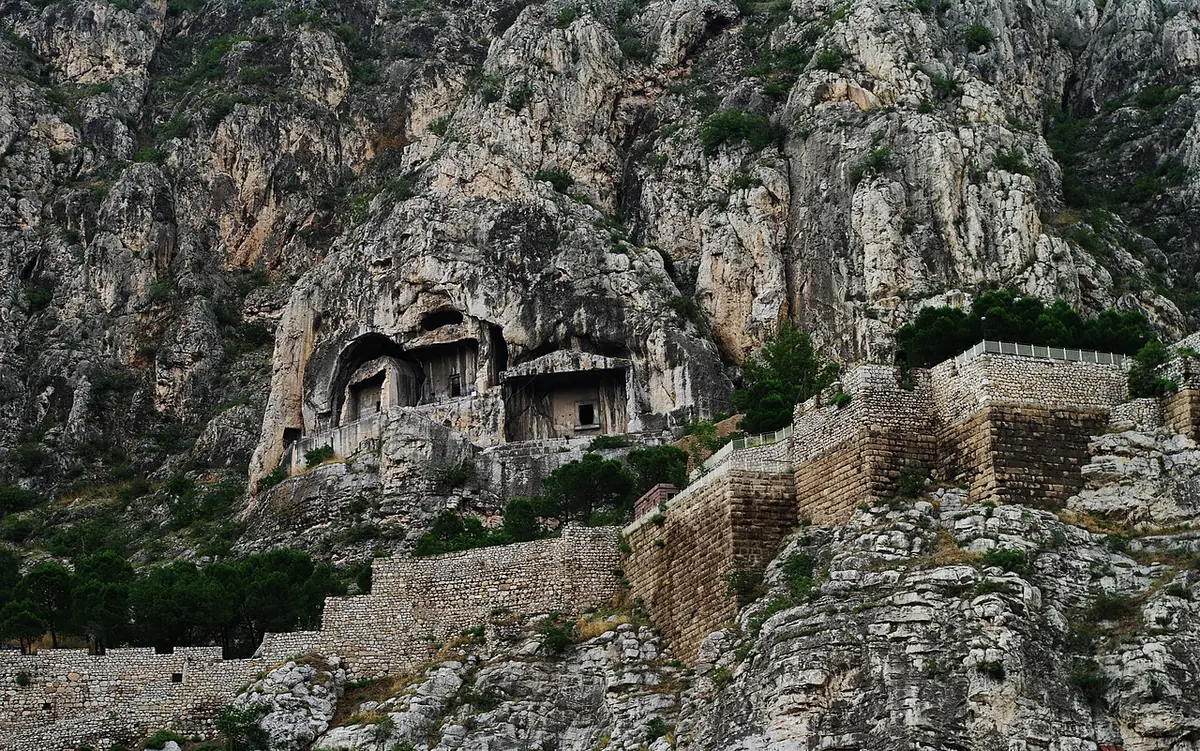
St. Asterius of Amasea was a bishop and preacher of the generation after the great Cappadocian Fathers, St. Basil, St. Gregory of Nyssa and St. Gregory of Nazianzus. He had been a lawyer before he became bishop of Amasea, the chief city of the province of Pontus, sometime between 380 and 390. Amasea is today's Amasya, in northern Turkey, a river town under steep cliffs.
He is remembered for two things. His sermons, about sixteen of which survive, are some of the liveliest preaching of the early Church. And one of them, a description of a painting of St. Euphemia, was read aloud at the Second Council of Nicaea in 787 as a witness that Christians had honored holy images from the beginning.
He should not be confused with Asterius the Sophist, an Arian writer of the same century.
The life of St. Asterius
Very little is known of his life beyond what his own sermons reveal. The 1904 translators of his sermons, Galusha Anderson and Edgar Goodspeed, gathered the few facts. His chief teacher was a Scythian who had been sold as a slave to a schoolmaster of Antioch and had become a famous scholar in his own right. Asterius studied Demosthenes and became a skilled orator, and he practiced law before he was made bishop.
He held to the orthodox faith of Nicaea in the Arian controversies of his time, and his people remembered him as a faithful pastor whose life matched his preaching.
One sermon can be dated exactly. Preaching on New Year's Day, he mentions the fall of the consul Eutropius as an event of the previous year. Eutropius fell in 399, so the sermon was preached on January 1, 400. In another sermon, now lost but summarized by the Byzantine scholar Photius, he spoke of himself as a man of great age. After that he passes from view. We do not know when or how he died.
His preaching
Asterius preached on ethics: how Christians should live with money, marriage and power. He preached with images his hearers could see.
Against the luxury of the rich
In his sermon on the rich man and Lazarus, he mocks wealthy Christians who wore robes woven with pictures, "lions and leopards; bears and bulls and dogs." The more pious, he says, had the Gospel stories woven into their clothes. His answer is one of the most quoted passages of the early Fathers:
Do not picture Christ on your garments. It is enough that he once suffered the humiliation of dwelling in a human body which of his own accord he assumed for our sakes. So, not upon your robes but upon your soul carry about his image.
He goes on: "Do not portray the paralytic on your garments, but seek out him that lies sick." His objection was to vanity and waste, not to sacred images, as his sermon on St. Euphemia shows.
The New Year's sermon
His sermon On the Festival of the Calends attacks the pagan customs and excesses of the Roman New Year. His translators called it "the earliest extant New Year's sermon." It begins with a contrast that still speaks to us: two feasts kept on the same days, one of "the rabble without," and the other "of holy and true religion."
The painting of St. Euphemia
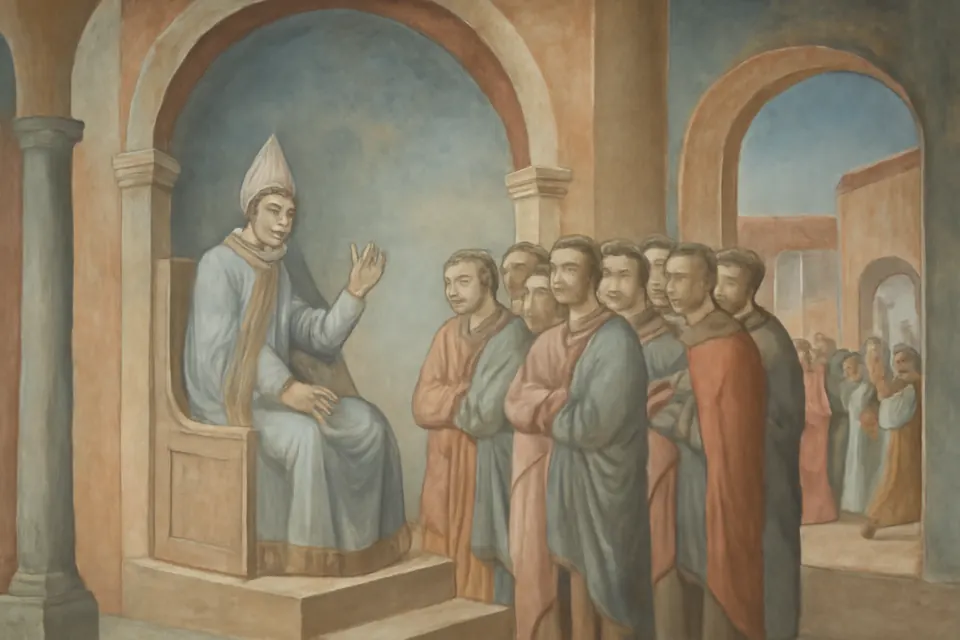
In his eleventh oration, Asterius tells his hearers how he went to the shrine of St. Euphemia at Chalcedon and found, in a portico near her tomb, a painting on linen of her martyrdom. He describes it scene by scene: the judge on his high seat, the soldiers dragging the young woman forward, the torturers, the prison where she prays, and finally Euphemia standing unafraid in the midst of the fire. The painting moved him deeply, and his description is the earliest account of her martyrdom we have.
Four centuries later, when the Second Council of Nicaea met in 787 to restore the veneration of icons, the bishops had his description read twice as evidence that the early Church honored images. The council called him, with a play on his name (aster means "star" in Greek), "a bright star illumining the minds of all."

Miracles
No miracles are recorded for St. Asterius. The Church honors him for his teaching and his pastoral life.
Symbols of St. Asterius of Amasea in art
He is rarely shown. In Eastern icons he would appear as an elderly bishop in the omophorion, the broad stole with crosses, holding a book for his sermons.

His writings
Fourteen genuine sermons were printed in Migne's Patrologia Graeca, volume 40, and two more were later found in manuscripts on Mount Athos. Five were translated into English in 1904 as Ancient Sermons for Modern Times. Photius, in the 9th century, read ten more that are now lost.
Feast day
We keep his memory on October 30, the date popular Catholic calendars give him. See our feast days page for other saints of October.
Prayer to St. Asterius
No traditional prayer to St. Asterius has come down to us. Let us take his own counsel as our prayer, to carry Christ's image "not upon your robes but upon your soul," and ask him to intercede for preachers, for lawyers, and for all Christians tempted to let their wealth speak louder than their charity.
Frequently asked questions
Who was St. Asterius of Amasea?
A bishop of Amasea in Pontus in the late 4th and early 5th centuries, trained in rhetoric and law, famous as a preacher. He is a different person from Asterius the Sophist, an Arian writer of the same period.
When is the feast day of St. Asterius of Amasea?
October 30 in popular Catholic saint calendars. He has no feast in the General Roman Calendar.
Why is St. Asterius of Amasea important?
His sermons give a rare picture of daily life in his time, and his sermon on the painting of St. Euphemia's martyrdom was read at the Second Council of Nicaea (787) as evidence that Christians had honored holy images from early times.
Did St. Asterius oppose religious images?
No. He criticized wealthy Christians who wore costly robes woven with Gospel scenes, because of their vanity and expense, while he described a painting of a martyr with loving admiration. The council of 787 quoted him in favor of images.
Keep exploring
Sources
- Asterius of Amasea, Ancient Sermons for Modern Times, trans. Galusha Anderson and Edgar J. Goodspeed (1904), introduction, at Early Christian Writings. His Scythian teacher, his study of Demosthenes, the New Year's sermon of 400, his old age, and the praise at Nicaea II
- Asterius of Amasea, Sermons (1904): preface to the online edition by Roger Pearse. Former lawyer, bishop between 380 and 390; the sixteen homilies; Oration 11 on St. Euphemia quoted twice at Nicaea II; Photius's ten lost sermons
- Asterius of Amasea, Sermon 1: The Rich Man and Lazarus (1904 translation). The passage on garments woven with Gospel scenes
- Asterius of Amasea, Sermon 4: On the Festival of the Calends (1904 translation)
- Christian Iconography: St. Euphemia in Art, Iconography, Legend. Asterius's description of the painting at her tomb