Blessed Irene Stefani, "Nyaatha," Mother of Mercy
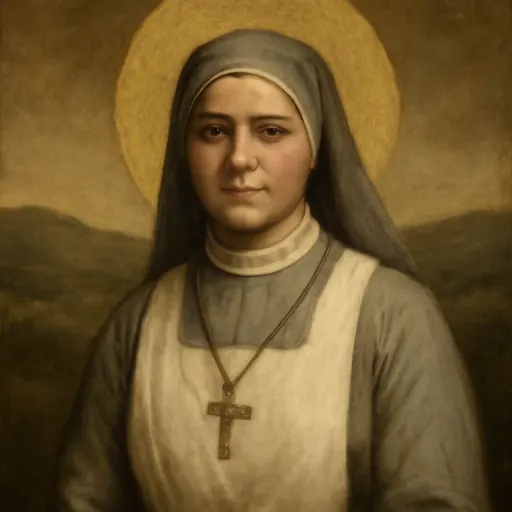
Blessed Irene Stefani (1891–1930) was an Italian Consolata Missionary Sister who nursed the sick and wounded in Kenya and Tanzania for fifteen years. The Kikuyu of Nyeri called her Nyaatha, "mother of mercy." She died of plague, caught while caring for a dying man. She was beatified in Nyeri on May 23, 2015. Her feast is October 31.
Who was Blessed Irene Stefani?
Blessed Irene Stefani was an Italian missionary sister and nurse who gave fifteen years to the people of Kenya and died of plague she caught at a sick man's bedside. The Kikuyu people around Nyeri called her Nyaatha, "mother of mercy," and that is still the name she is known by there. She was born Aurelia Mercede Stefani on August 22, 1891, in Anfo, a village on Lake Idro in the province of Brescia, one of twelve children. She died at Gikondi, near Nyeri, on October 31, 1930. We keep her feast on October 31.
When she was beatified in 2015, Pope Francis described her the next day in a few words: she "served the peoples of Kenya with joy, mercy and tender compassion."

From Anfo to Kenya
Her mother died in 1907, when Aurelia was fifteen, and she took over much of the care of her younger brothers and sisters. In 1911 she entered the Consolata Missionary Sisters in Turin, the congregation founded by St. Joseph Allamano for the missions in Africa, and took the name Irene. She made her first vows in January 1914, and at the end of that year she sailed for Kenya, landing at Mombasa in January 1915.
Nurse in wartime
The First World War had reached East Africa. Sister Irene was sent to nurse in military hospitals in Kenya and Tanganyika, caring for soldiers and above all for the African carriers who were marched with the armies and died in great numbers from wounds, exhaustion and disease. Tradition among her sisters holds that she baptized many dying men at their own request.

Mother of mercy at Gikondi
After the war she returned to Nyeri and helped form the first young women of a new local congregation, the Mary Immaculate Sisters. About 1920 she was sent to the mission of Gikondi, and she stayed there for the rest of her life. She ran the dispensary, taught in the schools, and walked from homestead to homestead visiting the sick, teaching the catechism and bringing whatever she had.
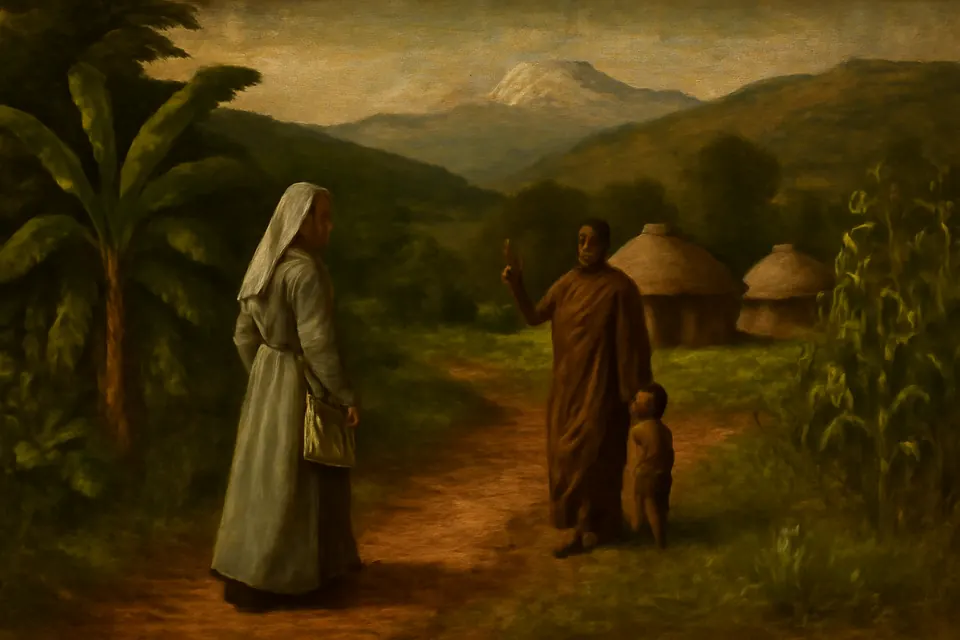
She was superior of the small community of Consolata sisters at Gikondi for some years, but the people remembered her less as a superior than as the sister who came when someone was sick. Her name, Nyaatha, was given to her by the families she served, and they kept using it long after her death.
In October 1930, already weak and worn down, she went to the bedside of a man dying of plague and stayed with him for hours. She caught the disease and died eleven days later, on October 31, 1930. She was thirty-nine.
The miracle of Nipepe
Her cause was opened in 1985. Pope Benedict XVI declared her Venerable in 2011, and in 2014 Pope Francis approved a miracle through her intercession (approved).
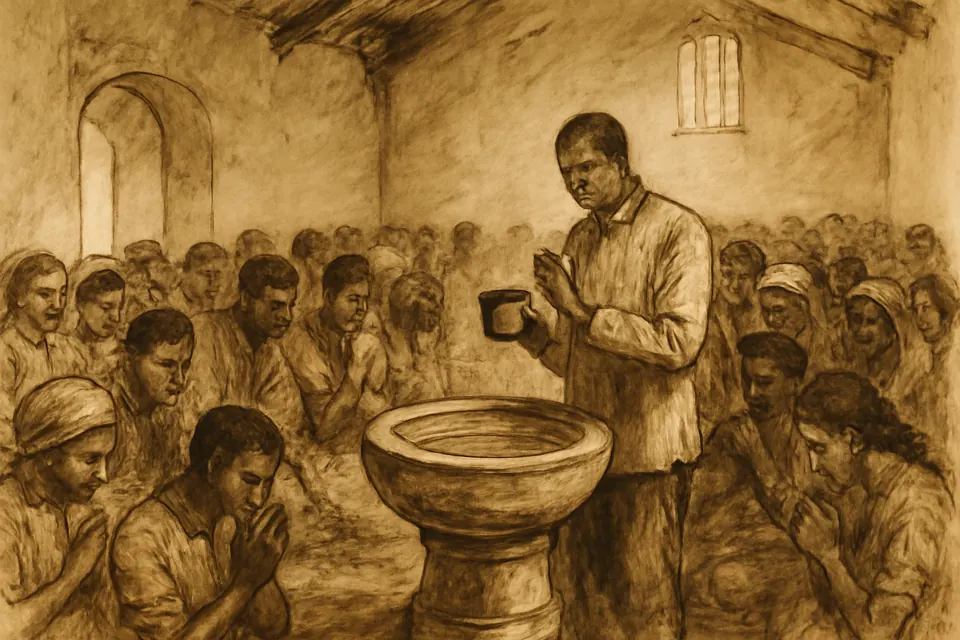
It happened in 1989 at Nipepe, in northern Mozambique, during the civil war. About 270 people had taken refuge in the parish church and were trapped there, in danger of death, with almost nothing to drink. They prayed to Sister Irene. The little water in the baptismal font, four to six liters, was enough for all of them to drink and wash for four days, until help arrived from outside. The church at Nipepe is now a shrine in her honor.
Beatification in Nyeri
Sister Irene was beatified on May 23, 2015, at Dedan Kimathi University in Nyeri. Cardinal Polycarp Pengo of Dar es Salaam presided for Pope Francis, and Independent Catholic News reported a crowd of up to 100,000 people, with members of her family from Italy among them. In 2017 a shrine, the Irene Stefani Nyaatha Shrine, was opened at Gikondi on the foundations of the house where she lived.
Symbols of Blessed Irene Stefani in art
Her images are modern and simple. Look for:
- The gray habit and veil of the Consolata Missionary Sisters.
- A nurse's apron or a basin: for her work in the hospitals and dispensaries.
- Water: for the miracle of the baptismal font at Nipepe.
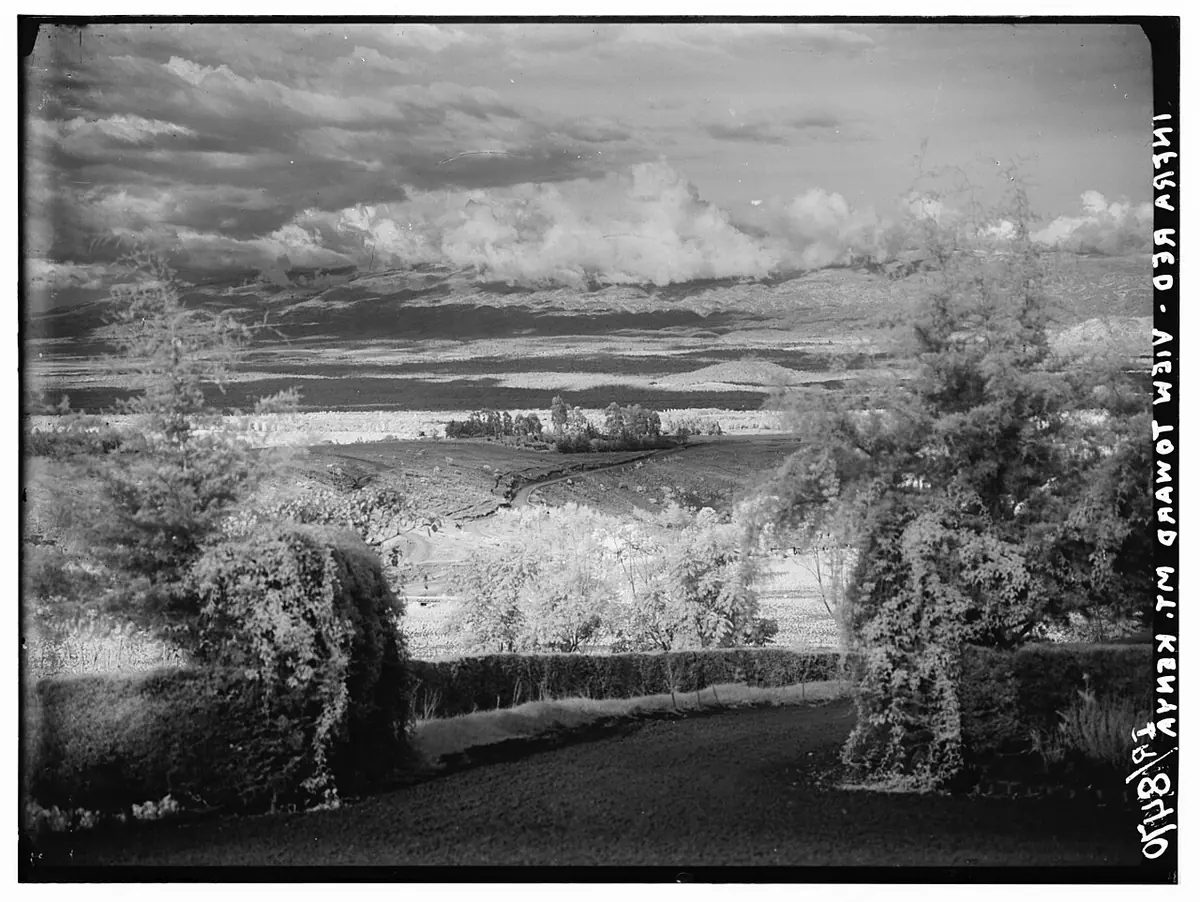
- Mount Kenya and the green hills of Nyeri in the background.
Feast day and prayer
Her feast is October 31, the day she died. She is honored above all in the Archdiocese of Nyeri, at Gikondi and at Nipepe, and by the Consolata Missionaries around the world. See also the feast day calendar and Blessed Leonella Sgorbati, another Consolata sister and nurse who gave her life in East Africa.
We know of no traditional prayer to Blessed Irene Stefani to reprint here. Let us ask her to pray for nurses and all who care for the sick, for the people of Kenya and Mozambique, and for those trapped by war. Blessed Irene Stefani, Nyaatha, pray for us.
Frequently asked questions
Who was Blessed Irene Stefani?
An Italian religious sister, born Aurelia Mercede Stefani in Anfo near Brescia in 1891, who joined the Consolata Missionary Sisters and worked as a nurse and catechist in Kenya from 1915 until her death in 1930.
What does Nyaatha mean?
It is the name the Kikuyu people gave her. It is usually translated "mother of mercy" or "mother of all mercy."
What miracle led to Irene Stefani's beatification?
In 1989, during Mozambique's civil war, about 270 people trapped in the parish church of Nipepe prayed to Sister Irene, and the few liters of water in the baptismal font lasted them for four days until help came. Pope Francis approved it as a miracle in 2014.
When is the feast of Blessed Irene Stefani?
October 31, the day she died in 1930.
Keep exploring
Sources
- Pope Francis, Regina Caeli, Pentecost, May 24, 2015. The Pope's words on her beatification the day before
- Independent Catholic News: Kenya celebrates beatification of Sr Irene 'Nyaatha' Stefani (2015). The ceremony at Dedan Kimathi University in Nyeri, the celebrants, the crowd, and the account of the miracle in the baptismal font
- Wikipedia: Irene Stefani. Her vows in 1914, wartime nursing, the Gikondi mission, the decrees of 2011 and 2014, and the Nyaatha shrine at Gikondi; only source found