St. Basil the Elder
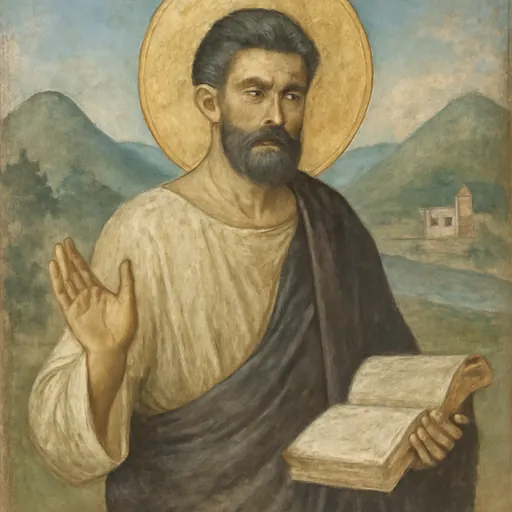
St. Basil the Elder was a Christian teacher of rhetoric in Pontus, in the early fourth century, the son of St. Macrina the Elder and the husband of St. Emmelia. Their children included St. Basil the Great, St. Gregory of Nyssa, St. Macrina the Younger and St. Peter of Sebaste. The Roman Martyrology remembers him with Emmelia on May 30.
Who was St. Basil the Elder?
St. Basil the Elder was a Christian layman of Pontus, in northern Asia Minor, in the early fourth century, and the father of one of the holiest families the Church has ever known. He was a teacher of rhetoric, a married man and never a priest. With his wife, St. Emmelia, he raised ten children, among them St. Macrina the Younger, St. Basil the Great, St. Gregory of Nyssa and St. Peter of Sebaste.
We know him almost entirely through his sons and their friend. What they tell us is brief and full of love. The Roman Martyrology honors him and Emmelia together on May 30.
A family that kept the faith through persecution
Basil came from a Christian family of Pontus that had suffered for Christ. His mother was St. Macrina the Elder, who had learned the faith from the disciples of St. Gregory the Wonderworker, the apostle of the region.
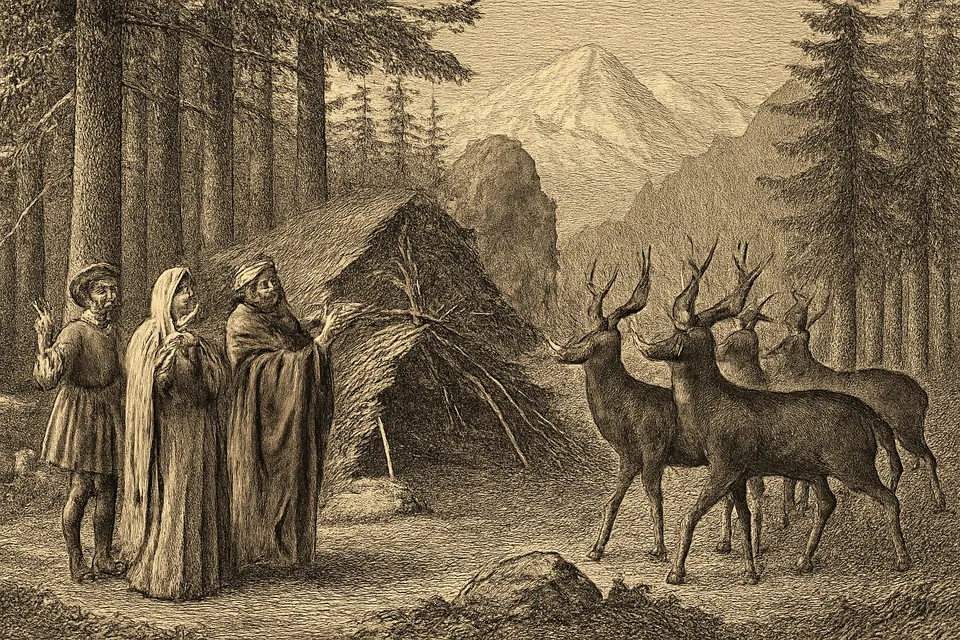
St. Gregory of Nazianzus, in his funeral oration for Basil the Great, tells how "Basil's paternal ancestors" fled the persecution of Maximinus in the early 300s. They hid in a thicket on the mountains of Pontus "to about seven years, or a little more," exposed to frost, heat and rain. Gregory adds a story the family loved to tell: when they longed for better food, they prayed, and a herd of stags came out of the woods and offered themselves, "the prisoners of prayer and righteous petition."
The Roman Martyrology places this exile on Basil and Emmelia themselves. Gregory's oration, given a few years after Basil the Great's death in 379, is the older source; it speaks of Basil's ancestors, so the fugitives were most likely Basil the Elder's parents, perhaps with Basil himself as a child.
Teacher of virtue
After the persecution ended, the family recovered its standing. Basil became a teacher of rhetoric, the art of public speaking that every educated man of his time studied. Gregory of Nazianzus says that Pontus knew him "as its common teacher of virtue," and the Catholic Encyclopedia adds that he won a considerable name as a teacher.
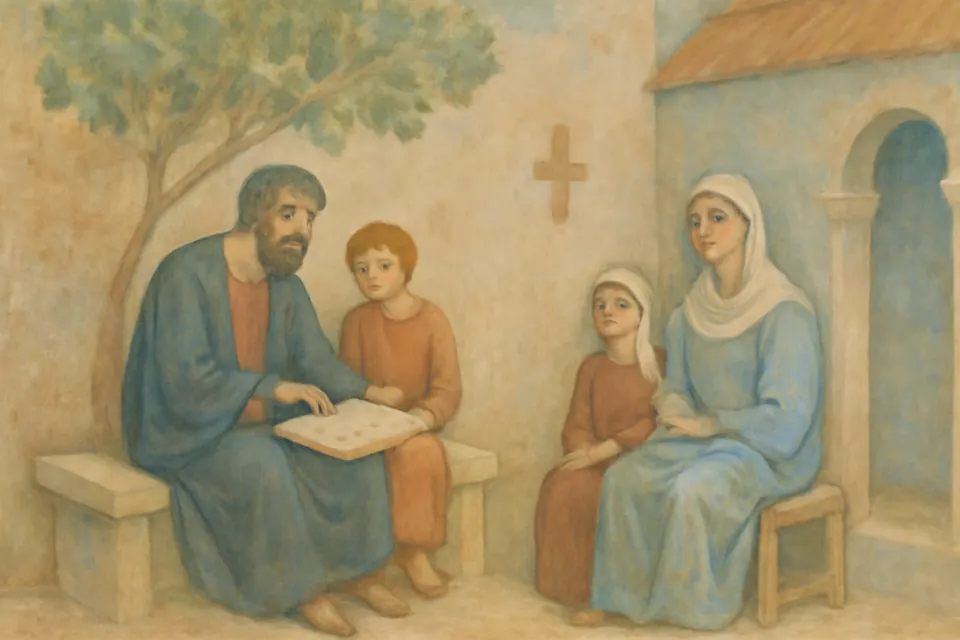
His first pupil was his own son. Gregory writes that young Basil was formed "under his great father," trained "in general education, and practised in the worship of God." The boy who would become one of the great Fathers of the Church learned his letters at his father's side.
Gregory of Nazianzus gives the father one of the warmest lines in his whole oration:
Who has not known Basil, our archbishop's father, a great name to everyone, who attained a father's prayer, if anyone, I will not say as no one, ever did? For he surpassed all in virtue, and was only prevented by his son from gaining the first prize.
Husband and father
Basil married Emmelia, the daughter of a martyr. Gregory of Nazianzus praises their marriage for "generosity to the poor, for hospitality, for purity of soul," and for giving a portion of their property to God, something, he notes, not yet common. Their greatest distinction, he says, was their children.
Gregory of Nyssa, in his Life of St. Macrina, gives us a glimpse of Basil as a father. He calls him "a shrewd man with a reputation for forming right decisions." When suitors crowded around his beautiful eldest daughter, he chose for her a young relative, a promising lawyer. The young man died before the wedding, and Macrina resolved never to marry, holding her father's choice as binding as a marriage.
His death
Basil died while his children were still young. Gregory of Nyssa writes that the youngest, Peter, "received the names of son and orphan" at the same moment: "as he entered this life his father passed away from it." Emmelia was left with nine children, estates in three provinces and three governors to pay taxes to. When she died years later, she asked to be laid in her husband's grave, in the church of the Holy Martyrs near the family estate at Annesi.

A family of saints
The Catholic Encyclopedia counts ten children, three of them honored as saints in the West; Eastern tradition and the Roman Martyrology honor more. Three of the sons, Basil, Gregory and Peter, became bishops. Basil and Gregory are Doctors and Fathers of the Church. Macrina founded a community of consecrated women on the family estate. Gregory of Nazianzus saw the hand of the parents in all of it: when one child is great, he wrote, it may be nature, but "when all are eminent, the honour is clearly due to those who brought them up."

Miracles and legends
- Traditional: the stags that came to the family's elders in the forests of Pontus in answer to prayer, told by Gregory of Nazianzus as a family story.
No miracles are recorded of Basil the Elder himself. His holiness was the ordinary holiness of a good teacher, husband and father.
Symbols of St. Basil the Elder in art
He is rarely painted on his own. When he appears, it is as:
- A teacher with a scroll, in the cloak of a philosopher or rhetorician;
- A father among his children, in images of the holy family of Cappadocia;
- Beside Emmelia, with whom the Roman Martyrology joins him.
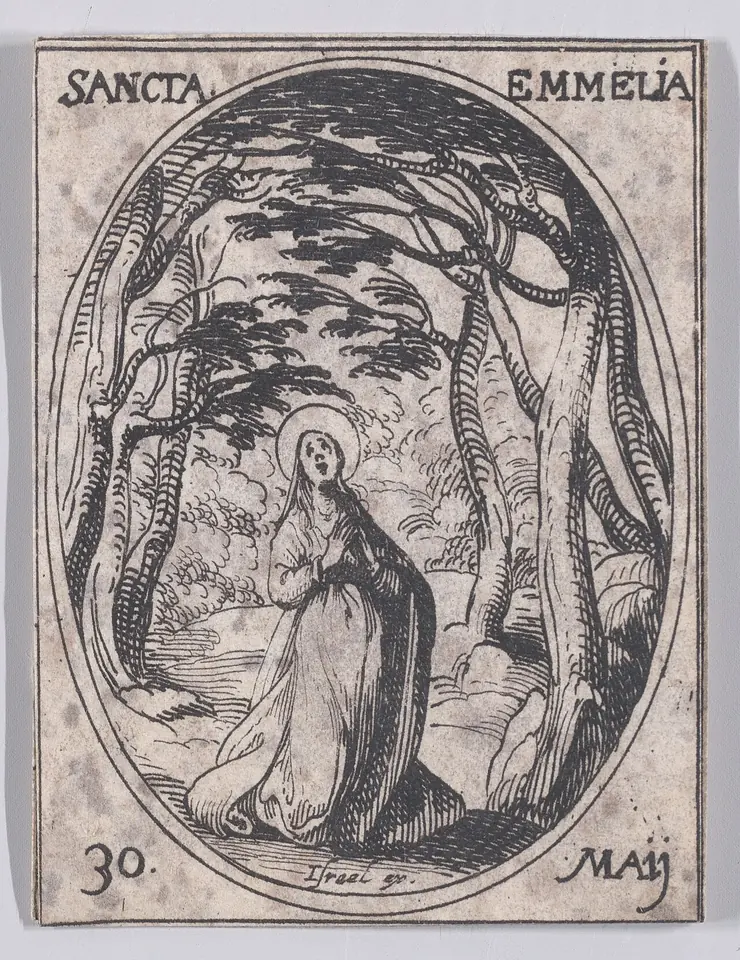
Jacques Callot's book of the saints of the year, published in 1636, gives May 30 to Emmelia, and June 14, then the feast of their son, to Basil the Great.

Feast day and prayer
We remember St. Basil the Elder with St. Emmelia on May 30. See the feast day calendar.
There is no traditional prayer to him alone. Let us ask St. Basil and St. Emmelia to pray for Christian parents and teachers, for families that suffer for the faith, and for fathers who want to hand on to their children what they have received.
Frequently asked questions
Who was St. Basil the Elder?
A Christian layman of Pontus in Asia Minor in the early 300s, a respected teacher of rhetoric who was never a priest. He married Emmelia, the daughter of a martyr, and they had ten children, of whom several are honored as saints. He was the father and first teacher of St. Basil the Great.
When is the feast of St. Basil the Elder?
May 30, which the Roman Martyrology keeps for him and his wife St. Emmelia together.
Who were the children of St. Basil the Elder?
Gregory of Nyssa counts four sons and five daughters who grew up; the Catholic Encyclopedia counts ten children. Among them were St. Macrina the Younger, St. Basil the Great, St. Gregory of Nyssa, St. Peter of Sebaste and Naucratius. Basil, Gregory and Peter all became bishops.
Is St. Basil the Elder the same as St. Basil the Great?
No. Basil the Elder was the father; Basil the Great, Bishop of Caesarea and Doctor of the Church, was his eldest son. The father is remembered on May 30, the son on January 2 in the Roman calendar.
Keep exploring
Sources
- Roman Martyrology, May 30 (1916 English edition). The entry for Basil and Emmelia
- St. Gregory of Nazianzus, Oration 43: Funeral Oration on the Great St. Basil. The flight of Basil's paternal ancestors into the forests of Pontus, the deer, the praise of Basil the Elder and Emmelia, quoted
- St. Gregory of Nyssa, Life of St. Macrina (W. K. Lowther Clarke translation, 1916). Macrina's betrothal, his death at Peter's birth, the four sons and five daughters, the family tomb at the church of the Holy Martyrs
- Catholic Encyclopedia (1907): St. Basil the Great. His parents, his reputation as a teacher, that he was not a priest, his ten children