St. Germain of Paris, Bishop and Father of the Poor
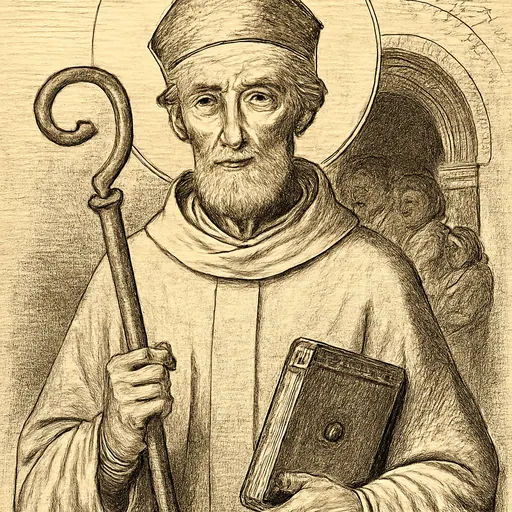
St. Germain of Paris (about 496 to 576), also called Germanus, was abbot of St. Symphorian at Autun and then bishop of Paris for some twenty years. He turned King Childebert I to a Christian life, dedicated the church that became Saint-Germain-des-Prés, excommunicated a wicked king and tried to stop a civil war. Famous for his love of the poor, he is honored on May 28.
Who was St. Germain of Paris?
St. Germain of Paris, called Germanus in Latin, was bishop of Paris from 555 until his death in 576, in the first century of the Frankish kingdom. He is the Germain of Saint-Germain-des-Prés, the great abbey church on the Left Bank, which holds his tomb. He was born near Autun in Burgundy about 496. Butler, writing in the 1700s, gives a much earlier date of about 469.
He was a monk at heart and stayed one as a bishop. The Catholic Encyclopedia calls his "characteristic virtue" his love for the poor, and Butler says his house "was perpetually crowded with the poor and the afflicted." In a city ruled by violent and quarrelsome kings, he was the man who told them the truth.
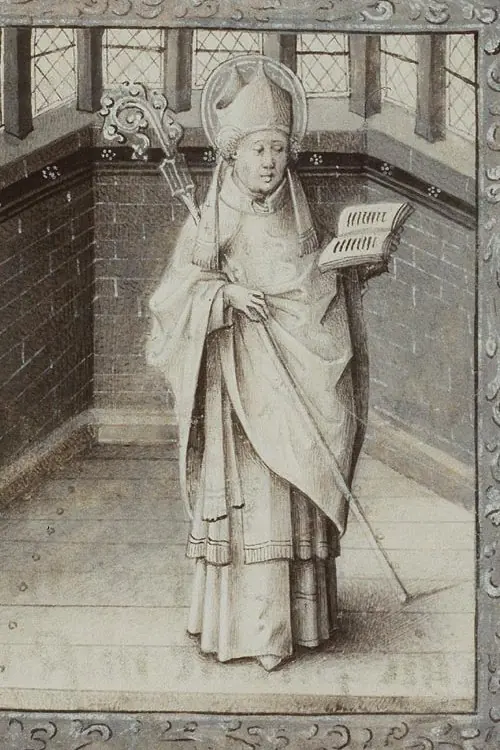
The life of St. Germain
Abbot of St. Symphorian
Germain studied at Avallon and at Luzy under his cousin Scapilion, a priest. Butler says that no weather kept him from walking more than a mile to Matins at midnight. St. Agrippinus of Autun ordained him priest, and he became abbot of St. Symphorian near Autun. He gave alms so freely that his monks, afraid he would give away everything the abbey owned, rebelled against him.
Butler tells of a dream in those years: a venerable old man handed him the keys of the city of Paris and told him God was entrusting its people to his care.
Bishop of Paris and the king's conscience
In 555, Germain happened to be in Paris when its bishop died. King Childebert I, son of St. Clotilde, kept him there, and clergy and people agreed to make him their bishop. He went on living as a monk. Butler says he prayed in the church from nine at night until after Matins, kept beggars at his own table and had a holy book read to his guests while they ate.
Under his influence the worldly Childebert changed his life. Butler writes that the king gave so much to the bishop for the poor that, when his treasury ran dry, he melted down his silver plate and gave away the chains he wore around his neck. Germain had a leading part in the Third Council of Paris in 557, and at his urging Childebert ordered the remaining pagan idols destroyed and forbade the riotous dancing that marked feast days.
Saint Vincent's church
Around 542, Childebert besieged Saragossa in Spain. When the people carried the relics of St. Vincent around the walls, the king spared the city, and the bishop gave him the martyr's stole. Back in Paris, Childebert built a church in honor of St. Vincent and the Holy Cross to receive it, with a monastery beside it. Germain dedicated the church on December 23, 558, the very day the king died. It is the church we now call Saint-Germain-des-Prés.
Kings at war
Childebert's successors were harder men. King Charibert put away his queen and, while she still lived, married Marcovefa, a former servant who had worn a religious habit. Germain excommunicated them both, in 568 according to the Catholic Encyclopedia. After Charibert's death in 570, his brothers Sigebert and Chilperic went to war, stirred up by their queens, Brunhilda and Fredegund. Germain wrote to Brunhilda begging her to make peace; the Catholic Encyclopedia notes that his letter survives.
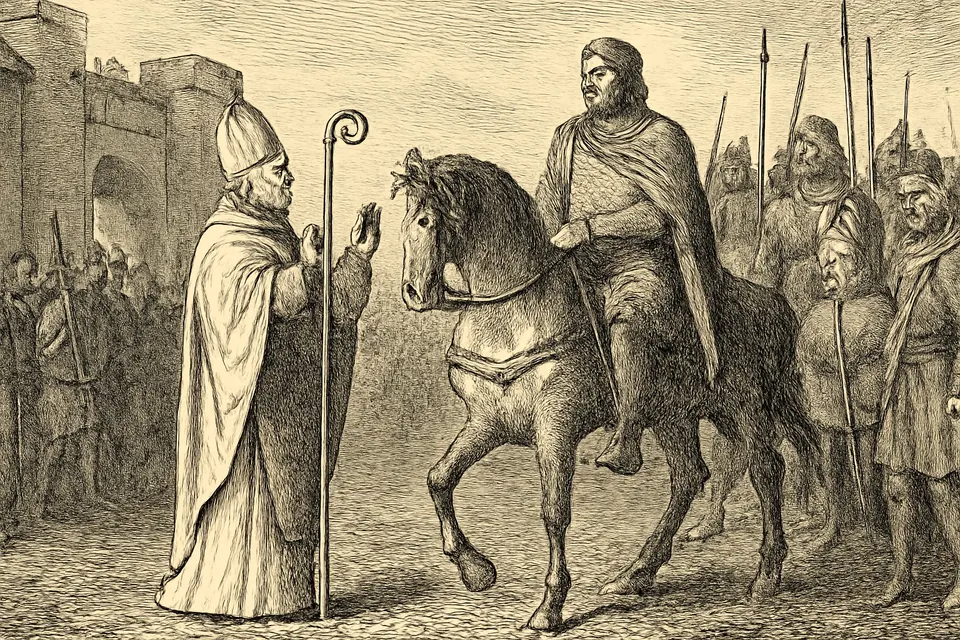
When Sigebert set out in 575 to finish off his brother, Germain met him. St. Gregory of Tours, a bishop of the next generation who knew these kings, records the warning:
If you go and do not purpose to kill your brother you shall return alive and victorious; but if you have another purpose in mind you shall die.
Sigebert went anyway, and two assassins sent by Fredegund killed him at Vitry. Germain died the next year, on May 28, 576, about eighty years old, before peace returned.
The miracles of St. Germain
Germain's friend Venantius Fortunatus, later bishop of Poitiers, wrote his Life and filled it with miracles. These are among the best attested:
- King Childebert healed at Celles: when the king lay dangerously ill, Germain prayed all night and laid hands on him in the morning. The Catholic Encyclopedia says the healing is attested in the king's own letters patent, which gave the land of Celles to the church of Paris in thanks (reported).
- King Clotaire's fever: Butler, following Fortunatus, says Clotaire was cured when he touched the bishop's clothes to his body (traditional).
- The prisoners at his funeral: Gregory of Tours writes that as Germain's body was carried to burial, it bore heavily on the street when the prisoners cried out, and could be lifted easily again once they were released (reported).
- The burning prison: years later, during a great fire in Paris, Gregory says "the blessed Germanus appeared to them and broke the posts and chains" and let the prisoners go, and they fled to the church where his tomb was (reported).
King Chilperic himself wrote Germain's epitaph, which, Butler says, told of sight restored to the blind and speech to the dumb at his tomb.
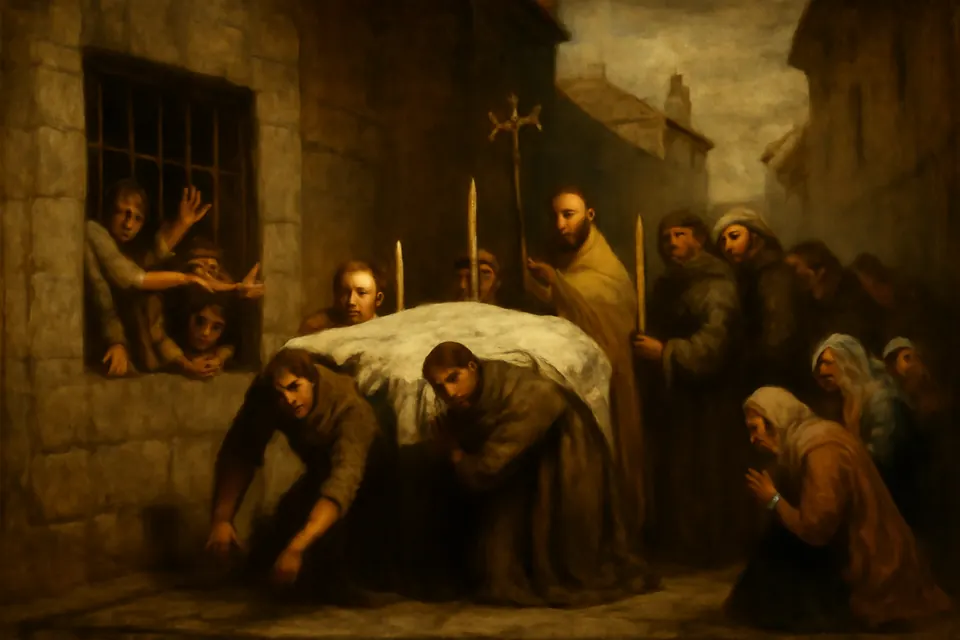
Why St. Germain is honored as a friend of the poor
St. Germain has no formal patronage, but his love for the poor was so great that his own monks rebelled against his almsgiving, and a king melted his silver to keep up with him. The stories Gregory of Tours tells of prisoners set free at his funeral and in the burning prison have long made him a friend of captives too. Let us ask him to pray for the poor of our cities, as he cared for the poor of Paris.
Symbols of St. Germain in art
St. Germain is shown as a bishop, and you usually recognize him by the place:
- Miter, crozier and vestments: he appears as a bishop in medieval manuscripts like Jean le Tavernier's Book of Hours.
- A book: the Gospel he preached, or the treatise on the Gallican liturgy long attributed to him.
- A hand raised in blessing: as in the window Jean-Auguste-Dominique Ingres designed for the royal chapel at Dreux.
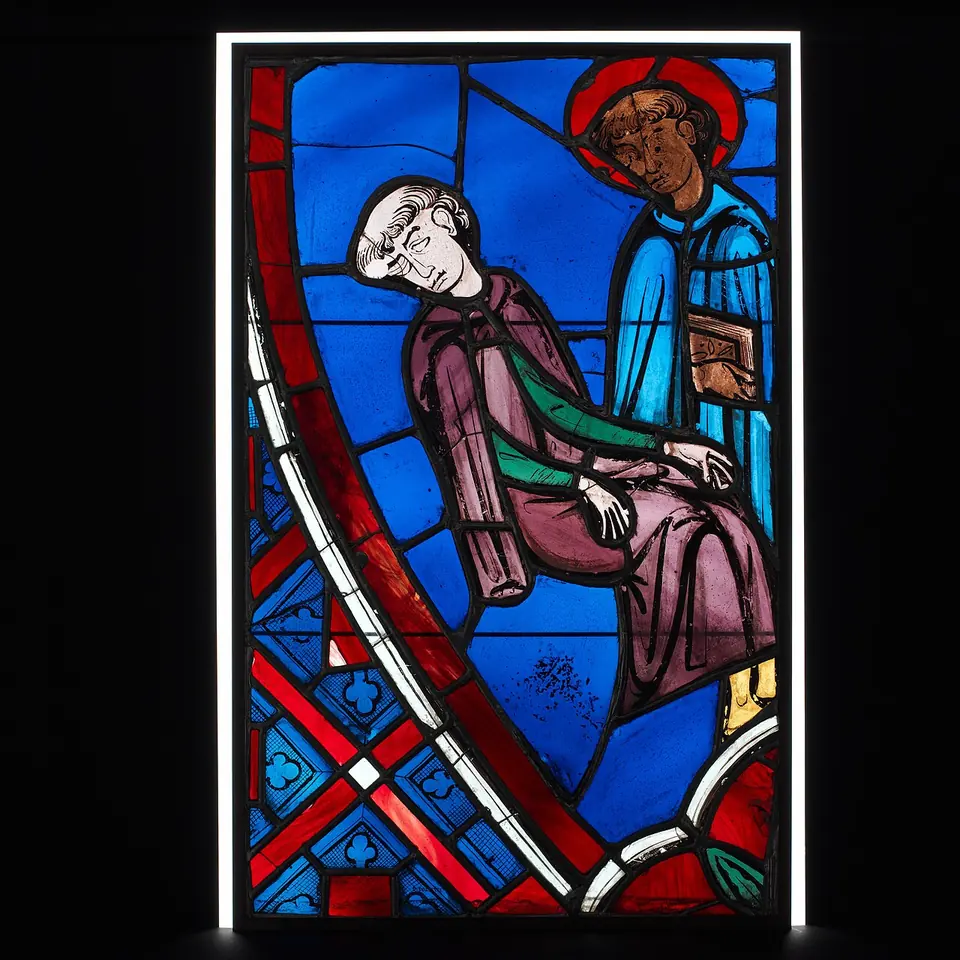
- Scenes from his legend in stained glass, such as two French panels of the 1240s now in the Metropolitan Museum of Art in New York.

Saint-Germain-des-Prés, his tomb
Germain was buried, as he had asked, in the Chapel of St. Symphorian that he had built at the entrance of St. Vincent's church. A stone in the rebuilt chapel marks the presumed site of that first grave.
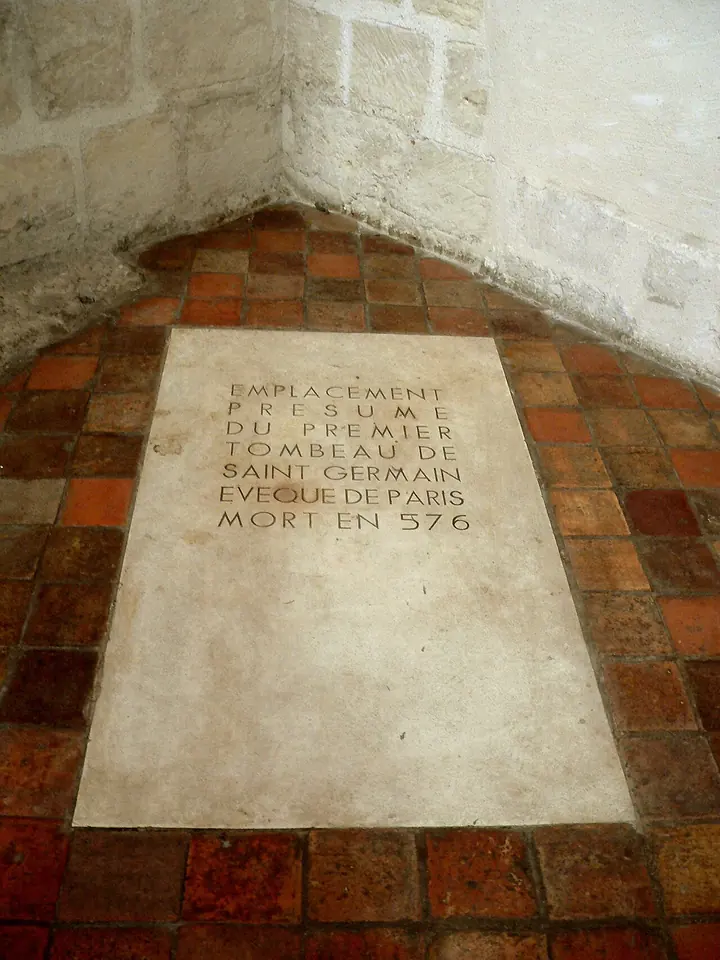
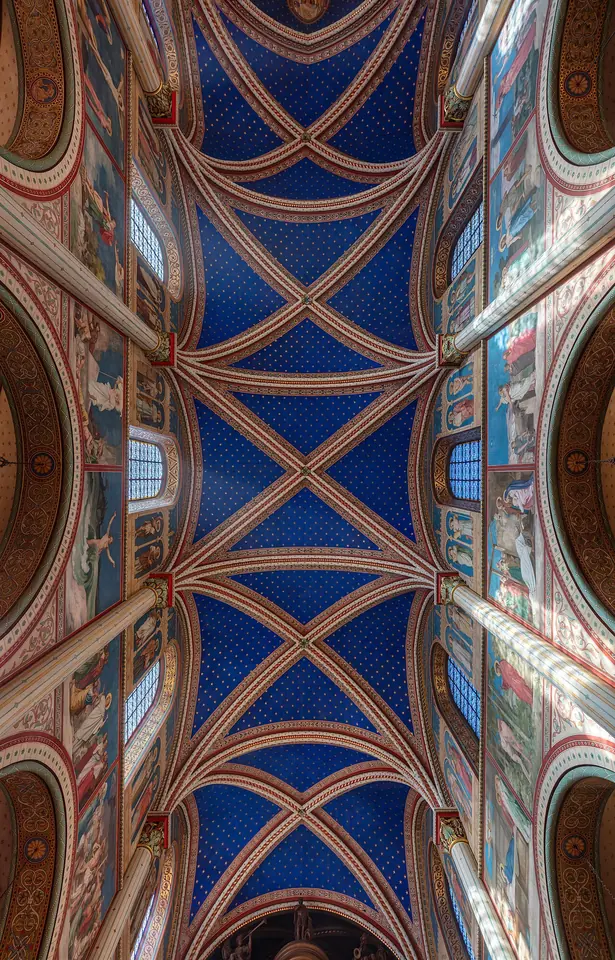
In 754 his relics were carried into the main church in the presence of King Pepin and his seven-year-old son, the future Charlemagne, and from then on the church was called Saint-Germain-des-Prés. Butler says Charlemagne loved to tell of the miracles he saw that day, and that the greater part of the relics remained in the church. The Normans burned it in the 800s; it was rebuilt in 1014 and dedicated by Pope Alexander III in 1163.
Feast day and prayer
We keep the feast of St. Germain of Paris on May 28, the day of his death. See the other saints of late May on our feast days page.
There is no traditional prayer to St. Germain with a known origin that we can cite. Let us ask him, the bishop who would not flatter kings, to pray for all who must speak the truth to the powerful, for prisoners and for the poor.
Frequently asked questions
Who was St. Germain of Paris?
A Burgundian priest, born near Autun about 496, who was abbot of St. Symphorian at Autun and became bishop of Paris in 555. He reformed King Childebert I, presided at the Councils of Paris, and is buried in the church now named for him, Saint-Germain-des-Prés. He died on May 28, 576.
Is Saint-Germain-des-Prés named after St. Germain of Paris?
Yes. King Childebert built it as the church of St. Vincent and the Holy Cross to hold the stole of St. Vincent, and Germain dedicated it on December 23, 558, the day the king died. When Germain's relics were moved into the main church in 754, it took his name.
What miracles are attributed to St. Germain?
The healing of King Childebert at Celles, which the king recorded in a charter; the healing of King Clotaire's fever; prisoners released at his funeral and, years later, freed from a burning prison in a vision of him, both told by St. Gregory of Tours; and healings at his tomb, praised in an epitaph written by King Chilperic.
Is St. Germain of Paris the same as St. Germain of Auxerre?
No. St. Germain of Auxerre was bishop of Auxerre and died in 448; the Paris church of Saint-Germain-l'Auxerrois is named for him. St. Germain of Paris lived a century later.