St. John Southworth

St. John Southworth (1592–1654) was a Lancashire priest who spent decades in and out of English prisons, cared for the dying in Westminster during the plague of 1636 and was hanged, drawn and quartered at Tyburn on June 28, 1654, for being a priest. His body rests in Westminster Cathedral, which keeps his feast on June 27.
Who was St. John Southworth?
St. John Southworth was an English Catholic priest who worked in secret for thirty-five years, much of it from prison cells, and died at Tyburn on June 28, 1654, during Oliver Cromwell's rule. Westminster Cathedral calls him "the Cathedral's own saint," because he served the poor and the sick of Westminster and because his body rests there today.
The anniversary of his death is June 28; the cathedral keeps his solemnity on June 27. He was canonized in 1970 among the Forty Martyrs of England and Wales.

The life of St. John Southworth
A Lancashire family and the Douai seminary
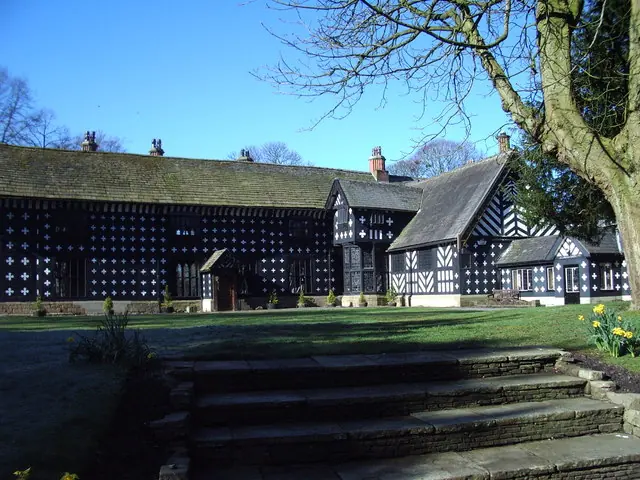
He was born in Lancashire in 1592, a younger son of the Southworths of Samlesbury Hall near Blackburn, an old Catholic family whose fortunes had been sliding since Elizabeth I came to the throne. Like hundreds of young Englishmen who wanted to be priests, he crossed to the English College at Douai in Flanders. He was ordained there and sent back to England on October 13, 1619.
Prisoner, exile and prisoner again
His first years were spent in Lancashire. In 1627 he was arrested, tried and condemned to death for being a priest, but the sentence was not carried out. He stayed in Lancaster Castle, and in 1628, Bishop Challoner tells us, it was Southworth who gave the last absolution to St. Edmund Arrowsmith as he was led out to die.
Moved to the Clink prison in London, he was one of sixteen priests handed over in April 1630 to the French ambassador to be shipped abroad. He came back. Over the next decade he was in and out of the Clink and the Gatehouse at Westminster, released, rearrested and released again. Prison in those years was often loose: priests could sometimes walk out by day.
The plague of 1636
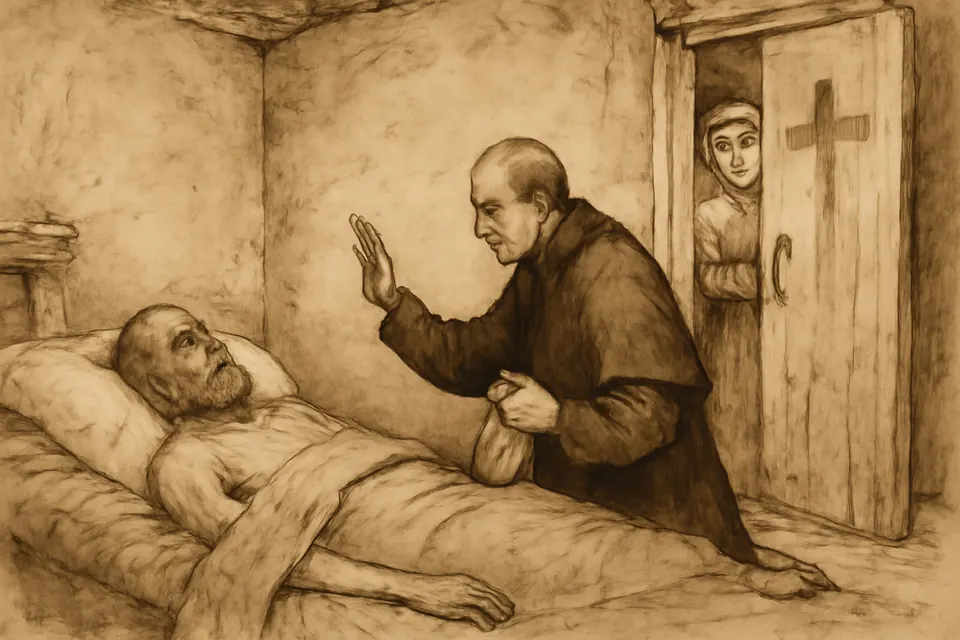
In 1636 plague struck Westminster. A curate of St. Margaret's, Robert White, petitioned the Archbishop of Canterbury against "two Popish priests" who went into the infected houses. One of them, he wrote, was "Southwell," who under pretense of giving alms went into "divers visited houses in Westminster" and reconciled dying men to the Catholic Church. The complaint is the best testimony we have to Southworth's charity: he walked into houses marked for death to bring bread and the sacraments.
The last trial
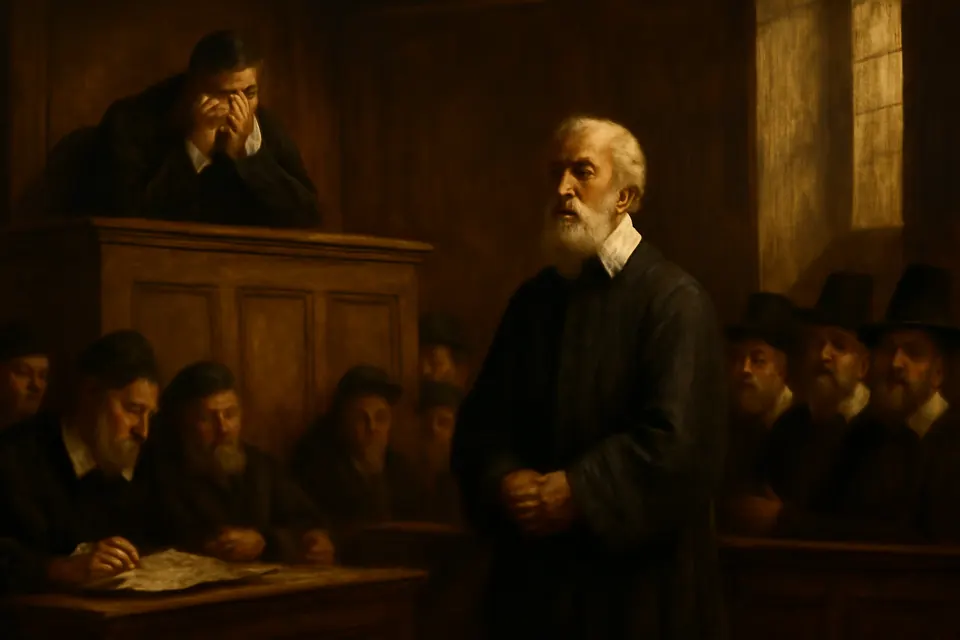
In 1654 a pursuivant named Jefferies informed on him, and he was taken from his bed at night. At the Old Bailey he admitted he was a priest. A Protestant writer who described the trial years later said the judges spent hours begging him to plead not guilty, assuring him they had no evidence and his life would be safe. He would not deny his priesthood, "taking it to be a denying of his religion." The Recorder of London, Serjeant Steel, was "so drowned in tears" that he could hardly pronounce the sentence.
On June 28, 1654, in heavy rain and thunder, he was dragged to Tyburn on a sledge between two coiners, dressed in a priest's gown and a four-cornered cap. Thousands came to watch. He told them:
Hither I was sent by my lawful superiors to teach Christ's faith, not to meddle with any temporal affairs. Christ sent His apostles; His apostles their successors; and their successors me.
He asked the Catholics in the crowd to pray with him, raised his hands and shut his eyes. He was about sixty-two. Challoner records no more priests put to death in England until the panic of the Titus Oates plot in 1678.
His relics and a reported miracle
The authorities allowed his body to pass to the Howard family, the Catholic house of the Dukes of Norfolk, who sent it to the English College at Douai. There it was laid near the altar of St. Augustine.
- The healing of Francis Howard: reported. Challoner cites the college records: in 1656 Francis Howard, a son of the Earl of Arundel, "absolutely despaired of by all the physicians," was brought back "from the very gates of death" by the prayers and relics of the martyr.
During the French Revolution the body was hidden to save it from destruction, and its place was forgotten. It was found again in 1927, brought back to England, and enshrined in Westminster Cathedral.
Where the relics of St. John Southworth are kept: see them on the relics map →
Why we remember St. John Southworth in times of plague
The Church has never named him patron of anything. But the Westminster petition of 1636 shows him going where others would not, into houses shut up with plague, to feed the poor and absolve the dying. That makes him a natural intercessor for the sick, for those who nurse them, and for priests who carry the sacraments into danger.
Symbols of St. John Southworth in art
Few old images of him exist, so he is recognized mostly by his shrine and modern devotional pictures:
- Red vestments: his body lies in the red of a martyr, with a silver mask over the face, in the Westminster casket.
- A priest's gown and four-cornered cap: what an eyewitness said he wore to Tyburn.
- The martyr's palm and the rope: as for the other English martyrs.
Douai, where his body lay for almost three centuries, keeps a memorial to him in the Collegiate Church of Saint-Pierre.
Feast day and pilgrimage
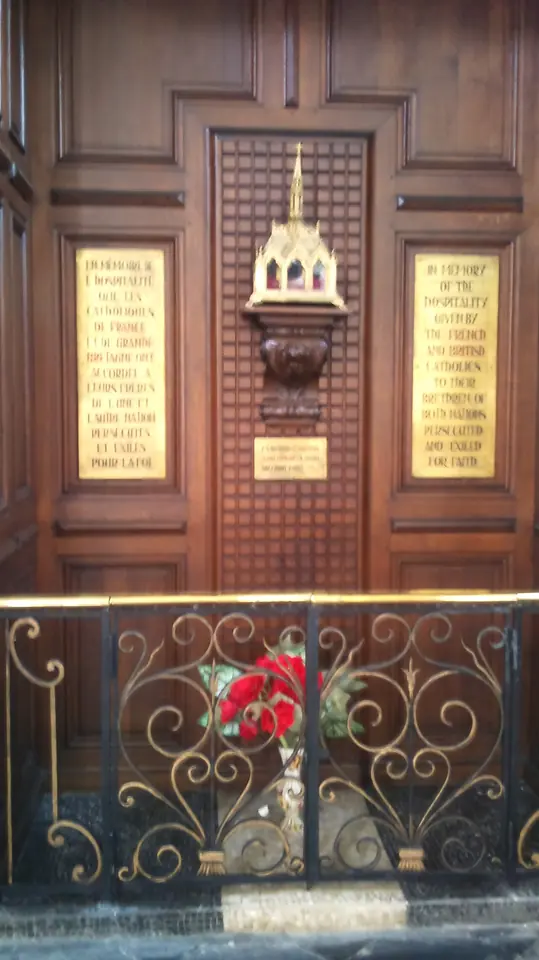
Westminster Cathedral keeps his feast on June 27 as a solemnity, and for several days his casket is placed in the center of the nave. The rest of the year he lies in the Chapel of St. George and the English Martyrs. See our feast days page for more saints of June.
Prayer to St. John Southworth
We haven't found a traditional prayer to him with a source we can cite, so we don't print one here. Let us ask St. John Southworth to pray for the sick and the dying, for those who care for them in times of plague, for priests who serve in hard places, and for the people of Westminster and Lancashire. St. John Southworth, pray for us.
Frequently asked questions
When is the feast day of St. John Southworth?
The anniversary of his martyrdom is June 28. Westminster Cathedral, where his body lies, celebrates him as a solemnity on June 27. He is also honored with the Forty Martyrs of England and Wales on October 25.
Where is the body of St. John Southworth?
In a glass casket in the Chapel of St. George and the English Martyrs in Westminster Cathedral, London. For his feast it is brought into the nave for several days.
Why is St. John Southworth linked to the plague?
During the plague of 1636 in Westminster, he went into infected houses to bring alms and the sacraments to the dying, as an Anglican curate complained in a petition at the time.
Why was St. John Southworth executed?
For being a Catholic priest. At his trial in 1654 the judges begged him to plead not guilty, but he would not deny his priesthood, and the law then required a death sentence.
Keep exploring
Sources
- Catholic Encyclopedia (1912): St. John Southworth. His arrests, imprisonments and release to the French ambassador in 1630; the editors' note on the 1927 rediscovery of his relics
- Richard Challoner, Memoirs of Missionary Priests (1924 edition), on archive.org. The plague petition of 1636, the account of his trial, his speech at Tyburn and the healing of Francis Howard in 1656
- Westminster Cathedral: An Architectural Gem. His casket in the Chapel of St. George and the English Martyrs and his solemnity on June 27
- Pope Paul VI, homily for the canonization of the Forty Martyrs of England and Wales, October 25, 1970. Canonization