St. Cadoc of Llancarfan, Abbot and Teacher of Wales
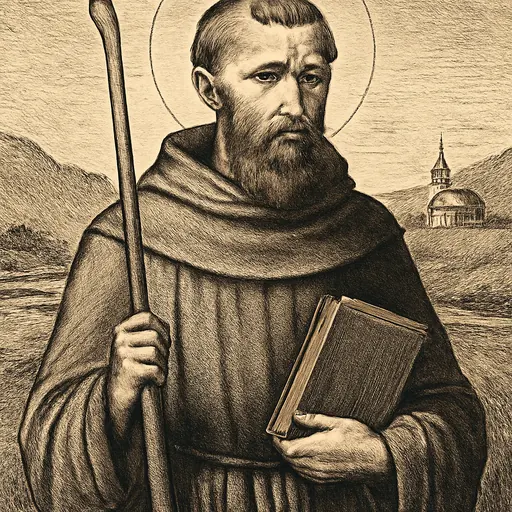
St. Cadoc (Cadog, Catwg) was a 6th-century Welsh abbot, son of a local king, who founded the monastery and school of Llancarfan in the Vale of Glamorgan, where saints such as Illtud and Gildas studied and taught. Later tradition links him with Ireland, Scotland and the little island of Saint-Cado in Brittany. Butler's Lives of the Saints keeps his feast on January 24.
Who was St. Cadoc?
St. Cadoc of Llancarfan, also written Cadog and in Welsh Catwg, was an abbot of the early 500s and one of the founders of Christian learning in Wales. He is not the Cadoc of later Welsh poetry or the Breton town names alone: he is the monk who built a monastery and school in a marshy valley in Glamorgan that taught a generation of Celtic saints.
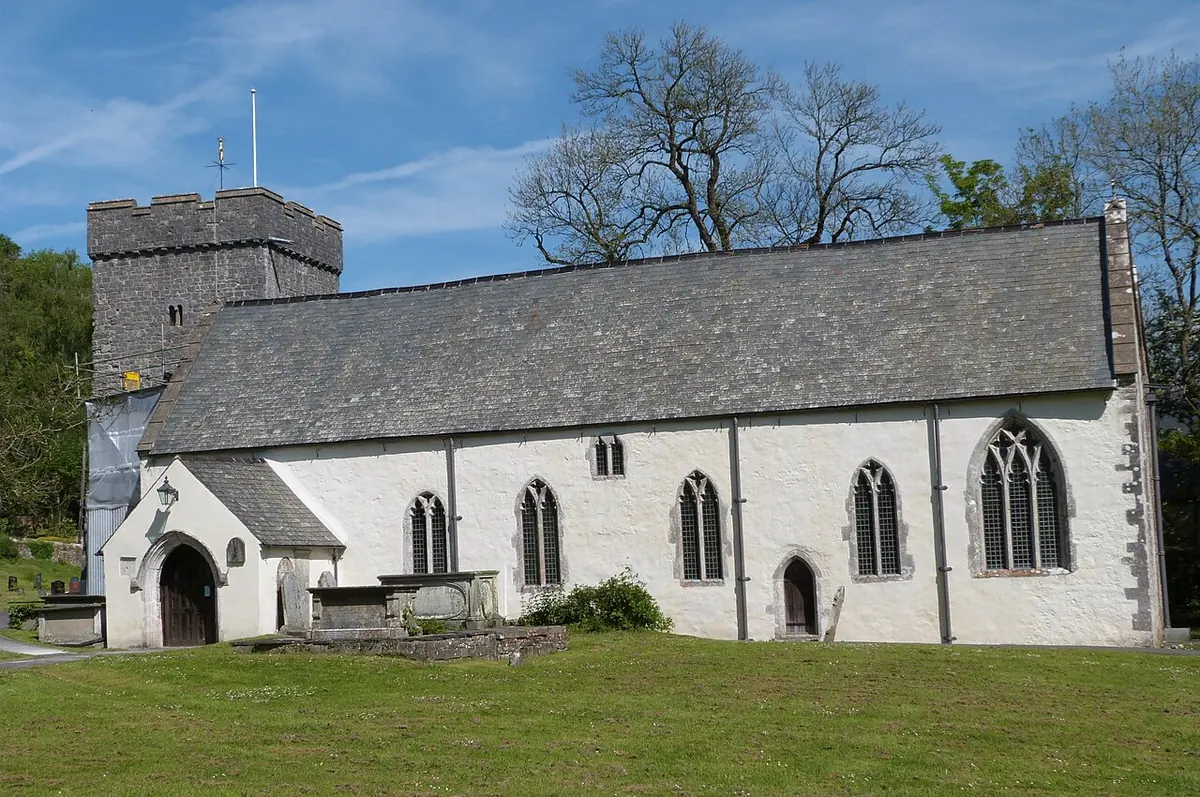
Butler's Lives of the Saints gives the outline. Cadoc was the eldest son of Gwynllyw, a prince of south Wales, and Gladusa (Gwladys), daughter of Brychan, whose name survives in Brecknockshire. He studied under an Irish monk named Tathai, who kept a famous school at Caerwent, the old Roman town of Venta Silurum. Then he went home to Glamorgan and founded Llancarfan, three miles from Cowbridge. Butler says the name means "the Church of Stags."
Llancarfan and its school
Llancarfan became one of the great monasteries of Wales, and its school, Butler writes, was "fruitful in great and holy men." Cadoc persuaded Illtud to leave the court and learn there; Illtud later founded his own famous monastery at Llanilltud. St. David's contemporary Gildas, the historian of the Britons, taught at Llancarfan for a year and copied a book of the gospels. The Welsh, says Butler, kept that book for centuries in St. Cadoc's church and swore their most solemn oaths and covenants on it.
Butler adds that Cadoc and Gildas later left Llancarfan to live in stricter retreat on two islands in the Bristol Channel, Ronech and Echni. Leland, quoted by Butler, called his successor at Llancarfan, Elli, "an excellent disciple of an excellent master."
The Life of St. Cadoc
Almost everything else comes from a long Latin Life written at Llancarfan in the late 1000s, five centuries after Cadoc. Its author names himself in a verse at the end: Lifris. The book honors its monastery and its lands, and much of it is legend. W. J. Rees printed it with an English translation in 1853, and it is good reading.
The white boar
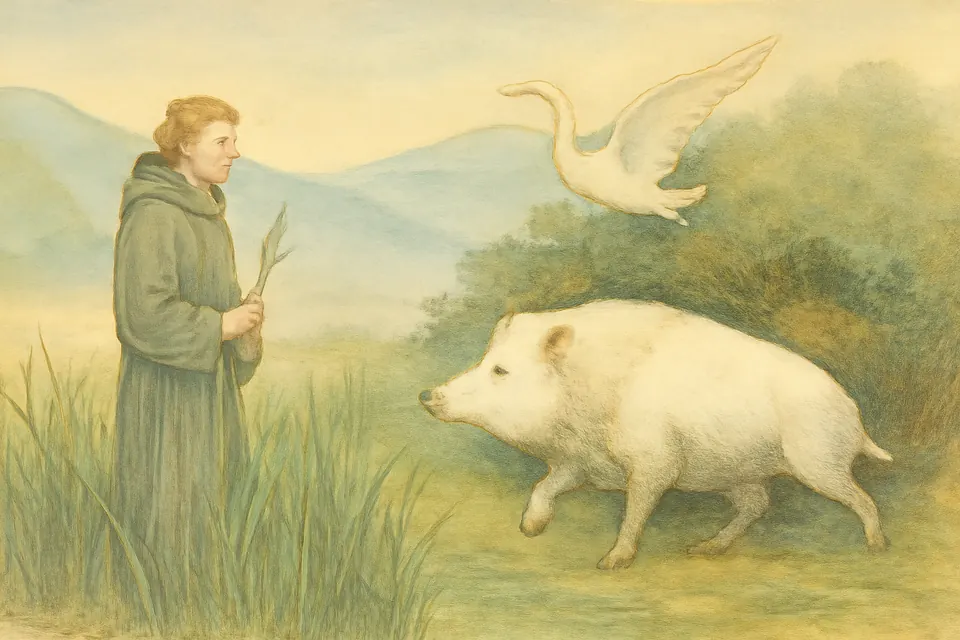
The Life tells how Cadoc looked for a place to build in a valley that was "a watery moor, producing nothing but reeds." An angel told him in a dream that he would see a white boar spring up at his footsteps, and that he should build where it stopped. At dawn a "bristly white old boar" rose from a thicket, a white swan flew off its nest, and the boar paused three times, looking back at him. Cadoc marked each place with a twig and built his church, his refectory and his dormitory there. This story is traditional.
The miracles and legends of St. Cadoc
All of the following are traditional, from the Life:
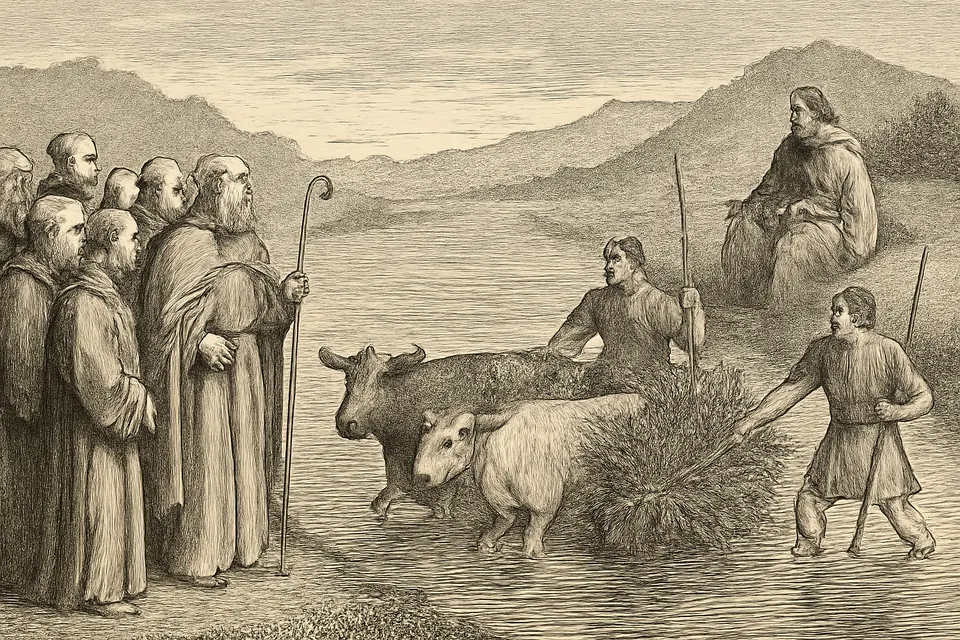
- Arthur and the cattle. Cadoc sheltered a man who had killed three of King Arthur's soldiers. The judges awarded Arthur a hundred cows for each man, and Arthur insisted they be red in front and white behind. Cadoc had ordinary heifers brought, and they turned those colors. When Arthur's men Kai and Bedwyr seized them in the ford, they turned into bundles of fern, and Arthur asked Cadoc's pardon. The cows, the Life adds, were later found safe in their owners' stalls.
- The wolves. Two wolves swam over to Cadoc's island and killed his sheep, and on their way back they were turned to stone. Rees notes that two rocks in the Bristol Channel are still called the Wolves.
- The healing spring. Coming from St. Michael's Mount in Cornwall, Cadoc struck the dry ground and a spring of healing water rose.
How did St. Cadoc die?
The Life ends with a strange journey. A white cloud carries Cadoc to "Beneventum," where he is made abbot and then bishop under the name Sophias, and a soldier kills him with a lance while he is celebrating the Eucharist. Butler reports that some took Beneventum for Benevento in Italy, while the old Life seems to mean the Roman town at Weedon in Northamptonshire. We do not know where or how Cadoc died. If the soldier's lance is true, he was a martyr, but no early record confirms it.
Saint Cado in Brittany
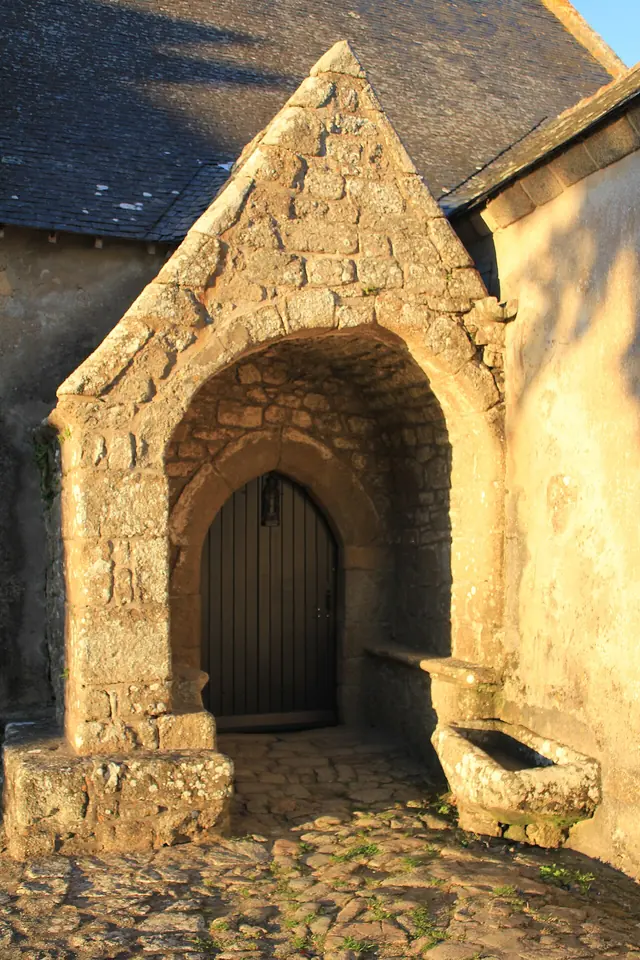
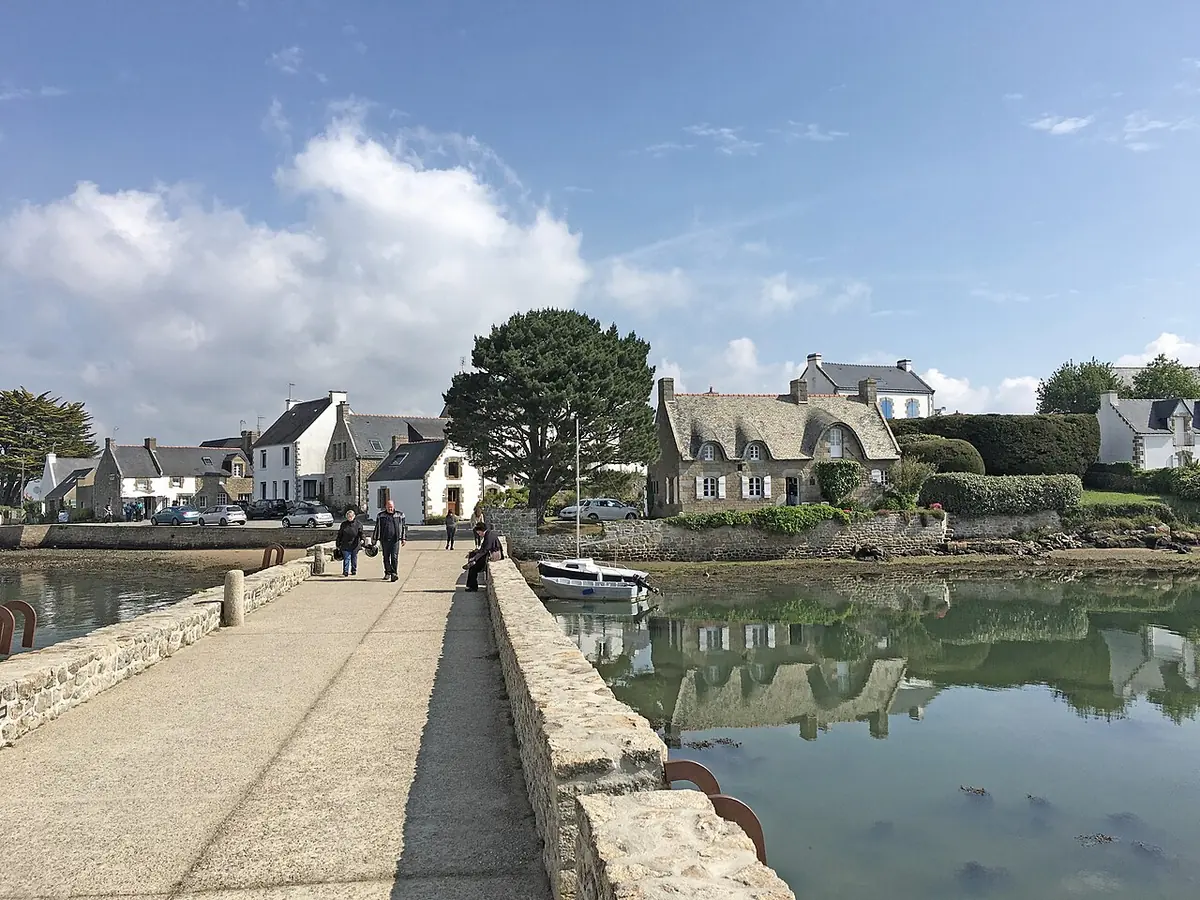
Butler mentions Chatelain's view that Cadoc is the same saint honored in Brittany as Cado, from whom a small island near Vannes takes its name. That island, Saint-Cado in the Ria d'Étel, still has its old chapel and a stone causeway, and in Brittany tradition calls on St. Cado for the deaf.
Symbols of St. Cadoc in art
Cadoc has no fixed medieval image that has come down to us, so he is usually shown as a Celtic abbot in a plain habit with a staff and a book, the book standing for the school of Llancarfan. Artists who know his Life sometimes add a white boar, the sign of Llancarfan's founding, stags for the "Church of Stags," or cattle from the story of Arthur.
The church at Llancarfan has another kind of treasure: medieval wall paintings, among them St. George on horseback fighting the dragon.

Feast day
We keep St. Cadoc on January 24, the date in Butler's Lives. Many churches in south Wales carry his name, among them Llancarfan, Raglan and Llangattock Lingoed.
Prayer to St. Cadoc
No traditional English prayer to St. Cadoc has come down to us with a known source. We can ask his help in our own words:
St. Cadoc, abbot and teacher, you built a house of prayer and learning in a wild valley and taught others to serve Christ. Pray for teachers and students, for the Church in Wales and Brittany, and for us, that we may love wisdom and forgive those who wrong us. Amen.
See our patron saints index and the feast days calendar for more saints of the Celtic lands.
Frequently asked questions
Who was St. Cadoc?
A Welsh abbot of the early 500s, eldest son of Gwynllyw, a king of south Wales, and Gwladys, daughter of Brychan of Brycheiniog. He studied under an Irish teacher at Caerwent and then founded Llancarfan, near Cowbridge, which became one of the most famous monastic schools of Wales.
What is St. Cadoc's feast day?
Butler's Lives of the Saints gives January 24. Some Welsh and Breton calendars use other dates.
Is St. Cadoc in the stories of King Arthur?
Yes. His Latin Life, written at Llancarfan in the late 1000s, is one of the early texts that mention Arthur. It tells how Arthur demanded cattle from Cadoc as compensation for three of his soldiers, and how the cows turned into ferns. It is a legend, not a record of history.
Where is St. Cadoc honored today?
At St. Cadoc's Church in Llancarfan and many other Welsh churches named for him, such as Raglan and Llangattock Lingoed, and in Brittany, where the island of Saint-Cado in the Ria d'Étel has an old chapel bearing his name.
Sources
- Alban Butler, The Lives of the Fathers, Martyrs, and Other Principal Saints, vol. 1 (January 24), St. Cadocus, or Cadoc, Abbot in Wales. Parents, Llancarfan, Illtud and Gildas, the gospel book, the Breton identification
- W. J. Rees, Lives of the Cambro British Saints (1853): Life of Saint Cadoc, Latin text and English translation. The white boar, Arthur and the cattle, the wolves turned to stone, the death at Beneventum; the author Lifris