Blessed Laura Vicuña: The Chilean Girl Who Offered Her Life for Her Mother

Blessed Laura Vicuña (1891 to 1904) was a Chilean pupil of the Salesian sisters in Argentina who offered her life for her mother's conversion. She died at twelve, and her mother promised to change her life. John Paul II beatified her in 1988; her feast is January 22. She is invoked by victims of abuse and children in broken homes.
Who was Blessed Laura Vicuña?
Blessed Laura Vicuña was a Chilean schoolgirl who lived only twelve years and gave every one of the last two to God for her mother's soul. Born in Santiago on April 5, 1891, she grew up on the Argentine side of the Andes, went to school with the Salesian sisters at Junín de los Andes, and died there on January 22, 1904. St. John Paul II beatified her in 1988, at the hill in Italy where St. John Bosco was born, and called her "a poem of purity, of sacrifice, of filial love," quoting the words on her tomb.
Her story is hard to read. It is also full of light. Let us walk through it with her.
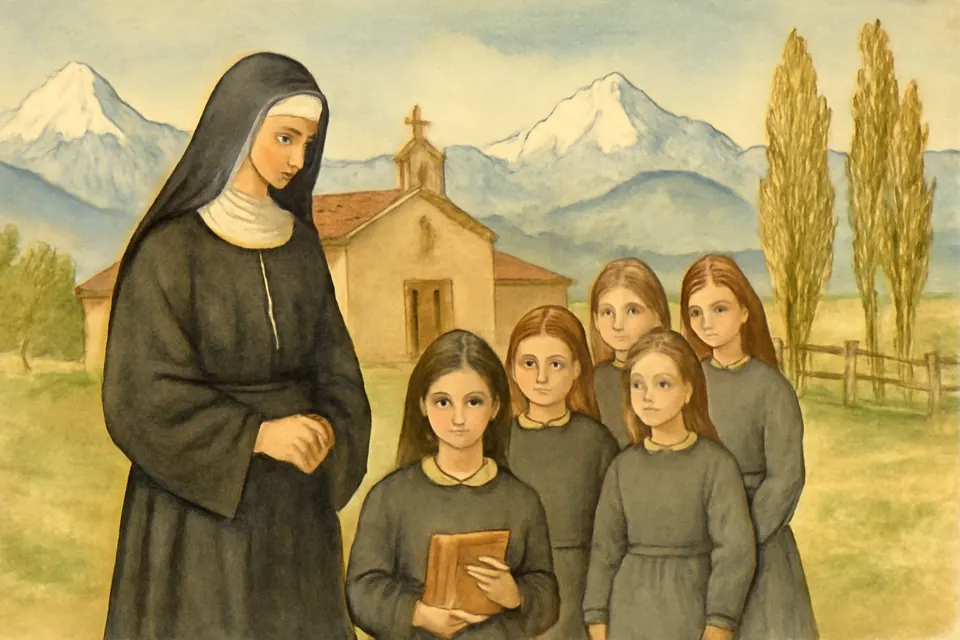
A family in exile
Laura's father was a soldier from an old Chilean family, a man John Paul II described as "of great goodness and valor." Political trouble drove the family out of Santiago to Temuco, and he died when Laura was two. Her mother, Mercedes Pino, crossed into Argentina with Laura and her little sister and settled in the territory of Neuquén, near the village of Quilquihué.
The Pope did not soften what came next. The country was rough frontier land, and Mercedes went to work for a rancher, an estanciero, and lived with him without marriage. He was a hard and violent man. Neighbors pitied her, he said, for that unhappy union and for the cruelty of the man she was bound to.
At school with the Salesian sisters
Laura found a refuge at the little boarding school the Daughters of Mary Help of Christians ran at Junín de los Andes. The sisters were the spiritual daughters of St. John Bosco, and they taught her the faith, prepared her for First Communion and Confirmation, and loved her. She wanted to become one of them.
At ten, having heard the story of St. Dominic Savio, she wrote her own resolutions, which John Paul II read out at her beatification:
1) My God, I want to love you and serve you all my life; so I give you my soul, my heart, my whole being. 2) I want to die rather than offend you by sin; so I mean to deny myself in everything that would draw me away from you. 3) I resolve to do all I know and can so that you may be known and loved, and to make reparation for the offenses you receive every day from people, especially from the members of my family.
The Dicastery for the Causes of Saints adds that in 1902 she made private vows of poverty, chastity and obedience. Her motto was Dominic Savio's: "death, but not sins."
The offering
In catechism class Laura came to understand the danger her mother's soul was in. One day she heard the Gospel say that the greatest love is to lay down one's life for the people we love, and she offered her life to the Lord for her mother's salvation.
The ranch had also become dangerous for Laura herself. The man made advances on her, and with her confessor's permission she took up small penances to guard her purity. One day, the Pope said, he attacked her and beat her violently, leaving her stunned with fear. "But she had won, young Laura."
Already worn down by illness, she declined quickly after that, sustained by the Eucharist and by hope for her mother. She spent her last illness with her mother in a little house near the school.
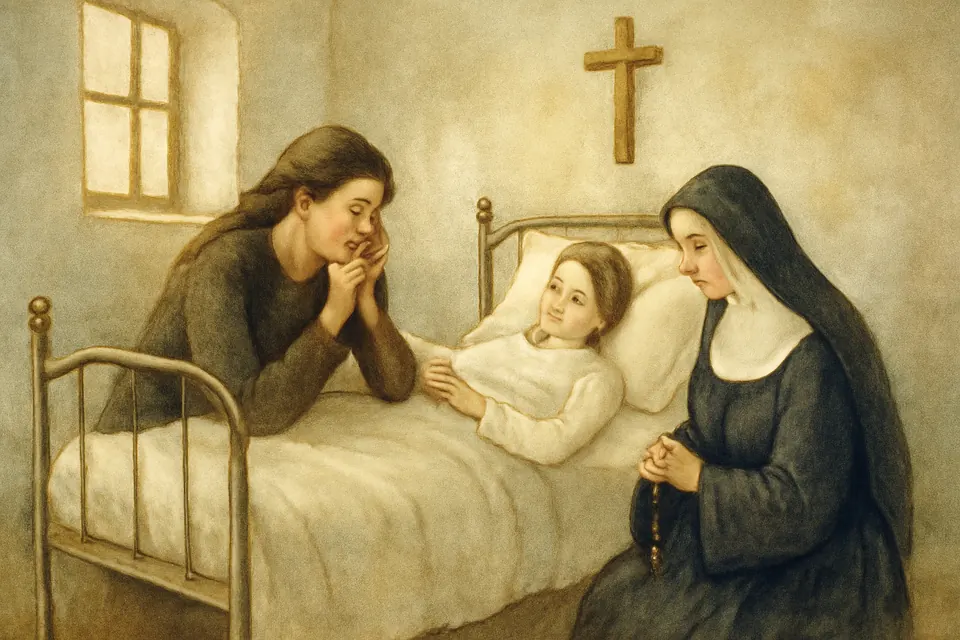
Her last day
A few hours before she died, Laura called her mother to her bed and told her the secret. John Paul II quoted her words:
Yes, mother, I am dying... I asked Jesus for it myself, and he heard me. It is almost two years since I offered him my life for your salvation, for the grace of your return. Mother, before I die, will I not have the joy of seeing you repent?
Her mother was shaken to the core. She had never imagined such love in her daughter. She promised to change her life and to go to confession, and she did, promptly and sincerely. Laura died on January 22, 1904. Her mission, the Pope said, was complete.
We call Laura's offering a reported grace: her mother's conversion is part of the documented story of her life. Laura was beatified in 1988; the Church has not yet canonized her, and the Salesian sisters continue to gather reports of favors received through her prayers.
Why Laura is invoked by abuse victims
Laura knew what it is to live in a home that is not safe. She suffered violence from the man in her mother's house, held fast to her purity, and kept praying for the people who had failed her. That is why Catholics ask her prayers for children and young people who suffer abuse, for children of broken families, and for orphans. In his homily John Paul II drew the lesson for us: every child has the right to grow up in a family that is a place of mutual love and of human and Christian formation.
Symbols of Blessed Laura Vicuña in art
Laura lived in the age of photography, and the few school photographs of her shape almost every image:
- The school pinafore: the plain dress with a dark V-shaped band worn by the girls at Junín. Statues and holy cards nearly always show it.
- A lily: purity, which she defended at great cost.
- A crucifix or a Communion host: her love for Jesus in the Eucharist, which carried her through her last months.
- The Andes: the mountains between Chile, where she was born, and Argentina, where she died.
- Our Lady of the Snows: the patroness of the sanctuary at Junín de los Andes, often shown sheltering Laura.
In Salesian churches she is often painted beside Dominic Savio, as two young pupils of Don Bosco's family.
Feast day, shrines and relics
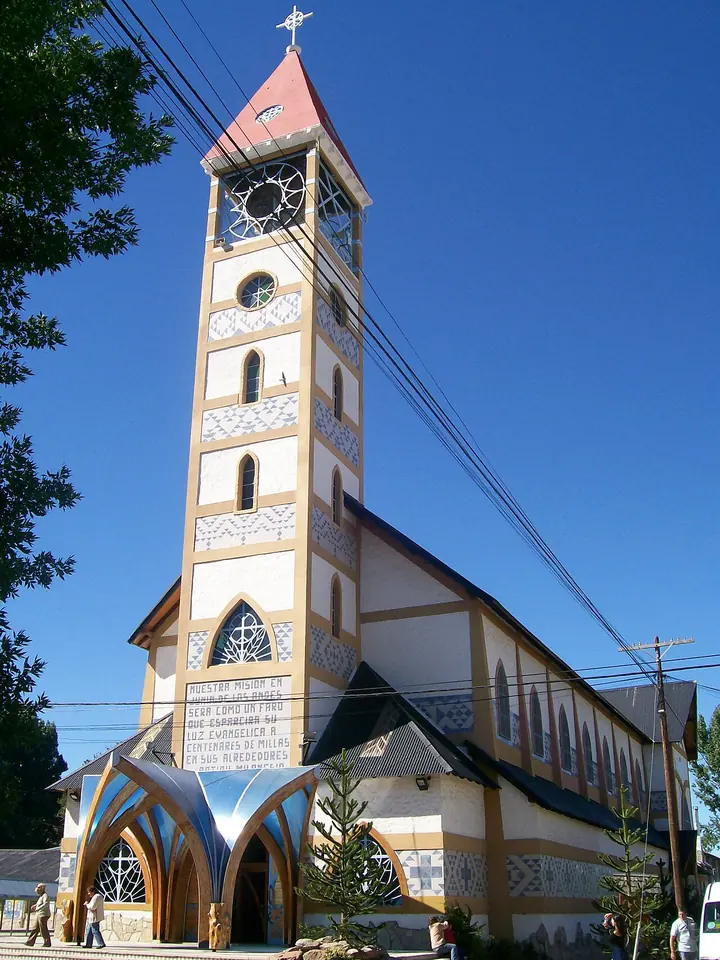
We keep Blessed Laura Vicuña's feast on January 22. In 2023 the Salesian sisters joined their three Argentine provinces into one and named it after her. Her body was moved on March 2, 1956, from Junín de los Andes to the chapel of the Daughters of Mary Help of Christians at Bahía Blanca, and pilgrims, many of them girls and young women, come to pray there. Junín de los Andes keeps her memory at the sanctuary and in the places where she lived. See our feast day calendar and patron saints.
Where the relics of Blessed Laura Vicuña are kept: see them on the relics map →
Prayer to Blessed Laura Vicuña
The Church has not published an official prayer to Blessed Laura, and we won't put words in her mouth. Her own first resolution makes a beautiful prayer for any young person to pray: "My God, I want to love you and serve you all my life; so I give you my soul, my heart, my whole being."
Let us ask Blessed Laura to pray for children who are not safe at home, for mothers and fathers who have lost their way, and for every young person learning, as she did, that love can be stronger than fear.
Frequently asked questions
Who was Blessed Laura Vicuña?
A Chilean girl born in Santiago on April 5, 1891, who grew up in Argentina after her father's death and went to school with the Daughters of Mary Help of Christians (the Salesian sisters) at Junín de los Andes. She offered her life to God for her mother, who was living with a violent rancher, and died on January 22, 1904, at twelve. Her mother returned to the faith that day.
When is Blessed Laura Vicuña's feast day?
January 22, the day of her death. It is kept by the Salesian family and in Chile and Argentina; she is not on the General Roman Calendar.
Why is Laura Vicuña a patron of abuse victims?
The man her mother lived with tried more than once to force himself on Laura and once beat her badly when she refused him. She resisted, kept her innocence and prayed for her mother through it all, so people who have suffered abuse, especially children, ask her prayers.
Where is Laura Vicuña buried?
Her body rests in the chapel of the Daughters of Mary Help of Christians at the Instituto María Auxiliadora in Bahía Blanca, Argentina, where it was brought from Junín de los Andes in 1956.
Keep exploring
Sources
- John Paul II, Homily for the beatification of Laura Vicuña, Colle Don Bosco, September 3, 1988 (Italian, vatican.va). Her three resolutions, the attack, her offering, her last words to her mother and the inscription on her tomb (our translations)
- Dicastery for the Causes of Saints: Laura Vicuña. Birth, her private vows in 1902, her motto, beatification and the resting place of her body in Bahía Blanca
- Daughters of Mary Help of Christians: Laura Vicuña, patron of the Argentine Province. The Argentine province named for her in 2023, her last illness at the "Ranchito" and the hope for her canonization
- Argentine Chamber of Deputies, draft resolution asking Pope Leo XIV to canonize Blessed Laura Vicuña (2026). The transfer of her remains to Bahía Blanca on March 2, 1956, the dates of her cause, and her patronage of abuse victims and orphans in Chile and Argentina