St. Euthymius the Great, Father of the Monks of the Judean Desert

St. Euthymius the Great (377–473) was an Armenian-born priest and monk who settled in the Judean desert east of Jerusalem, founded a laura of hermits, baptized a whole Arab tribe and trained the monks who filled the desert after him, among them St. Sabbas. We keep his feast on January 20, the day of his death, in East and West alike.
Who was St. Euthymius the Great?
St. Euthymius the Great was a monk of the fifth century who made the wilderness east of Jerusalem bloom with prayer. Born in Armenia in 377, he came to the Holy Land as a pilgrim, never went home, and for almost seventy years lived as a hermit and a father of hermits in the Judean desert. Arab nomads were baptized at his word. Bishops and an empress sought his counsel. A generation of desert saints, St. Sabbas first among them, learned the monastic life from him. We keep his feast on January 20, the day he died in 473, and East and West keep it together.
His biographer, Cyril of Scythopolis, wrote about forty years after his death and knew monks who had lived with him. The Catholic Encyclopedia calls that Life "very reliable," so for once we have a desert father whose story rests on a near-contemporary witness.
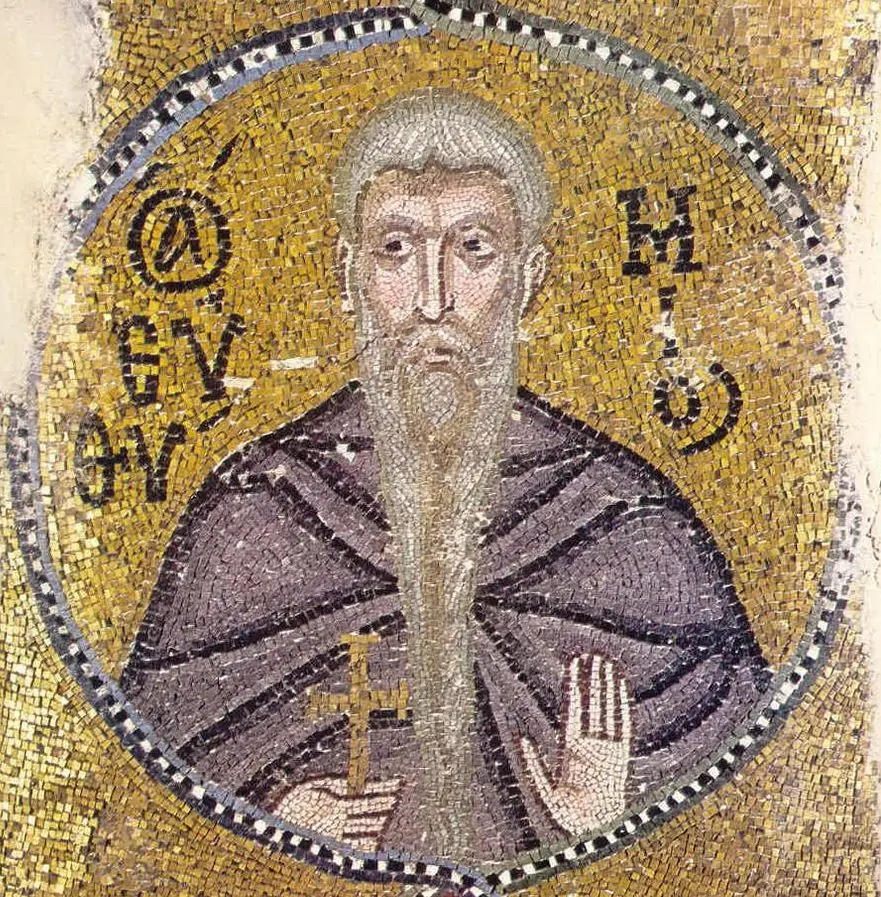
The life of St. Euthymius
A child of good cheer
He was born at Melitene, in Lesser Armenia, to a noble Christian couple, Paul and Dionysia. The Orthodox life tells that they had long been childless and heard a voice in a vision: "Be of good cheer! God will grant you a son, who will bring joy to the churches." So they called him Euthymius, which means good cheer. His father died soon after, and his mother gave the boy to the Church. Bishop Otreius of Melitene educated him, ordained him a priest and put him in charge of all the monasteries of the diocese.
Into the desert
The work weighed on a man who longed for silence. At twenty-nine he slipped away to Jerusalem, prayed at the holy places and settled in a cell at the laura of Pharan, earning his bread by weaving baskets. There he found a friend in the monk Theoctistus. Each year after Epiphany the two went out into the wilderness for Lent. In 411, the Catholic Encyclopedia says, they found a cave high in the cliff of a wild gorge and stayed. Shepherds found them, disciples followed, and the cave became a church with a monastery around it, which Euthymius gave to Theoctistus to govern.

The Saracen tribe
The healing that made him famous was a child's. Terebon, the son of an Arab chief named Aspebetus, was gravely ill, and he recovered after Euthymius prayed over him. The father and his whole tribe were baptized and camped around the monks. Aspebetus took the name Peter, became a priest and later a bishop over his people, and the Catholic Encyclopedia notes that he sat at the Council of Ephesus in 431.
The crowds that followed drove Euthymius farther out: to Mount Marda by the Dead Sea, then to the wilderness of Ziph near the cave where David hid from Saul. In the end he came back toward his friend and settled on a low hill beside the road from Jerusalem to Jericho. His laura of separate cells grew there, and its church was dedicated on May 7, 428, by Juvenal of Jerusalem, as the archaeologist Yizhar Hirschfeld records from Cyril. Euthymius still went to Theoctistus's monastery for the Sunday liturgy.
Defender of Chalcedon
When the Council of Chalcedon in 451 confessed Christ as one Person in two natures, much of the Palestinian monastic world rose against it. Euthymius accepted the council, and the Catholic Encyclopedia says it was largely by his authority that most of the desert monks came to accept it too. The Empress Eudocia, who had sided with the council's opponents, turned to him for guidance and returned to communion with the Church.
A holy death
The Orthodox life says that on the eve of the feast of St. Anthony the Great he told his priests he would not keep another vigil with them. In the morning he gave his monks his last counsel: love, humility, faithfulness at the services, care for a brother struggling with temptation, and hospitality: "Never refuse hospitality to visitors. Offer a bed to every stranger." He stayed three days in the sanctuary and died on January 20, 473, in his late nineties.
The miracles of St. Euthymius
- The healing of Terebon: traditional. Told by Cyril and accepted by the Catholic Encyclopedia, it led to the baptism of a whole tribe.
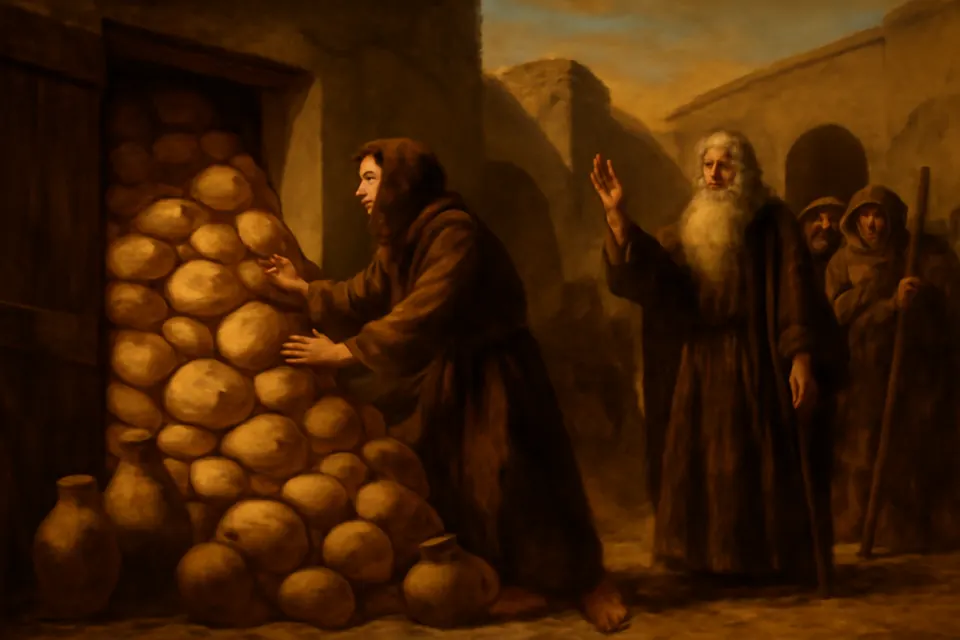
- The bread for the pilgrims: traditional. About four hundred Armenian pilgrims arrived at the poor laura on their way to the Jordan. Euthymius told the steward to feed them. The steward said there was not enough, went to the storeroom and found it full of bread, with the wine and oil jars full too. The Orthodox life adds that for three months the door would not shut.
- Fire at the altar: traditional. Monks said they saw fire come down and surround him as he celebrated the Liturgy, and he told some of them that an angel often served with him.
Symbols of St. Euthymius in art
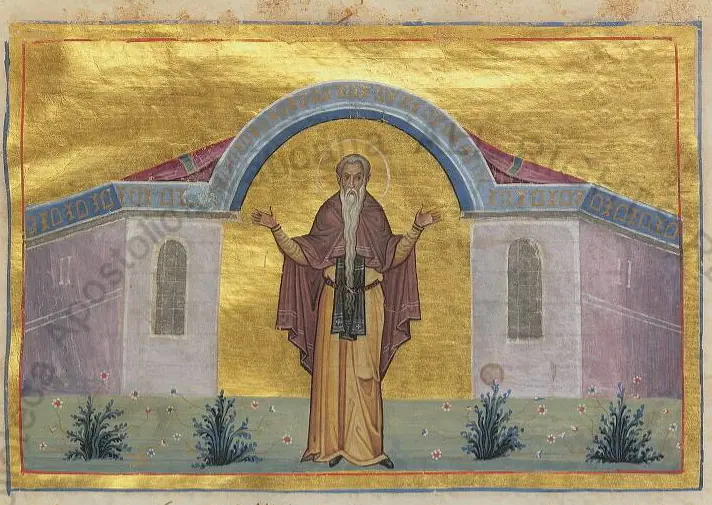
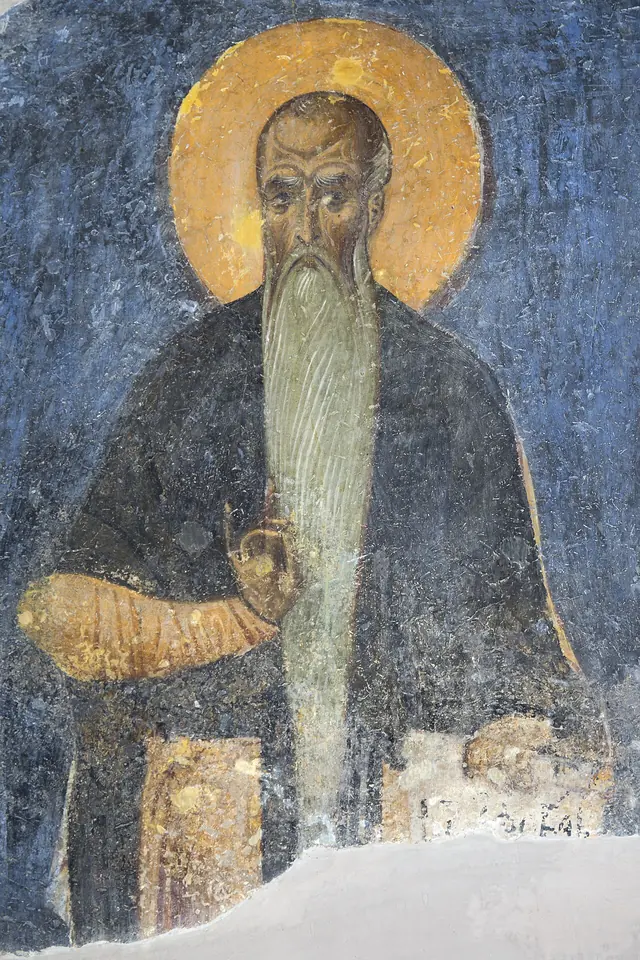
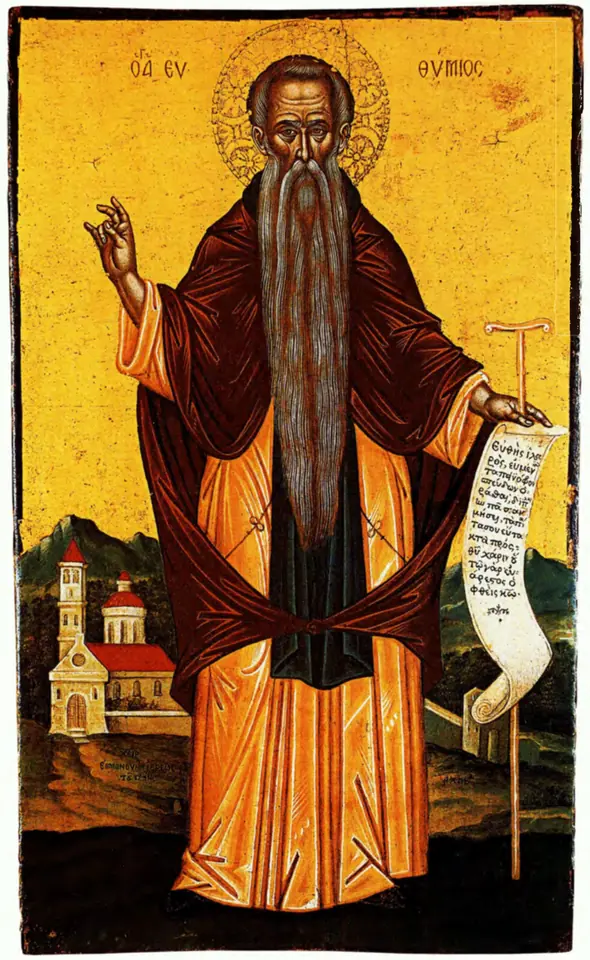
In Byzantine art Euthymius is one of the great monastic fathers. Look for an old monk with a very long, thin white beard, often reaching his waist, a dark mantle over his habit and sometimes the monk's analavos with its embroidered crosses. He often holds an unrolled scroll of monastic teaching, or a small cross, and raises his right hand in blessing. In churches he usually stands near St. Sabbas, St. Theodosius and St. Anthony, so read the Greek or Slavonic name beside him.
The mosaic at Nea Moni on Chios shows him in a gold medallion, and the 12th-century fresco at Nerezi near Skopje is one of the most moving portraits of him that survives. The Cretan painter Emmanuel Tzanes set him against a small domed church in 1682.
His monastery and tomb
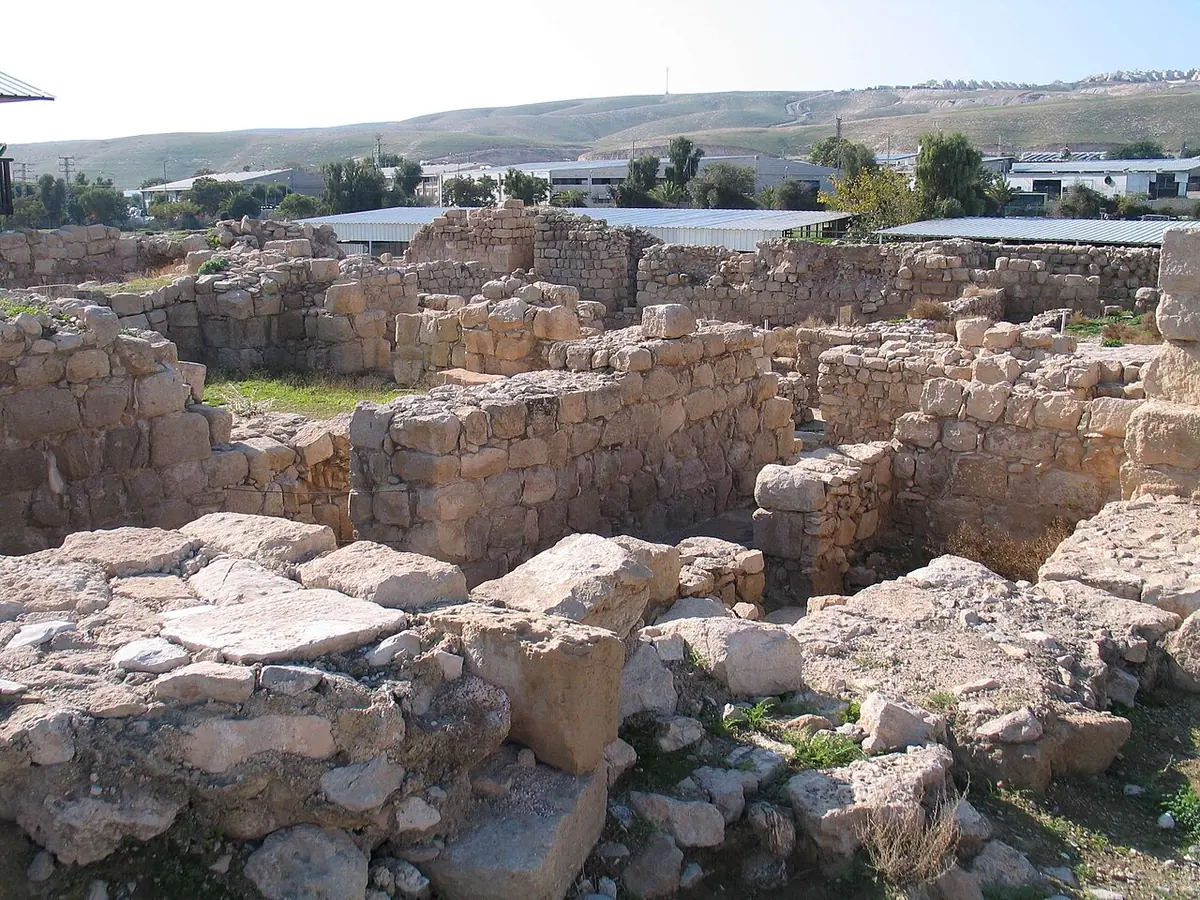
After his death the deacon Fidus spent three months turning Euthymius's first cave into a vaulted burial chamber, and the patriarch laid him there on May 7, 473. The laura became a walled monastery in 482. The Russian pilgrim Abbot Daniel saw the relics in the early 1100s, and John Phocas found the monastery fortified in 1177. Its ruins, at Khan el-Ahmar in Mishor Adumim, have been excavated, and the underground crypt survives, though the saint's relics are gone.
Prayer to St. Euthymius
On his feast the Byzantine Church sings a troparion (Tone 4) that bids the desert rejoice because he has multiplied its spiritual children, led them in piety and brought them to the perfection of the virtues, and it asks for a peaceful life through his prayers. The OCA prints the full text on its website.
Let us ask St. Euthymius to pray for us, that we may love silence, welcome every stranger and keep the faith whole. His teaching to two restless monks still speaks to anyone tempted to run from a hard place: "It is not the place that produces success, but faith and a firm will." Find other saints of January on our feast days page.
Frequently asked questions
Who was St. Euthymius the Great?
A fifth-century monk from Melitene in Armenia who came to Jerusalem as a pilgrim about 405 and spent nearly seventy years in the Judean desert. He founded a laura of hermit monks, dedicated in 428, and is called "the Great" for his holiness and his defense of the faith of the Council of Chalcedon.
When is the feast of St. Euthymius the Great?
January 20, the anniversary of his death in 473. The date is the same in the Roman Martyrology and in the Byzantine calendar of the Orthodox and Eastern Catholic churches.
What does the name Euthymius mean?
It means "good cheer" in Greek. The Orthodox life says his childless parents heard a voice promising them a son who would "bring joy to the churches," and they named him for it.
Is the Monastery of St. Euthymius still standing?
Its ruins are. Excavations at Khan el-Ahmar in Mishor Adumim uncovered the church, the walls and the vaulted burial crypt built over the cave where he first lived. The relics are no longer there.
Keep exploring
Sources
- Catholic Encyclopedia (1909): St. Euthymius. His birth in 377, the cure of Terebon and the Saracen bishop at Ephesus, his part in winning the monks to Chalcedon, and Cyril of Scythopolis as the reliable early biographer
- Orthodox Church in America: Venerable Euthymius the Great. The meaning of his name, the bread for the Armenian pilgrims, his sayings, his last instructions and death, and Abbot Daniel's visit to the relics
- Orthodox Church in America: Troparion and Kontakion of St. Euthymius the Great. Text of the troparion in Tone 4
- Yizhar Hirschfeld, Euthymius and His Monastery in the Judean Desert, Liber Annuus 43 (1993). The dedication of the laura on May 7, 428, the tomb built by the deacon Fidus, Abbot Daniel's and John Phocas's visits, and the excavated crypt