St. Bona of Pisa
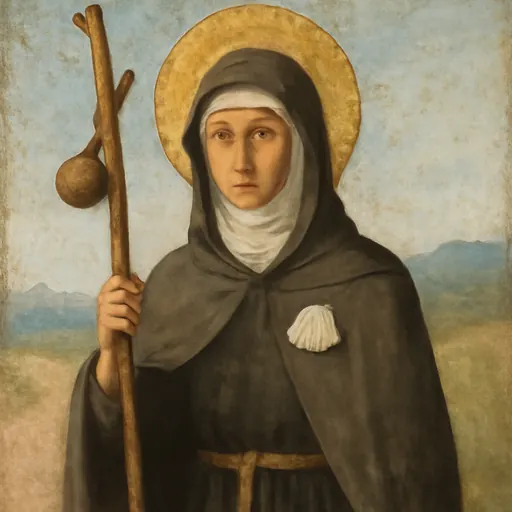
St. Bona of Pisa (about 1156–1207) was a laywoman bound to the Augustinian canons of San Martino in Pisa who walked as a pilgrim to Jerusalem, often to Rome, and nine times to Santiago de Compostela. In 1962 Pope John XXIII named her patroness of Italian travel hostesses, which is why she is called the patron saint of flight attendants. Her feast is May 29.
Who was St. Bona of Pisa?
St. Bona of Pisa was a twelfth-century laywoman who spent her life walking to the holy places of Christendom and helping others make the same journeys. She went to Jerusalem as a girl, visited the tomb of St. Peter in Rome again and again, and walked to the shrine of St. James the Greater at Santiago de Compostela nine times. Between journeys she lived as a recluse in a small house beside the church of San Martino in Pisa, under the guidance of the canons regular of St. Augustine who served it.
That is why Pope John XXIII, in 1962, named her the patroness of Italian travel hostesses. Today flight attendants all over the world know her as their patron saint.
Most of what we know comes from an early life of St. Bona, published by the Bollandists in the Acta Sanctorum. It is a medieval life, so it mixes solid memories with visions and wonders, and we read it that way.

The life of St. Bona of Pisa
A child of San Martino
Bona was born in Pisa about 1156, in the parish of San Martino, when Pisa was a great sea power trading across the Mediterranean. Her early biographer remembers her as a pious child. As a young woman she was received by the Augustinian canons of San Martino as a kind of lay sister and lived in a little house near their church, following their rule of prayer.
Jerusalem, and capture at sea
After a vision of Our Lord, the New Catholic Encyclopedia says, she set out for the Holy Land while still in her teens. A later account adds that she wanted to see her father, who had gone east and was fighting near Jerusalem. In the Holy Land a hermit named Ubald taught her about the holy places she should visit and told her when it was time to go home. The voyage back was hard. She was wounded by Saracen raiders and fell into the hands of robbers, until Pisans recognized her and brought her home.
Nine times to Santiago
The hardship did not stop her. She walked to Santiago de Compostela, in the far northwest of Spain, nine times, a journey of more than a thousand miles each way, often guiding groups of pilgrims. Tradition holds that she traveled with pilgrims under the protection of the knights of the Order of St. James. She also made frequent pilgrimages to the tomb of St. Peter in Rome. An early description of her calls her full of energy, helpful and unselfish, ready to reassure the sick with a smile.

Her death
She fell ill as she prepared for a tenth journey to Santiago, and could only get back to her little room near San Martino. She died there on May 29, 1207, at about fifty, and was buried in the church she had served all her life.
The miracles and legends of St. Bona
Her medieval life records visions of Christ and of St. James, who, the story says, appeared to her and helped her on the road. These belong to the traditional stories of her life: they come from her early biography, not from any formal investigation. Pisa honored her as a saint from the time of her death, and her cult is older than the modern canonization process.
Why St. Bona is the patron saint of flight attendants
Bona did on foot what cabin crews do in the air: she went ahead of travelers, kept them together, cared for the sick and frightened among them, and brought them home. In 1962 Pope John XXIII formally named her the patroness of Italian travel hostesses, and the patronage has spread to flight attendants and air crews in many countries. She is also a patron of travelers and pilgrims. For air travelers, Catholics also turn to St. Joseph of Cupertino; see more on our patron saints page.
Symbols of St. Bona in art
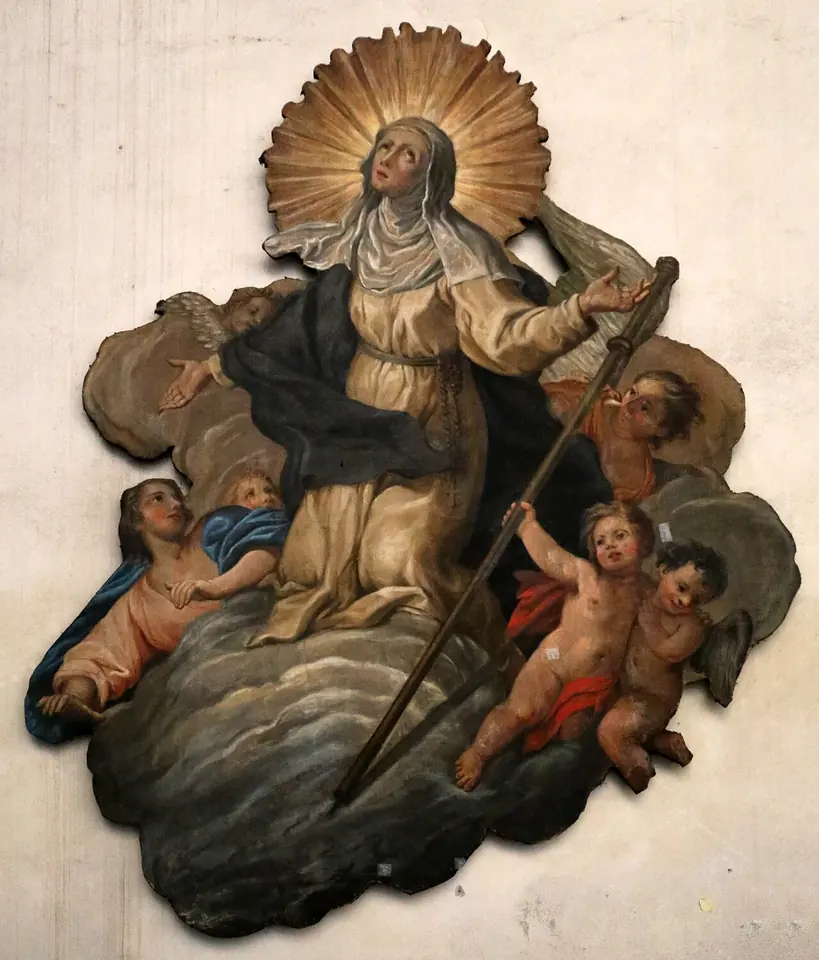
- The pilgrim's staff: her many journeys. In the Baroque relief in San Martino she holds it even in heaven.
- The scallop shell, cloak and hat: the badges of the pilgrim to Santiago.
- The dark habit and white veil: her life under the Augustinian rule.
- Rays or a halo of gold: her glory in heaven.
In Pisa, look for her in San Martino, where Riminaldi's altarpiece and the painted relief hang near her relics.
Feast day, shrine and prayer
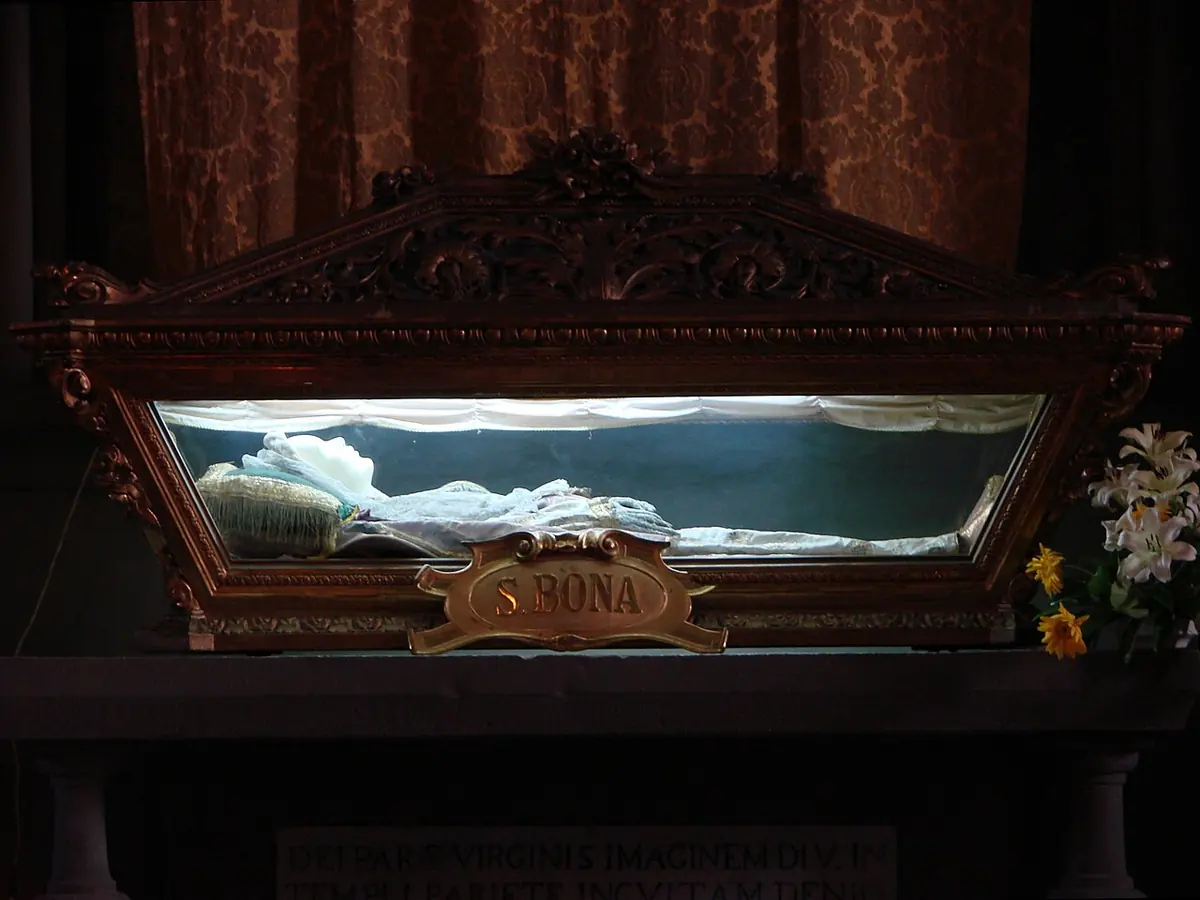
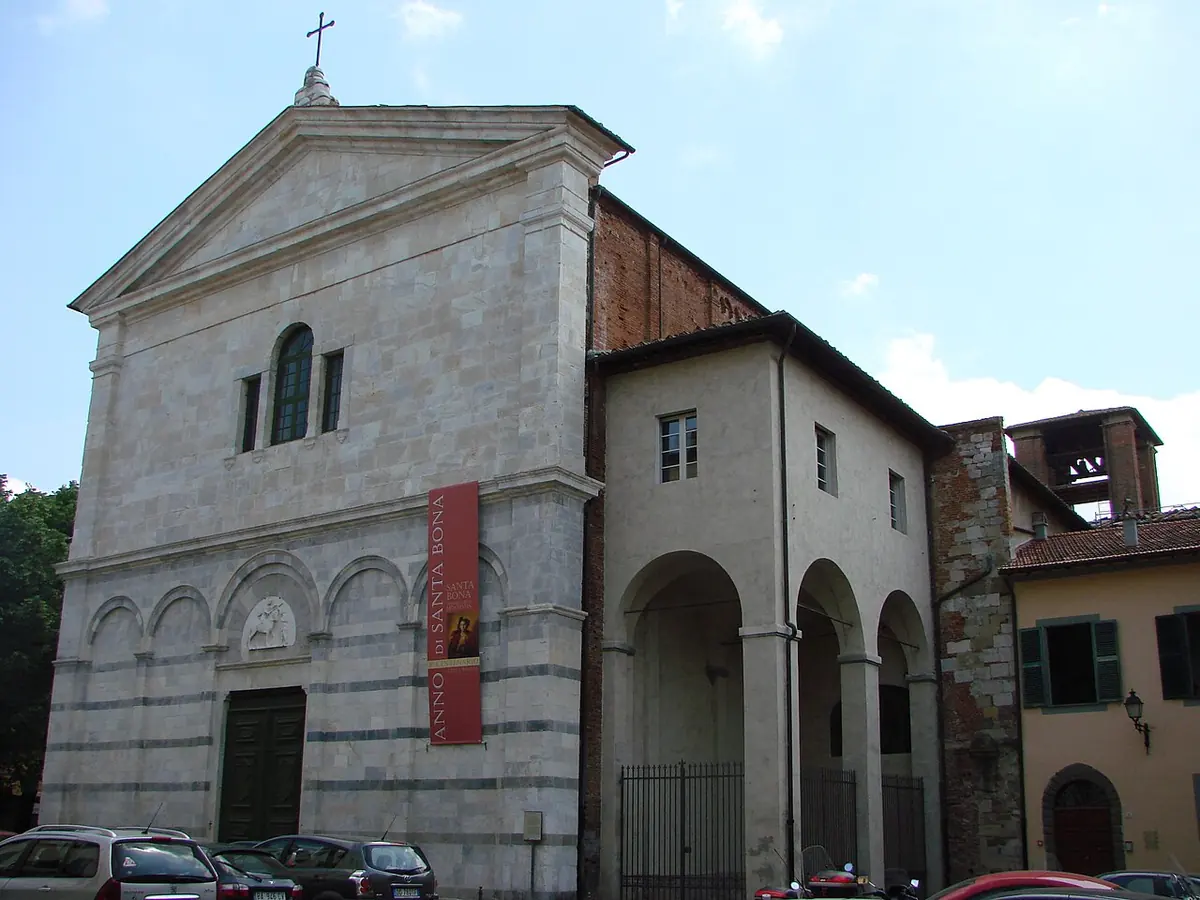
We keep the feast of St. Bona on May 29. Her body lies in the church of San Martino in Pisa, in the old quarter south of the Arno, where she lived and died. Find other saints of May on our feast days calendar.
There is no long-established traditional prayer to St. Bona in English. Before a journey, let us ask St. Bona to watch over all who travel, and to bring flight attendants, pilots and every pilgrim safely home.
Frequently asked questions
Why is St. Bona the patron saint of flight attendants?
Because she spent much of her life on the road, leading and caring for other pilgrims. In 1962 Pope John XXIII officially named her patroness of Italian travel hostesses, and airline cabin crews around the world have taken her as their patron since.
When is St. Bona's feast day?
May 29, the day she died in Pisa in 1207.
Was St. Bona canonized in 1962?
No. Some sites say so, but she was honored as a saint in Pisa from the Middle Ages, long before the modern canonization process. What Pope John XXIII did in 1962 was name her a patroness of hostesses.
Where is St. Bona buried?
In the church of San Martino in Pisa, next to the small house where she lived and died.
Keep exploring
- Patron saint pages
- Travelers
- Feast-day calendar
- Saints remembered in MaySaint of the dayWhat saint is my birthday?
- Relics
- Where the relics are kept (map)
- More
- Saints A to ZPatron saints A to ZExplore every section
Sources
- New Catholic Encyclopedia: Bona, St. (M. J. Hamilton), via Encyclopedia.com. Her life, burial at San Martino, and the 1962 patronage (Acta Apostolicae Sedis 54, 1962, 707–708); cites her life in the Acta Sanctorum, May vol. 7
- Independent Catholic News: St. Bona. Her capture at sea and the contemporary description of her character