St. Pedro de Jesús Maldonado, Martyr of the Eucharist
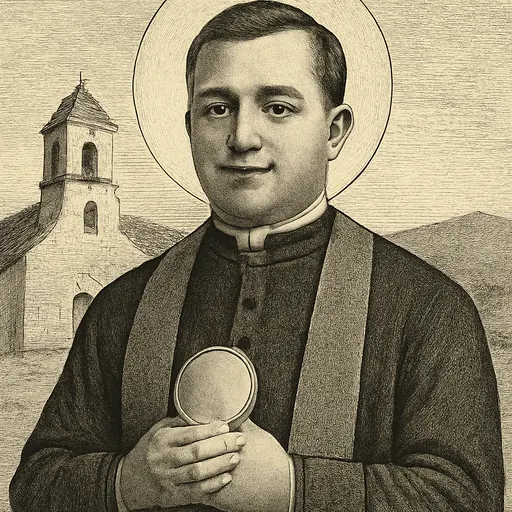
St. Pedro de Jesús Maldonado (1892–1937) was a Mexican priest of Chihuahua who loved the Eucharist above everything and founded groups of nightly adoration in his parish. On Ash Wednesday 1937 he was seized and beaten while protecting the Blessed Sacrament, and he died on February 11, 1937. Pope John Paul II canonized him in 2000.
Who was St. Pedro de Jesús Maldonado?
St. Pedro de Jesús Maldonado was a Mexican parish priest whose whole life turned on the Blessed Sacrament. As a seminarian he wrote down a resolution that became the program of his priesthood. On Ash Wednesday 1937, during the persecution of the Church in Mexico, armed men seized him while he held a pyx of consecrated Hosts. He was beaten so badly that he died the next morning, February 11, 1937. We keep his feast on that day.
He was born in the city of Chihuahua on June 15, 1892. At seventeen he entered the diocesan seminary there. His classmates, the Knights of Columbus account says, remembered him as cheerful, friendly and kind, and devoted to his studies.
"My heart always in heaven, in the tabernacle"
The Vatican's biography gives his seminary resolution in his own words:
He pensado tener mi corazón siempre en el cielo, en el sagrario.
"I have resolved to keep my heart always in heaven, in the tabernacle." The biography calls him a priest in love with Jesus in the Blessed Sacrament, a constant adorer.
The seminary was suppressed in 1914, and he was sent home. He finished his studies across the border in El Paso, Texas, where he was ordained a priest; the Knights of Columbus give the date as January 25, 1918. The Vatican's biography, for its part, calls the day of his death the anniversary of his ordination, so the sources differ on the date.
Pastor of Santa Isabel
He went home to Chihuahua despite the danger and was sent to San Nicolás de Carretas just as a terrible epidemic struck. He cared for the sick in body and soul without a thought for his own health.
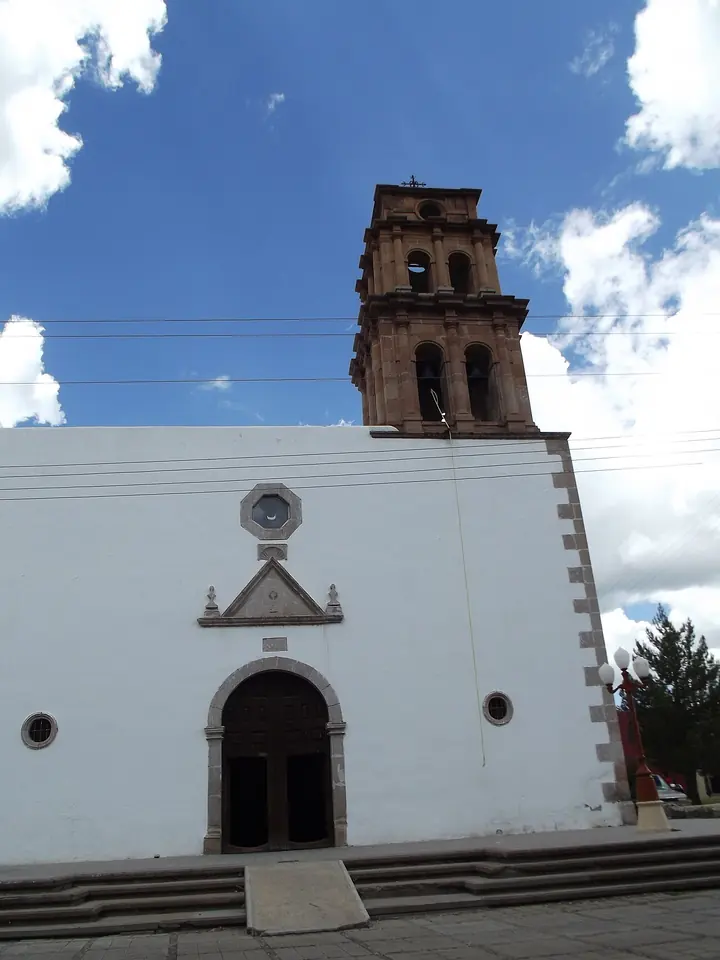
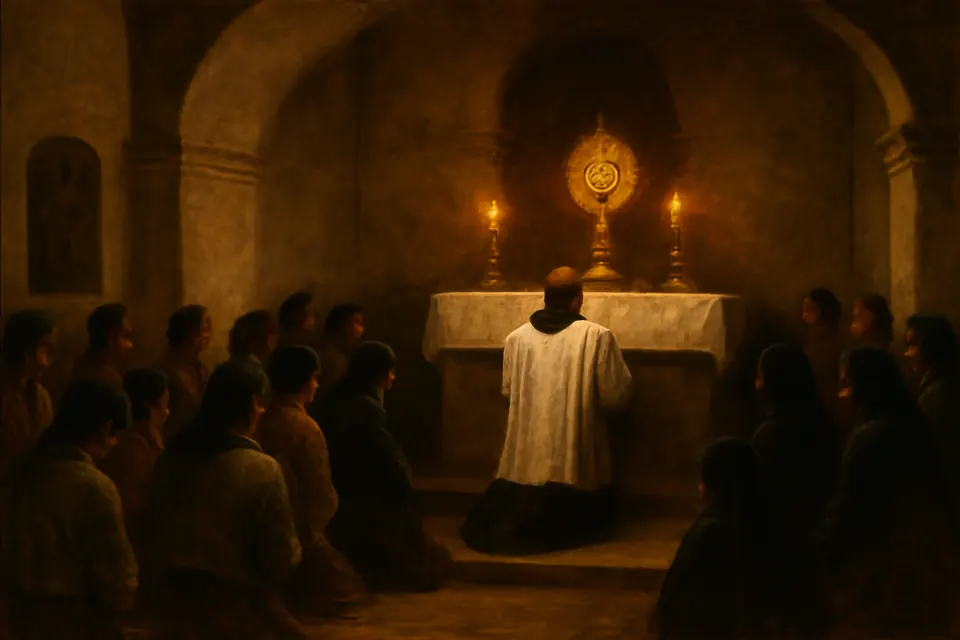
In January 1924 he became parish priest of Santa Isabel. He took charge of the children's catechism himself and won over the adults with songs and plays. He revived parish associations that had died out and founded new ones. Above all, he founded many groups of nightly adoration, so that his people would keep watch with the Lord through the night.
Exile and return
The Cristero War ended in 1929, but in Chihuahua the hostility to the Church grew worse from 1931. In 1934 the authorities deported Father Maldonado to El Paso. He came back as soon as he could and settled at Boquilla del Río, less than two miles from Santa Isabel, to go on caring for his parish.
Ash Wednesday, 1937
On February 10, 1937, Ash Wednesday, he celebrated Mass, gave out the ashes and sat down to hear confessions. A group of armed men, drunk according to the Knights of Columbus account, came to arrest him. Father Pedro took a pyx with consecrated Hosts and went with them. He walked barefoot to Santa Isabel, and a large crowd of the faithful followed.

At the town hall the officials insulted and struck him. The local political boss, Andrés Rivera, hit him on the head with a pistol and fractured his skull. The men beat him as he lay on the floor. The pyx fell open and the Hosts spilled out. One of the men picked them up and, mocking, told the priest, "Cómete esto," "Eat this." The Vatican's biography sees in that moment the answer to his lifelong wish: by the hand of his executioner, he received Jesus in the Blessed Sacrament before he died.
Hours later, some of the faithful carried him to the civil hospital in Chihuahua. He died early the next morning, February 11, 1937.
Canonization
Pope John Paul II beatified him with the other martyrs of the Mexican persecution in 1992 and canonized him on May 21, 2000, as one of St. Cristóbal Magallanes and his 24 companions. As a martyr, he needed no approved miracle for beatification; the Church recognized that he died for the faith. In his homily that day, the Pope prayed that the example of the new saints would help Mexicans "make a renewed commitment of fidelity to God."
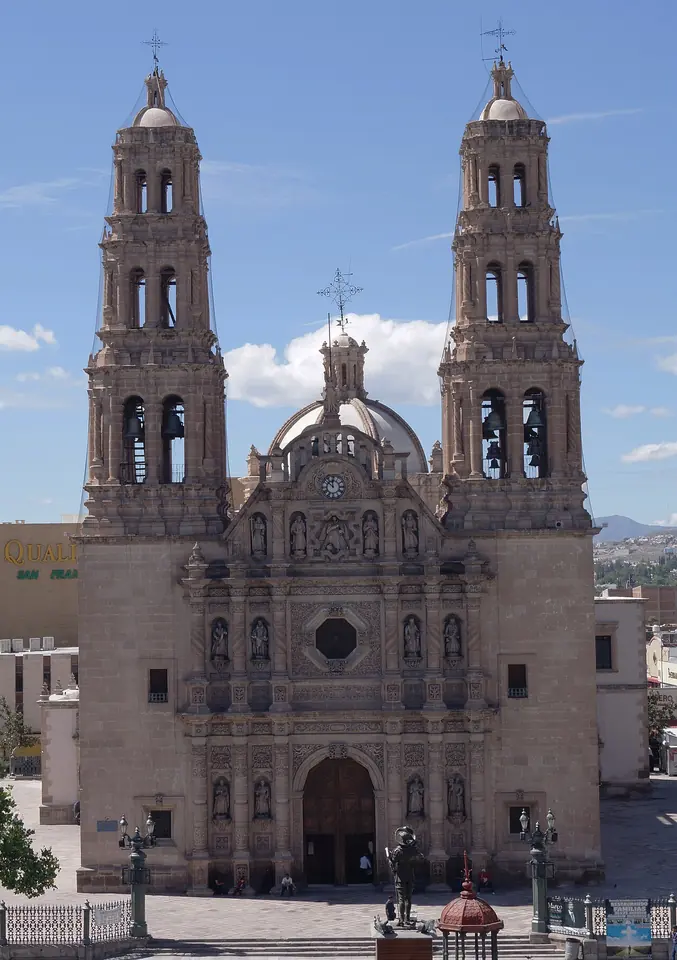
His relics rest in the Cathedral of Chihuahua, in an altar marked with his name.

Symbols of St. Pedro de Jesús Maldonado in art
He lived in the age of photography, so his images follow photographs of a round-faced young priest in a black cassock. Look for:
- A pyx or monstrance with the Host: his love of the Eucharist and the Hosts he carried when he was taken.
- Ashes: he was seized on Ash Wednesday.
- The palm: the sign of a martyr.
He also appears in group images of the Mexican martyrs beside St. José María Robles Hurtado and St. Toribio Romo.
Prayer and feast day
We keep his feast on February 11, and on May 21 with all the martyrs canonized in 2000. There is no widely used English prayer to him, but his seminary resolution is a prayer we can make our own: to keep our hearts always in heaven, in the tabernacle. Let us ask St. Pedro de Jesús Maldonado to pray for priests, for all who keep watch in Eucharistic adoration, and for Christians who suffer for their faith. St. Pedro de Jesús Maldonado, pray for us.
Frequently asked questions
Who was St. Pedro de Jesús Maldonado?
A priest of the Archdiocese of Chihuahua, born there in 1892, who served as parish priest of Santa Isabel from 1924. A lover of the Blessed Sacrament, he founded many groups of nightly adoration. He was deported in 1934, came back to his people, and was attacked by armed men on Ash Wednesday 1937. He died the next day.
How did St. Pedro de Jesús Maldonado die?
On February 10, 1937, after he had distributed ashes and heard confessions, armed men arrested him. He took a pyx with consecrated Hosts and went with them. At the town hall he was struck on the head with a pistol and beaten. He was taken to the hospital in Chihuahua and died early on February 11.
When is the feast of St. Pedro de Jesús Maldonado?
February 11, the day of his death. He is also honored on May 21 with the other Mexican martyrs canonized in 2000.
Where are the relics of St. Pedro de Jesús Maldonado?
In the Metropolitan Cathedral of Chihuahua, where they rest in an altar inscribed with his name.
Keep exploring
Sources
- Holy See, Office of Liturgical Celebrations: Pedro de Jesús Maldonado Lucero (biography, in Spanish). His seminary resolution (quoted), the nightly adoration, the arrest on Ash Wednesday, the Hosts and "Cómete esto," his death on February 11
- Knights of Columbus: St. Pedro de Jesús Maldonado Lucero. His seminary years, ordination in El Paso, the epidemic at San Nicolás de Carretas, Santa Isabel from 1924, deportation in 1934, Boquilla del Río, Andrés Rivera, and his relics in the Cathedral of Chihuahua
- John Paul II, homily for the canonizations of May 21, 2000