St. Ferdinand III of Castile (San Fernando, King of Castile and León)
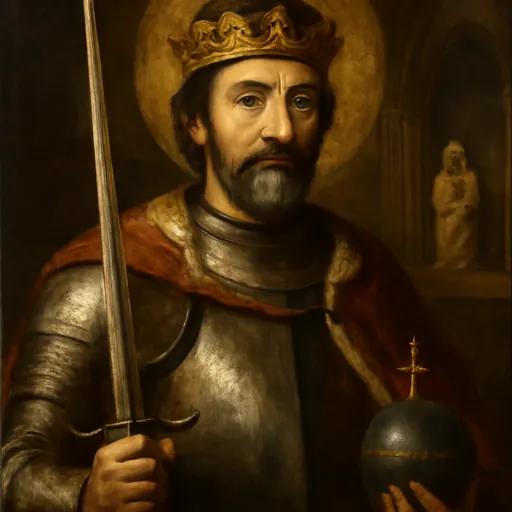
St. Ferdinand III of Castile (1199–1252) was the king who united the crowns of Castile and León, won back Córdoba and Seville, and ruled with a reputation for justice, prayer and care for the poor. Pope Clement X canonized him in 1671. We keep his feast on May 30; he is the patron of Seville and of Spain's military engineers, and his incorrupt body rests in Seville Cathedral.
Who was St. Ferdinand III of Castile?
St. Ferdinand III of Castile, "San Fernando" to Spaniards, was the thirteenth-century king who joined the crowns of Castile and León and brought Córdoba and Seville back under Christian rule. He is one of the few medieval kings the Church has declared a saint, and Spain loves him less for his victories than for the kind of man he was: a ruler who kept justice, spared his people heavy taxes, fasted, prayed through the night before battles, and asked to be buried in the habit of a Franciscan.
He was the son of King Alfonso IX of León and Queen Berengaria of Castile. Berengaria's sister Blanche was the mother of St. Louis IX of France, so the two saint kings were first cousins. His son was Alfonso X, "the Wise."

The life of St. Ferdinand III
King of Castile and León
He was born around 1199 in the kingdom of León. In 1217 his mother, the rightful heiress of Castile, renounced the crown in his favor, and he became king of Castile at about eighteen. In 1230, when his father died, he became king of León as well, though not without opposition. The union of the two kingdoms that he achieved was never undone.
The Catholic Encyclopedia says he chose the wisest counselors in the realm, saw to strict justice, and took great care not to overburden his subjects with taxes, "fearing, as he said, the curse of one poor woman more than a whole army of Saracens." In 1219 he married Beatrice of Swabia, and the Catholic Encyclopedia counts seven children of that marriage. The great Gothic cathedrals of Burgos (1221) and Toledo (1226) were begun in his reign.

Córdoba and Seville
Most of his reign was spent in war against the Muslim kingdoms of al-Andalus. He took Córdoba in 1236 and Seville in 1248, and by his death, the Catholic Encyclopedia notes, only Granada and Alicante remained in Muslim hands. In both cities he turned the great mosque into a cathedral dedicated to the Blessed Virgin. He founded dioceses, restored Catholic worship, built churches and monasteries, and endowed hospitals.
His soldiers saw a different side of him. The Catholic Encyclopedia says he watched over their conduct, "confiding more in their virtue than in their valour," fasted strictly, wore a rough hair shirt, and often spent the night in prayer, especially before battles. "Amid the tumult of the camp," it says, "he lived like a religious in the cloister."

Death in Seville
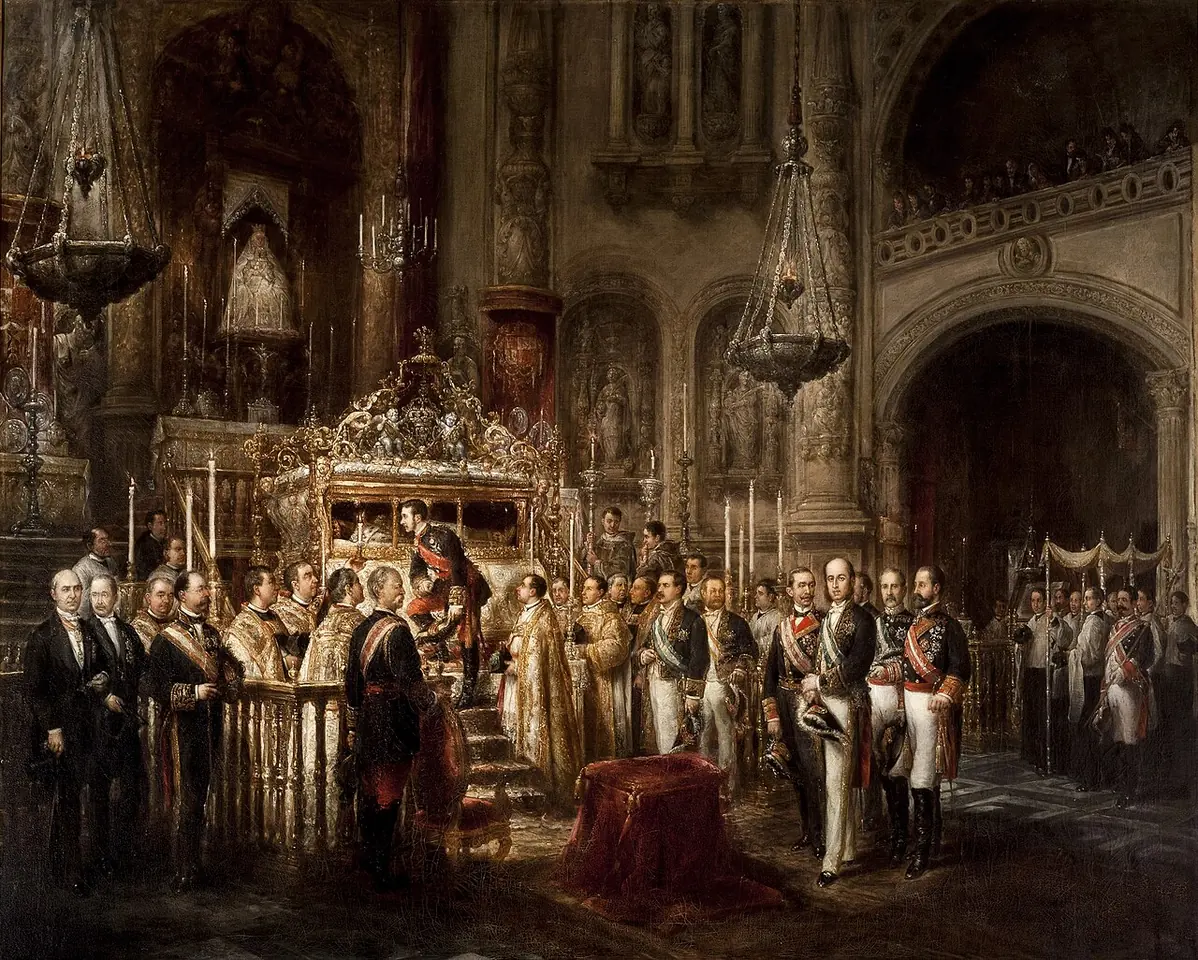
He fell ill in Seville and died there on May 30, 1252. He was buried in the cathedral before the image of the Blessed Virgin, clothed at his own request in the habit of the Third Order of St. Francis.

The miracles of St. Ferdinand III
Many miracles were reported at his tomb in the centuries after his death, and they were part of the long cause that ended when Pope Clement X canonized him in 1671. His body has been described as incorrupt for centuries. The Catholic Encyclopedia puts it with care: "His body, it is said, remains incorrupt." No single miracle from his cause is widely cited today, so we leave the details to the record of the canonization.
Why St. Ferdinand III is a patron saint
- Seville: he restored the city to Christian worship and is buried at its heart.
- Engineers: King Charles IV named him patron of the royal sappers and miners in 1804, and in May 1805 the patronage was extended to the whole corps of engineers, the forerunner of today's Spanish Army engineers. A company of engineers still mounts the guard of honor beside his body on his feast. See our page on the patron saint of engineers.
- Kings and rulers: he is held up as a model of a Christian ruler who served the poor, kept justice and governed in prayer.
Symbols of St. Ferdinand III in art
- Crown, sword and orb: the signs of a king. The sword is held upright as a sign of just rule, not raised in battle.
- Armor and an ermine-lined mantle: both warrior and king, as in the Murillo portrait and the seventeenth-century painting in Seville's city hall.
- The Virgin Mary: often a small image of the Virgin, recalling his devotion and the Virgen de los Reyes in the Royal Chapel.
To tell him from St. Louis IX, look for the castle and lion of Castile and León; Louis wears the blue mantle with gold lilies of France.

Feast day and the Royal Chapel
We keep his feast on May 30. In Seville Cathedral's Royal Chapel, his body lies in a Baroque silver urn beneath the Virgen de los Reyes. On his feast the cathedral opens the urn so the faithful can see him, while a company of army engineers with their flag stands guard. In the Plaza Nueva a bronze equestrian monument honors him. See more saints of the season on our feast days page.

Praying with St. Ferdinand III
There is no widely known English prayer to St. Ferdinand with a documented origin. In Seville the faithful come to pray before his open urn on his feast. Let us ask St. Ferdinand, who feared the curse of one poor woman more than an army, to pray for all who govern, that they may rule with justice and mercy.

Frequently asked questions
Who was St. Ferdinand III of Castile?
The king of Castile from 1217 and of León from 1230, who united the two crowns for good and took Córdoba (1236) and Seville (1248). He was the son of Alfonso IX of León and Berengaria of Castile, a first cousin of St. Louis IX of France, and the father of Alfonso X the Wise.
What is St. Ferdinand III the patron saint of?
He is the patron of the city of Seville and of the Spanish Army's corps of engineers. Rulers and those in government also look to him as a model of a Christian king.
When is the feast of St. Ferdinand III?
May 30, the day he died in Seville in 1252. On that day the cathedral opens his silver urn in the Royal Chapel so the faithful can see his body.
Is St. Ferdinand III's body incorrupt?
His body is kept in a silver urn in the Royal Chapel of Seville Cathedral and has long been described as incorrupt. The Catholic Encyclopedia says, more cautiously, that 'His body, it is said, remains incorrupt.'
Keep exploring
Sources
- St. Ferdinand III, Catholic Encyclopedia (1909). His reign, the 'curse of one poor woman' saying, his burial in the Franciscan habit and the 1671 canonization
- Abierta la urna del Rey San Fernando III, Público (Europa Press). The opening of the urn on his feast and the guard of honor of the Engineers
- San Fernando: el legado del Rey Santo que guía al Arma de Ingenieros, El Faro de Ceuta. The 1804 and 1805 decrees naming him patron of the engineers, citing the Archivo Militar de Segovia