St. John Wall, Franciscan Martyr of Worcester
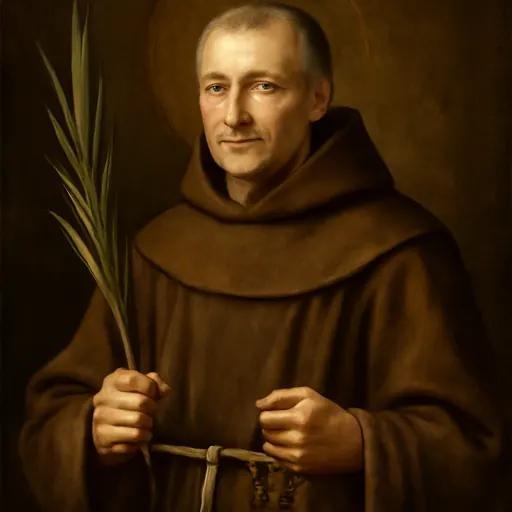
St. John Wall (1620–1679) was an English Franciscan friar, Father Joachim of St. Anne, who served the Catholics of Worcestershire in secret for over twenty years and was hanged, drawn and quartered at Worcester on August 22, 1679, during the Popish Plot panic. The informers themselves declared him innocent of any plot, and he was offered his life if he would give up his faith. Pope Paul VI canonized him in 1970 among the Forty Martyrs of England and Wales.
Who was St. John Wall?
St. John Wall was a Franciscan friar who spent more than twenty years bringing the sacraments to the hidden Catholics of Worcestershire, and died for his priesthood at Worcester on August 22, 1679. It was the octave day of the Assumption, a fitting day for a man who had taken the name of Our Lady's mother. We keep his feast on that day.
He was born in Lancashire in 1620 into a gentry family. Dom Bede Camm, who traced his story in Forgotten Shrines (1910), thought he was born at Chingle Hall in the parish of Goosnargh, a son of Anthony Wall. He was sent young to the English College at Douai and then studied in Rome, where he was ordained priest about 1645, entered in the college records under the name John Marsh. His brother William also became a priest, was condemned to death during the same persecution, and was reprieved.
At about thirty-two he took the Franciscan habit at the English convent of St. Bonaventure in Douai on New Year's Day, 1651, and made his vows a year later. He took the religious name Joachim of St. Anne. Within half a year of his profession he was made vicar of the house, and soon after master of novices.

Twenty years in Worcestershire
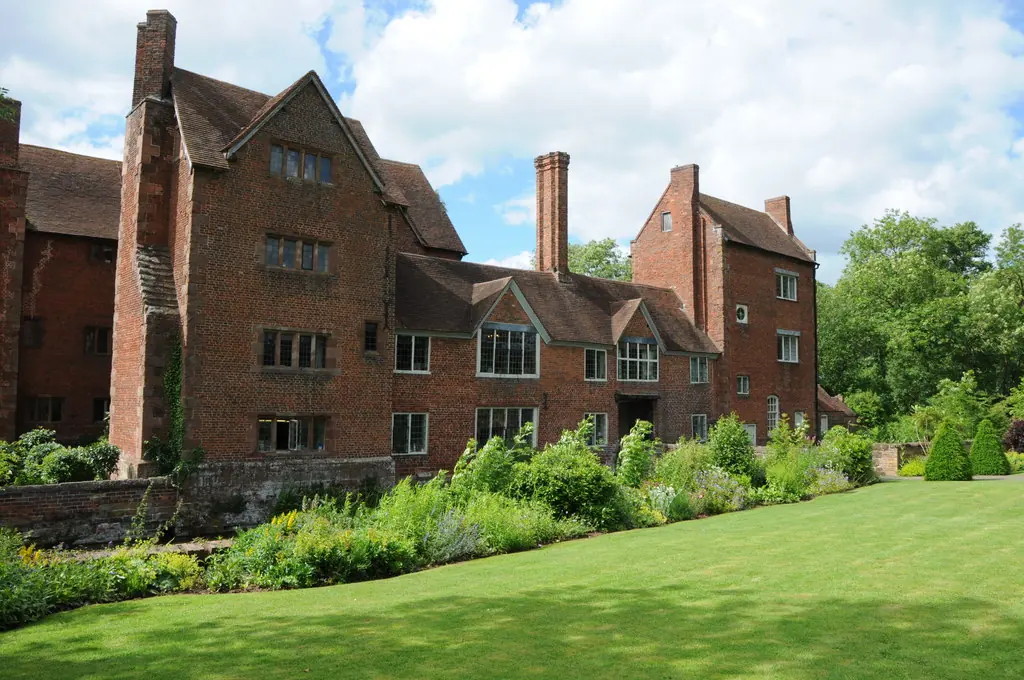
In 1656 he was sent to England with a small band of friars and given charge of Worcestershire. He lived under the names Francis Johnson and Webb. Camm writes that the greater part of his mission was spent at Harvington Hall, a moated house near Kidderminster, where the Catholic widow Dame Mary Yate gave him a home. Harvington is still famous for its hiding places for priests. Challoner says he was "esteemed a laborious missioner, who both by word and example gained many souls to God."
Arrest and trial
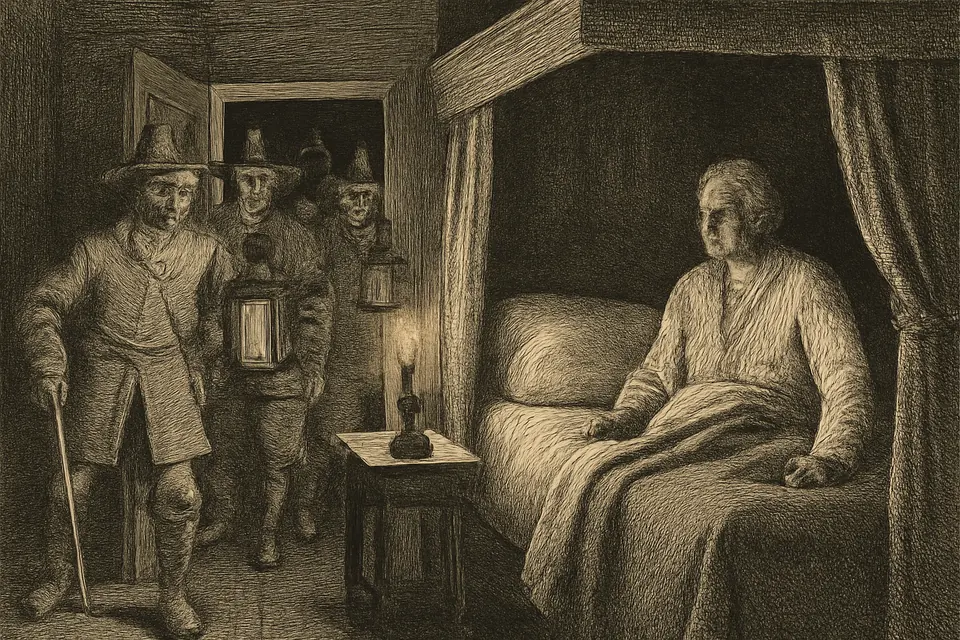
When the false Popish Plot set off a hunt for priests in late 1678, Father Wall was taken almost by accident. Camm tells how the sheriff's officers came to Rushock Court at night to arrest a man for debt, broke into a bedroom and found the friar in bed. They guessed who he was. He refused the oaths of allegiance and supremacy and was sent to Worcester jail in early December.
In prison he wrote a narrative of his sufferings. "It is an easy thing to run the blind way of liberty," he wrote, "but God deliver us from all broad, sweet ways." After five months he was tried at Worcester on April 25, 1679, before Judge Atkins, for being a priest. He would neither confess nor deny it. When he was found guilty and sentenced, he bowed and said aloud, "Thanks be to God; God save the King; and I beseech God to bless your lordship, and all this honourable bench."
Declared innocent, but not spared
He was sent to London and examined four times by the plot's informers, Titus Oates, William Bedloe, Stephen Dugdale and Miles Prance. Afterward he wrote to a friend that he had been "publicly declared innocent and free of all plots whatever." Bedloe told him that if he would only conform in religion, he would pledge his own life that Wall would not die. "I told them," he wrote, "I would not buy my life at so dear a rate as to wrong my conscience."
He was sent back to Worcester. In the same letter he said he had "a strong imagination" that he would be one of those who suffered.
His death at Worcester
Two days before the execution a fellow Franciscan, Father William Levison, managed to visit him. On the last day they were alone for four or five hours; Levison heard his confession and gave him Holy Communion. Then he did something brave. He stood in the crowd next to the under-sheriff, near the gallows, and gave Father Wall the last absolution as he was turned off the ladder. Wall was executed on Red Hill, above the city. Levison wrote that he was the first to suffer at Worcester "since the Catholic religion entered into this nation."

The Catholics of the town carried his body to St. Oswald's churchyard and buried it. Levison secretly took the head, which was sent to the Franciscans at Douai.
- Reported: Challoner records that for some time afterward his grave at Worcester stayed green while the rest of the churchyard, a constant thoroughfare, was bare. This was never formally investigated.

Canonization
Pope Pius XI beatified John Wall in 1929. Pope Paul VI canonized him on October 25, 1970, as one of the Forty Martyrs of England and Wales.
Symbols of St. John Wall in art
No portrait from his lifetime is known, so images of him are modern. He is shown in the brown habit of the Franciscans. Look for:
- The Franciscan habit and knotted cord: his order, the friars of St. Francis of Assisi.
- The palm: the sign of a martyr.
- The rope: the manner of his death, in group images of the Forty Martyrs.
In paintings and windows of the Forty Martyrs he stands beside the other Franciscan, St. John Jones.
Feast day and where he is honored
We keep his feast on August 22, the same day the old priest St. John Kemble died at Hereford. In the churchyard of the Catholic church at Harvington stands a crucifix put up for the bicentenary in 1879, inscribed in his memory with the motto of the Franciscans, Deus meus et omnia, "My God and my all." See the feast day calendar for the other martyrs of 1679.
We know of no traditional prayer composed for St. John Wall alone. Let us ask him, who would not buy his life at the price of his conscience, to pray for all who are offered an easy way out of their faith, and for the friars who carry on his work. St. John Wall, pray for us.
Frequently asked questions
Who was St. John Wall?
A Lancashire-born priest, ordained in Rome, who joined the Franciscans at Douai in 1651 and took the name Joachim of St. Anne. From 1656 he worked in Worcestershire under the names Francis Johnson and Webb, mostly from Harvington Hall. He was arrested in December 1678 and executed at Worcester on August 22, 1679.
Why was John Wall executed?
He was condemned for high treason under the statute of 1585 for being a priest ordained abroad. In London the Popish Plot informers, including Titus Oates and William Bedloe, examined him and declared him innocent of any plot, but he was still put to death because he would not renounce his faith.
When is the feast of St. John Wall?
August 22, the day of his martyrdom in 1679, the same day St. John Kemble died at Hereford. He is also honored with the Forty Martyrs of England and Wales, canonized by Pope Paul VI on October 25, 1970.
What is the connection between St. John Wall and Harvington Hall?
Harvington Hall, a moated house near Kidderminster famous for its priest hiding places, was home to the Catholic widow Dame Mary Yate, who sheltered him. Dom Bede Camm wrote that the greater part of his missionary life was spent there. A crucifix in the churchyard of the Catholic church at Harvington has honored him since 1879.
Keep exploring
Sources
- Richard Challoner, Memoirs of Missionary Priests (1924 ed.), pp. 550–554, at archive.org. His own narrative of his imprisonment and trial, his letter after the London examinations, and Father Levison's account of his death
- Bede Camm, Forgotten Shrines (1910), pp. 253–275, at archive.org. His family and birthplace, ordination in Rome, Harvington Hall, his arrest at Rushock Court and the place of execution on Red Hill
- Holy See: Paul VI, Canonization of forty martyrs from England and Wales, October 25, 1970