St. Theodosius the Cenobiarch
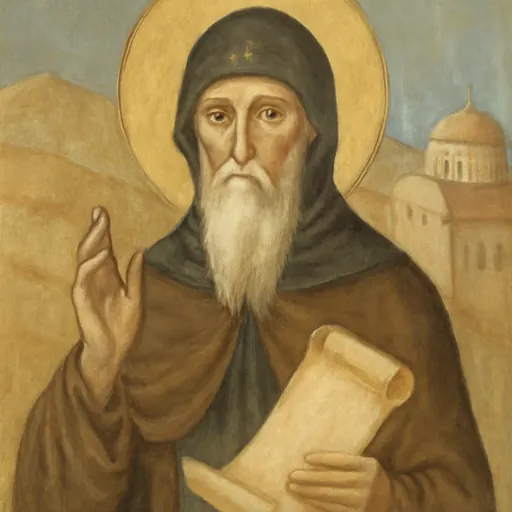
St. Theodosius the Cenobiarch (423–529) was a monk from Cappadocia who founded a great monastery in the desert near Bethlehem, with hospitals, guesthouses and four churches for monks of different languages. The patriarch of Jerusalem made him head of all the community-living monks (cenobites) of Palestine, and he defended the Council of Chalcedon against an emperor. His feast is January 11.
Who was St. Theodosius the Cenobiarch?
St. Theodosius the Cenobiarch was a monk of the Holy Land who turned a desert cave near Bethlehem into one of the largest monasteries of the early Church. He lived more than a hundred years, from 423 to 529. The Church of Jerusalem made him head of every community of monks in Palestine, and the East still calls him Theodosius the Great.
We know him chiefly through a Life written by Theodore, bishop of Petra, who had been his disciple; Butler's Lives of the Saints follows it closely. A second early account by Cyril of Scythopolis also survives. So the main lines of his life come from people who knew him or his monks.
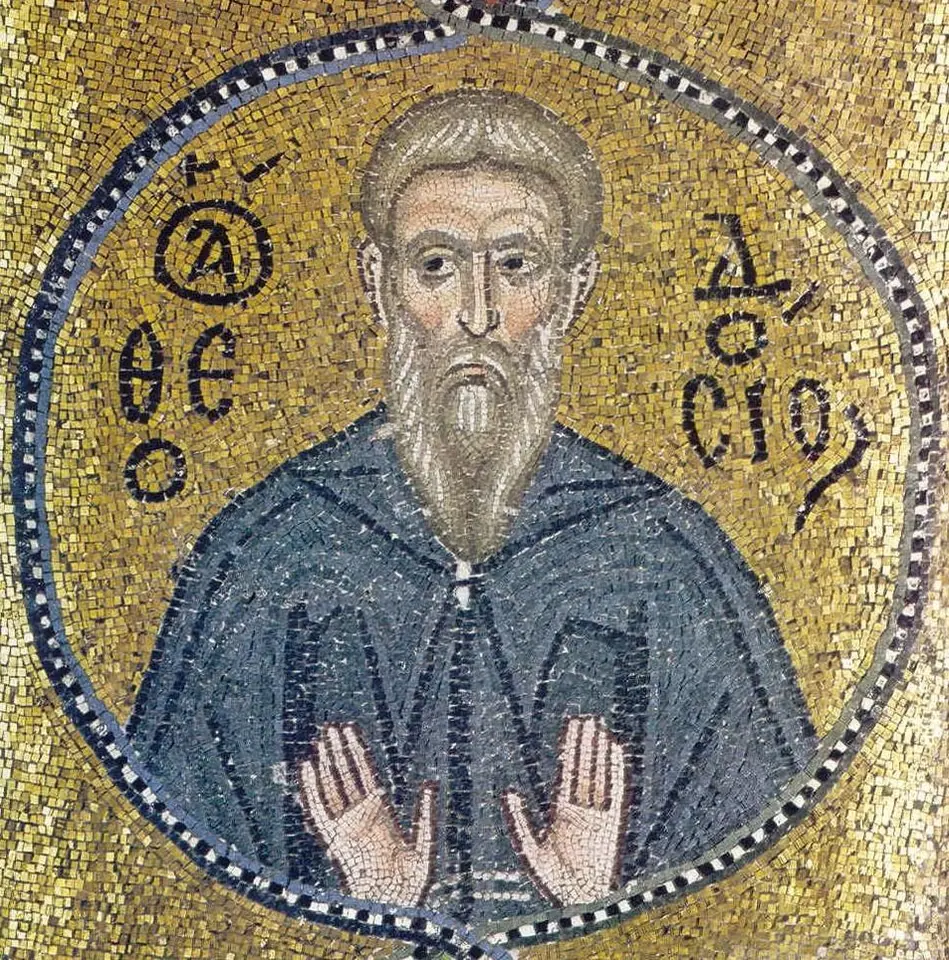
The life of St. Theodosius
From Cappadocia to Jerusalem
Theodosius was born in 423 at Mogariassus in Cappadocia, in the middle of what is now Turkey. He was ordained a reader as a young man and, moved by the example of Abraham, left his country to go to Jerusalem. On the way he went out of his road to see St. Simeon Stylites on his pillar. Butler says Simeon "foretold him several circumstances of his life."
In Jerusalem he put himself under an old monk named Longinus, because, as Butler puts it, he feared "the dangers of living without a guide." When a devout woman built a church of the Blessed Virgin on the road to Bethlehem, Longinus ordered Theodosius to take charge of it. He did not stay long. Afraid of the praise of men, he withdrew to a cave on a desert hill.
Thirty years in the cave
For thirty years, Butler says, he never tasted bread, living on pulse and wild herbs, with prayer and many tears. The Eastern troparion still sings that "by a flood of tears you made the desert fertile." Disciples came anyway. He meant to accept only six or seven, but charity won, and he resolved never to turn away anyone who seemed sincere.
The first lesson he gave them was to remember death. He had a large common grave dug for the community, led the monks to it and asked who would be the first to dedicate it. A priest named Basil knelt and asked his blessing. Theodosius had the prayers for the dead said for him, and Basil died peacefully on the fortieth day, with no sign of illness.

A city of saints in the desert
When the cave became too small, Theodosius built a great monastery nearby. The Eastern account says he walked into the desert with a censer of cold coals and incense, asking God to show him the place, and built where the coals caught fire by themselves.

The monastery cared for everyone. It had an infirmary for sick monks, another for the old and weak, and a house for those who had lost their minds. It had guesthouses where, on one day, more than a hundred tables were served. Butler calls it "a city of saints in the midst of a desert." There were four churches: one for the Greeks, one for the Armenians (with Arabs and Persians), one for the Bessi from the lands north of Thrace, and a fourth for penitents. Each nation sang the first part of the Mass, through the Gospel, in its own language. Then all came together in the Greek church for the Eucharist and received Communion together. The Orthodox account puts the number of monks at 700.
Sallust, bishop of Jerusalem, named St. Sabas superior of the hermits of Palestine and Theodosius superior of the cenobites, the monks who lived in community. "Whence," Butler says, "he was styled the Cenobiarch." The two old abbots were close friends.
Standing for the faith
The Emperor Anastasius favored the Monophysite party, which rejected the Council of Chalcedon's teaching that Christ is one person in two natures. He tried to win Theodosius with money; the abbot gave it all to the poor. When the emperor sent him a heretical creed to sign, Theodosius wrote back that he was ready to die for the faith of the Church. Later he went up into the pulpit in Jerusalem and cried out, in Butler's words: "If any one receives not the four general councils as the four gospels, let him be anathema."
He was banished. Anastasius died in 518, and his successor Justin recalled him. Theodosius lived eleven more years, kept his old austerities, and bore a painful last illness without asking God to ease it. He died in 529, in his 105th year, and was buried in the cave where he had begun.
The miracles of St. Theodosius
- The censer that lit itself (traditional): told in the Eastern account of how he chose the site for his monastery.
- Bread multiplied for the hungry (traditional): during a famine he let the crowds in, and the monks found the bakery full of bread. Butler, from the early Life, says provisions for his guests were "more than once miraculously multiplied by his prayers."
- Provisions at Easter (traditional): when the first twelve monks had nothing to eat for the feast, not even bread for the Eucharist, mules arrived loaded with food.
- A woman healed (reported): as he left the church in Jerusalem, a woman with a cancer was healed by touching his garment, an event the early Life records.
- The earthquake at Antioch (traditional): the Eastern account says he once called his monks to prayer, saying God's wrath was near the East, at the very hour an earthquake destroyed Antioch.
Symbols of St. Theodosius in art
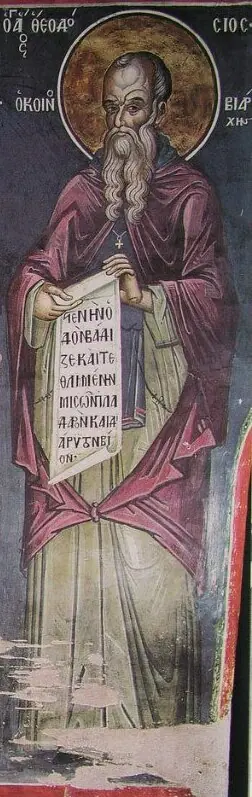
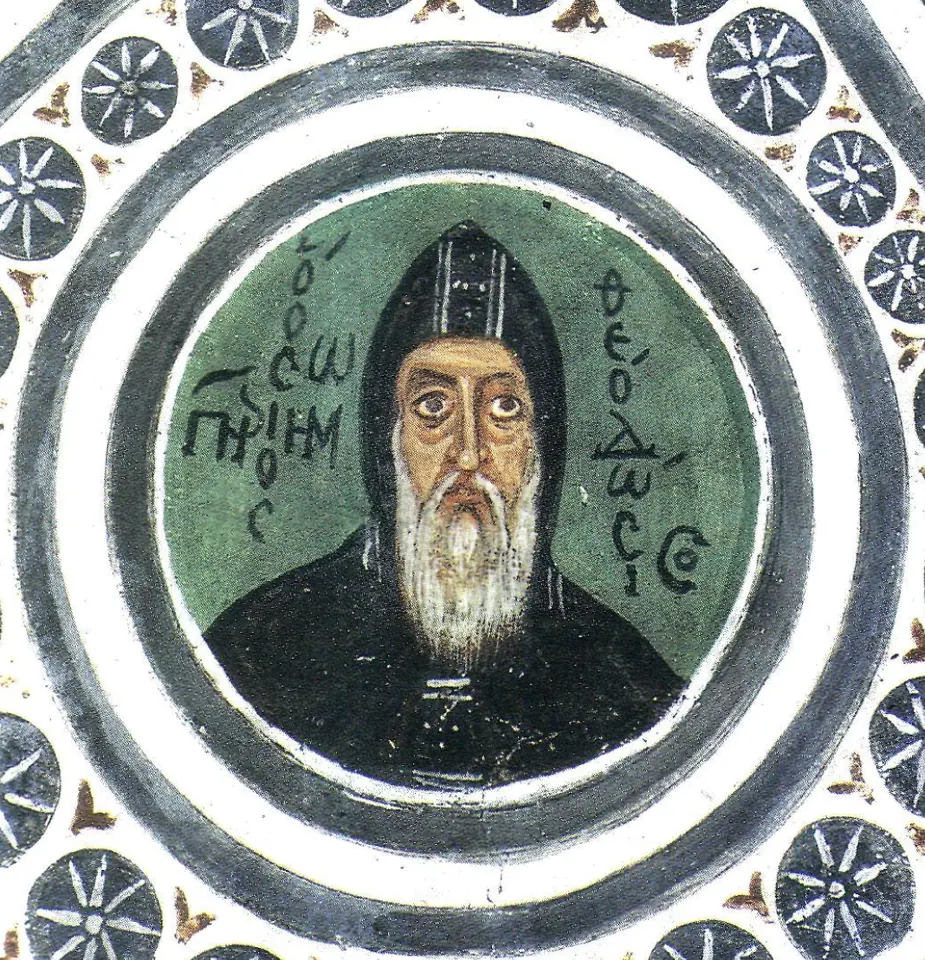
- Dark habit and cowl: the monk. Byzantine images show him in the dark hood of a monk.
- Very long white beard: his long life.
- Scroll: his teaching. The 1547 fresco at Dionysiou on Mount Athos shows him with an open scroll.
- Censer: the sign that chose his monastery's site, though this is less common.
In Byzantine churches he usually appears among the great monastic fathers, near St. Anthony, St. Sabas and St. Euthymius, so read the inscription to be sure.
Feast day and where he is honored
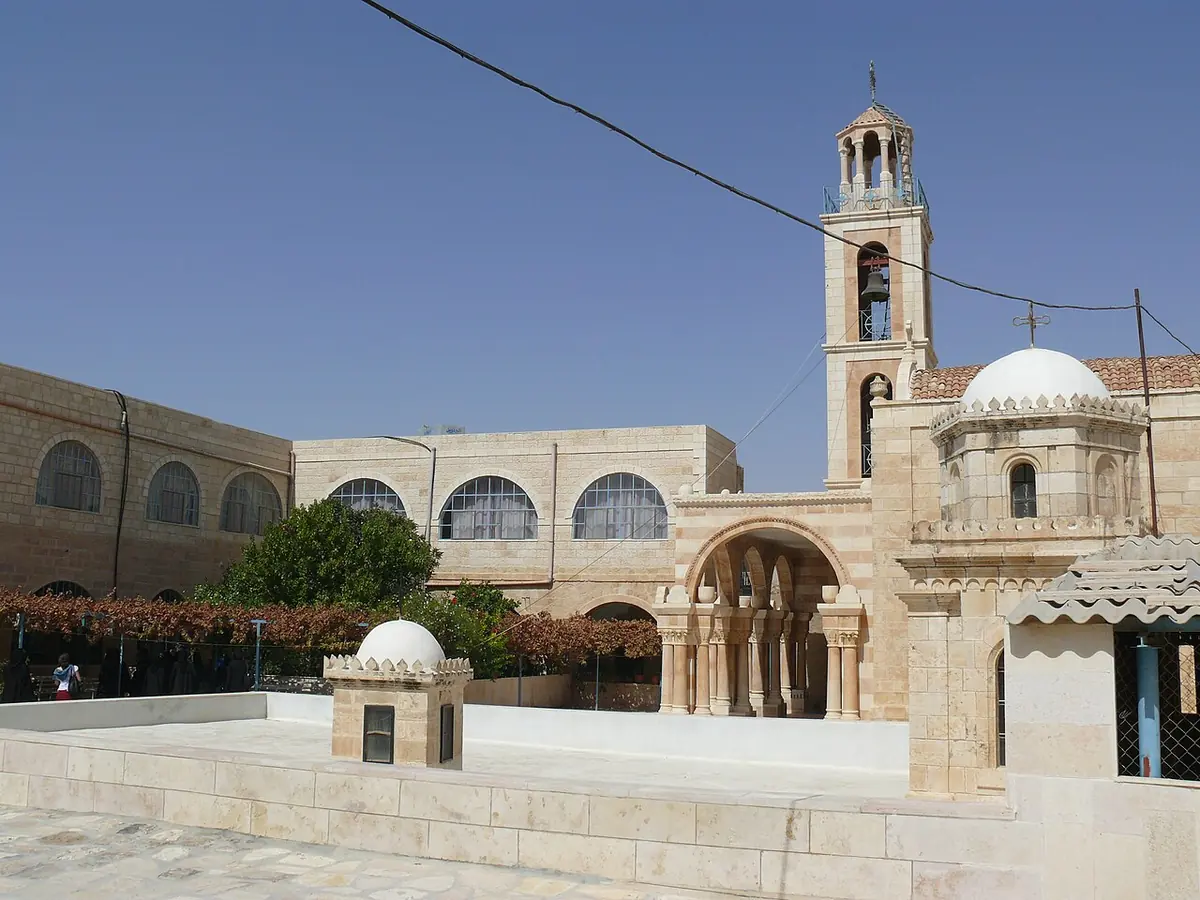
We keep his feast on January 11, the same day in the Roman and Greek calendars. His tomb is in the Cave of the Magi, inside the Greek Orthodox Monastery of St. Theodosius at al-Ubeidiya, east of Bethlehem, where tradition says the wise men rested on their way home. See other saints of January on our feast days page.
Prayer to St. Theodosius
The Orthodox Church sings a troparion on his feast (Tone 8) that praises his tears, his longing for God and his miracles, and asks him to pray for our souls; the OCA prints the full text on its website.
Let us ask St. Theodosius to pray for monks and nuns, for those who care for the sick, the old and the stranger, and for the Christians of Bethlehem who still keep his monastery.
Frequently asked questions
Who was St. Theodosius the Cenobiarch?
A fifth- and sixth-century monk born in Cappadocia who settled near Bethlehem, lived thirty years in a cave, and then built a large monastery that cared for the sick, the old and travelers. He was named superior of all the cenobitic monks in Palestine, while his friend St. Sabas led the hermits.
What does Cenobiarch mean?
Head of the cenobites. A cenobite (from the Greek for 'common life') is a monk who lives in community rather than alone. Butler explains that Sallust, bishop of Jerusalem, made Theodosius superior of the cenobites throughout Palestine, 'whence he was styled the Cenobiarch.'
When is the feast of St. Theodosius the Cenobiarch?
January 11, in both the Roman and the Greek calendars.
Where is St. Theodosius buried?
In the cave where he first lived, now inside the Monastery of St. Theodosius (Deir Dosi) east of Bethlehem. Tradition says the Magi lodged in this cave on their journey, so it is called the Cave of the Magi.
Keep exploring
Sources
- Alban Butler, The Lives of the Fathers, Martyrs, and Other Principal Saints, vol. 1 (Dublin: James Duffy, 1866), January 11, Internet Archive. Drawn from the Life by his disciple Theodore of Petra: his birth in 423, the four churches, his office as Cenobiarch, his stand against Anastasius, his death at 105 and his burial in the Cave of the Magi
- Venerable Theodosius the Great, the Cenobiarch, Orthodox Church in America. The censer, the multiplied bread, and the warning before the Antioch earthquake, as the Eastern Church tells them
- Venerable Theodosius the Great: Troparion and Kontakion, Orthodox Church in America. Full text of the troparion