Blessed John Story, Lawyer and Martyr

Blessed John Story (or Storey) was an English lawyer, Oxford's first Regius Professor of Civil Law and a member of Parliament who defended the Catholic faith under three Tudor monarchs. Exiled in Flanders, he was kidnapped by agents of the English government in 1570, tried in Westminster Hall and executed at Tyburn on June 1, 1571. Pope Leo XIII beatified him in 1886.
Who was Blessed John Story?
Blessed John Story was an English lawyer and scholar who was hanged, drawn and quartered at Tyburn on June 1, 1571, for his loyalty to the Catholic faith. He was born about 1504, studied law at Oxford, and became the university's first Regius Professor of Civil Law. He sat in the House of Commons under Edward VI, Mary and Elizabeth, and he spoke out against the new religion each time it came. His name is often spelled Storey. We keep his feast on June 1.
Like St. Thomas More, he was a married layman and a lawyer with a deep love for religious life. Like More, he has been called cruel by Protestant writers. His story is not a simple one, and we tell it as it is.
The life of John Story
Oxford lawyer and a fall he never forgot
Story studied civil law at Hinksey Hall in Oxford and took his bachelor's degree in 1531. The 1535 royal commissioners named him reader in civil law, and in 1537 he became principal of Broadgates Hall, the forerunner of Pembroke College. He took his doctorate in 1538. He had wanted to be a priest but chose to serve God as a layman and married Joan Watts, who stood by him for the rest of his life.
Under Henry VIII he took the Oath of Supremacy, like most Englishmen of his day. His biographers say he grieved over it all his life and believed only his blood could make it right.
"Woe to thee, O land"
In the Parliament of Edward VI, Story sat for Hindon in Wiltshire. When the bill for the first English Prayer Book came before the Commons in January 1549, he rose against it and quoted the Book of Ecclesiastes: "Woe to thee, O land, whose King is a child." The House had him arrested and sent to the Tower, the first time on record that the Commons committed one of its own members. He was released in March after a written submission and soon left England for the Catholic University of Louvain.
He came home when Mary became queen in 1553 and was made chancellor of the dioceses of London and Oxford and Dean of the Arches. In that office he took part in the trials of Protestants under the heresy laws, and in 1555 he acted as the queen's proctor at the trial of Archbishop Cranmer. John Foxe later called him "a bloody tyrant." Story's Catholic biographers answer that many of Foxe's charges against him were false, and Story himself, at his death, denied any personal cruelty. We do not pretend these were gentle years. The Church honors him for the way he died, not for every act of his life.
Prison, escape and exile
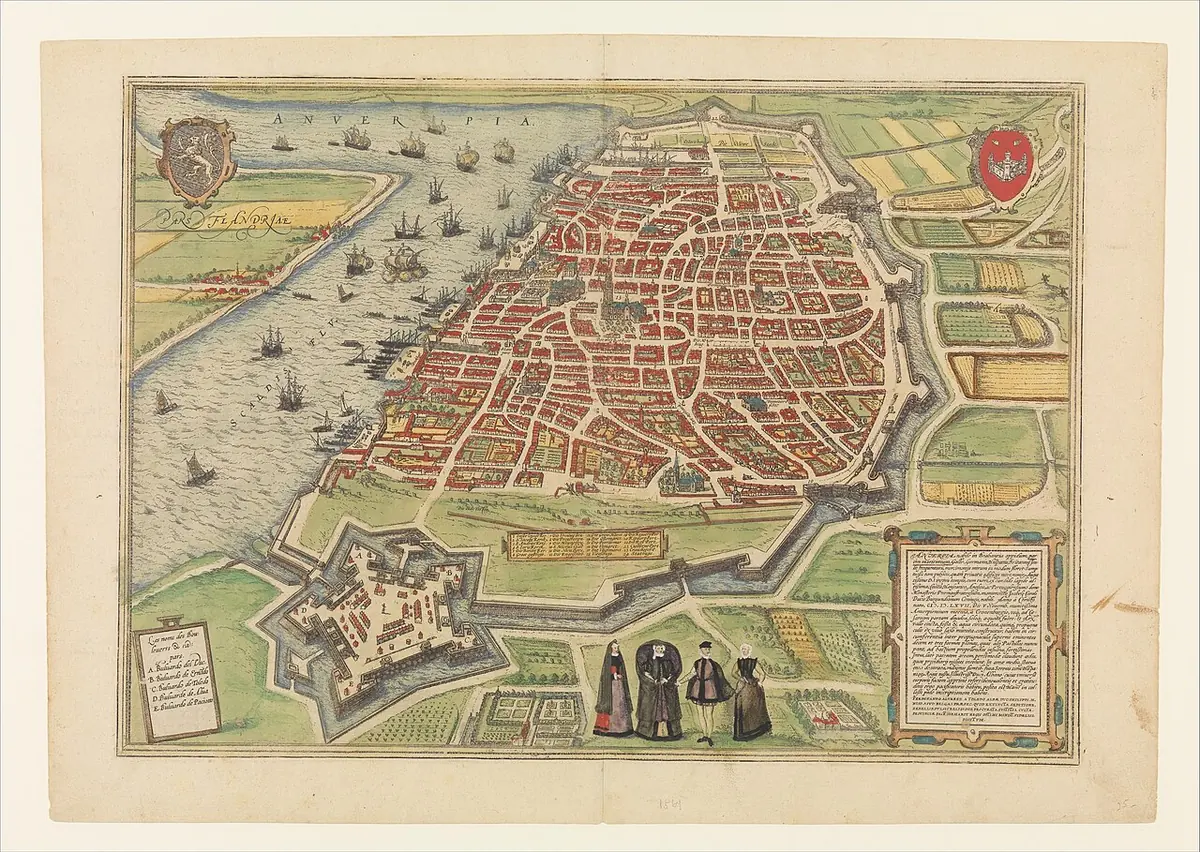
In the first Parliament of Elizabeth, Story was one of only a handful of members to resist the Act of Supremacy. He was sent to the Fleet prison in May 1560, escaped, was taken again and held in the Marshalsea, and escaped once more to Antwerp. There he renounced his English allegiance and became a subject of King Philip II of Spain. Under the Duke of Alva he held a post in the customs of Flanders, searching ships' cargoes for forbidden goods.
Kidnapped at Bergen-op-Zoom
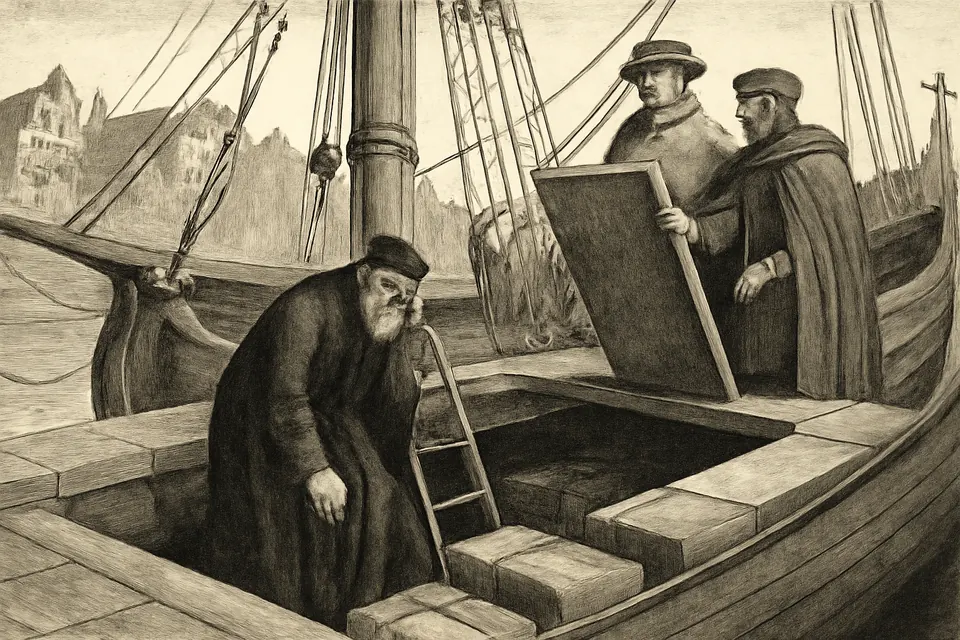
William Cecil's agents planned to seize him at his work. In August 1570 three English merchants hired a Flemish skipper and invited Story aboard a ship at Bergen-op-Zoom to search a cargo for forbidden goods. When he went below, the hatches were shut and the ship sailed for England.

He landed at Yarmouth on the evening of August 14. The next morning he wrote to Cecil that he had been "deceived by my simple and yet foxy skipper."
He was taken to the Tower of London and racked several times. On May 26, 1571, he was indicted in Westminster Hall for conspiring against the queen's life and helping the northern rebels. He denied the charges and refused to plead, saying he was a Spanish subject. He was condemned the next day.

In the hall that day sat a young Oxford scholar named Edmund Campion. Father Robert Persons later wrote that Campion was "animated to offer himself by this blessed man's example" and left England for the English College at Douai. Ten years later St. Edmund Campion died at Tyburn too.
The martyrdom at Tyburn
On June 1, 1571, Story was dragged on a hurdle from the Tower to Tyburn. A hostile pamphleteer who stood in the crowd took down his speech. He said he had been afraid of death, but "this night past I have been so comforted with God and godly men, that the fear of death is taken from my sight." He forgave the men who betrayed him "freely with all my heart." He spoke of his cruelty, denied it, and asked the crowd to provide for his family:
I beseech you, for charity sake, bestow it yearly on my wife, who hath four small children ... she is the faithfullest wife, the lovingest and constantest that ever man had.
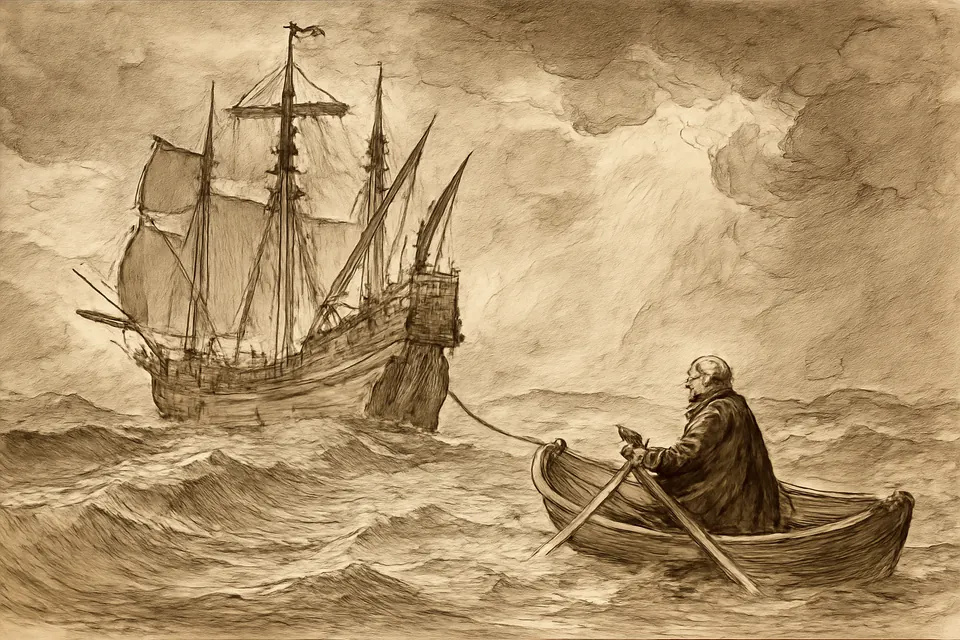
Then he told them what faith he died in. He compared the Church to a ship from which he had once fallen, and the sacraments to a little boat at its stern:
Being in the boat, I espied three oars, that is, to wit, contrition, confession, and absolution; and I held all these fast, and ever since then I have continued in the ship of Christ, of which the Apostle Peter is the guide and principal.
Asked again whether the queen was supreme head of the Church, he answered, "I come not hither to dispute." The cart was drawn away. He was cut down alive and quartered with great cruelty while Lord Burghley, the Earl of Bedford and Lord Hunsdon looked on.
Beatification
Pope Leo XIII confirmed the honor given to John Story among fifty-four English martyrs in 1886.
- Approved: as a martyr he was beatified without a miracle. No miracle has been approved for his canonization.
- We know of no reported miracles attributed to him.
Symbols of Blessed John Story in art
No portrait of him from his lifetime is known. When he is pictured, the fitting signs are the doctor's cap and gown of a professor of law, a law book, the ship in which he was carried off, the rope of Tyburn, and the martyr's palm. The ship also recalls the image he used on the scaffold of the Church as a vessel and the sacraments as the oars of a boat.
Feast day and prayer
We keep his feast on June 1, and in England and Wales with all the martyrs of the Reformation on May 4. See the feast day calendar.
We know of no traditional prayer to him that we can quote. Let us ask him to pray for lawyers and lawmakers, for exiles and for those taken by force from their homes, and for all who have once fallen away and come back through contrition, confession and absolution. Blessed John Story, pray for us.
Frequently asked questions
Who was Blessed John Story?
An English Catholic layman, born about 1504, who became the first Regius Professor of Civil Law at Oxford, sat in Parliament, served as chancellor to Bishop Bonner under Queen Mary, and was executed at Tyburn on June 1, 1571, for his loyalty to the Catholic Church.
How was John Story captured?
Agents working for William Cecil lured him aboard a ship at Bergen-op-Zoom in the Low Countries in August 1570, telling him it carried forbidden books for him to search. When he went below, they shut the hatches and sailed to England. He landed at Yarmouth on August 14, 1570.
Why is John Story a controversial martyr?
Under Queen Mary he was chancellor of the diocese of London and took part in the trials of Protestants, some of whom were burned. John Foxe painted him as a cruel persecutor. At his death Story denied personal cruelty and said he had helped win pardons for twenty-eight condemned prisoners. The Church honors him for the death he died for the faith.
When is the feast of Blessed John Story?
June 1, the anniversary of his martyrdom at Tyburn in 1571.
Keep exploring
Sources
- Catholic Encyclopedia (1910): Bl. John Story. Parliamentary career, imprisonment in 1548–49 and 1560, escape to Antwerp, kidnapping at Bergen-op-Zoom, racking in the Tower, indictment of May 26 and sentence of May 27, 1571, and Campion's presence at the trial
- Bede Camm, ed., Lives of the English Martyrs Declared Blessed by Pope Leo XIII in 1886 and 1895, vol. 2 (1904–05): The Blessed John Storey. Oxford degrees and lectureship, the speech "Woe to thee, O land," the Marian years, the kidnapping plot and the Yarmouth letter, and the full text of his speech at Tyburn from a hostile contemporary pamphlet