St. Théophane Vénard

St. Théophane Vénard (1829 to 1861) was a French priest of the Paris Foreign Missions Society who served the persecuted Christians of northern Vietnam, was caught, kept in a cage and beheaded in Hanoi on February 2, 1861. His joyful letters from prison made him beloved, above all by St. Thérèse of Lisieux. He is a patron of missionaries, canonized in 1988.
Who was St. Théophane Vénard?
St. Théophane Vénard was a young French priest who went to northern Vietnam as a missionary, lived for years in hiding among persecuted Christians, and was beheaded for the faith in Hanoi in 1861. He is one of the 117 Vietnamese Martyrs canonized in 1988. Yet he is remembered less for how he died than for the way he wrote: letters full of tenderness for his family and of plain, even cheerful, readiness to die.
St. Thérèse of Lisieux loved him. In her last illness she said he was "a little saint" whose life had "nothing out of the ordinary" in it, and that is why she loved him.
The life of St. Théophane Vénard
"I too will be a martyr"
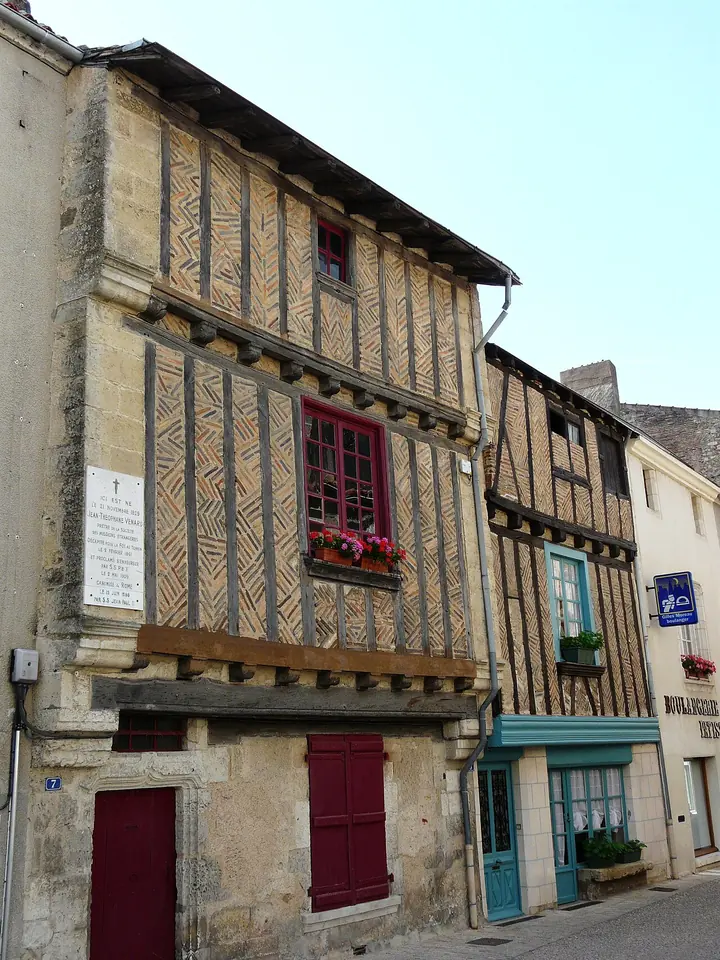
Jean-Théophane Vénard was born on November 21, 1829, at Saint-Loup-sur-Thouet in western France, the son of the village schoolmaster. The parish priest lent the family the Annals of the Propagation of the Faith, the missionary magazine of the day. One afternoon, minding his father's goats on the hillside, nine-year-old Théophane read aloud to his brother and sister the account of Fr. Jean-Charles Cornay, newly martyred in Tonkin. His 1913 biography records that he cried out at the end:
And I too will go to Tong-king, and I too will be a martyr!

He studied at Doué-la-Fontaine, at the minor seminary of Montmorillon and the major seminary of Poitiers. In 1851 he entered the seminary of the Paris Foreign Missions Society. He was ordained a priest on June 5, 1852, and sailed for the Far East on September 19 without knowing where he would be sent.
Six years in hiding
After fifteen months in Hong Kong he was sent to West Tonkin, in northern Vietnam. Under the emperor Tu Duc, Christians were hunted, priests were put to death, and villages that sheltered them were punished. Vénard learned the language, fell gravely ill, recovered, and moved from hiding place to hiding place: for a time in the convent of the Lovers of the Holy Cross at But-dong, then with an old Christian woman, often in holes and caves. In between he heard confessions, said Mass at night and, with his catechists, translated the Gospels, the Acts and the Epistles into Vietnamese. The Christians, frightened by the persecution, burned part of that manuscript.
Arrest and the cage
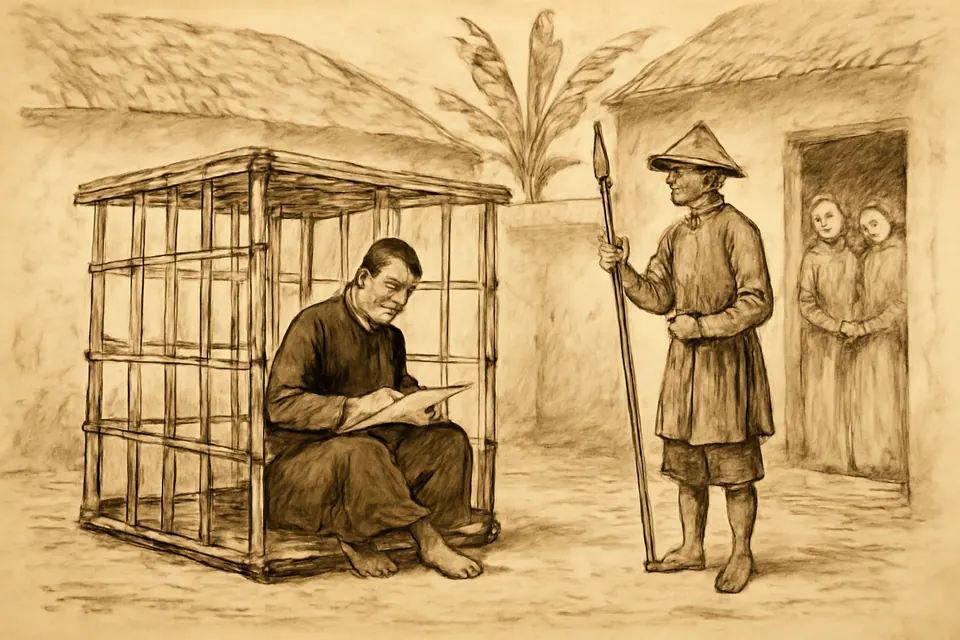
He was betrayed and arrested at Ke-beo on November 30, 1860, the feast of St. Andrew. He was shut in a bamboo cage and carried to Hanoi for trial. The mandarin questioned him and tried to make him trample on the cross; he refused. From the cage he wrote his last letters. To his father, on January 20, 1861:
I have not been put to the torture like my brethren. A slight sabre-cut will separate my head from my body, like the spring flower which the Master of the Garden gathers for His pleasure. We are all flowers planted on this earth, which God plucks in His own good time, some a little sooner, some a little later.
He ended it: "Father and son, may we meet in paradise. I, poor little moth, go first."
February 2, 1861
He was condemned to beheading for coming to Tonkin to preach the Catholic faith. On February 2, the feast of the Presentation of the Lord, he put on a white cotton garment and a silk one he had had made for "the day of the great feast." The archives of his Society record that when the executioner asked how much he would pay to be killed quickly, Théophane answered, "The longer it lasts, the better it will be." The man struck several clumsy blows before the last.

Miracles and the road to canonization
Théophane was declared Venerable by Leo XIII in 1879. Pope Pius X approved his beatification on April 11, 1909, and it was celebrated at St. Peter's on May 2. Pope John Paul II canonized him on June 19, 1988, with the other Vietnamese Martyrs. As a martyr, he was beatified on the proof of his martyrdom, without the need for a miracle. We know of no individual miracle formally approved through his intercession; the favors his friends have attributed to him since the 1860s are reported, not examined by the Church.
Why St. Théophane Vénard is a patron of missionaries
He is a model for missionaries because his whole short life ran in one line, from a boy's cry in a French field to a missionary's death in Hanoi. In the United States, Fr. James Anthony Walsh, cofounder of Maryknoll, edited the English edition of his life and letters and kept a relic of him at the Maryknoll seminary. Many Carmelites and young religious, following St. Thérèse, have taken the name Theophane.
Symbols of St. Théophane Vénard in art
- A black cassock: he is shown as a young priest of the 1850s, as in the portraits kept by his Society.
- A chain: the chain he wore in captivity, now in the Hall of Martyrs in Paris.
- A bamboo cage: where he wrote his last letters.
- The palm: the sign of a martyr.
- Folded hands and a gentle smile: his paintings usually show him praying and calm.
You will find him in the crypt and Hall of Martyrs of the Paris Foreign Missions on the rue du Bac, in the windows of his home church, and in pictures of the Vietnamese Martyrs.
Feast day, relics and prayer
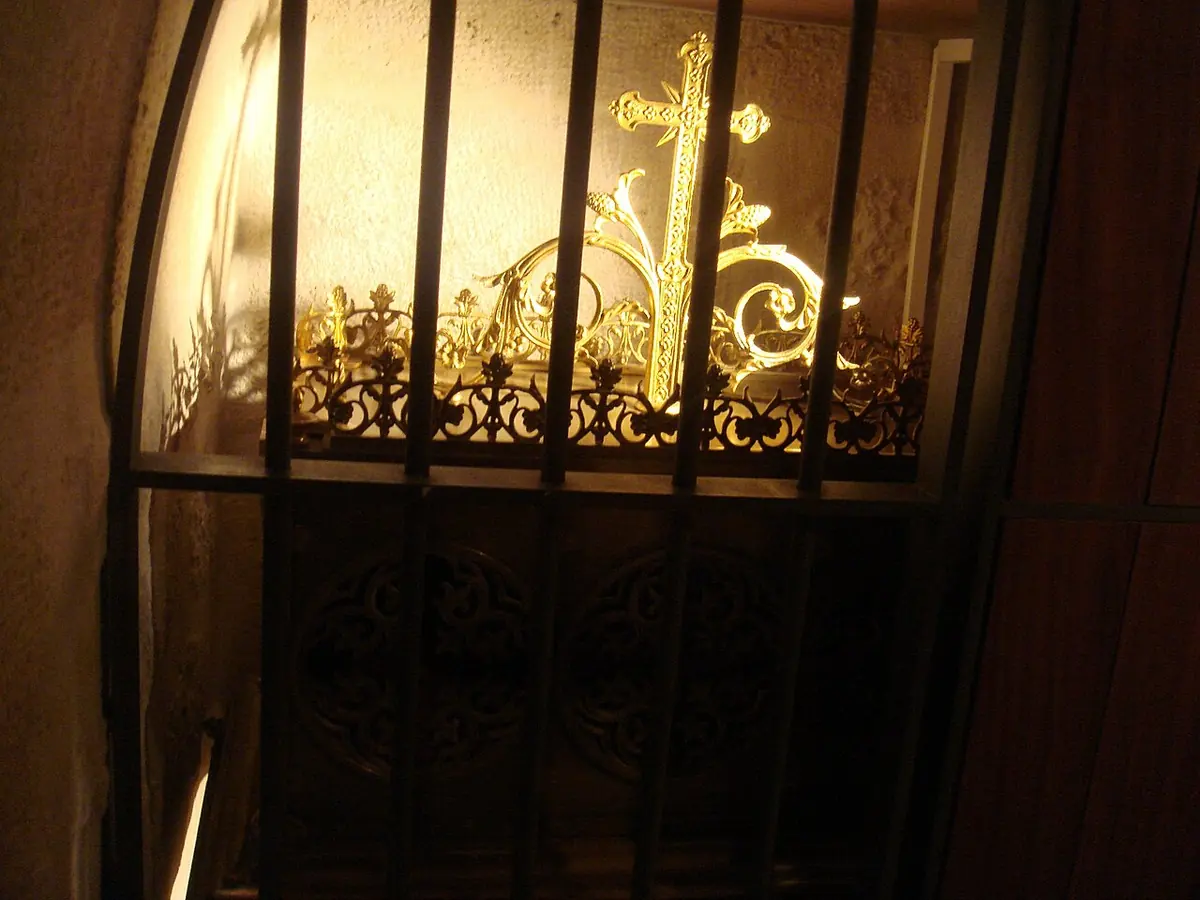
We keep his feast on February 2, the day of his death, and honor him again with all the Vietnamese Martyrs on November 24. See our feast days page. His body was buried at the place of execution, moved twice in Vietnam, and in 1865 brought to Paris, where it rests in the crypt of the chapel of the Paris Foreign Missions under the altar of St. Joseph. His head, thrown into the Red River, was recovered on February 15, 1861, and kept by the Christians of Tonkin.
We know of no traditional prayer to him with a sourced text. Let us pray as St. Thérèse did, asking his help to love God in ordinary things: St. Théophane Vénard, pray for us, for every missionary far from home, and for the Church in Vietnam.
Where the relics of St. Théophane Vénard are kept: see them on the relics map →
Frequently asked questions
Who was St. Théophane Vénard?
A French missionary priest born in 1829 in Saint-Loup-sur-Thouet. He joined the Paris Foreign Missions Society, was ordained in 1852 and spent six years hiding and serving Christians in West Tonkin (northern Vietnam) under persecution. Betrayed and arrested in November 1860, he was beheaded in Hanoi on February 2, 1861, at thirty-one.
Why did St. Thérèse of Lisieux love Théophane Vénard?
She read his life and letters in her last illness in 1897 and found in him a saint like the one she wanted to be. "He is a little saint," she said. "There is nothing out of the ordinary in his life. He loved the Immaculate Virgin very much, his family too." His brother, Fr. Eusèbe Vénard, sent her a small relic of him.
When is the feast of St. Théophane Vénard?
February 2, the anniversary of his martyrdom, which fell on the feast of the Presentation of the Lord. He is also celebrated with all 117 Vietnamese Martyrs on November 24.
Where are the relics of St. Théophane Vénard?
His bones were brought to Paris in 1865 and rest in the crypt of the chapel of the Paris Foreign Missions Society on the rue du Bac. His head, thrown into the Red River and recovered, stayed in Vietnam. The Society's Hall of Martyrs keeps his chain and his tunic.
Keep exploring
Sources
- IRFA, Archives of the Paris Foreign Missions Society: 0635, Vénard Théophane (biographical notice). Dates of birth, ordination, departure, arrest and death, the cage, the last words to the executioner, the relics, the 1909 beatification and 1988 canonization
- A Modern Martyr: Théophane Vénard (Blessed), trans. Lady Herbert, ed. James Anthony Walsh (1913), archive.org. His childhood vow, the letter of January 20, 1861, St. Thérèse's words about him and the relics at Maryknoll
- Pope John Paul II, Homily for the canonization of 117 Vietnamese martyrs, June 19, 1988 (Italian, vatican.va)