Blessed Antonio Lucci, Franciscan Theologian and Bishop of Bovino

Blessed Antonio Lucci (1682–1752) was a Conventual Franciscan theologian whom Pope Benedict XIII made bishop of Bovino in Apulia. He opened free schools, taught catechism himself, defended the poor against the local nobility, and gave away everything, dying in debt for alms. He was beatified on June 18, 1989. His feast is July 25.
Who was Blessed Antonio Lucci?
Blessed Antonio Lucci was a Franciscan friar from the mountains of Molise who became one of the leading theologians of his order, and then, at the pope's command, the bishop of a poor diocese in Apulia. At Bovino he catechized children himself, opened free schools, stood up to the local nobles on behalf of the poor, and gave away his clothes, his income and more than he had. He died in 1752 owing 1,900 ducats he had borrowed to give alms.
The Roman Martyrology remembers him as a bishop "who shone for his extraordinary learning and was so generous in helping the poor that he paid no heed even to his own needs" (our translation).

The life of Blessed Antonio
A friar from Agnone
He was born Angelo Nicola Lucci in Agnone, Molise, on August 2, 1682. At fifteen he asked to join the Conventual Franciscans, and in 1698 he made his profession at Isernia, taking the name Antonio. In 1705 he was ordained a priest together with his friend St. Francis Fasani, and the two remained close all their lives. In 1709 he earned his doctorate in theology and the title of "father master."
Teacher of theology
For twenty years he taught in his order's schools: at Ravello, where he came to know Blessed Bonaventure of Potenza, then in Naples, at the important college of San Lorenzo, which he also directed. In 1718 he was elected minister provincial, but within a year he was called to Rome as regent of the College of St. Bonaventure at the basilica of the Twelve Apostles. He wrote treatises in theology, philosophy and history for his students, and clergy and nobles of Rome came to him for advice.
Pope Benedict XIII, himself a friar, made him one of the theologians of the Roman Synod of 1725, asked him to give the opening address at the provincial synod of Benevento, and commissioned a work from him against Jansenism. When the Duke of Bovino asked for a good bishop in 1728, the pope assured him: "I will send you a holy and learned bishop" (our translation). On February 7, 1729, Antonio Lucci was named bishop of Bovino.
Bishop of Bovino
At Bovino, said John Paul II at his beatification, his zeal spread "like a magnificent cedar." He set out first to renew his clergy, and since he could not found a seminary, he trained the priests himself. He issued edicts on the conduct of clergy and people and organized catechism classes for children, preparing many of them for the sacraments in person. He opened free elementary schools, and he even clothed the children and gave them tools for work. To pay for all this, John Paul II said, he stripped himself entirely of the revenues of his see.
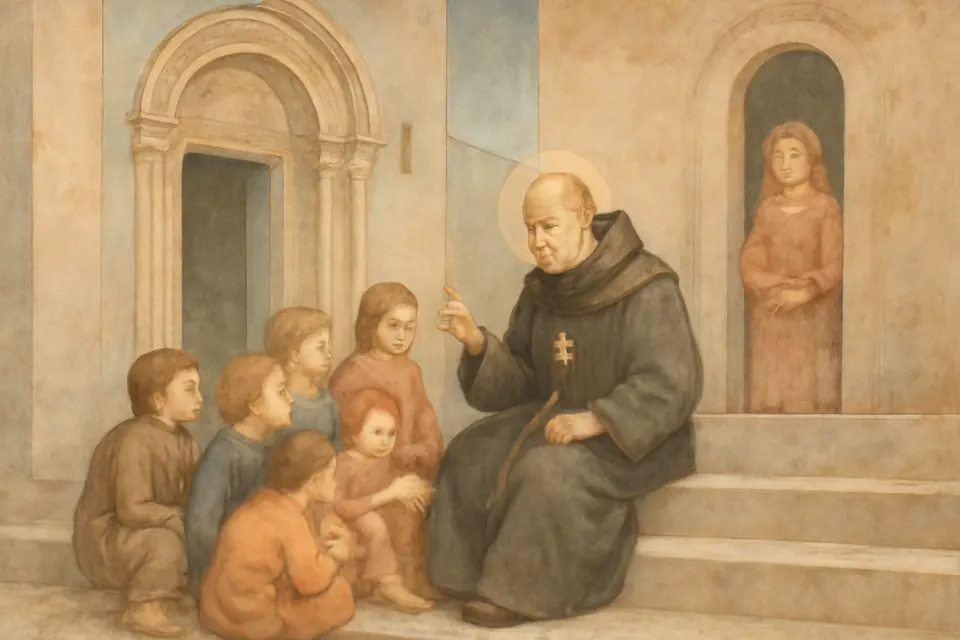
He also took on the powerful. When the land registry of the kingdom was being drawn up, he fought the nobles' attempt to exempt their feudal incomes from taxation at the expense of the poor and the Church.
The witnesses at his cause remembered his charity most of all. One of his former students testified that in winter he would take off his own undergarments to give them to the poor, shivering with cold. A Capuchin friar recalled that he gave grain, money, beds and linen from morning to night, once even handing a poor man of Troia the trousers he had just taken off, and that he was cheerful when he had money to give and visibly sad when he had none. When people scolded him for running up debts, he answered: "Have you ever seen a bishop put in prison for debts?" (our translation).

Death
On the morning of July 25, 1752, after about two weeks of illness, he died peacefully in Bovino with a reputation for holiness. He left the cathedral chapter 1,900 ducats of debts, all borrowed for the poor, which he had meant to repay after the harvest.
Beatification
His cause took more than two centuries. St. John Paul II beatified him in St. Peter's Square on June 18, 1989, with Mother Elisabetta Renzi. The pope compared his life to the mustard seed of the Gospel, "the smallest of all the seeds," that grows into a great tree giving shelter to all who are in need. Beatification followed the Church's recognition of an approved miracle, as the process for a non-martyr requires.
Symbols of Blessed Antonio in art
- Franciscan habit with cord: he wore the habit of the Conventual Franciscans as a bishop.
- Miter and crosier: his office as bishop of Bovino.
- Book: for his learning as a theologian and teacher.
- Alms or poor people around him: for the charity that defined his episcopate.
Feast day and where he is honored
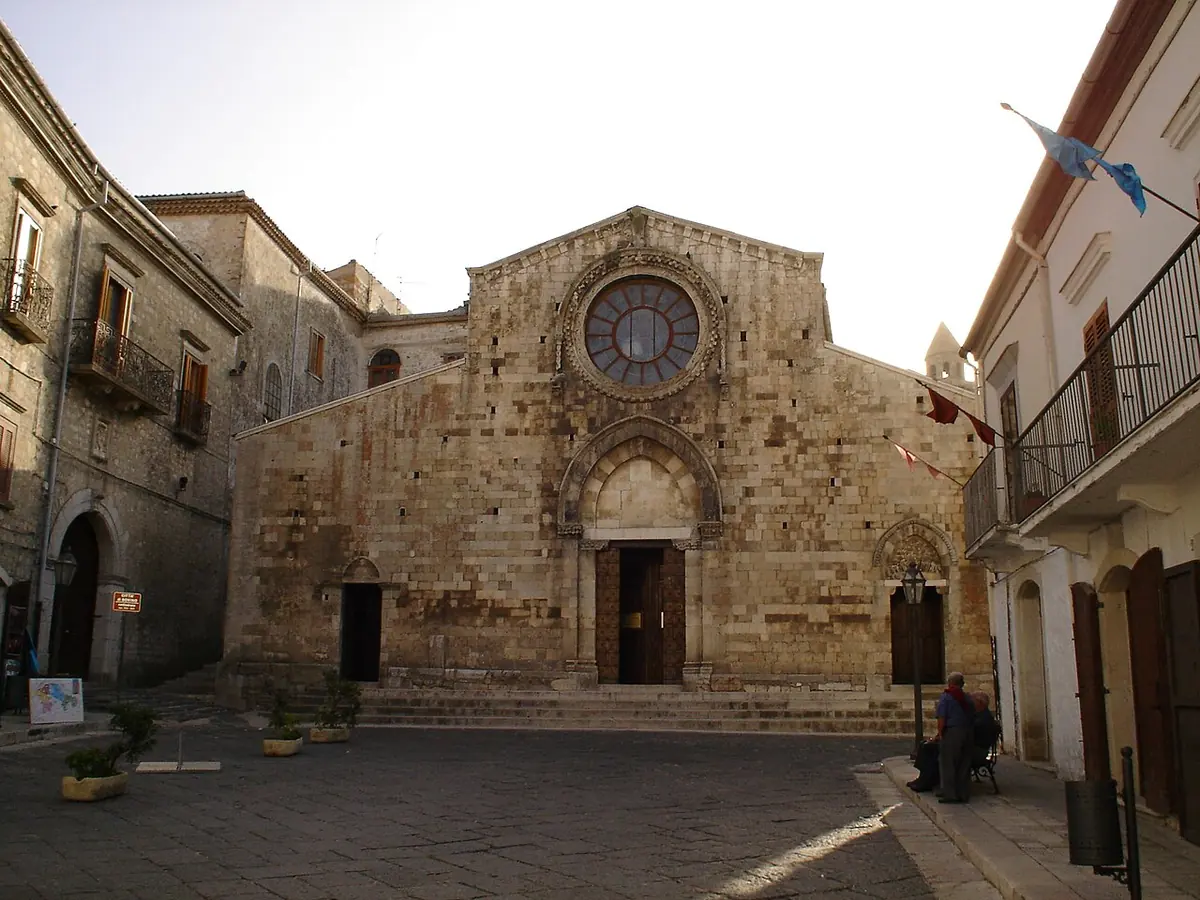
His feast is July 25. He was buried in the cathedral of Bovino, where his remains are kept and venerated. Agnone, his hometown, and the Conventual Franciscans also keep his memory. See others honored in July on our feast days page.
Praying with Blessed Antonio
We have not found an official English prayer to Blessed Antonio Lucci, so we do not print one. His life teaches what John Paul II called a "charity without limits," joined to sound teaching.
Let us ask Blessed Antonio Lucci to pray for bishops and teachers of the faith, for poor children who need schools, and for all who are tempted to keep for themselves what belongs to the poor.
Frequently asked questions
Who was Blessed Antonio Lucci?
A friar of the Conventual Franciscans from Agnone in Molise, a doctor of theology who taught in Naples and Rome. In 1729 Pope Benedict XIII made him bishop of Bovino, where he served the poor for more than twenty years until his death in 1752.
When is the feast of Blessed Antonio Lucci?
July 25, the day he died in Bovino in 1752.
When was Antonio Lucci beatified?
Pope John Paul II beatified him in St. Peter's Square on June 18, 1989, together with Mother Elisabetta Renzi.
Was Antonio Lucci a friend of St. Francis Fasani?
Yes. The two young friars were ordained priests together in 1705 and stayed friends for life.
Keep exploring
Sources
- John Paul II, Omelia per la beatificazione del Vescovo Antonio Lucci e di Madre Elisabetta Renzi, June 18, 1989, Vatican. His offices under Benedict XIII, free schools, defense of the poor, and the bishop's revenues given away
- Antonio Lucci, Dicastery for the Causes of Saints. Birth at Agnone on August 2, 1682, profession in 1698, ordination in 1705, doctorate in 1709
- Beato Antonio Lucci, Santi e Beati. Ordination with Francis Fasani, his teaching posts, the Roman Synod of 1725, appointment on February 7, 1729, testimonies from the Positio, the catasto, and the 1,900 ducats of debt