Blessed Andrew of Phú Yên, Protomartyr of Vietnam
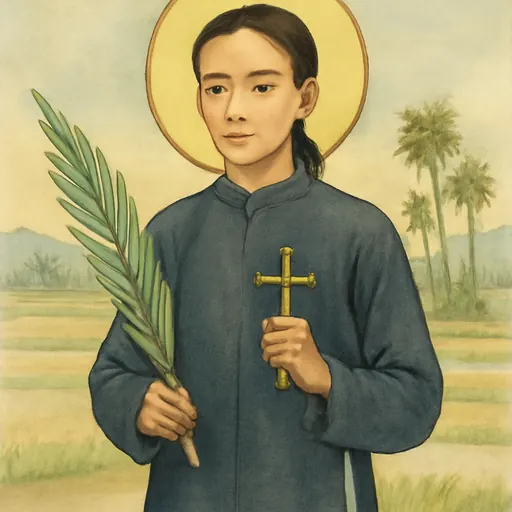
Blessed Andrew of Phú Yên (about 1625–1644) was a young Vietnamese catechist, baptized by the Jesuit Alexandre de Rhodes's mission, who was put to death for refusing to give up Christ. He died calling on the name of Jesus at about nineteen and is the protomartyr (first martyr) of Vietnam and a patron of catechists. John Paul II beatified him in 2000. His feast is July 26.
Who was Blessed Andrew of Phú Yên?
Blessed Andrew of Phú Yên was a young man from the coast of central Vietnam who became a Christian, gave his life to teaching the faith as a catechist, and was put to death for Christ in 1644, when he was about nineteen. He is the protomartyr of Vietnam, the first of the many thousands of Vietnamese Catholics who would die for the faith over the next two centuries, and the Church holds him up as a patron and model for catechists.
His life
A boy from Phú Yên
Andrew was born around 1625 in the province of Phú Yên, in the land Europeans then called Cochinchina, ruled by the Nguyễn lords. In 2025 the Church in Vietnam marked the 400th anniversary of his birth. His mother, Joan, entrusted him to the Jesuit missionaries, among them the French Jesuit Alexandre de Rhodes, who did more than anyone to plant the faith in Vietnam and to write the Vietnamese language in Latin letters.

Baptism and the House of God
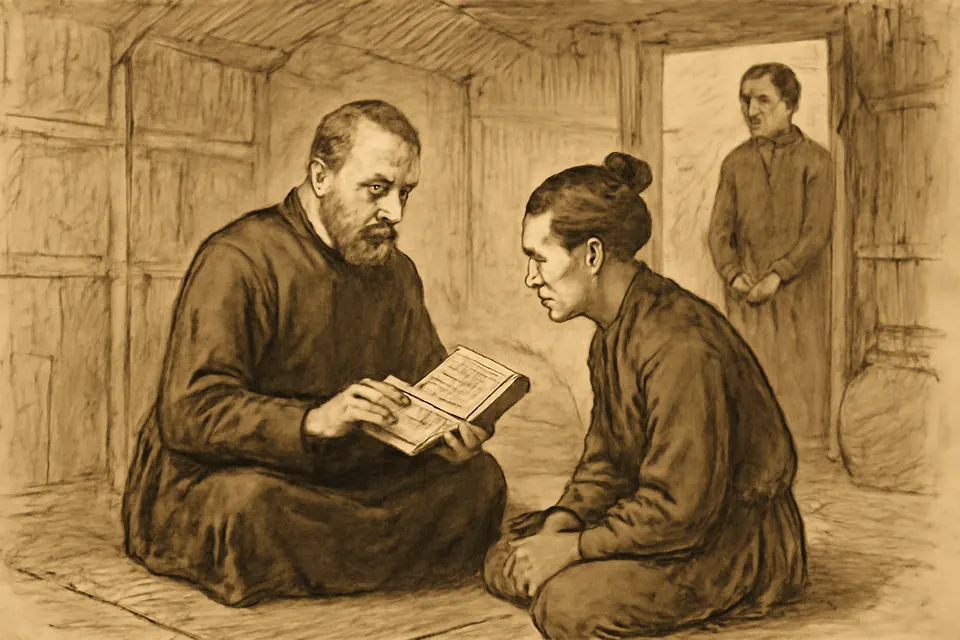
Andrew was baptized, together with his mother, at sixteen, the age John Paul II gave in his beatification homily. "From the day he received Baptism," the pope said, "he strove to develop a deep spiritual life." He became one of the missionaries' closest helpers and joined the Maison Dieu, the "House of God," an association of young catechists who promised to spend their whole lives serving the Church: teaching the faith, preparing people for baptism, and assisting the priests.
The homily sums it up: "For love of the Lord he spent all his energy in serving the Church and assisting priests in their mission."
Arrest
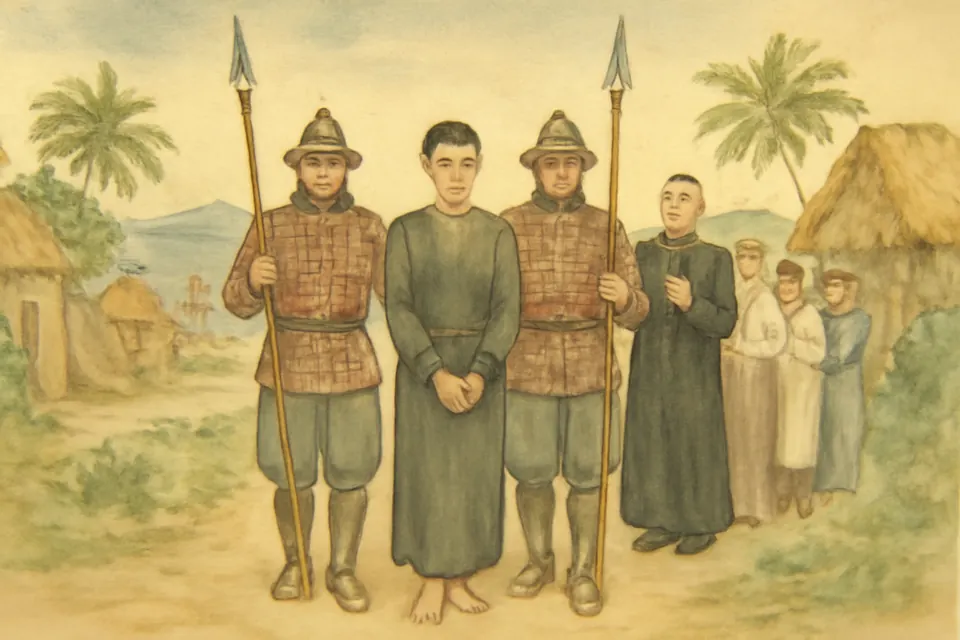
In July 1644 the authorities of the Nguyễn lord moved to stop the spread of Christianity. Father de Rhodes was ordered out of the country, and soldiers came looking for a catechist. They found Andrew, beat him, bound him and took him to the governor. Pressed to renounce Christ, he refused and was put in prison.
Martyrdom
On July 26, 1644, he was condemned and led out to execution at Kẻ Chàm. Father de Rhodes and a number of Christians were present, and de Rhodes later wrote of his death. As he walked to his death, Andrew kept repeating words that John Paul II called "the expression of what motivated his whole life":
Let us return love for love to our God, let us return life for life.
He was struck with a lance, and as the sword fell he called out the name of Jesus. Pope Leo XIV recalled in 2025 that the name of Jesus was his last word.
Beatification
Pope John Paul II beatified Andrew of Phú Yên in Rome on March 5, 2000, together with Pedro Calungsod, the young Filipino catechist martyred in Guam, and 42 others. "Today Bl. Andrew, protomartyr of Viêt Nam, is given as a model to the Church of his country," the pope said. As a martyr he could be beatified without a miracle, and none has been approved for him; the graces Vietnamese Catholics ask through him are reported, not formally examined.
Why Blessed Andrew is the patron saint of catechists
He was a layman who taught the faith, prepared others for baptism and served the priests, and he died for it. The Church in Vietnam honors him as patron of its catechists, and in July 2025 Pope Leo XIV, speaking to Vietnamese catechists for the anniversary of his birth, called him "an invaluable assistant to the Jesuit missionaries" and asked his intercession for all who teach the faith in hard times.
Symbols of Blessed Andrew in art
- Palm branch: the martyr's victory.
- Lance and sword: the weapons of his execution, shown without gore.
- Simple Vietnamese robe: he is shown as a young lay catechist of his time, not in clerical dress.
- Cross or catechism: his work as a teacher of the faith.
Most images of him are modern, made in Vietnam since his beatification.
Feast day and where he is honored
His feast is July 26. The great pilgrimage place in his honor is Mằng Lăng Church in Tuy An district, Phú Yên, the parish of his home region, with memorials to him. He is honored with the Vietnamese martyrs and in Vietnamese Catholic communities around the world. See more feast days.

Prayer to Blessed Andrew of Phú Yên
We know of no single traditional English prayer to him, and we won't invent one. Let us ask Blessed Andrew, in our own words, to pray for catechists and Sunday-school teachers, for young people preparing for baptism and confirmation, and for Christians who suffer for the faith in Asia today. Let us take his words as our own: love for love, life for life. Blessed Andrew of Phú Yên, pray for us.
Frequently asked questions
Who was Blessed Andrew of Phu Yen?
A young Vietnamese catechist who helped the Jesuit missionaries in Cochinchina (central Vietnam). Arrested in 1644, he refused to renounce his faith and was executed on July 26, 1644. He is honored as the first martyr of Vietnam.
What were Blessed Andrew's last words?
He died calling out the name of Jesus. On the way to death he repeated words that John Paul II quoted at his beatification: "Let us return love for love to our God, let us return life for life."
Why is Andrew of Phu Yen the patron of catechists?
Because he was a lay catechist who gave all his energy to teaching the faith and helping priests, and died for it. Pope Leo XIV called on him as patron of catechists in a 2025 message to Vietnamese catechists.
When is the feast of Blessed Andrew of Phu Yen?
July 26, the day he was martyred in 1644.
Keep exploring
Sources
- John Paul II, Homily for the Beatification of 44 Servants of God, 5 March 2000, Vatican. His baptism at sixteen, the Maison Dieu association of catechists, the words he repeated on the way to martyrdom, and the title protomartyr of Vietnam
- "Pope to Vietnamese catechists: You are never alone," Vatican News, 25 July 2025. The 400th anniversary of his birth, his last word, his age at death, and his patronage of catechists