St. Bartolomea Capitanio
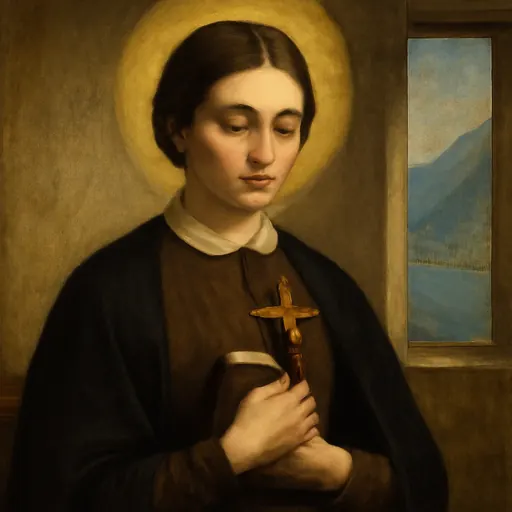
St. Bartolomea Capitanio (1807–1833) was a young teacher of Lovere, on Lake Iseo in northern Italy, who founded the Sisters of Charity, now called the Sisters of Maria Bambina, with St. Vincenza Gerosa in 1832. She died eight months later, at twenty-six. Pope Pius XII canonized the two foundresses together in 1950. We keep her feast on July 26.
Who was St. Bartolomea Capitanio?
St. Bartolomea Capitanio was a young teacher from Lovere, a small town on Lake Iseo in the province of Bergamo, who founded a congregation of sisters for works of charity and died eight months later, at twenty-six. With St. Vincenza Gerosa, she is the foundress of the Sisters of Charity of Lovere, known around the world as the Sisters of Maria Bambina. Pope Pius XII canonized the two women together on May 18, 1950. We keep her feast on July 26.
Her life was short and nearly all of it was spent in one town. Most of what we know comes from her own writings, which the sisters have kept, and from the account of her life the congregation publishes.
A hard home in Lovere
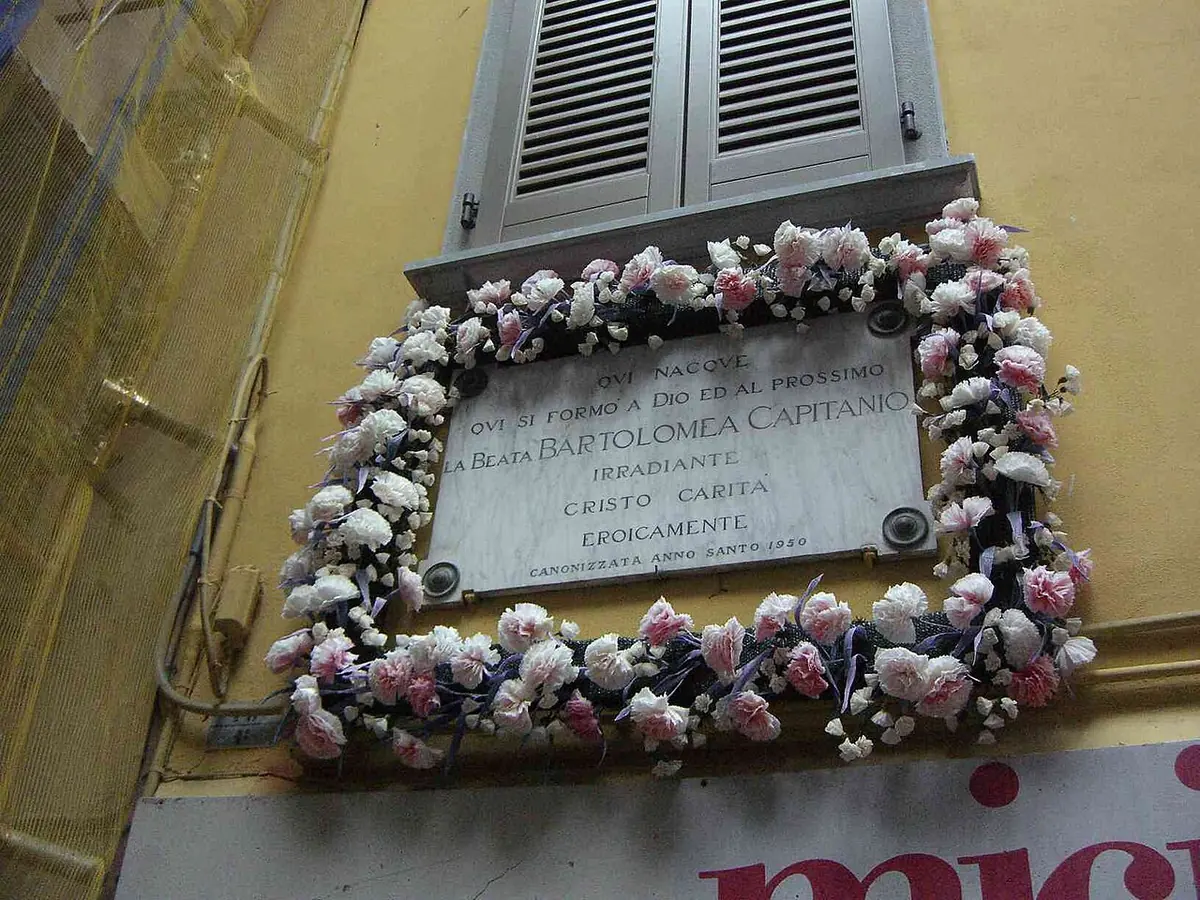
Bartolomea was born on January 13, 1807, to Modesto Capitanio and Caterina Canossi. Lovere was poor after the French wars, drought and epidemics. Her father dealt in grain and kept a small greengrocer's shop, and the family got by.
Then Modesto began to drink. He grew violent at home, and in the town he became known, the sisters' biography says, as "Modesto the Madman." Of her six brothers and sisters, only Camilla survived infancy. The sisters' account says this sorrow at home taught the young Bartolomea to unite her own suffering with Christ's and gave her a lasting compassion for the weak.
With the Poor Clares
When she was eleven and a half, her mother sent her to school with the Poor Clares, who had just returned to their convent in Lovere after being expelled in the Napoleonic years. She did well there. At twelve, in a game of drawing straws suggested by Sister Francesca Parpani, she drew the longest straw and told her friends she would be the first of them to become a saint:
I want to be a saint. I want to be a saint soon. I want to be a great saint!
It was a child's boast. The rest of her life was the slow work of making it true, and of learning, as the biography puts it, that the wish "did not come from herself but from God."

A call to works of mercy
She left the convent school at eighteen and made a private vow of chastity. For a time she was drawn to the enclosed life of the Poor Clares, but the needs of Lovere called louder: girls with no family or schooling, young women drifting, the sick with no one to nurse them. She opened a school for girls in her own home, taught the catechism, brought life back to the parish oratory, and nursed the sick in their homes and in the hospital.
During a retreat in 1826 she wrote:
After a good hour of considering, to the best of my ability, the various states of Religion, I sincerely declare, before God, that the Lord is calling on me to found an Institute the whole purpose of which would be acts of mercy, and that this is what at the point of death I would be happy to have embraced.
In 1829 she bound herself by a "vow of charity." Her spiritual director, Don Angelo Bosio, guided her and kept watch over the strict penances she practiced. The parish priest and the bishop of Brescia, Gabrio Nava, approved her plan.
Founding with Caterina Gerosa
She needed a house and a companion. The house was bought with the help of Don Bosio and the parish priest. The companion was Caterina Gerosa, an older woman of Lovere already experienced in charity, who shared her vision.
Before dawn on November 21, 1832, the feast of the Presentation of Mary, Bartolomea wrote her "Humble Offering." The two women went to the parish church of St. George and then to the Gaia house, where the institute began. Part of her offering reads:
Here I am, most lovable Jesus: I have reached at last the longed-for moment of my sacrifice. Today, through the hands of Mary, I have the happiness to consecrate myself entirely and irrevocably to your glory and the service of my neighbour.
Illness and death
On April 1, 1833, she came home from church with a fever and took to her bed. She did not get up again. Caterina despaired of carrying on without her. On July 26, 1833, eight months after the founding, Bartolomea died "with the sweet names of Jesus and Mary on her lips." To those weeping around her she said:
When I am in Heaven, I will be able to do a great deal more than I can here.
People in Lovere said the institute would die with her. It did not. Caterina, who took the name Sister Vincenza, led it until her own death in 1847. The sisters later took the name Maria Bambina in Milan, after a statue of the infant Mary given to the institute, and their work spread far beyond Italy.
The miracles of St. Bartolomea
Her beatification in 1926 and canonization in 1950 followed the Church's ordinary process, which requires approved miracles. We have not been able to confirm the details of those healings from a source we could open, so we do not describe them here.
Symbols of St. Bartolomea Capitanio in art
St. Bartolomea lived in the nineteenth century and has no ancient attributes. Painters show her as a young woman of the 1830s in a plain dark dress, often with a book or a crucifix, and very often beside St. Vincenza Gerosa, her older companion. In the apse of their sanctuary at Lovere, the painting over the altar shows Christ crowning the two of them.
Where she is honored
Bartolomea and Vincenza rest side by side in the Sanctuary of Sts. Bartolomea Capitanio and Vincenza Gerosa in Lovere, consecrated in 1938 and dedicated to Christ, King of Virgins. Their bodies lie in glass cases, and the sanctuary takes in the old chapel that leads into the first house of the sisters, the "Conventino."

Feast day and prayer
We keep the feast of St. Bartolomea Capitanio on July 26. See the feast day calendar.
Her own "Humble Offering," quoted above, is a fine prayer to make our own on the day we give ourselves to God's service. Let us also ask her to pray for teachers and nurses, for young women discerning a call to religious life, and for every family troubled by drink.
St. Bartolomea Capitanio, pray for us.
Frequently asked questions
Who was St. Bartolomea Capitanio?
A young woman of Lovere, in the province of Bergamo, who taught girls, nursed the sick and in 1832 founded the Institute of the Sisters of Charity with Caterina (later Vincenza) Gerosa. She died in 1833 at twenty-six.
When is the feast of St. Bartolomea Capitanio?
July 26, the day she died in 1833.
Who are the Sisters of Maria Bambina?
The Sisters of Charity of Sts. Bartolomea Capitanio and Vincenza Gerosa. They took the name Maria Bambina ("the Child Mary") in Milan, after a statue of the infant Virgin given to the institute.
Where is St. Bartolomea Capitanio buried?
In the Sanctuary of Sts. Bartolomea Capitanio and Vincenza Gerosa at Lovere, where the bodies of both foundresses rest in glass cases.
Keep exploring
Sources
- Sisters of Charity of Sts. Capitanio and Gerosa: Bartolomea Capitanio, A Life Dedicated to Charity (Sr. Vincenza Mosca). Her family, schooling, writings, the founding on November 21, 1832, her illness, death and last words
- MilanoFree: Santuario Bartolomea Capitanio e Gerosa. The sanctuary at Lovere, its consecration in 1938, the bodies of the two saints, and the canonization of May 18, 1950