St. Egwin of Evesham
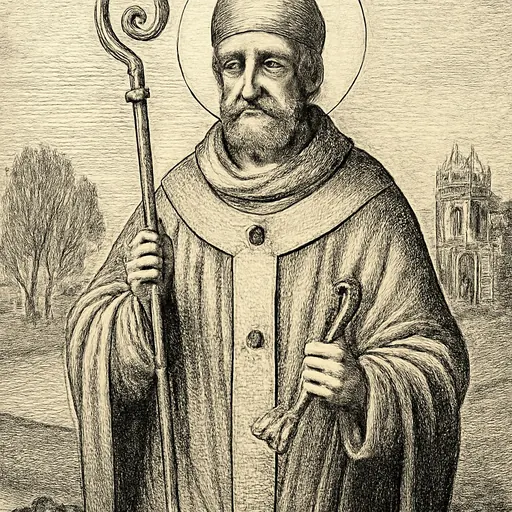
St. Egwin of Evesham (died 717) was a Mercian prince who became the third bishop of Worcester and founded the Benedictine abbey of Evesham. He is famous for the legend of the key: he chained his own feet, threw the key into the River Avon, and found it again inside a fish in Rome. His feast is December 30.
Who was St. Egwin of Evesham?
St. Egwin of Evesham was an Anglo-Saxon prince who became the third bishop of Worcester and founded the abbey of Evesham in honor of the Blessed Virgin Mary. He lived at the turn of the eighth century, when the Mercians had been Christian for less than a hundred years. He is best remembered for the old story of the key and the fish, and for the vision of Our Lady that gave Evesham its name. He died on December 30, in 717 according to the abbey's tradition, and we keep his feast on that day.
His name is spelled many ways: Egwin, Ecgwine, Ecgwin. The earliest life of him survives in an eleventh-century manuscript; a fuller one was written by Prior Dominic of Evesham about 1125 and shortened by the monk Thomas of Marlborough about a century later. The Benedictine nuns of Stanbrook, who retold his life in 1904, warned that the abbey's legends grew in the telling, and we keep that in mind.
Bishop of Worcester
The Catholic Encyclopedia says Egwin was "a prince of the Mercian blood royal" who had left the world for a religious life. When Oftfor, the second bishop of Worcester, died about 692, king, clergy and people together demanded Egwin as their bishop, and he accepted against his will.
He was a strict shepherd. He preached to pagans and insisted that his own flock keep Christian marriage and that the clergy live chastely. That zeal made him enemies. Because King Ethelred of Mercia was his friend, they took their complaints over the king's head to the Church's authorities, and Egwin decided to go to Rome and put his case before the pope himself.
The key in the fish
Here the old lives tell the story everyone in Evesham knew. As a sign of penance for his own sins and those of his people, Egwin locked iron fetters on his feet and threw the key into the River Avon. Then he set out, chained, on the long road to Rome.
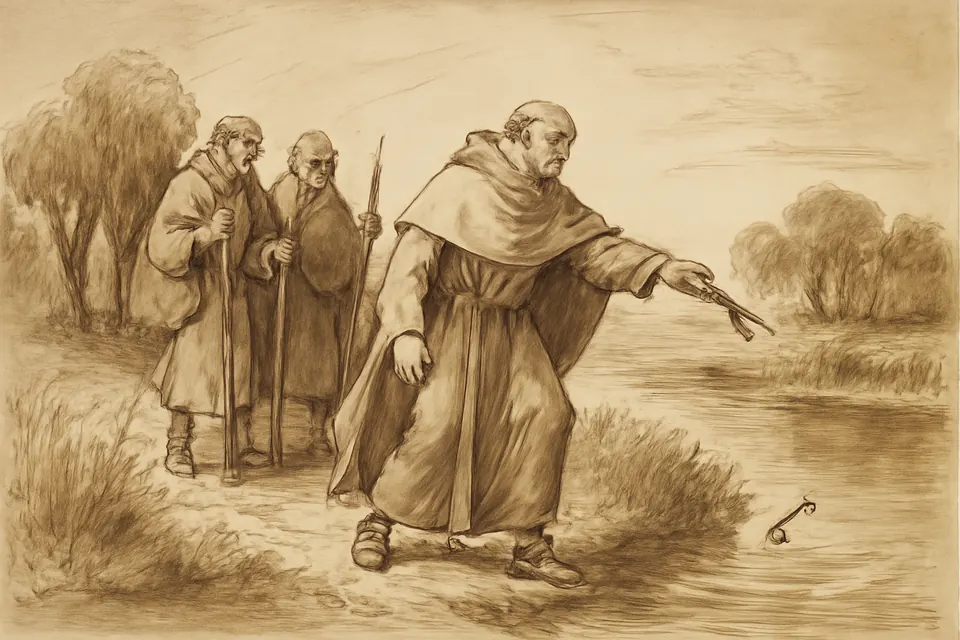
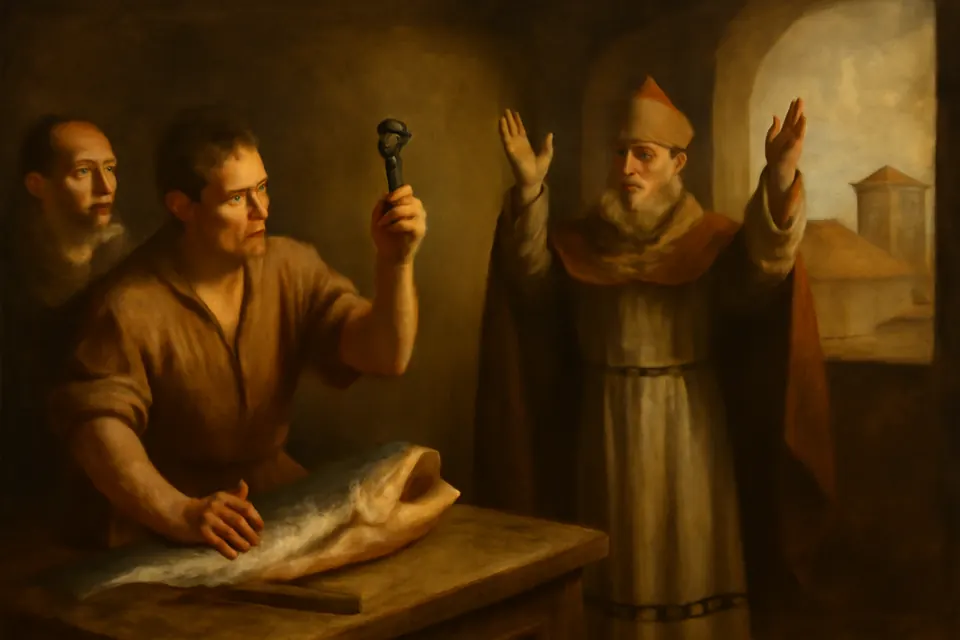
In Rome he went first to pray at the tombs of the Apostles. His servants went fishing in the Tiber and brought back a large fish, and when the cook opened it, he found the key of Egwin's chains. "Thus," wrote his biographer, "the Roman Tiber gave back what the English Avon had swallowed up." Egwin unlocked his fetters before a wondering crowd, and the pope cleared him of every charge.
Our Lady and the herdsman Eoves
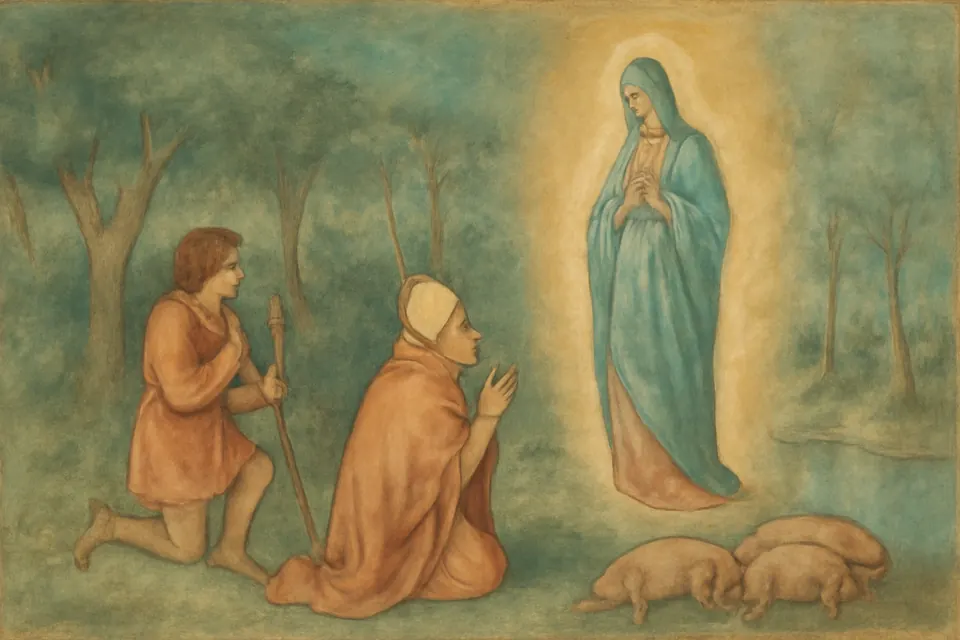
After his return, one of the bishop's herdsmen, a man named Eoves, came to him with a story. In the forest by the Avon he had seen the Virgin Mary. Egwin went to the place himself and, the abbey's founding charter says, saw the vision too, and understood that Our Lady wanted a church built there in her honor.
King Ethelred gave him the land. The place took its name from the herdsman: Eoves ham, "Eoves's dwelling," Evesham. The Catholic Encyclopedia dates the foundation to about 701; the charter of endowment is dated 714.
A second journey and his death
About 709 Egwin went to Rome again, this time with Coenred, Ethelred's successor as king of Mercia, and Offa, king of the East Saxons. Pope Constantine granted Evesham remarkable privileges, including freedom from the bishop's control, which the abbey defended for centuries. Egwin took part in the first great Council of Clovesho, one of the last acts of his life.
Later tradition says he gave up his see to rule Evesham as its first abbot, though the Catholic Encyclopedia notes that contemporary charters make that doubtful. He died on December 30 and was buried in his abbey church. His Latin epitaph says he left this life when "the thirteenth time the wintry sun was born" in Capricorn, that is, thirteen days after the winter solstice.
The miracles of St. Egwin
- Traditional: the key found inside a fish in the Tiber, from his medieval lives.
- Traditional: the vision of Our Lady to Eoves and to Egwin, recorded in the abbey's charter and lives.
- Reported: the Evesham chronicle records many cures at his shrine. Fittingly, several were about chains: a penitent who had bound himself with nine chains lost the last one in the abbey choir "at the Agnus Dei," and a condemned man running to St. Egwin's altar found his fetters fall away. The Stanbrook nuns, who retold these stories, wrote that we may take them as signs of "the love and reverence entertained for the Saint."
Evesham Abbey and his shrine
Evesham grew into one of the great Benedictine houses of England. After the Danish raids secular canons took it over, but in 960 St. Dunstan and St. Ethelwold restored the monks. Egwin's shrine, rebuilt and adorned by later abbots, became one of the richest and most visited in the west of England. It stayed the abbey's chief treasure until the Reformation, when it vanished. The abbey was surrendered to Henry VIII in 1539 and largely pulled down for building stone.
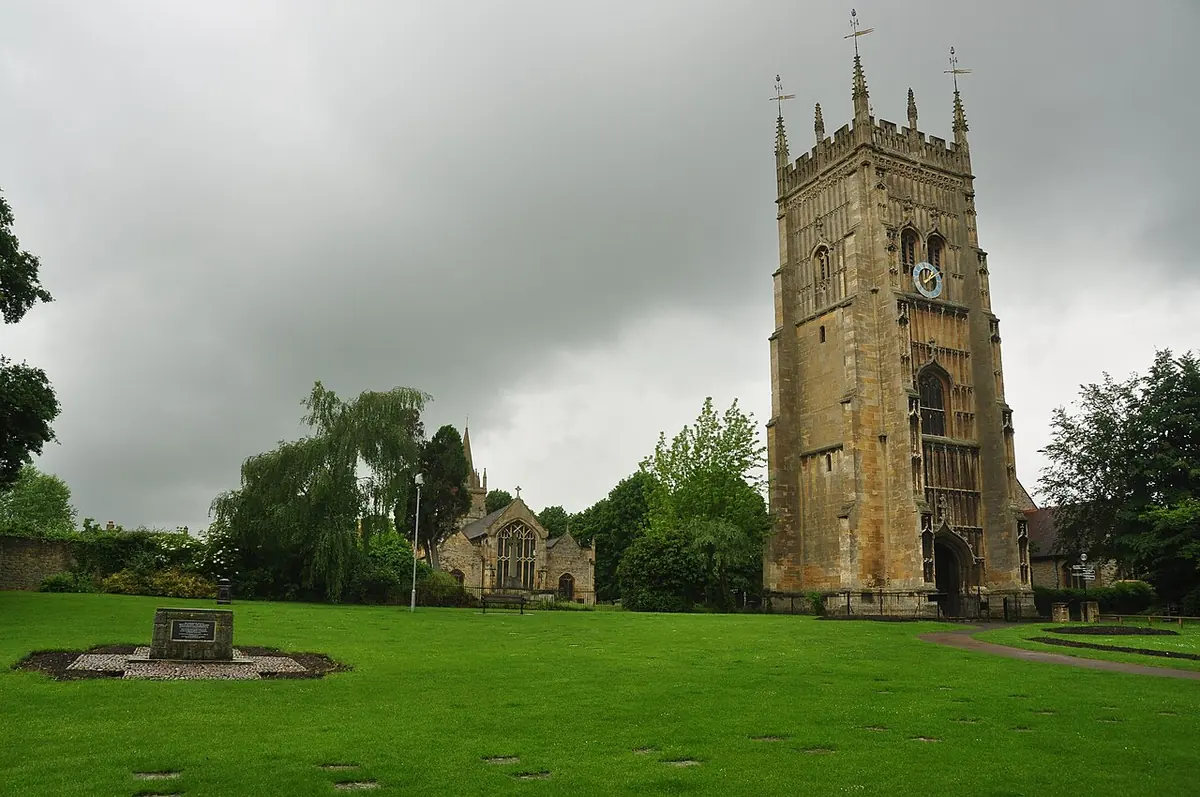
The tall bell tower, built by Abbot Clement Lichfield about 1533, still stands over the abbey site, beside the two old parish churches the monks built for the town.
Symbols of St. Egwin in art
- Miter and crozier: he was a bishop.
- Fetters on his feet, or a key: the chains of his penance and the key he threw away.
- A fish with a key: his own sign, the clearest way to recognize him.
- A church in his hands: the founder of Evesham.
The medieval monks of Evesham had his story painted in a window of the abbey church about 1220, and statues of him stood on the abbey gateway, but both were lost with the abbey.

Feast day and prayer
We keep his feast on December 30; see our feast day calendar. At Evesham it was the great feast of the year, and crowds who had come for Christmas stayed on for it. We have found no traditional English prayer to him. Let us ask in our own words: St. Egwin, who carried your chains to Rome and found them loosed, pray for all who are falsely accused and for all who long to be freed from their sins.
Frequently asked questions
Who was St. Egwin of Evesham?
A member of the Mercian royal family who became the third bishop of Worcester about 692 and founded Evesham Abbey in honor of the Blessed Virgin in the early 700s. He died on December 30, about 717.
What is the story of St. Egwin and the key?
Accused by people who resented his strictness, Egwin set out for Rome to clear his name. As a penance he locked iron fetters on his feet and threw the key into the River Avon. In Rome his servants caught a fish in the Tiber, and the cook found the key inside it, so he unlocked his chains. It is a traditional legend from his medieval lives.
When is the feast of St. Egwin?
December 30. At Evesham it was the abbey's chief feast, kept within the octave of Christmas.
How did Evesham get its name?
Tradition says it comes from Eoves, the bishop's herdsman, who saw a vision of the Virgin Mary at the place. Eoves ham means Eoves's dwelling.
Keep exploring
Sources
- Catholic Encyclopedia (1909): St. Egwin. His election to Worcester, his pilgrimages to Rome, the privileges of Pope Constantine and the Council of Clovesho
- Catholic Encyclopedia (1909): Evesham Abbey. The vision of Eoves, the foundation charter of 714, his death in 717, the shrine and the suppression in 1539
- Benedictine Nuns of Stanbrook, Saint Egwin and His Abbey of Evesham (1904), Internet Archive. The medieval lives by Prior Dominic and Thomas of Marlborough, his epitaph, the feast on December 30, the history of the shrine and the miracles of the broken fetters