St. Andrew Corsini
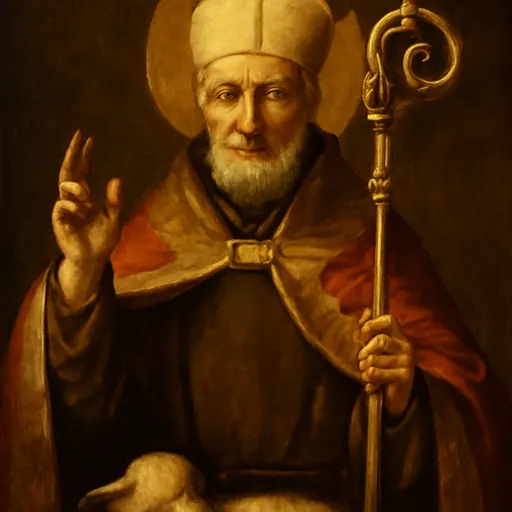
St. Andrew Corsini (1302–1373) was a Florentine nobleman who ran wild as a youth, then became a Carmelite friar, a preacher known as the Apostle of Florence, and Bishop of Fiesole. He was loved as a peacemaker and a father to the poor. His feast is January 6, kept by the Carmelites on January 9, and his body rests in the Carmine church in Florence.
Who was St. Andrew Corsini?
St. Andrew Corsini was a son of one of the great families of fourteenth-century Florence who squandered his youth, came home to God through his mother's tears, and became a Carmelite friar, a preacher, and finally Bishop of Fiesole, the hill town above Florence. He was a bishop who wore a hair shirt under his vestments, fed the poor at his own door and was sent by the Pope to stop a civil war. The Catholic Encyclopedia sums up how the Florentines saw him: "a prophet and a thaumaturgus," a wonder-worker.
He was born in Florence on November 30, 1302, the feast of St. Andrew the Apostle, and was named for him. His parents, Nicholas Corsini and Peregrina, had prayed for a child and vowed him to the Blessed Virgin before he was born.
The wolf who became a lamb
The best-known story about him comes from the old Roman Breviary, the prayer book of priests for centuries. While his mother was expecting him, "she dreamt that she brought forth a wolf, which ran to the Carmelite Church and was changed into a lamb as soon as it reached the porch."

For a while the dream looked like a warning. Andrew "turned to bad courses," the Breviary says, and his mother often rebuked him. One day, as the story goes, she told him about the dream and about the vow she and her husband had made. The words struck home. Andrew went to the church of Santa Maria del Carmine, knelt before Our Lady, and asked to be received by the Carmelite friars. He was still in his teens. His old companions tried to pull him back, and the Breviary adds that the devil "exercised him with many and diverse temptations," but he held firm and made his profession.
Friar, preacher and superior
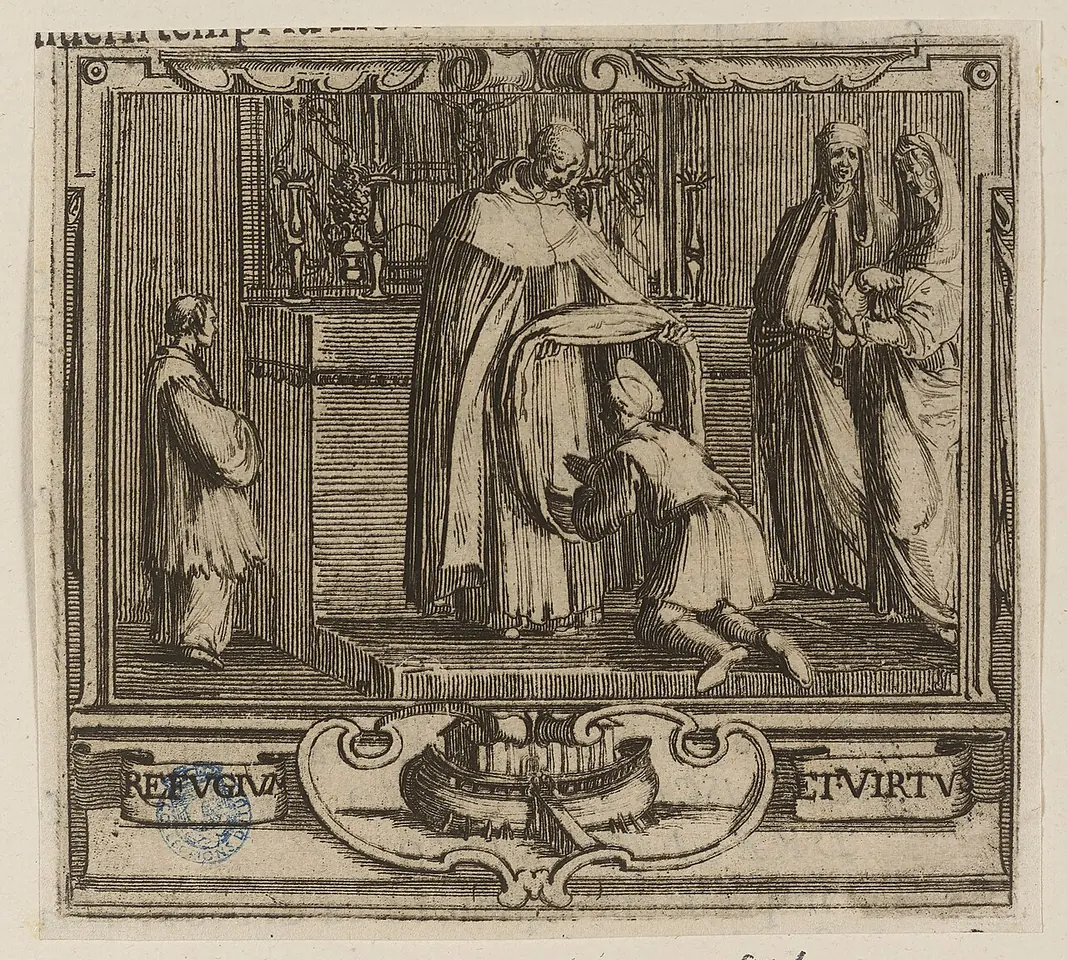
He was ordained a priest in 1328, and tradition holds that he said his first Mass in a quiet hermitage to escape the family feast his relatives had planned. He was sent to study at the University of Paris and then spent time at the papal court in Avignon with his cousin, Cardinal Pietro Corsini. Back in Florence, his preaching won him the name "Apostle of Florence," and he was made superior over the Carmelite houses of Tuscany.
The bishop who hid
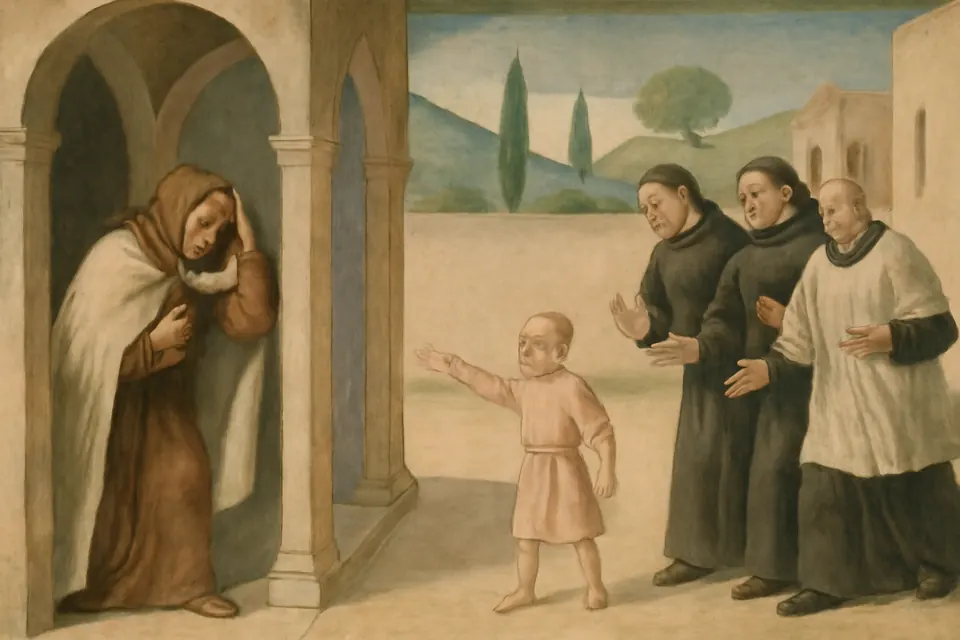
When the see of Fiesole fell vacant, the clergy chose Andrew. He thought himself unworthy and ran away. The Breviary says he "lay hidden and unknown, till he was betrayed by the voice of a child marvellously speaking," and was found outside the city. A later tradition places his hiding place at a charterhouse. Rather than resist what now seemed plainly God's will, he accepted. Sources differ on the year: Pope Clement VI's appointment is usually dated 1349, while the Breviary gives 1360.
As bishop he doubled his penances. He slept on vine branches, gave his income to the poor, and was sought everywhere as a peacemaker. Pope Urban V sent him as legate to Bologna, where nobles and commoners had come to blows, and he restored peace there. On Christmas night, tradition holds, Our Lady told him he would die on the feast of the Epiphany. He died at Fiesole on January 6, 1373, in his seventy-first year, and his body was carried down to the Carmine church in Florence.
The miracles of St. Andrew Corsini
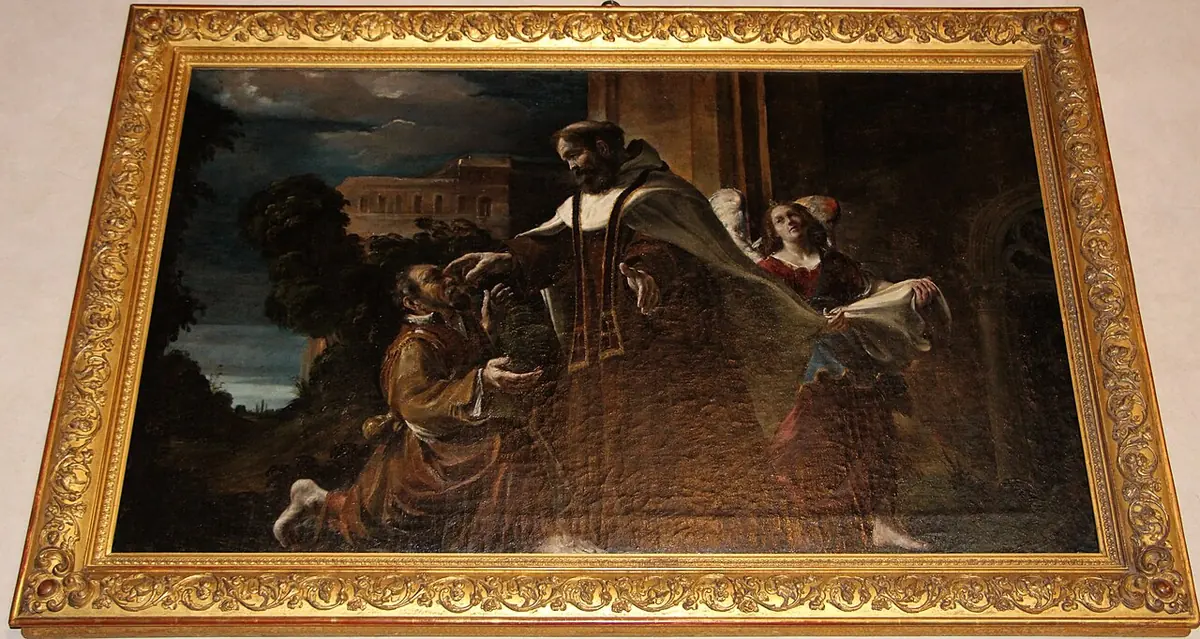
- Healings (reported): Cures were reported in his lifetime and at his tomb, and the Catholic Encyclopedia says they "were so multiplied at his death" that Pope Eugene IV allowed public veneration. Guercino painted him giving sight to a blind man.
- The child's voice (traditional): the infant who revealed where he was hiding, as the Breviary tells it.
- The Battle of Anghiari (traditional): On June 29, 1440, Florence defeated the army of Milan at Anghiari. The Florentines credited the victory to St. Andrew's prayers, and Baroque painters later showed him riding above the battle on a white horse or a cloud.
He was canonized by Pope Urban VIII on April 22, 1629, after a cause that had stalled under Pope Paul II in the 1460s.
Why St. Andrew Corsini is honored as a protector of Florence
The old Breviary closes his story by saying his body "is looked on with great reverence by the citizens, to whom, even in these days, he hath more than once shown himself a protector." Anghiari is the reason. He is also remembered as a model for parents praying for a wayward child, since the turning point of his life was his mother's word to him.
Symbols of St. Andrew Corsini in art
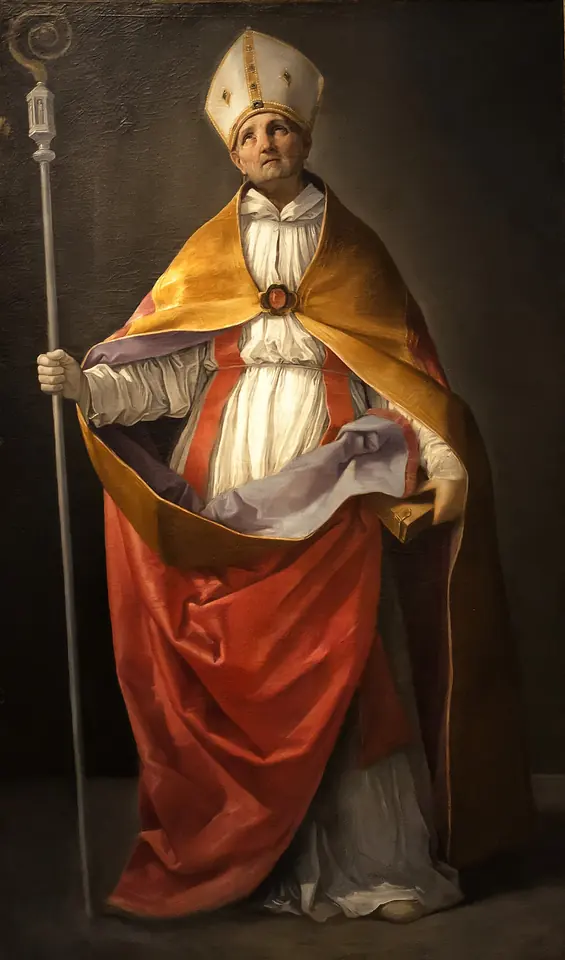
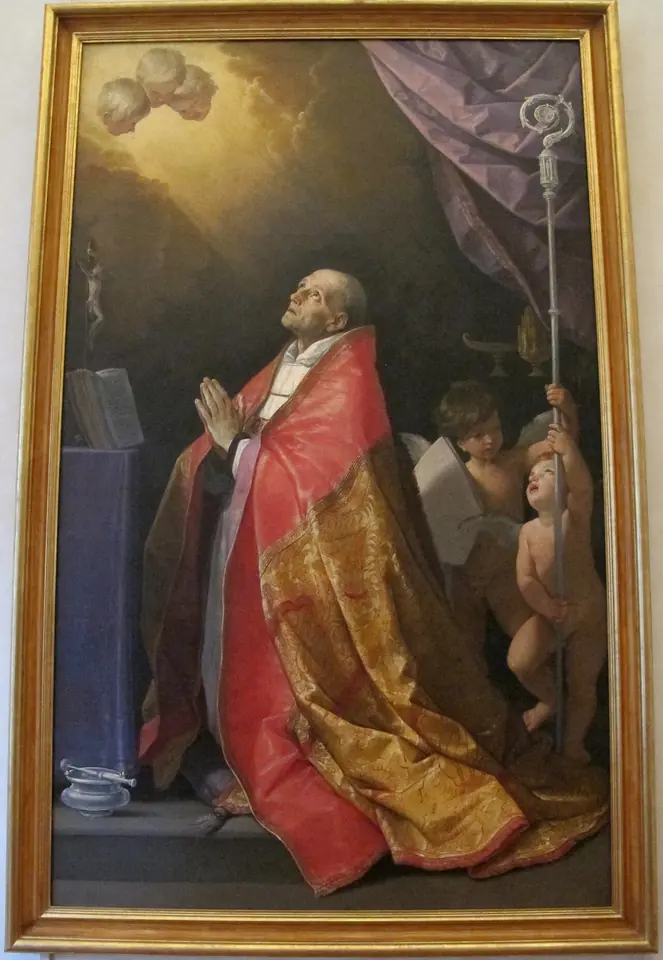
- Miter, crozier and cope: he was Bishop of Fiesole. Reni's two paintings show him this way.
- A brown habit under the vestments: he stayed a Carmelite friar as a bishop.
- The wolf and the lamb: his mother's dream, sometimes shown at his feet.
- Our Lady in the clouds: the visions of the Blessed Virgin who called him and who foretold his death.
- A horse or cloud above soldiers: the Battle of Anghiari.
Feast day, shrines and prayer
We keep his feast on January 6 in the Roman Martyrology, and the Carmelites on January 9. His body lies in the Corsini Chapel of the Carmine in Florence, built by his family after the canonization and reopened after restoration on his feast in January 2026, when the Bishop of Fiesole said Mass there with descendants of the Corsini family present. Pope Clement XII, born Lorenzo Corsini, also built a grand chapel in his kinsman's honor at St. John Lateran in Rome. Find other saints of January on our feast days calendar.
The collect from his feast in the old Roman Breviary is a fitting prayer:
O God, Who dost continually raise up in thy Church new examples of godly living, grant unto thy people so to follow in the steps of thy blessed Bishop and Confessor Andrew, that at the last they may, together with him, attain unto thine eternal reward.
Let us ask St. Andrew Corsini to pray for every young person who has wandered, and for every mother still praying for a child to come home.
Frequently asked questions
Who was St. Andrew Corsini?
A member of the noble Corsini family of Florence, born in 1302, who gave up a dissolute youth to join the Carmelites. He studied in Paris, preached in Florence, governed the Carmelite houses of Tuscany and served about a quarter century as Bishop of Fiesole. Pope Urban V sent him to make peace in Bologna. He died in 1373 and was canonized in 1629.
When is the feast day of St. Andrew Corsini?
January 6, the day he died, in the Roman Martyrology. Before 1969 his feast was kept on February 4 throughout the Latin Church, and the Carmelites now keep it on January 9.
What is the story of the wolf and the lamb?
The Roman Breviary tells that before he was born, his mother dreamed she gave birth to a wolf that ran into the Carmelite church and became a lamb as soon as it reached the porch. When the wayward young Andrew learned of the dream, and that his parents had vowed him to the Blessed Virgin, he repented and became a Carmelite.
Where is St. Andrew Corsini buried?
In the Corsini Chapel of the Basilica of Santa Maria del Carmine in Florence, the church of the Carmelite friary where he first gave himself to God.
Keep exploring
Sources
- Catholic Encyclopedia (1907): St. Andrew Corsini
- Roman Breviary, lessons for the feast of St. Andrew Corsini, February 4 (English translation, Divinum Officium). The mother's dream, the child who revealed his hiding place, his legation to Bologna, his date of death, and the collect quoted on this page
- Order of Carmelites: Inauguration of the Restored Chapel of St. Andrew Corsini (2026)
- Carmelite Friars, Province of St. Elias: St. Andrew Corsini, Bishop. Beatification by Eugene IV (1440), canonization by Urban VIII (1629), the Lateran chapel
- Chorus, Churches of the Patriarchate of Venice: St. Andrea Corsini at the Battle of Anghiari