Pope St. Telesphorus, Martyr
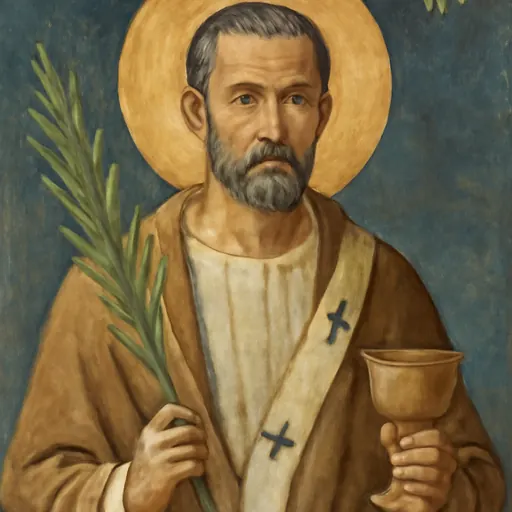
Pope St. Telesphorus was the Greek bishop of Rome from about 125 to about 137, the seventh in succession from the apostles. St. Irenaeus, writing about 180, records that he "was gloriously martyred," the earliest witness to the martyrdom of any pope after St. Peter. Later tradition credits him with the Christmas night Mass and the Gloria. His feast day is January 2.
Who was St. Telesphorus?
Pope St. Telesphorus was the bishop of Rome in the 120s and 130s, a Greek who led the Roman Christians under the emperors Hadrian and Antoninus Pius and died a martyr around 137. He is the seventh bishop of Rome counted from the apostles, the eighth if we count St. Peter himself. The unusual name, Greek for "bringer of fulfillment," is borne by a later Quebec village and by a few other figures, but the saint is this early pope.
He matters for one reason above all. Of all the bishops of Rome after Peter, he is the first whose martyrdom is reported by a writer close to his own time. Everything else we are told about him comes later and has to be weighed with care.

What the oldest sources say
St. Irenaeus, about the year 180
St. Irenaeus of Lyon set down the succession of Roman bishops to show that the apostles' teaching had been handed on faithfully. In the middle of that plain list, he pauses for one name:
Sixtus was appointed; after him, Telephorus, who was gloriously martyred; then Hyginus; after him, Pius; then after him, Anicetus.
(The old English translation spells the name "Telephorus.") Irenaeus names no other early pope as a martyr in that passage, which is why historians take this one seriously. He was writing roughly forty years after Telesphorus died.
Eusebius and the Easter question
The historian Eusebius dates his election to the twelfth year of Hadrian, about 128 or 129, and his death to the first year of Antoninus Pius, about 138 or 139. The Catholic Encyclopedia gives about 125 to 136 instead; the exact years are uncertain.
Eusebius also preserves a letter of Irenaeus to Pope Victor about the date of Easter. The Churches of Asia kept Easter on the fourteenth day of the Jewish month, whatever the weekday, while Rome kept it on Sunday. Irenaeus reminded Victor that earlier popes, "Anicetus, and Pius, and Hyginus, and Telesphorus, and Xystus," kept the Roman custom and still lived in peace with those who came from the other Churches. Telesphorus held to the Sunday Easter without breaking communion over it.
The Christmas night Mass and the Gloria
The Liber Pontificalis, the Book of the Popes compiled centuries later, adds a good deal. It calls him "by nationality a Greek, previously an anchorite," a hermit. It credits him with ordering "the fast of seven weeks" before Easter, with ruling that "at the season of the nativity of our Lord Jesus Christ masses should be celebrated during the night," and with ordering that before the Sacrifice "the angelic hymn should be repeated, namely, 'Gloria in excelsis deo.'"
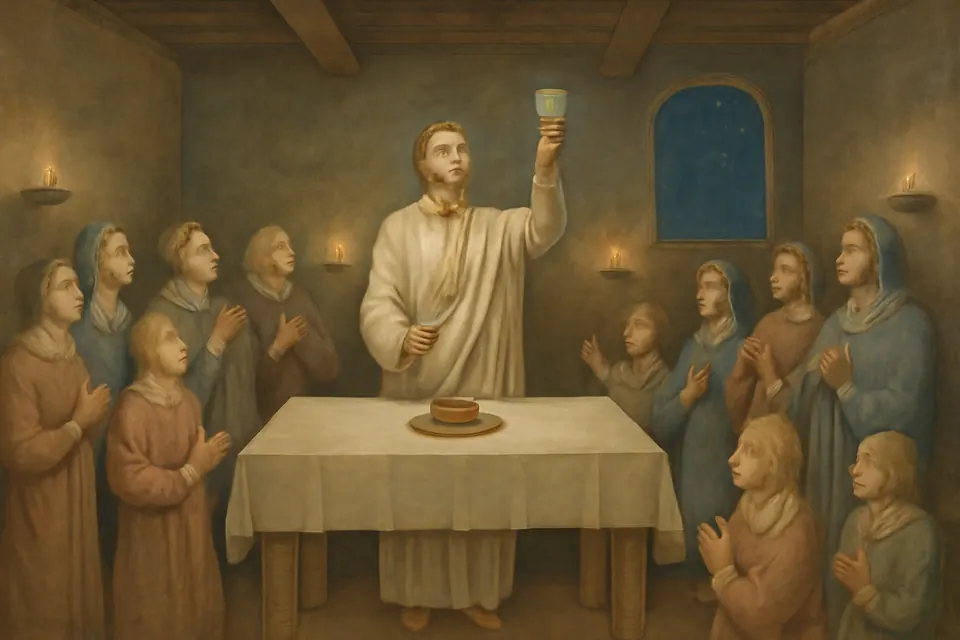
These are beautiful details, and they are why Telesphorus is sometimes called the pope of Midnight Mass. The Catholic Encyclopedia is plain, though: "None of the statements in the 'Liber pontificalis' and other authorities of a later date as to liturgical and other decisions of this pope are genuine." The author of the Book of the Popes often credited old popes with the customs of his own day, and the editor of the English edition notes that the fast before Easter was kept before Telesphorus. So we treat the Christmas Mass and the Gloria as traditional.

His martyrdom
Of his death we know only what Irenaeus tells us and what Eusebius repeats: it was a martyrdom, and a glorious one. No early account gives the place, the manner or the judge. The Book of the Popes says simply, "He was crowned with martyrdom," and that he "was buried near the body of the blessed Peter in the Vatican, January 2." The current Roman Martyrology keeps that day and calls him "pope and martyr."
Alban Butler, in his Lives of the Saints, places his election toward the end of the year 128, says he "sat eleven years, and saw the havoc which the persecution of Adrian made in the church," and quotes Eusebius: "He ended his life by an illustrious martyrdom." Christians under Hadrian were not hunted by any general edict, but they could still be denounced and put to death for the name of Christ. Telesphorus kept his flock through those years and then gave his own life.
Symbols of St. Telesphorus in art
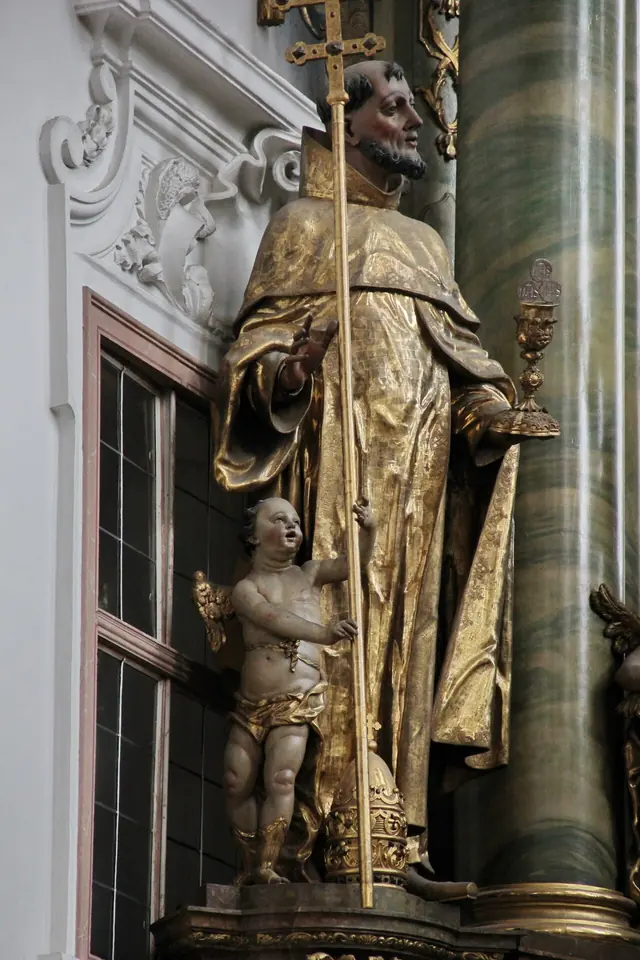
There is no early portrait. Artists show him as a pope with the pallium or tiara, often with the palm of martyrdom. Baroque statues in Bavaria and Austria give him a chalice and a tall papal cross, perhaps recalling the Mass traditions linked to his name. Carmelite churches honored him too, fittingly for a pope the Book of the Popes calls a former hermit. In the Carmelite church at Straubing, he stands in a monk's dark habit under a golden mantle, with a cherub holding his tiara.
Feast day and prayer
We keep the memory of St. Telesphorus on January 2, in the octave of Christmas. That fits the old tradition of the night Mass. Older calendars kept January 5, and the Greek Church keeps February 22. See his neighbors on our feast days page.
There is no traditional prayer written for St. Telesphorus alone. Let us ask him in our own words, perhaps after Midnight Mass: St. Telesphorus, faithful shepherd and martyr, pray for the pope and for all who suffer for Christ, and help us to sing the angels' Gloria with grateful hearts.
Frequently asked questions
Who was Pope St. Telesphorus?
The bishop of Rome who succeeded St. Sixtus I and was followed by St. Hyginus, in the reign of the emperor Hadrian and the first years of Antoninus Pius. The Liber Pontificalis says he was a Greek and "previously an anchorite," a hermit. St. Irenaeus records that he died a martyr.
When is the feast of St. Telesphorus?
January 2 in the current Roman Martyrology, which follows the burial date in the Book of the Popes. Older calendars kept January 5, and the Greek Church honors him on February 22. He is not on the General Roman Calendar.
Did St. Telesphorus start Midnight Mass at Christmas?
The Liber Pontificalis, compiled centuries after his death, credits him with Masses at night on Christ's Nativity, the Gloria before the Sacrifice and the seven-week fast before Easter. The Catholic Encyclopedia says that none of these statements "are genuine." It is a lovely tradition, but not history.
Why is the name Telesphorus important to Christians?
His martyrdom is the first after St. Peter's that an early writer reports for a bishop of Rome. Irenaeus, writing only about forty years later, singles him out as the one "who was gloriously martyred," while he names the other early popes without a word about their deaths.
Keep exploring
Sources
- J.P. Kirsch, Pope St. Telesphorus (Catholic Encyclopedia, 1912). Irenaeus on his martyrdom, Eusebius's dates, the Easter custom, the later liturgical decrees not genuine, January 5 and February 22
- St. Irenaeus, Against Heresies, Book III, chapter 3
- Eusebius, Church History, Book V (Irenaeus's letter to Pope Victor, chapter 24)
- Alban Butler, Lives of the Saints, vol. I (1866): St. Telesphorus, Pope and Martyr
- Roman Martyrology 2004, January 2 (GCatholic)
- Louise Ropes Loomis, The Book of the Popes (Liber Pontificalis), New York: Columbia University Press, 1916. A Greek and former anchorite; the Lenten fast, the Christmas night Masses and the Gloria; burial near St. Peter on January 2