St. Daniel of Padua: Deacon, Martyr and Patron of Padua

St. Daniel of Padua was a deacon of the early Church of Padua who died a martyr, probably in the persecution of Diocletian. His forgotten tomb was found in 1075, and his body, pierced by long nails, was carried into Padua Cathedral on January 3, 1076, which is his feast day. He is a secondary patron of Padua.
Who was St. Daniel of Padua?
St. Daniel of Padua was a deacon of the early Church in Padua, in northern Italy, who gave his life for Christ. Almost nothing about his life survives, but his tomb does. Found in 1075 near the oratory of St. Prosdocimus, Padua's first bishop, it held a body pierced by long nails and a stone that named him: Hic corpus Danielis martyris et levitae quiescit, "Here rests the body of Daniel, martyr and deacon."
We keep his feast on January 3, the day in 1076 when his relics entered Padua Cathedral. He is a secondary patron of the city and the diocese.

What we know, and what is legend
The honest answer about Daniel's life is that we know very little. The Italian Santi e Beati, following the Roman Martyrology, calls him a deacon of the Church of Padua who was probably martyred during the persecution of Diocletian at the start of the fourth century. A later Paduan tradition makes him older still: a deacon serving St. Prosdocimus himself in the second century, and a convert from Judaism. That story fits his name and his burial place, but no early document supports it.
What we do have is solid physical evidence. His tomb was real, the nails were real, and the inscription named him as a martyr and a levita, the old Latin word for a deacon. Like St. Stephen and St. Lawrence, he was a servant of the altar and of the poor who died a witness.
The finding of St. Daniel's relics
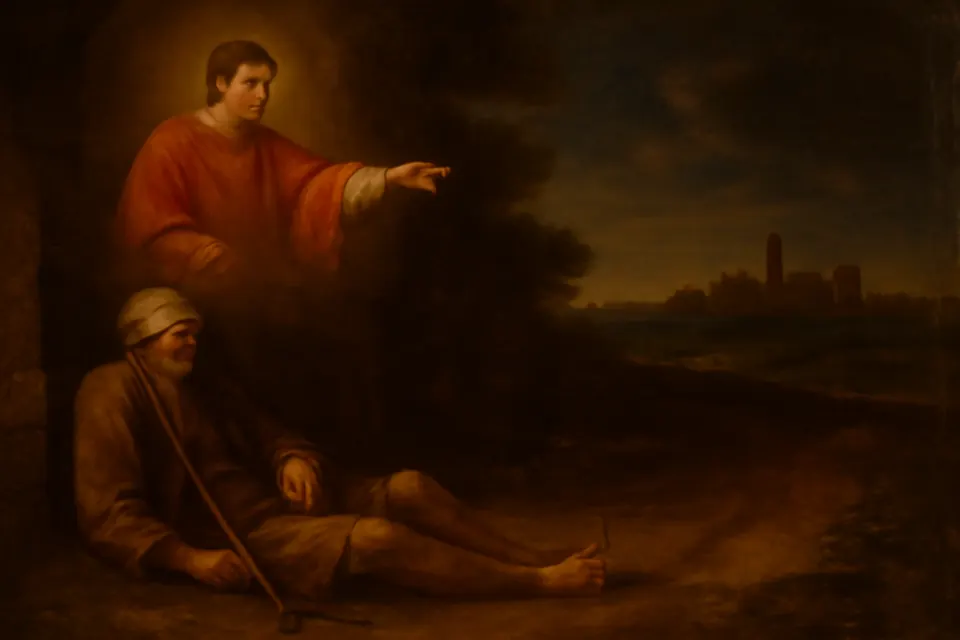
The blind man's vision
Over the centuries Daniel's grave was forgotten. The story of its recovery, which Santi e Beati judges reliable at its core, begins with a blind man from Tuscia, the country north of Rome. In a vision the martyr told him to seek his sight at the oratory of St. Prosdocimus in Padua, beside the basilica of St. Justina, where Daniel's tomb lay unknown. The vision and the cure that followed are traditional, handed down with the story of the finding.
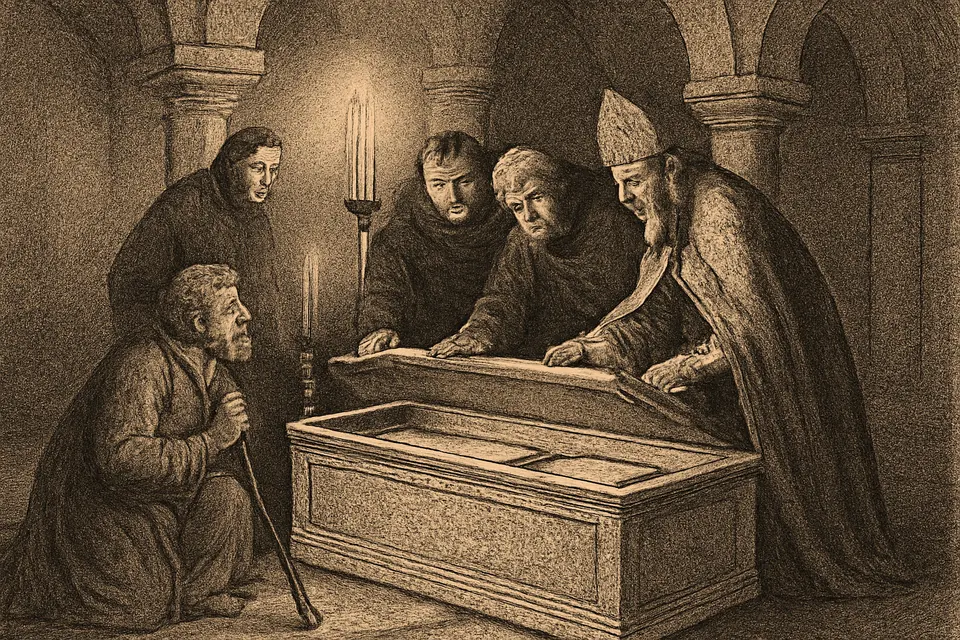
The marble ark, 1075
The search that followed, in 1075, uncovered a marble ark. Inside, the body lay face up on a wooden board, under a marble slab, pierced through by many long nails. The inscription confirmed whose body it was.
January 3, 1076
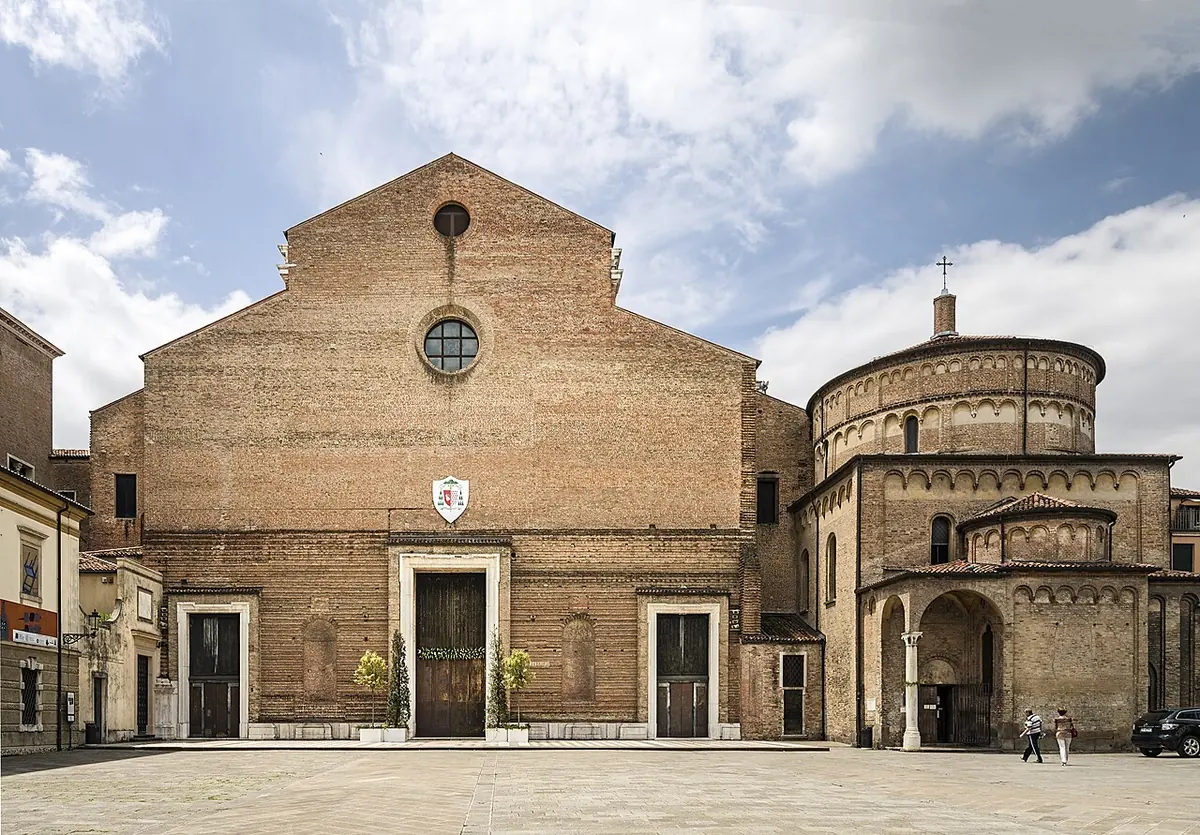
On January 3, 1076, Bishop Ulderico carried the ark into the new cathedral of Santa Maria inside the city walls. The monks of St. Justina and the people of their quarter did not want to lose their martyr, so to calm them the bishop built an oratory to Daniel near the place of the finding. The parish church of San Daniele stands on that site today, and Sebastiano Santi painted the story of the finding and the translation on its ceiling.

In 1592 the relics were moved from the high altar of the old cathedral to the space beneath the choir of the new one. When that undercroft was made into a winter chapel in 1953, the ark was uncovered and studied. It is an ancient Roman sarcophagus whose pagan carving was chiseled away and replaced with the Christian inscription, which scholars found agrees with the story of the finding.
Why St. Daniel is a patron of Padua
Padua honors him as one of its own martyrs and a secondary patron of the city and diocese, alongside its better-known patrons St. Anthony, St. Justina and St. Prosdocimus. Santi e Beati also names him a patron of women whose relatives are at war, and wives and mothers have long brought those fears to him. See more patron saints.

Symbols of St. Daniel of Padua in art
- The deacon's dalmatic: usually red, the color of martyrs. It is the garment that tells you he was a deacon, not a priest or bishop.
- The palm: the sign of a martyr.
- A model of the city: Padua placed under his protection, as in Jacopo da Montagnana's panel in Detroit and the statue on the front of his church.
- Nails and wooden planks: taken from what was found in his tomb. Baroque artists showed his martyrdom as nailing between boards, or as being dragged by horses, as in Antonio Zanchi's 1677 altarpiece in his chapel at St. Justina's.
- A book or banner: the Gospel a deacon proclaims, and the standard of a city patron.
Andrea Mantegna included him as a young deacon in the polyptych he painted in 1453–1454 for the Paduan abbey of St. Justina, now in the Brera in Milan.
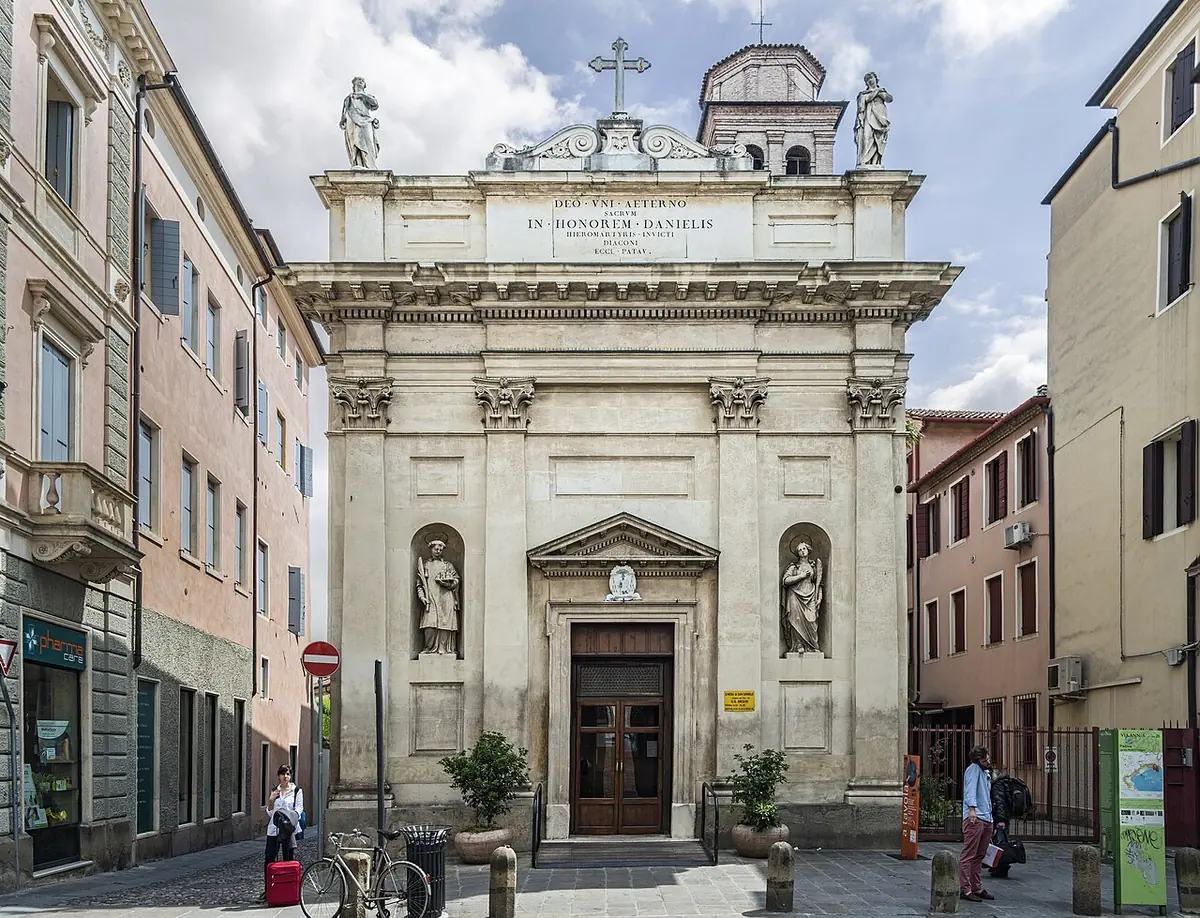
Feast day and where St. Daniel is honored
His feast is January 3; see the feast day calendar. His relics rest in Padua Cathedral, beneath the choir. The church of San Daniele in the old city keeps the memory of the place where he was found, and his chapel in the basilica of St. Justina holds Zanchi's painting of his martyrdom.
Prayer to St. Daniel of Padua
We have found no traditional prayer to St. Daniel in the standard prayer books. The people of Padua ask his intercession on his feast and at his tomb, and anyone can join them: "St. Daniel, deacon and martyr, pray for us."
Let us ask him to watch over those who serve at the altar, and over every family waiting for someone to come home from war.
Frequently asked questions
When is the feast day of St. Daniel of Padua?
January 3. It is the anniversary of the day in 1076 when Bishop Ulderico carried his relics into the cathedral of Padua, and it is his date in the Roman Martyrology.
How did St. Daniel of Padua die?
No reliable account of his martyrdom survives. When his tomb was opened in 1075, his body lay on a wooden board pierced by many long nails, and later art shows him nailed between planks or dragged by horses. Santi e Beati places his death, probably, in the persecution of Diocletian in the early 4th century.
Where are the relics of St. Daniel of Padua?
In Padua Cathedral, in the undercroft beneath the choir, inside an ancient Roman marble sarcophagus re-carved with a Christian inscription.
Is St. Daniel of Padua the prophet Daniel?
No. The prophet Daniel of the Old Testament lived in Babylon centuries before Christ. Daniel of Padua was a Christian deacon and martyr in Roman Italy.
Keep exploring
Sources
- Santi e Beati: San Daniele di Padova, Diacono e martire. the blind man's vision, the finding in 1075, the nails and inscription, the translation of January 3, 1076, the move of 1592 and the 1953 opening, patronages