St. Zdislava of Lemberk, Wife, Mother and Healer of Bohemia

St. Zdislava of Lemberk (about 1220–1252) was a Czech noblewoman, wife of Count Havel of Lemberk and mother of four, who nursed the sick and poor, founded a church, a Dominican priory and a hospital, and lived as a lay Dominican. Her date in the Roman Martyrology is January 1 (the Czech Republic keeps May 30). Pope John Paul II canonized her at Olomouc on May 21, 1995, and she is a patron of families.
Who was St. Zdislava of Lemberk?
St. Zdislava of Lemberk was a Czech noblewoman of the thirteenth century who was a wife, the mother of four children, and a nurse to the poor. With her husband she founded a church, a Dominican priory and a hospital in northern Bohemia, and she lived as a lay member of the Dominican family. She died young, on January 1, 1252.
When Pope John Paul II canonized her at Olomouc on May 21, 1995, he praised her "extraordinary capacity for giving to others" and called her a witness to the "Gospel of the family" and the "Gospel of life" (our translation from the Vatican's Italian text). She is one of the few married women of the Middle Ages raised to the altars as a model for families.
The life of St. Zdislava
A child who ran to the forest
Zdislava was born around 1220 at Křižanov in Moravia, to a noble family. The old lives say she gave away her pocket money to the poor as a child, and that at seven she ran off into the forest to live as a hermit. Her father brought her home, and she obeyed, though reluctantly.
Dominican tradition adds that her mother served in the household of Queen Kunigunde of Bohemia, and that this is how the young girl first came to know the new Order of Preachers.
Wife of the lord of Lemberk
While still a girl of about fifteen she was married to Havel, a nobleman of the Markvartic family who held Lemberk Castle, on a frontier exposed to raids. The older accounts call him a man of violent temper who did not like his wife spending her time with poor and common people. (Agnes Dunbar's Dictionary of Saintly Women (1904–1905) gives her husband a different name and later dates, a sign of how confused the medieval records are.)
Zdislava won him over with patience. When refugees fled the Mongol invasions of the 1240s, she opened the castle to them and nursed the sick with her own hands. John Paul II noted that she gave the sick such care that "she is still remembered today as a healer."

Church, priory and hospital
In time Havel came to support her work. Together they built a church, a monastery and a hospital, according to the Dominican friars who keep her shrine today. The Dominican priory of St. Lawrence at Jablonné (in German, Gabel) was one of their foundations, and Zdislava joined the Third Order of St. Dominic. Dominican tradition says she received Communion almost daily, which was very rare in the thirteenth century.
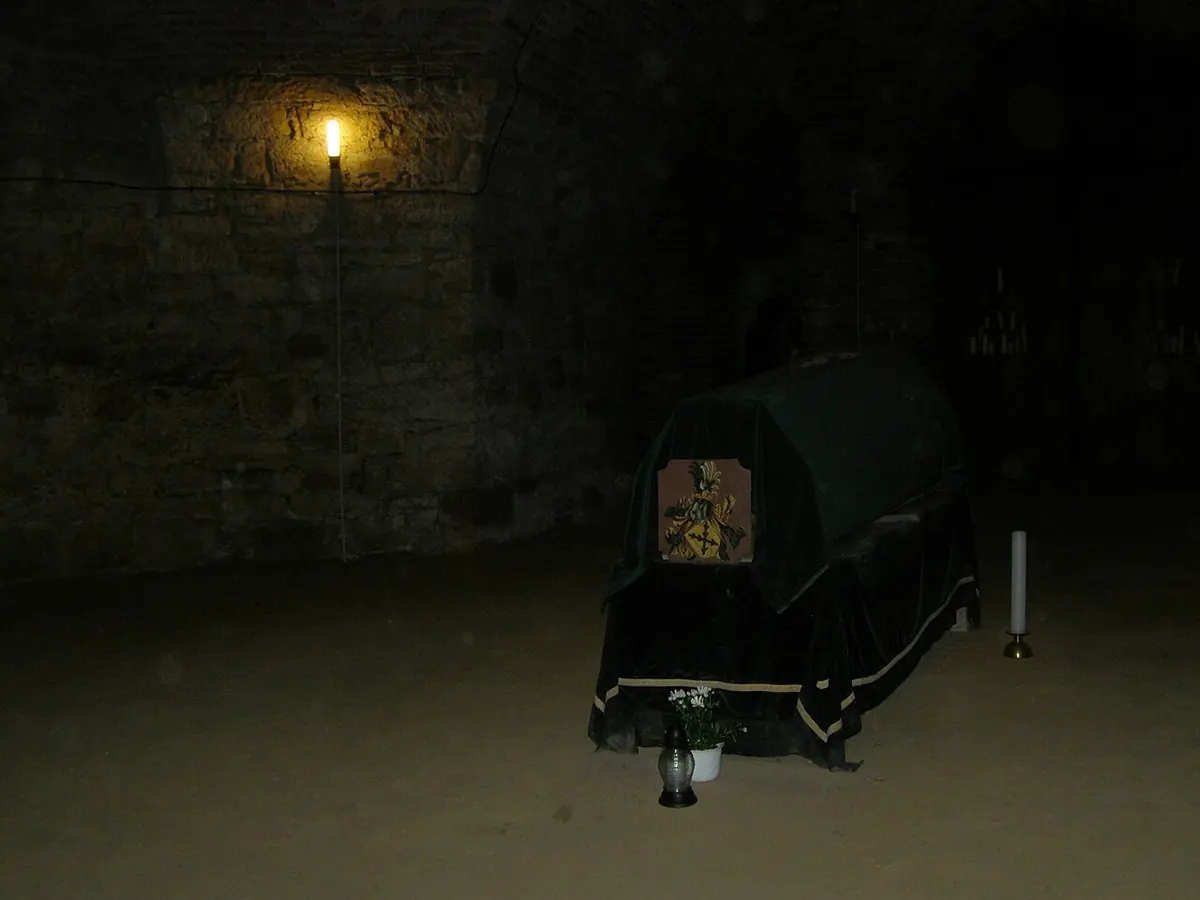
She died on January 1, 1252, still a young woman, and was buried at her own request in the church of St. Lawrence at Jablonné.
The miracles of St. Zdislava
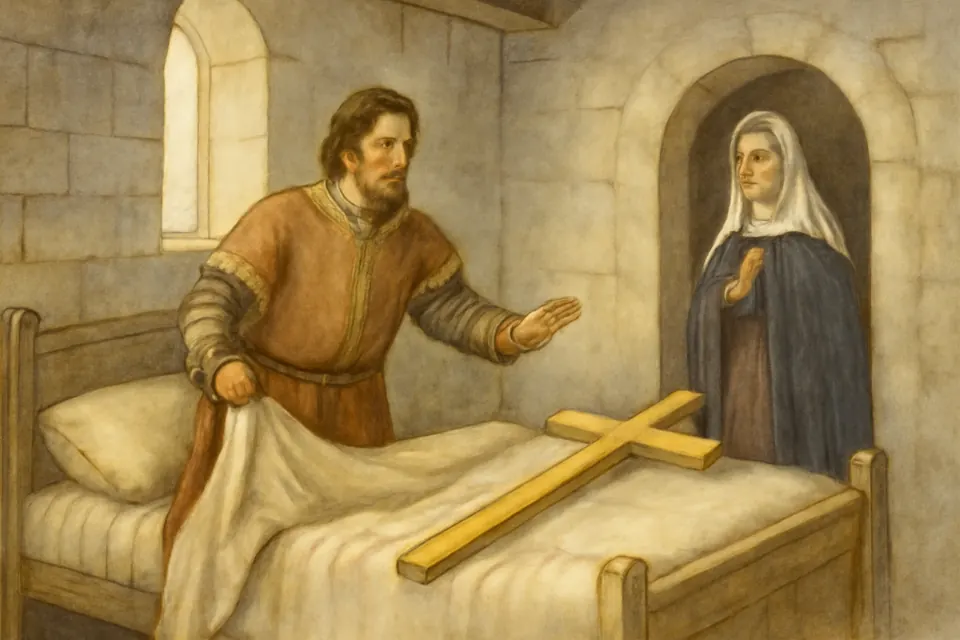
- The crucifix in the bed (traditional). The best-loved story: Zdislava laid a sick, feverish beggar in her own bed. Havel, furious, pulled back the blanket and found not a beggar but a crucifix. The Dominican friars of the Province of St. Joseph tell it this way; another version says she gave the bed away and left only a crucifix. Either way, the story marks the moment her husband changed his heart.
- Healings and a raising from the dead (reported). Her early biographers credit her with visions, healings and even raising someone from the dead. These come from the old lives, not from a modern investigation.
- The red robe (traditional). Dunbar records that after her death she appeared to her grieving husband in a red robe and left him a small piece of it.
- Canonization (approved). Pope St. Pius X confirmed her long-standing cult in 1907, and John Paul II canonized her in 1995.
Why St. Zdislava is the patron saint of families
Zdislava was a saint in her own home. John Paul II, quoting an earlier pope, called her "a model of conjugal fidelity, a support for domestic spirituality and integrity of morals." She lived her faith inside a hard marriage, raised four children, and still turned her household outward to the poor. In his words, she teaches that the family "must be open to God, to the gift of life, and to the needs of the poor." That is why Czech Catholics pray to her for families and for marriages in trouble. She is also patron of the Liberec Region, the Diocese of Litoměřice and the Czech Dominican Province.
Symbols of St. Zdislava in art
- A model of a church: her foundations at Jablonné. The Baroque statue on the basilica's façade shows her holding one.
- The sick or poor at her feet: her work as a nurse and "healer."
- A crucifix: the story of the crucifix in the bed.
- Children: her four children and her patronage of families.
- Dominican dress or a white veil: her life as a Dominican tertiary.
To recognize her in a Czech church, look for a veiled young woman with a church model in one arm and a sick or poor person beside her.

Feast day and where she is honored
Her date in the Roman Martyrology is January 1, the day she died. In the Czech Republic her feast is kept on May 30, and since 2019 the Dominicans keep it on January 4.
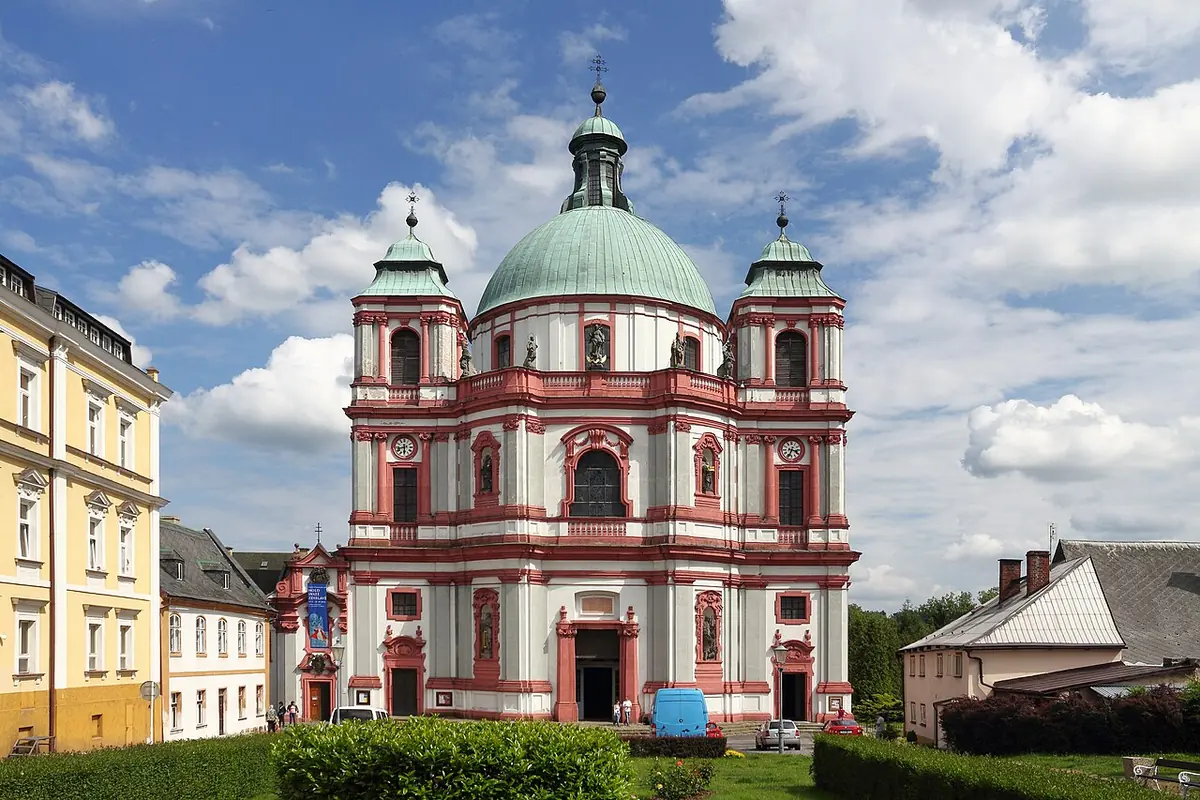
Her grave is in the crypt beneath the Basilica of St. Lawrence and St. Zdislava in Jablonné v Podještědí. The present church was built over it between 1699 and 1729, one of the finest Baroque churches in northern Bohemia, and John Paul II made it a minor basilica in 1996. The Dominican friars still serve it, and pilgrims come to pray at her tomb.
See other saints of January on our feast days page, and more patron saints of families.
Praying with St. Zdislava
We have not found a traditional English prayer to St. Zdislava with a source we can cite. The most fitting words are the ones John Paul II spoke at her canonization, when he turned to her and prayed (our translation from the Italian):
And you, Zdislava of Lemberk, guide the families of your homeland and of the whole world to an ever deeper understanding of their mission; make them open to giving, you gentle and strong, charitable and devout mother!
Let us ask St. Zdislava to pray for our families, for husbands and wives who find marriage hard, and for all who care for the sick.
Frequently asked questions
Who was St. Zdislava of Lemberk?
A thirteenth-century Bohemian noblewoman, wife and mother, who cared for the sick and refugees, founded a church, priory and hospital with her husband, and lived as a Dominican tertiary. John Paul II called her a witness to the "Gospel of the family."
When is the feast of St. Zdislava?
January 1 in the Roman Martyrology, the day she died in 1252. Czech Catholics keep her feast on May 30, and the Dominicans on January 4.
What is St. Zdislava the patron saint of?
Families and difficult marriages above all. She is also patron of the Liberec Region, the Diocese of Litoměřice and the Czech Dominican Province.
Where is St. Zdislava buried?
In the crypt of the Basilica of St. Lawrence and St. Zdislava in Jablonné v Podještědí, in northern Bohemia, where pilgrims still come to pray at her grave.
Keep exploring
- Patron saint pages
- FamiliesMarriageHealing
- Feast-day calendar
- Saints remembered in JanuarySaint of the day
- More
- Saints A to ZPatron saints A to ZExplore every section
Sources
- John Paul II, Homily at the Canonization of Zdislava of Lemberk and Jan Sarkander, Olomouc, May 21, 1995 (Italian), Vatican. Born in Moravia, wife of Count Havel of Lemberk, remembered as a "healer", a Dominican tertiary; passages translated on this page
- Svatá Zdislava, Bazilika sv. Vavřince a sv. Zdislavy, Jablonné v Podještědí (Dominican priory). Mother of four; church, priory and hospital; her grave; the basilica built 1699–1729 and made a minor basilica in 1996; her patronages
- Agnes B. C. Dunbar, A Dictionary of Saintly Women, vol. 2, archive.org. Her flight to the forest at seven, burial at Jablonné by her own wish, the vision in a red robe; gives different dates and a different name for her husband
- Dominican Saints 101: St. Zdislava, Dominican Friars, Province of St. Joseph. The bed and crucifix story, near-daily Communion, the January 4 Dominican feast
- Zdislava Berka, Wikipedia. only source found for the 1907 confirmation of her cult