St. Apollinaris Claudius, Bishop of Hierapolis and Apologist

St. Apollinaris Claudius was bishop of Hierapolis in Phrygia, in present-day Turkey, in the second century. He wrote a defense of the Christian faith addressed to Emperor Marcus Aurelius, books against pagan error and some of the first writings against the Montanist movement. He is the source of the story of the Thundering Legion. We keep his feast on January 8.
Who was St. Apollinaris Claudius?
St. Apollinaris Claudius was bishop of Hierapolis, a Roman city of Phrygia in Asia Minor, in the second half of the second century. He belongs to the generation of bishops and writers we call the apologists, men who answered the empire's suspicion of Christians with reasoned defenses of the faith. Eusebius of Caesarea, the first historian of the Church, writes that Apollinaris and St. Melito of Sardis "enjoyed great distinction" in their day, and that each addressed an apology for the faith to the reigning emperor, Marcus Aurelius.
We know him almost entirely through Eusebius. His own books are lost, and nothing is recorded about his birth, his family or the way he died. What survives is enough to show a bishop who wrote much, fought error and was trusted by other churches.
The life and writings of St. Apollinaris
Bishop of Hierapolis
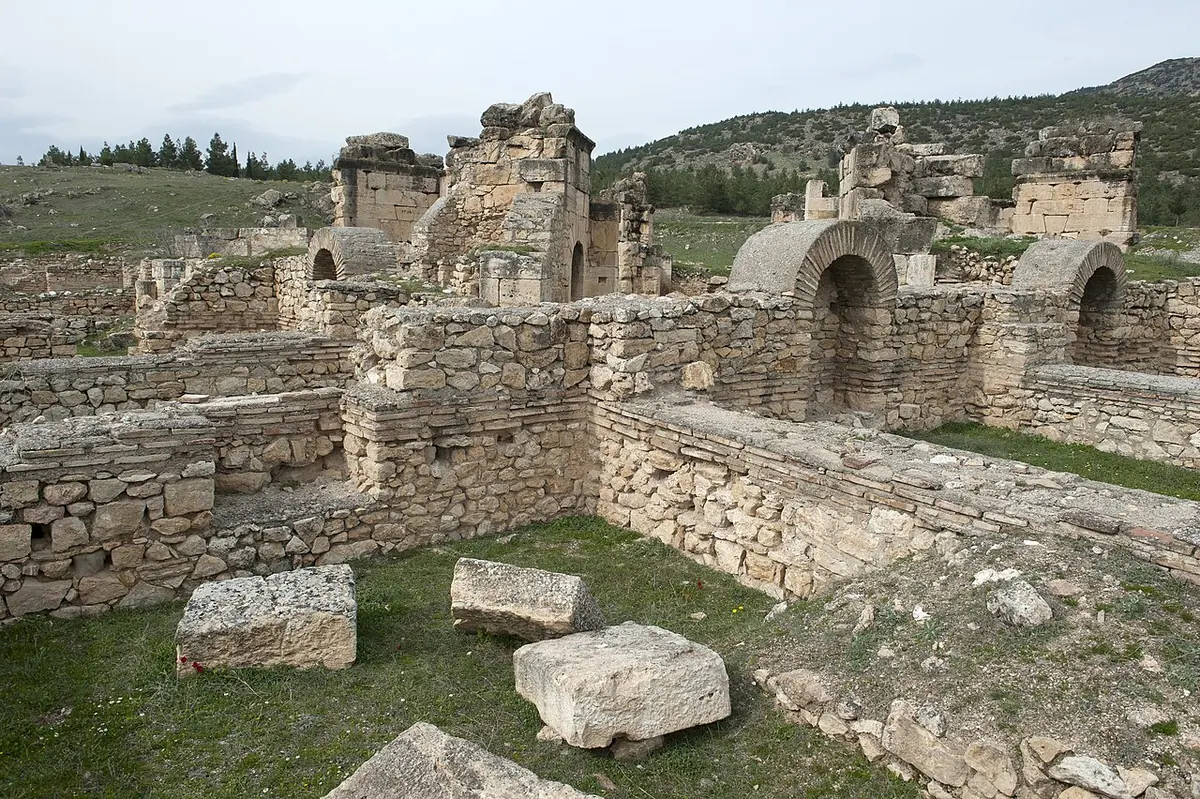
Hierapolis stood on the white travertine terraces of Pamukkale, in present-day western Turkey. It was an old Christian city. The Church there honored the tomb of St. Philip, and Papias, who had heard the disciples of the apostles, had been its bishop. Apollinaris led this church under Marcus Aurelius, who ruled from 161 to 180. The Roman Martyrology says he was "conspicuous for sanctity and learning, under Marcus Antoninus Verus."
His books
Eusebius lists the works of Apollinaris that reached him:
A number of works of Apolinarius have been preserved by many, and the following have reached us: the Discourse addressed to the above-mentioned emperor, five books Against the Greeks, On Truth, a first and second book, and those which he subsequently wrote against the heresy of the Phrygians.
The Catholic Encyclopedia notes that he wrote against the heresies of his time and showed that they had borrowed their errors from pagan philosophy. It dates his apology to the emperor to about 177. None of these works survives complete.

Against the "new prophecy"
The "heresy of the Phrygians" was the movement of Montanus, who claimed with two women prophets that the Holy Spirit spoke through them in a new and final prophecy. It arose in Phrygia, Apollinaris's own region. Eusebius says he wrote against it when it was still "in its incipiency," and calls him "a strong and invincible weapon" raised up against it.
His writings were still being passed from church to church a generation later. Serapion, bishop of Antioch, sent them to two Christians with this note, quoted by Eusebius: "I have sent you writings of the most blessed Claudius Apolinarius, bishop of Hierapolis in Asia." The Roman Martyrology, on March 10, also cites Apollinaris as the witness for the martyrdom of Sts. Caius and Alexander of Apamea in Phrygia.
St. Apollinaris and the Thundering Legion
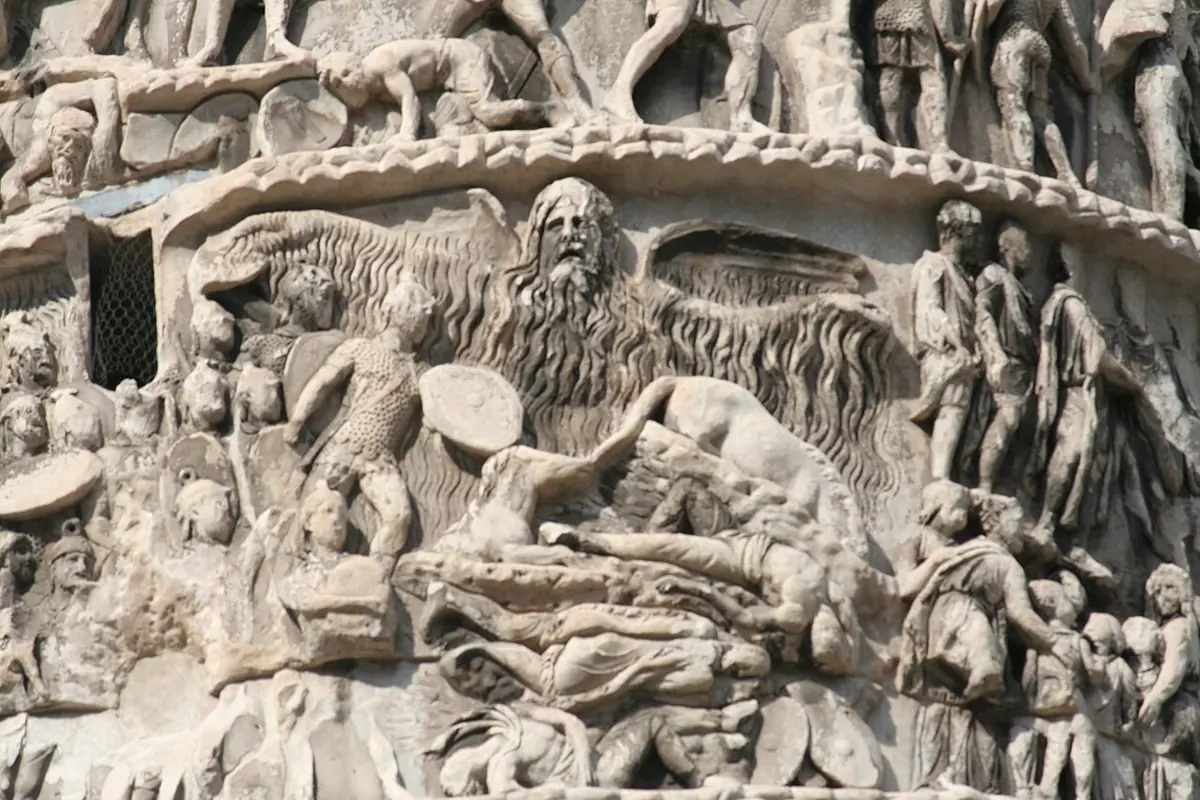
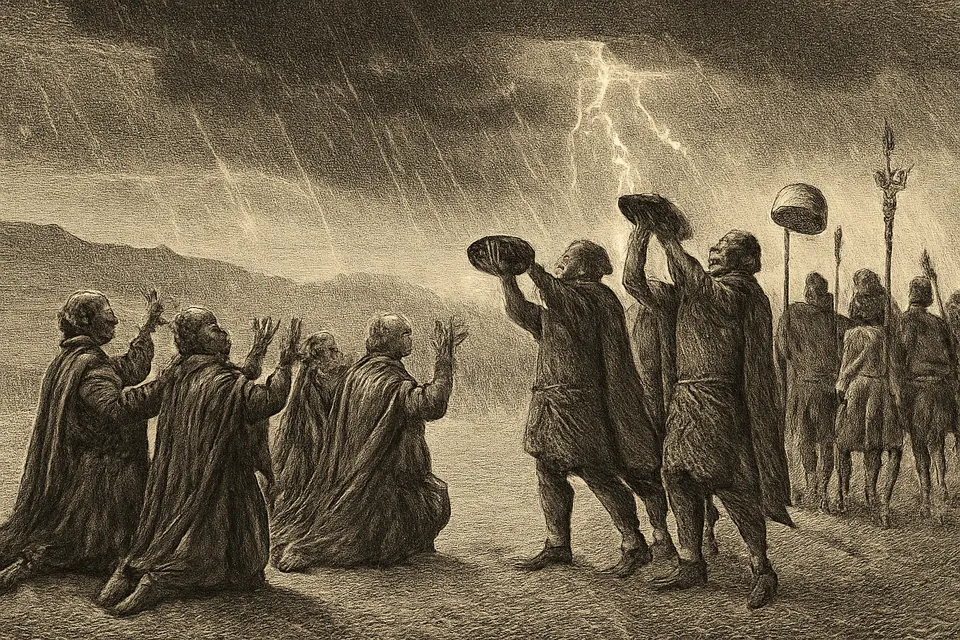
Apollinaris is the earliest Christian writer known to tell the story of the Thundering Legion. During Marcus Aurelius's war against the Germanic tribes north of the Danube, a Roman army was trapped and suffering from thirst. A sudden storm brought rain to the Romans and lightning against the enemy. Christian soldiers in the army, the Christian account says, had knelt and prayed.
Eusebius writes:
Among these is Apolinarius, who says that from that time the legion through whose prayers the wonder took place received from the emperor a title appropriate to the event, being called in the language of the Romans the Thundering Legion.
This is a reported wonder: a real storm that Romans remembered, which the pagans credited to their gods and the Christians to the prayers of their brothers in the ranks. Tertullian repeated the Christian account in his Apology. The Column of Marcus Aurelius in Rome shows the same rain, sent by a pagan rain god.
Symbols of St. Apollinaris Claudius in art
Apollinaris is rarely painted, and no traditional image of him is known to us. When he is shown, look for a bishop of the early Church with a book or scroll, for his apology and his treatises. A storm or lightning in the background points to the Thundering Legion. In Eastern icons a bishop of this age wears the omophorion, the broad stole marked with crosses, and holds the Gospel book.
Feast day and where he is honored
The Roman Martyrology lists him on January 8. No relics or tomb of his are known. Hierapolis, now an archaeological site beside Pamukkale, still shows the ruins of the Martyrium of St. Philip on the hillside above the city. See our feast days page for the saints around his day.

Prayer to St. Apollinaris Claudius
No traditional prayer to St. Apollinaris Claudius has come down to us, so we do not print one. Let us ask him to pray for bishops and teachers of the faith, for Christians who must explain their faith to people in power, and for soldiers in danger.
St. Apollinaris Claudius, pray for us.
Frequently asked questions
Who was St. Apollinaris Claudius?
A bishop of Hierapolis in Phrygia in the second century and one of the early Christian apologists. Eusebius lists his works: a discourse to the emperor, five books Against the Greeks, two books On Truth and writings against the Montanists. None survives complete.
When is the feast day of St. Apollinaris Claudius?
January 8, in the Roman Martyrology, which calls him a bishop "conspicuous for sanctity and learning, under Marcus Antoninus Verus."
What is the Thundering Legion?
A Christian account, reported by Apollinaris and later by Tertullian, says that a Roman legion facing thirst in battle prayed and a storm brought rain, and that the emperor afterward called it the Thundering Legion. Eusebius records Apollinaris's version in his Church History.
Is Apollinaris Claudius the same as St. Apollinaris of Ravenna?
No. Apollinaris of Ravenna was the first bishop of Ravenna, honored on July 20. Apollinaris Claudius was bishop of Hierapolis in Asia Minor and is honored on January 8.
Keep exploring
Sources
- Eusebius, Church History, Book IV, chapters 26–27 (NPNF translation, New Advent)
- Eusebius, Church History, Book V, chapters 5, 16 and 19 (NPNF translation, New Advent)
- Catholic Encyclopedia (1907): St. Apollinaris Claudius
- The Roman Martyrology (English translation, Baltimore: John Murphy, 1916), January 8