St. Thorfinn of Hamar: Exiled Bishop of Norway (died 1285)

St. Thorfinn of Hamar (died 1285) was a Norwegian bishop who stood with Archbishop Jon Raude for the freedom of the Church, was outlawed with him, and died in exile at the Cistercian abbey of Ter Doest in Flanders. Sixty years later the opening of his tomb began a quiet cult. We keep his memory on January 8.
Who was St. Thorfinn of Hamar?
St. Thorfinn of Hamar was a bishop of medieval Norway who chose exile rather than give up the freedom of the Church. He was bishop of Hamar for only a few years, was outlawed with his archbishop, survived a shipwreck, traveled to Rome, and died far from home at the Cistercian abbey of Ter Doest in Flanders on January 8, 1285. He was almost forgotten until his tomb was opened sixty years later.
He came from Trøndelag in the north of Norway, probably from Verdal, where his family lived. A Norwegian source gives his birth year as 1243, but no one is sure of it. His will shows a family of solid farming stock: a mother still living, three brothers and three sisters.
The life of St. Thorfinn
Canon of Nidaros
By 1273 Thorfinn was a canon of the cathedral chapter of Nidaros, the great church at Trondheim built over the tomb of St. Olaf. Some writers think he had been a Cistercian monk at Tautra, near Trondheim, before that, but this is not certain.
He was a close ally of Archbishop Jon Raude, who worked to give the Norwegian Church the freedoms the reform popes had asked for: free election of bishops and the Church's own courts and lands. On August 9, 1277, at Tønsberg, King Magnus the Law-mender signed an agreement with the bishops that granted much of this. Thorfinn's name is among the witnesses. The next year Jon Raude consecrated him bishop of Hamar.

Outlawed and shipwrecked
King Magnus died in 1280, leaving two boys as heirs. The noblemen who governed for them set the Tønsberg agreement aside, taxed the clergy and laid hands on Church lands. The archbishop and his bishops protested. In 1282 the regents declared Jon Raude, Bishop Andres of Oslo and Bishop Thorfinn outlaws.
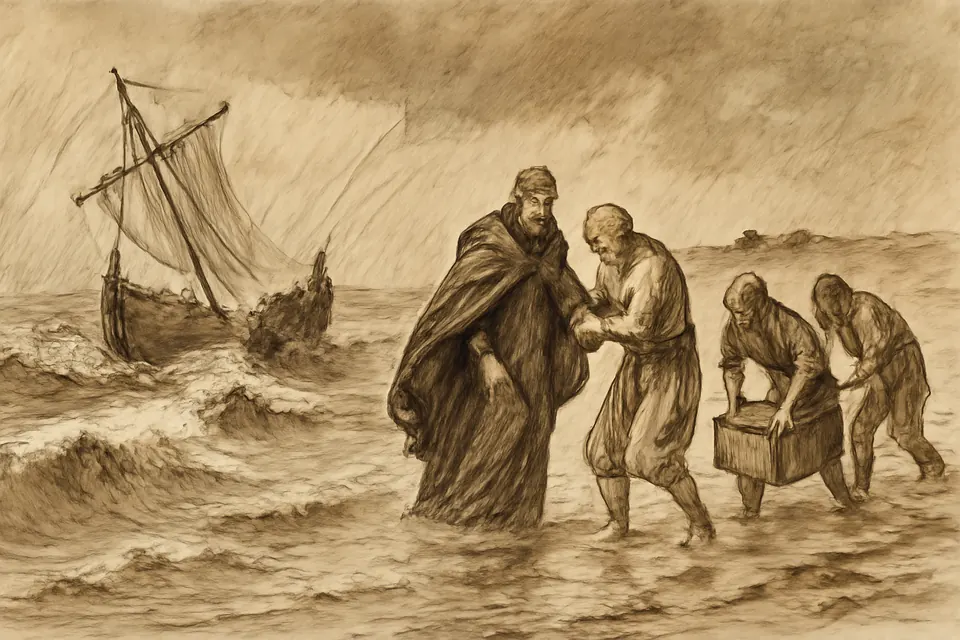
The archbishop and Andres went to Sweden. Thorfinn took a ship. It was wrecked, and after great hardship he reached the Cistercian abbey of Ter Doest at Lissewege, near Bruges, with a few companions and nothing but the clothes they wore. The monks received him with great kindness.
To Rome and back
Jon Raude died just before Christmas 1282. Thorfinn and Bishop Andres went to Rome to lay their case before Pope Martin IV, who wished to stay neutral and was busy with the war in Sicily. Thorfinn, already ill, returned to Ter Doest in 1284. On August 22 of that year he made his will, which still survives. He left gifts to churches in Hamar, to the Cistercians of Tautra and Ter Doest, an antiphonary he had had copied to a parish church, and his breviary to a canon named Jørund, who later became archbishop of Nidaros.
After seven months of illness he died on January 8, 1285, probably in his early forties, and was buried near the altar of the abbey church.

The opening of the tomb
Around 1345 the abbot of Ter Doest rebuilt the choir and meant to level Thorfinn's grave with the floor. When the tomb was opened, the account says, a sweet fragrance rose from it and filled the church. The puzzled abbot asked who the stranger was.
An old monk, Walter de Muda, still remembered him. Long before, Walter had written a Latin poem about the bishop on parchment and nailed it on a board over the grave, praising his steady goodness, his patience in trouble and his generosity. The poem was found there unspoiled. Walter was asked to write down all he remembered, and the Cistercians of Flanders and France began to keep Thorfinn's feast. The fragrance and the wonders reported at his tomb are reported signs from a medieval community; none was ever formally examined. Walter's poem and life were later printed in the Acta Sanctorum for January 8.
Where St. Thorfinn rests
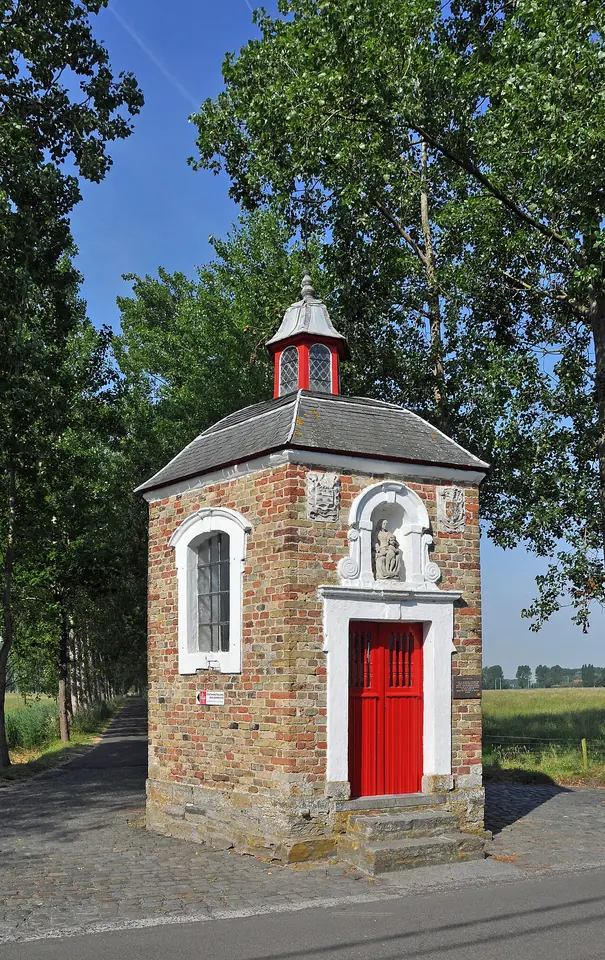
Calvinists destroyed Ter Doest in 1571. In 1687 Thorfinn's remains were found in the ruins and taken to a convent in Bruges, where his memory was still kept. When that crypt was opened in 1949, the graves had collapsed and his bones could no longer be told apart from the many abbots buried there. A great barn on the old abbey grounds keeps parts of the medieval walls, and Norwegian Catholics sometimes visit.
Thorfinn in Norway today
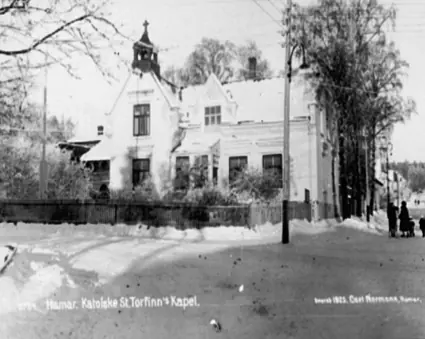
Norwegian historians brought the forgotten bishop back to light in the 1800s. When Hamar's first Catholic chapel since the Reformation opened in 1924, the parish took him as its patron, and Sigrid Undset, the Catholic novelist, worshiped there. She also gave him a part in her novel Olav Audunssøn, where he is the kind bishop of Hamar who helps two young lovers. The church in Levanger, near his home country, also bears his name.
Symbols of St. Thorfinn in art
Thorfinn has no old iconographic tradition, since his cult was small and local. Modern images of him draw on his story:
- A bishop with miter and crozier: his office at Hamar.
- A ship: his flight and shipwreck.
- A Cistercian abbey church: Ter Doest, where he was sheltered and buried.
- A book: the breviary and antiphonary he cared for and left in his will.
Feast day and prayer
We keep his memory on January 8. See other saints of January on our feast days page.
No traditional prayer to St. Thorfinn has come down to us. Let us ask him to pray for bishops who suffer for the freedom of the Church, for refugees and exiles, and for the Catholic Church in Norway. St. Thorfinn, pray for us.
Frequently asked questions
Who was St. Thorfinn of Hamar?
A canon of the cathedral of Nidaros (Trondheim) who became bishop of Hamar in 1278. When the regents of the young King Eirik tore up the Church's agreement with the crown, he was outlawed, fled by sea, and died at Ter Doest Abbey near Bruges on January 8, 1285.
Is Thorfinn a saint or a blessed?
He was never formally canonized. The Cistercians of Flanders and France kept his feast after about 1345, English reference books list him as St. Thorfinn, and the Catholic Church in Norway calls him Blessed Thorfinn. He is not in the current Roman Martyrology.
Where is St. Thorfinn buried?
He was buried near the altar of the abbey church of Ter Doest at Lissewege. After the abbey was destroyed in the sixteenth century his remains went to a convent in Bruges in 1687, but they can no longer be identified. Only the abbey's great barn survives at Ter Doest.
Why is the Catholic church in Hamar named for him?
When Hamar's first Catholic chapel since the Reformation opened in 1924, the parish took St. Thorfinn as its patron, the one medieval bishop of Hamar honored as a saint. The novelist Sigrid Undset worshiped there.
Keep exploring
Sources
- Den katolske kirke (katolsk.no): Den salige Torfinn av Hamar (1243–1285). Canon of Nidaros, the Tønsberg agreement of 1277, the 1284 will, the opening of the tomb about 1345, Walter de Muda, the 1687 transfer and 1949 crypt, the Hamar chapel of 1924; not in the Martyrologium Romanum
- Store norske leksikon: Torfinn (biskop), by Per-Øivind Sandberg. Bishop of Hamar 1278–1285, outlawed with Jon Raude and Bishop Andres of Oslo, shipwreck, the journey to Pope Martin IV, death seven months after his return
- Acta Sanctorum, January, vol. 1 (Antwerp, 1643), January 8. Prints Walter de Muda's poem and his account of Thorfinn (cited by katolsk.no; not opened by us)