Blessed Pauline Jaricot, Founder of the Propagation of the Faith and the Living Rosary
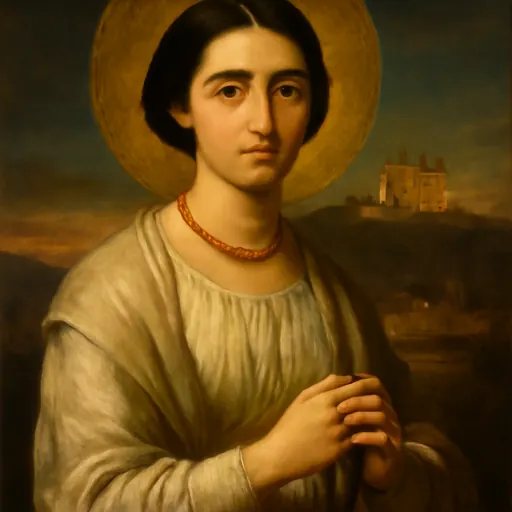
Blessed Pauline Jaricot (1799–1862) was a laywoman of Lyon, France, who founded the Society for the Propagation of the Faith in 1822, the worldwide collection that still supports the Church's missions, and the Living Rosary in 1826. She died poor and forgotten, was declared venerable in 1963 and was beatified in Lyon on May 22, 2022. Her feast day is January 9.
Who was Blessed Pauline Jaricot?
Blessed Pauline Jaricot was a young laywoman of Lyon, France, who found a way for ordinary Catholics to carry the whole Church's missions on their shoulders: a penny a week and a prayer a day. She was born on July 22, 1799, the youngest of seven children of a prosperous silk manufacturer, and baptized at the parish of Saint-Nizier. Out of her ideas came the Society for the Propagation of the Faith, which still gathers the offerings of World Mission Sunday, and the Living Rosary, which still unites praying Catholics in groups of fifteen.
She died poor on January 9, 1862. The Church beatified her in Lyon on May 22, 2022. That day Pope Francis called her "a courageous woman, attentive to the changes taking place at the time," with "a universal vision regarding the Church's mission."
The life of Blessed Pauline
A conversion at seventeen
At about seventeen she was recovering from a bad fall when her mother died, and her grief sent her into a life of intense prayer. On Christmas Day, 1816, she made a vow of perpetual virginity. She gathered pious young women who worked as servants into a prayer union, the Réparatrices, to make amends to the Sacred Heart of Jesus.
A penny a week for the missions
From about 1819 Pauline began collecting small weekly offerings among the women who worked in the family's silk mill. Her method was simple. Each collector found ten people to pray and to give a cent a week; each group of ten was linked to a larger group, and the money flowed to one treasurer.

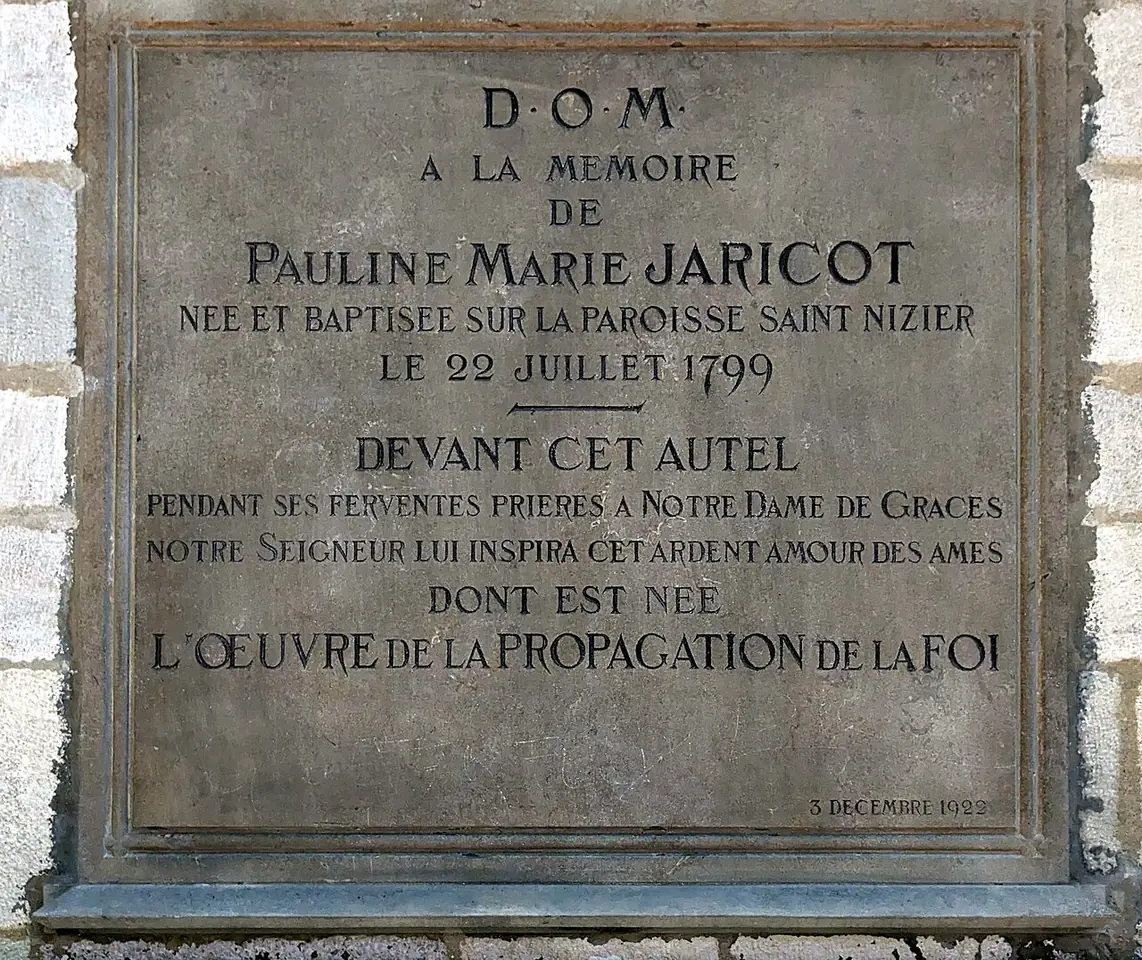
On May 3, 1822, a meeting in Lyon formally founded the Society for the Propagation of the Faith on her method. Pope Pius VII approved it the following year. A plaque in Saint-Nizier, placed in 1922, says that the Lord inspired her "ardent love for souls" while she prayed before the altar of Our Lady of Grace in that church.
The Living Rosary
In 1826 she founded the Living Rosary. Each member prays one decade of the rosary a day, and fifteen members together complete the whole rosary every day. Pope Gregory XVI gave the association canonical status in 1832, and it spread far beyond France. In 1831 she also gathered the Daughters of Mary, women consecrated to God without a habit, who served the spread of the faith.

Healing, ruin and forgiveness
In 1835, gravely ill again, she set out on a pilgrimage to Italy and was healed on the way. She credited the cure to St. Philomena, and her friend St. John Vianney, once her family's parish priest, shared that devotion. Back in Lyon she lived at Lorette, a house on the hill of Fourvière, which became the center of her works.
In 1845 she bought an ironworks to build a Christian workplace, with housing, a school and a chapel for the workers. The men she trusted to run it defrauded her, and she lost everything. She spent her last years paying debts, begging, and preaching forgiveness. She died destitute.
The miracle of Blessed Pauline Jaricot
The healing approved for her beatification is approved. In 2012 a girl of about three, Mayline Tran, choked on a piece of food. According to the Dicastery for the Causes of Saints, she went without oxygen for about thirty minutes, her heart stopped, and she reached the hospital alive but in a vegetative coma. Doctors told her parents that if she lived, she would never walk or speak. The mother of a school friend, a member of the Living Rosary, had been present and at once began asking Pauline's prayers, and others joined. From July her condition improved sharply, and she recovered completely.
A diocesan inquiry in Lyon examined the case in 2018 and 2019. The Vatican medical board declared the healing "rapid, complete, lasting and inexplicable" on September 19, 2019, the theologians and cardinals agreed, and Pope Francis approved the miracle in 2020. Mayline attended the beatification at thirteen.
Why missionaries ask her prayers
Pauline never left France, but she gave the missions their daily bread. The Pontifical Mission Societies honor her as their founder, and it is natural for missionaries and all who support the missions to ask her prayers. See more patronages on our patron saints page.
Symbols of Blessed Pauline in art
Pauline is shown as she appears in her portraits: a young woman with dark hair parted in the middle, a white dress and shawl, and a coral necklace. Devotional images add a rosary for the Living Rosary, a coin or offering box for the Propagation of the Faith, or a globe for the missions.
Feast day and where she is honored
We keep her memorial on January 9, the day of her death. Her tomb is in the Church of Saint-Nizier in Lyon, where she was baptized; a relic of her heart was carried in procession at her beatification. Her house at Lorette, on the Montée Saint-Barthélemy, is open to pilgrims. See other feasts on our feast days page.

Praying with Blessed Pauline
The simplest way to pray with Pauline is to do what she asked of her members: pray one decade of the rosary each day for the spread of the Gospel. Our guide to how to pray the rosary gives the prayers in full. Let us ask Blessed Pauline to pray for missionaries everywhere and for all who give from little.
Blessed Pauline Jaricot, pray for us.
Frequently asked questions
What did Pauline Jaricot found?
The Society for the Propagation of the Faith, formally established on May 3, 1822, and approved by Pope Pius VII the next year; the Living Rosary in 1826; and in 1831 the Daughters of Mary, women consecrated to God without a religious habit, working to spread the faith.
What miracle led to the beatification of Pauline Jaricot?
The healing of a girl of about three, Mayline Tran, who choked on food in 2012, went into cardiac arrest and lay in a vegetative coma. Prayer to Pauline began at once through a member of the Living Rosary. A Vatican medical board judged her recovery rapid, complete, lasting and inexplicable in 2019, and the decree was approved in 2020.
What is the Living Rosary?
A prayer association Pauline founded in 1826: members form groups of fifteen, and each prays one decade of the rosary a day, so that together the group prays the whole rosary daily. Pope Gregory XVI gave it canonical status in 1832.
Where is Pauline Jaricot buried?
In the Church of Saint-Nizier in Lyon, her baptismal parish, where her remains have rested since 1935.
Keep exploring
Sources
- Dicastery for the Causes of Saints: Paolina Maria Jaricot. Dates of birth and death, the founding dates, the venerable decree of 1963, the miracle decree with the medical board's finding, and Pope Francis's letter for the beatification
- Pope Francis, Regina Caeli address, May 22, 2022. Quoted
- Catholic Encyclopedia (1911): The Society for the Propagation of the Faith. The weekly cent for the missions and the founding meeting of May 3, 1822
- The Catholic Spirit: Blessed Pauline Jaricot, founder of Society for the Propagation of the Faith. The healing of 1835, the ironworks of 1845 and her bankruptcy, the Living Rosary's canonical status in 1832, and her tomb at Saint-Nizier since 1935
- National Catholic Register (CNA): French laywoman Pauline Jaricot is beatified (May 2022). The beatification Mass, the procession of her heart relic, and the healed girl's presence