St. Anthony of Antioch, Priest and Martyr with Sts. Julian and Basilissa
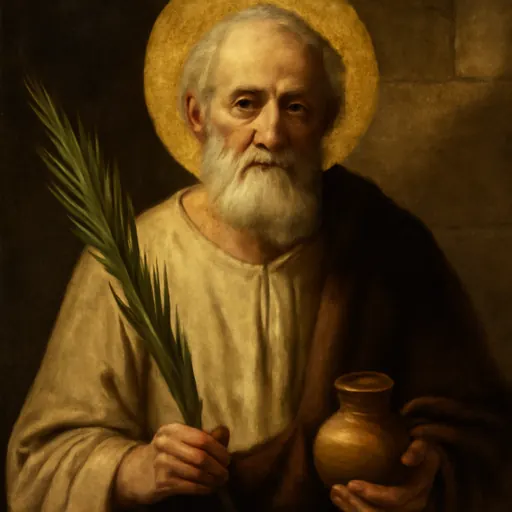
St. Anthony of Antioch was a priest martyred with Sts. Julian and Basilissa in the persecution of Diocletian, around 304. The ancient account says he baptized the converts Julian had won in prison, among them the governor's son Celsus, his mother Marcionilla and Anastasius, a man raised from the dead, and then died with them. The Roman Martyrology remembers him on January 9; the Orthodox Church on January 8.
Who was St. Anthony of Antioch?
St. Anthony of Antioch was a priest who gave his life for Christ in the persecution of Diocletian, at the beginning of the fourth century. We know him through the story of two better-known martyrs, the married saints Julian and Basilissa. When Julian's courage in prison brought others to the faith, it was the priest Anthony who baptized them, and he died with them.
The Roman Martyrology names him in its entry for January 9: Julian "was ordered by the president Marcian to be tormented in many ways and executed. With him suffered Anthony, a priest, and Anastasius, whom Julian raised from the dead, and made partaker of the grace of Christ; also, Celsus, a boy, with his mother Marcionilla, seven brothers, and many others."
He is not the same as St. Anthony the Great, the desert father, and his companion Julian is a different man from St. Julian of Antioch, the martyr of Cilicia.

The story of Julian, Basilissa and the priest Anthony
A marriage given to God
The Orthodox Church in America tells their story from the Greek tradition. Julian, born at Antinoe in Egypt, married the noble and wealthy Basilissa to please his parents, but the two agreed to live as brother and sister for the love of Christ. When their parents died, they built two monasteries, one for men and one for women, and each led one of them. The Roman Martyrology adds that many priests and ministers of the Church took refuge in their house during the persecution.

Converts in the prison
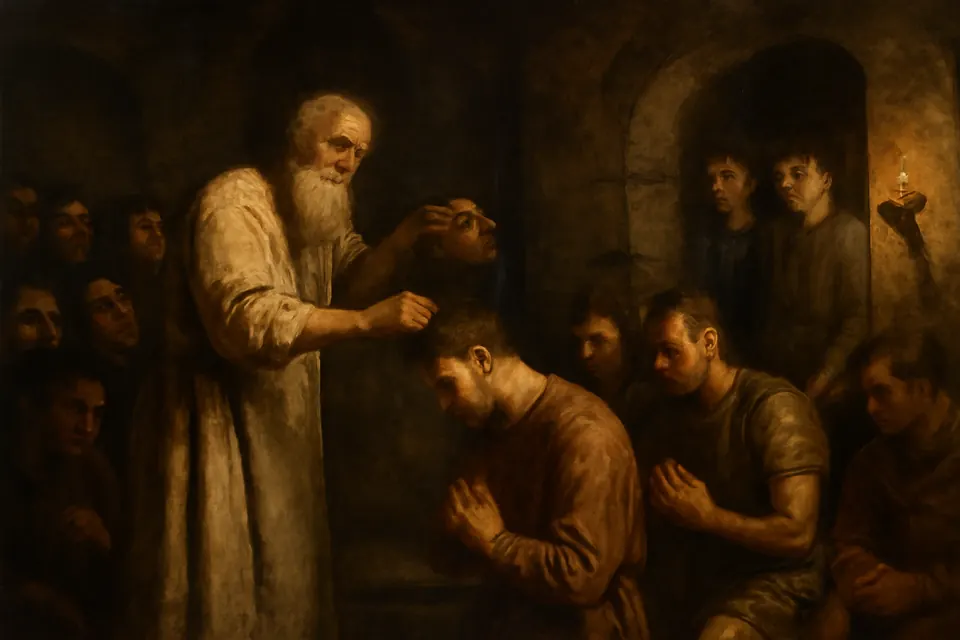
When the persecution struck, Julian was arrested and cruelly tortured on the orders of the governor Marcian. His courage moved the governor's own son, the boy Celsus, and Celsus's mother Marcionilla to believe. The account says Julian also raised a dead pagan to life, who took the name Anastasius, "risen." Twenty soldiers came to the faith as well.
The priest who baptized them
Here Anthony enters the story. According to the Orthodox account, "the converts received Baptism from the priest Anthony." The fuller Acts of these martyrs, printed by the Bollandists in the Acta Sanctorum, say that seven Christian brothers brought the priest Anthony secretly into the prison so that the soldiers and the governor's son could be baptized. For this Anthony was seized and tortured, and with the others he was put to the sword.
History and legend
We should say plainly what is certain and what is not. The martyrs Julian and Basilissa were honored in both East and West, and churches in France and elsewhere still bear their names. Their Acts, however, are a late and much embroidered work, and they disagree even on the city. The Roman Martyrology says Antioch; the Greek synaxaria say Antinoe, a city of Egypt, and many writers think the Egyptian city the original and Antioch a confusion of names. Anthony's name has come down to us only inside their story.
The raising of Anastasius and the other wonders of the Acts are traditional miracles. What we can hold with confidence is simpler: in a time of terror a priest risked his life to bring the sacrament of baptism to new believers, and he shared their death.

Symbols of St. Anthony of Antioch in art
Images of Anthony on his own are very rare; he usually appears, if at all, in the background of pictures of Julian and Basilissa. When he is shown, look for an elderly priest with the martyr's palm, sometimes with water or a shell for baptism, and the sword of his death. A seventeenth-century painting by Antonio Zanchi has sometimes been identified as his martyrdom, but Richard Stracke thinks it more likely shows another saint.
Feast day and where he is honored
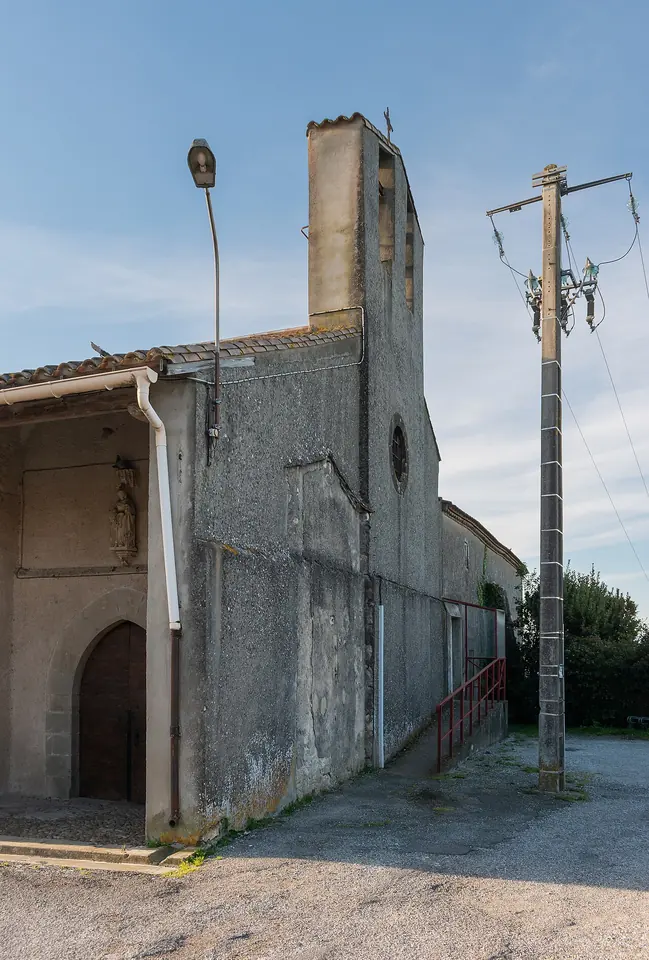
We keep his memory on January 9 with Julian, Basilissa and their companions; the Orthodox Church honors the same martyrs on January 8. Churches dedicated to Sts. Julian and Basilissa still stand, such as the village church of Ventenac-Cabardès in southern France. See more saints of January on our feast days page, and read about what a martyr is.
Praying with St. Anthony of Antioch
We know of no traditional prayer to St. Anthony of Antioch that we can cite. Let us ask his help in our own words: holy priest Anthony, you carried the grace of baptism into a prison at the cost of your life; pray for priests, for prison chaplains, and for all who are preparing for baptism, and pray for us, that we may never be ashamed of the faith we received.
Frequently asked questions
Who was St. Anthony of Antioch?
A priest of the early fourth century who, according to the Acts of Sts. Julian and Basilissa, baptized Julian's converts in prison and was martyred with them under Diocletian. The Roman Martyrology names him as "Anthony, a priest."
When is the feast of St. Anthony of Antioch?
January 9 in the Roman Martyrology, together with Sts. Julian, Basilissa, Celsus, Marcionilla and Anastasius. The Orthodox Church keeps them on January 8.
Was he martyred at Antioch or in Egypt?
The Roman Martyrology says Antioch. The Greek tradition, followed by the Orthodox Church, places Julian and Basilissa at Antinoe in Egypt. Many writers think Antinoe the original and Antioch a confusion of the two names.
Is he the same as St. Anthony the Great?
No. St. Anthony the Great was the hermit of the Egyptian desert who died in 356 and is honored on January 17. Anthony of Antioch was a priest and martyr of the persecution of Diocletian.
Keep exploring
Sources
- The Roman Martyrology (English translation, 1916), January 9. The elogium of Julian and Basilissa naming Anthony, a priest, Anastasius, Celsus and Marcionilla, at Antioch
- Martyrs Julian and his wife, Basilissa, and those with them in Egypt (Orthodox Church in America). Antinoe, the two monasteries, the converts baptized by the priest Anthony, the twenty soldiers and seven youths
- Richard Stracke, Saint Anthony of Antioch: The Iconography (Christian Iconography). The Acta Sanctorum account of the seven brothers who brought Anthony into the prison, and the January 9 and January 8 dates