Blessed Liduina Meneguzzi, Missionary Nurse of Dire Dawa
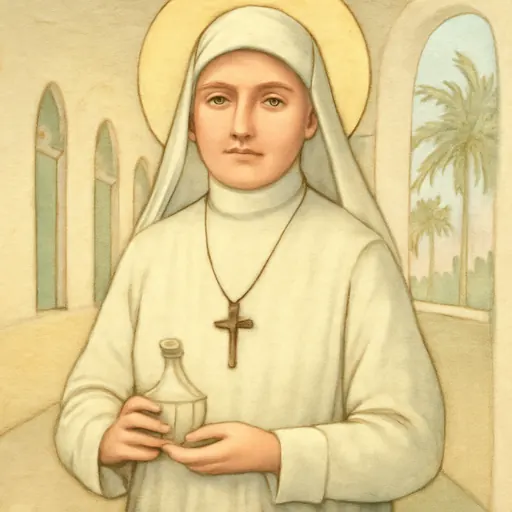
Blessed Liduina Meneguzzi (1901–1941) was an Italian sister of St. Francis de Sales who served as a missionary nurse in Dire Dawa, Ethiopia, during the Second World War. She cared for Catholics, Copts, Muslims and pagans alike, and the people called her Sorella Gudda, "the great sister." John Paul II beatified her in 2002; her memorial is December 2.
Who was Blessed Liduina Meneguzzi?
Blessed Liduina Meneguzzi was an Italian religious sister of the Congregation of St. Francis de Sales who became a missionary nurse in Dire Dawa, Ethiopia. During the Second World War her hospital filled with the wounded, and under the bombs she carried patients to shelter, baptized dying infants and nursed everyone who came to her, whatever their race or religion. The people of Dire Dawa called her Sorella Gudda, "the great sister." She died there in 1941 at the age of forty. We keep her memorial on December 2.
The life of Blessed Liduina Meneguzzi
A farm girl from Abano
She was born Elisa Angela Meneguzzi on September 12, 1901, at Giarre, a country district of Abano Terme near Padua. Her parents were poor farmers, honest and full of faith. As a girl she walked two kilometers each day to Mass, went to catechism and later taught it, and in the evenings prayed with her family and loved to talk about God with her brothers and sisters.
At fourteen she went out to work to help her family, serving in well-off homes and in the hotels of Abano, a spa town whose thermal baths drew many guests. Mild and always willing, she was well liked wherever she worked.
Sister Liduina in Padua
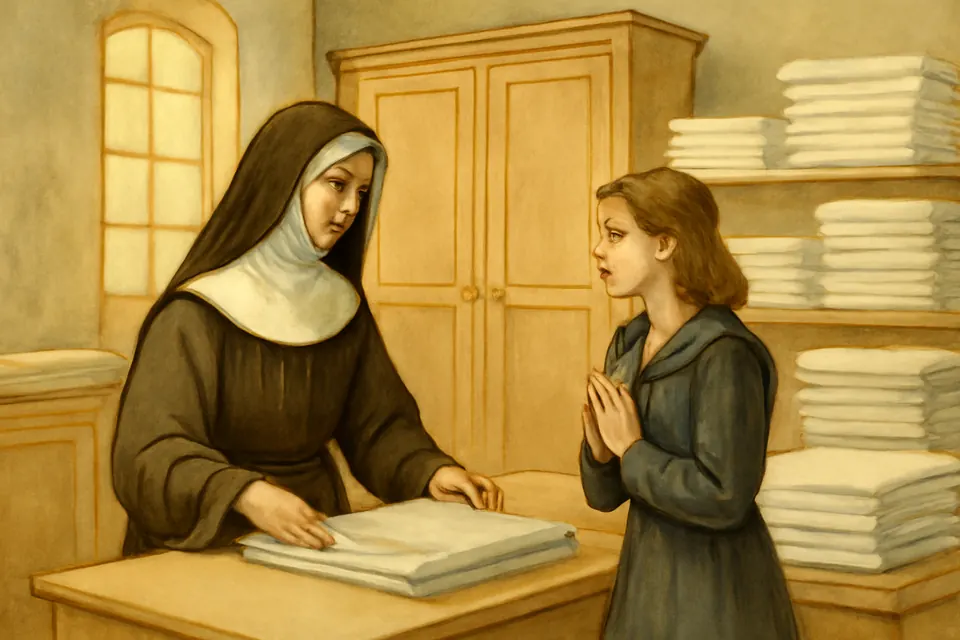
On March 5, 1926, she entered the Sisters of St. Francis de Sales, whose mother house was in Padua, and took the name Liduina. For about ten years she worked at the congregation's Collegio della Santa Croce, a boarding school for girls, as wardrobe keeper, nurse and sacristan. The students found in her a friend who listened, gave good advice and never lost patience.
Missionary in Dire Dawa
In 1937 her superiors granted the wish she had carried for years and sent her to Ethiopia, then under Italian occupation. She went to Dire Dawa, a railway city on the line to Djibouti, with people of many origins, customs and religions. She had little theological training. What she had was a deep life of prayer and a great heart.

She worked as a nurse in the Parini civil hospital. When war broke out, it became a military hospital and the wounded poured in. Her care for them was so tender that they called her an "angel of charity." When bombs fell on the city and the hospital, the cry went up, "Help, Sister Liduina!" Ignoring the danger, she carried the wounded to the shelter and ran back for more. She bent over the dying to help them make an act of contrition, and she always carried a small flask of water to baptize dying infants.
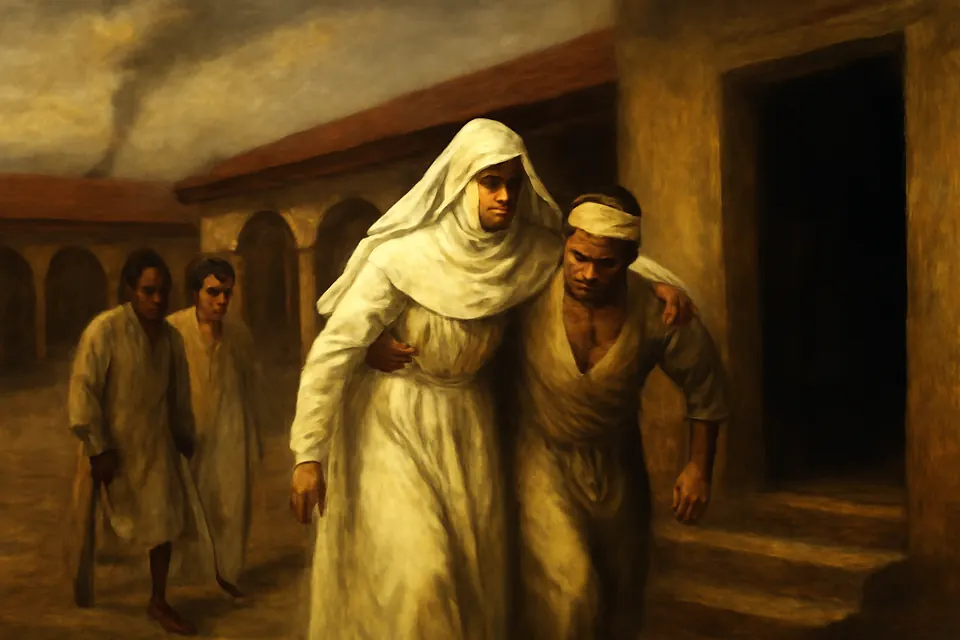
Her care did not stop at Italians or Christians. She served white and Black patients, Catholics and Copts, Muslims and pagans, and above all loved to speak of the goodness of God the Father and of the heaven He has prepared for all His children. The local people, most of them Muslim, were won over by her, and many came to think more warmly of the Catholic faith. She has been called an "ecumenical flame," because she lived this openness long before the Second Vatican Council taught it.
Her death
For some time she had been ill with an incurable disease. She accepted it in peace and kept working among the sick until the end. She finally underwent a difficult operation that seemed to go well, but complications and an intestinal paralysis followed, and she died on December 2, 1941, at forty, offering her life for peace in the world. A doctor who was present said, "I have never seen anyone die with such joy and blessedness" (our translation, as are the other quotations on this page).
At the soldiers' request she was buried in the part of the Dire Dawa cemetery reserved for them; they mourned her as one of their own family. In July 1961 her body was brought back to Padua and placed in a chapel of the mother house.

Beatification
Pope John Paul II beatified Sister Liduina in St. Peter's Square on October 20, 2002, World Mission Sunday, together with Daudi Okelo and Jildo Irwa, Andrea Giacinto Longhin, Marcantonio Durando and Marie de la Passion. In his homily he said that she "spent herself for the poorest and most suffering brothers and sisters, especially in the mission hospital of Dire Dawa" (our translation from the Italian).
- Approved: a miracle attributed to her intercession was recognized for her beatification. We have not found a reliable published account of it, so we leave the details out.
Symbols of Blessed Liduina Meneguzzi in art
Sister Liduina lived in the age of photography, and no old artwork of her exists. Devotional images show her:
- In the habit and veil of her congregation, often in white for the tropical missions;
- With a nurse's apron, for her years at the Parini hospital;
- Sometimes with a small flask of water, the one she carried to baptize dying children;
- With a crucifix, and with Ethiopian patients or children around her.
Feast day and prayer
We keep the memorial of Blessed Liduina Meneguzzi on December 2, the day of her death; the Diocese of Padua keeps it as an optional memorial. Her body rests in the mother house of the Sisters of St. Francis de Sales in Padua. See more saints of the season on our feast day calendar.
We know of no traditional prayer to her that we can quote. Let us ask her to pray for nurses, for missionaries, for the wounded of every war and for the people of Ethiopia. Blessed Liduina, you served everyone who came to you as if each were Christ; pray for us, that we may love without borders. Blessed Liduina Meneguzzi, pray for us.
Frequently asked questions
Who was Blessed Liduina Meneguzzi?
Born Elisa Angela Meneguzzi in 1901 near Abano Terme, in the province of Padua, to a poor farming family, she worked in hotels and family homes before entering the Sisters of St. Francis de Sales in Padua in 1926 as Sister Liduina. In 1937 she was sent to Dire Dawa in Ethiopia, where she nursed the sick and the war wounded until her death in 1941.
Why is Liduina Meneguzzi called an "ecumenical flame"?
Because, long before the Second Vatican Council, she served and spoke of God's goodness to everyone in her hospital without distinction, white and Black, Catholic and Coptic, Muslim and pagan. The mostly Muslim local people grew fond of her and came to think more warmly of the Catholic faith.
When was Liduina Meneguzzi beatified?
Pope John Paul II beatified her in St. Peter's Square on October 20, 2002, World Mission Sunday, together with the Ugandan catechists Daudi Okelo and Jildo Irwa and three others.
Keep exploring
Sources
- Dicastery for the Causes of Saints: Liduina Meneguzzi. Her family, work, entry into the congregation, her offices in Padua, Dire Dawa, the Parini hospital, "Sorella Gudda," the "ecumenical flame," her death, the doctor's words, her burial and transfer to Padua, and the 2002 beatification homily
- Diocese of Padua: liturgical calendar (Proprio delle Ore). Her optional memorial on December 2