St. Alexander Hotovitzky, Pastor of New York and New Martyr of Russia
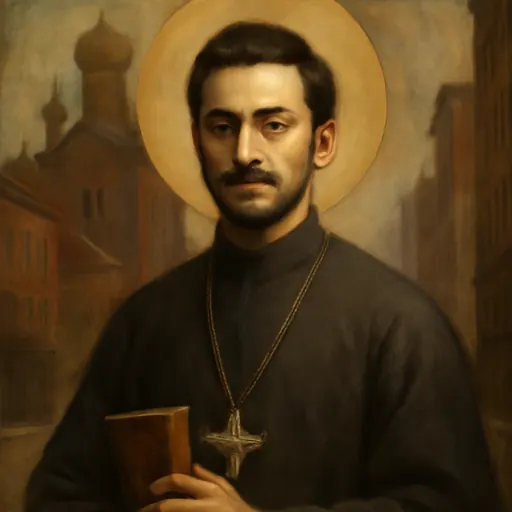
St. Alexander Hotovitzky (1872–1937) was an Orthodox priest who served in America for eighteen years, built St. Nicholas Cathedral in New York, and later died a martyr for Christ in Soviet Russia. The Russian Orthodox Church numbered him among its New Martyrs in 1994. The Orthodox Church in America keeps his memory on December 4, and the Russian Church on August 7.
Who was St. Alexander Hotovitzky?
St. Alexander Hotovitzky was an Orthodox priest who gave eighteen years of his life to the Church in America and then laid down his life for Christ in Soviet Russia. In New York he built St. Nicholas Cathedral, edited the diocesan journal and gathered immigrant parishes across the Northeast. In Moscow he stood beside St. Tikhon in the darkest years of the Church, and he was arrested, tried, exiled and finally taken away in 1937.
We know his story well because so much of it was written down: the Orthodox Church in America's life of the saint quotes his bishops, his own farewell to America and even his words at his Soviet trial. In 1994 the Russian Orthodox Church numbered him among its New Martyrs.
The life of St. Alexander Hotovitzky
From Volhynia to New York
He was born on February 11, 1872, in Kremenets in Volhynia, the son of Archpriest Alexander, rector of the Volhynia seminary. After the seminary he studied at the St. Petersburg Theological Academy, graduating with a master's degree in 1895, and was sent at once to the Diocese of the Aleutians and North America as a reader at St. Nicholas Church in New York.
Bishop Nicholas (Ziorov) ordained him a priest on February 25, 1896, in the cathedral in San Francisco. At the ordination the bishop told him, "Do not let this Divine spark in you be extinguished; on the contrary, try to kindle it in yourself so that it will warm you and those around you."
Eighteen years in America
Back in New York he became pastor of St. Nicholas. His missionary work was mostly among newly arrived Greek Catholic immigrants from Galicia and Carpathian Rus, and he helped found parishes in Philadelphia, Yonkers and Passaic. He edited the American Orthodox Messenger, helped found the diocese's mutual aid society, and spoke for the Orthodox Church before American church bodies. From 1898 to 1907 he served under Bishop Tikhon, the future Patriarch of Moscow, whose close helper he became.
His greatest work in stone was the new St. Nicholas Cathedral on East 97th Street. He led the work of raising money for it and overseeing the building, and in 1903 it became the cathedral of the diocese. In September 1905, when the treaty ending the Russo-Japanese War was signed in Portsmouth, New Hampshire, he led eight Orthodox priests to a service of thanksgiving there.
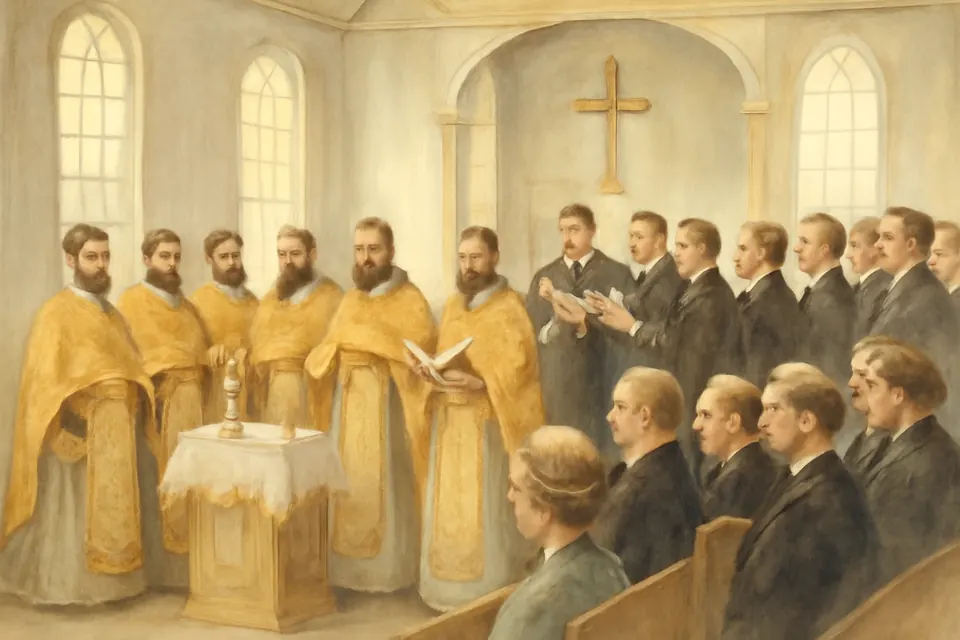
On the tenth anniversary of his ordination in 1906, Bishop Tikhon told him, "you have proven to be trustworthy, and have justified the expectations which were hoped for at your ordination." When he was recalled in 1914, he said goodbye with the words, "Farewell, American Orthodox Rus—my dear Mother, the Holy American Church."

Helsinki, Moscow and the Council
From 1914 to 1917 he served the Orthodox in Helsinki, assisting Archbishop Sergius (Stragorodsky). In August 1917 he was moved to Moscow as an assistant pastor of the Cathedral of Christ the Savior, again under Tikhon, now Patriarch. He took part in the great Church Council of 1917–18.
Trial, prison and exile
The Bolsheviks arrested him briefly in 1920 and 1921 for teaching children the faith. In 1922 the state began seizing church valuables, and Fr. Alexander helped draft a parish resolution asking that anything given be used truly to feed the starving. For this he stood trial in Moscow with more than a hundred clergy and laity. He did not admit any guilt and tried to protect the others, telling the court that the meeting in his apartment "was not counter-revolutionary and it cannot by any means be characterized as a shady plot." On December 13, 1922, he was sentenced to ten years in prison.
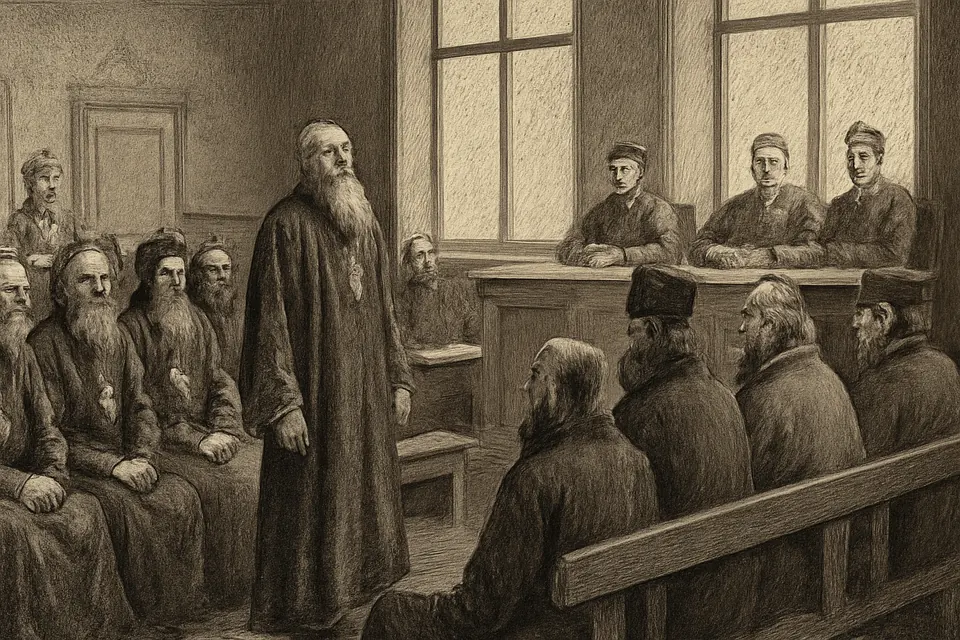
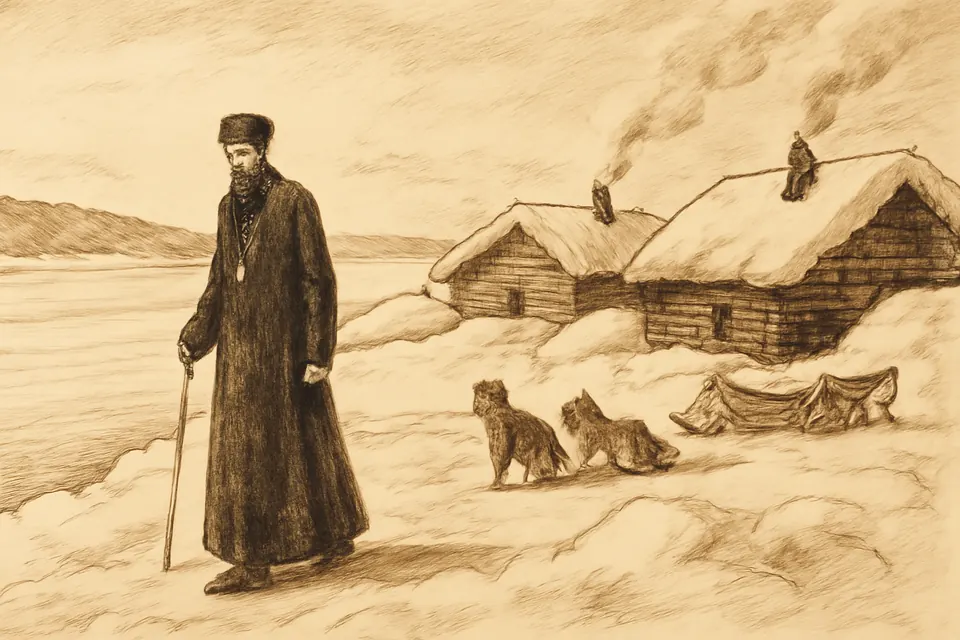
An amnesty freed him in October 1923, but in 1924 he was exiled for three years to the Turukhansk region of the far north. The Soviet police described him in their files as "a very active and decisive preacher with an advanced education who is anti-Soviet and capable of exercising great influence on the people."
The last years
After exile he was raised to the rank of protopresbyter and worked as an assistant to Metropolitan Sergius. In the 1930s he served as rector of the Church of the Deposition of the Robe on Donskoy Street in Moscow. A parishioner remembered "a tall, gray-haired priest with gentle facial features," and above all his eyes. In the fall of 1937 he was arrested again. The documents end there. Most oral accounts say he died a martyr, and no one knows where he is buried.
Glorification and witness
In 1994 the Russian Orthodox Church numbered him among the New Martyrs, proclaiming that he "fruitfully labored in the spreading of Orthodoxy on the American continent" and "ended his holy life by confessing Christ through suffering." The Church honors him for his faithful life and his martyrdom; the sources we have record no miracles, whether approved, reported or traditional, and none are needed to see his holiness. The Orthodox Church in America venerates him as a passion-bearer.
Symbols of St. Alexander Hotovitzky in art
- Priest's cassock and pectoral cross: the parish priest and missionary.
- Gold vestments and Gospel book: the pastor at the altar and the preacher.
- Martyr's cross: the New Martyr who confessed Christ in prison and exile.
His Moscow parishioners remembered him as a tall, gray-haired priest with gentle features and very kind eyes. Icons of American priest-saints can look alike, so to tell him from his fellow missionary St. John Kochurov, read the name written on the icon.
Feast day and where he is honored
The Orthodox Church in America keeps his memory on December 4; the Russian Church remembers him on August 7. He is honored especially at St. Nicholas Cathedral in New York and in the parishes he founded. See other saints on our feast days page.
Praying with St. Alexander Hotovitzky
The Orthodox Church honors him with the hymns of his feast; we know of no other prayer to him with a known origin. Let us take up the charge his bishop gave him and ask St. Alexander, who loved the Church in America and gave his life for Christ in Russia, to pray for us, that the divine spark given to us may not go out, and that we may confess our faith with courage when it costs us something.
Frequently asked questions
Who was St. Alexander Hotovitzky?
A Russian Orthodox priest, born in Volhynia in 1872, who came to America in 1895, was ordained in San Francisco in 1896 and served as pastor of St. Nicholas in New York until 1914. After returning to Russia he served in Helsinki and Moscow, was tried and exiled by the Soviets, and was arrested for the last time in 1937.
When is the feast of St. Alexander Hotovitzky?
The Orthodox Church in America keeps December 4, the memory of his glorification in 1994. The Russian Orthodox Church also commemorates him on August 7 with other New Martyrs.
What church did St. Alexander Hotovitzky build?
St. Nicholas Cathedral on East 97th Street in New York. He raised the money and oversaw its construction, and in 1903 it became the cathedral of the Orthodox diocese in America.
How did St. Alexander Hotovitzky die?
He was arrested in the fall of 1937, during the Great Terror. The records end there, but most oral accounts say he died as a martyr, and his burial place is unknown.
Keep exploring
Sources
- Glorification of the Priestmartyr Alexander Hotovitzky, Orthodox Church in America. His full life, Bishop Tikhon's 1906 words, his 1914 farewell, the 1922 trial and the August 7 commemoration
- New-Hieromartyr Alexander Alexandrovich (Hotovitsky), Holy Trinity Cathedral, San Francisco. His ordination in San Francisco on February 25, 1896, Bishop Nicholas's speech, and the 1994 proclamation
- New Martyr Alexander Hotovitsky was in Portsmouth for 1905 treaty signing, OrthoChristian.com. The 1905 Portsmouth service and the Soviet description of him