St. Porphyrios of Kafsokalyvia
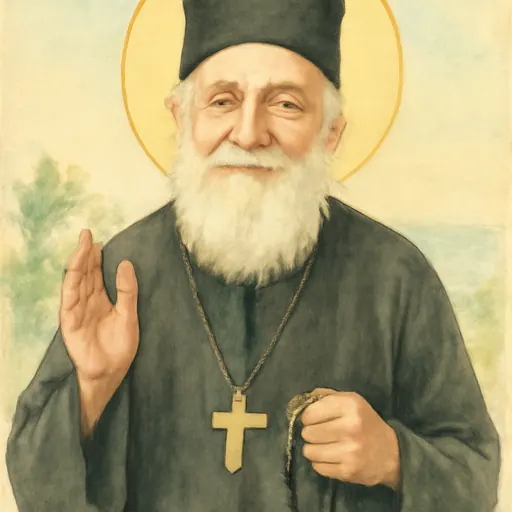
St. Porphyrios of Kafsokalyvia (1906–1991) was a Greek Orthodox monk of Mount Athos who spent thirty-three years as chaplain of the Athens Polyclinic hospital and became one of modern Greece's most sought-after spiritual fathers, known for his gift of clairvoyance. The Ecumenical Patriarchate canonized him in 2013, and his feast is December 2.
Who was St. Porphyrios of Kafsokalyvia?
St. Porphyrios of Kafsokalyvia was a Greek Orthodox monk and priest, one of the best-loved spiritual fathers of the twentieth century. Born in 1906 to a poor family on the island of Euboea, he ran away to Mount Athos as a boy, became a monk at the skete of Kafsokalyvia, and then, after illness drove him from the Holy Mountain, spent most of his life as a parish priest, a confessor and for thirty-three years the chaplain of a hospital in Athens. Thousands came to him for counsel. He died at his old hermitage on Athos in 1991, and the Ecumenical Patriarchate numbered him among the saints in 2013.
We keep his feast on December 2, the day of his death.
His life
A shepherd boy from Euboea
He was born Evangelos Bairaktaris on February 7, 1906, in the village of Agios Ioannis in Karystia, on Euboea, the fourth child of a poor and devout family. He tended sheep and had only one year of school. At about seven he went out to work, first in the town of Chalkida and then in a shop in Piraeus.
The OCA's life tells that he read the life of a hermit saint, St. John, and loved him so much that he longed to imitate him. At twelve he slipped away, secretly, to Mount Athos.
The novice of Kafsokalyvia
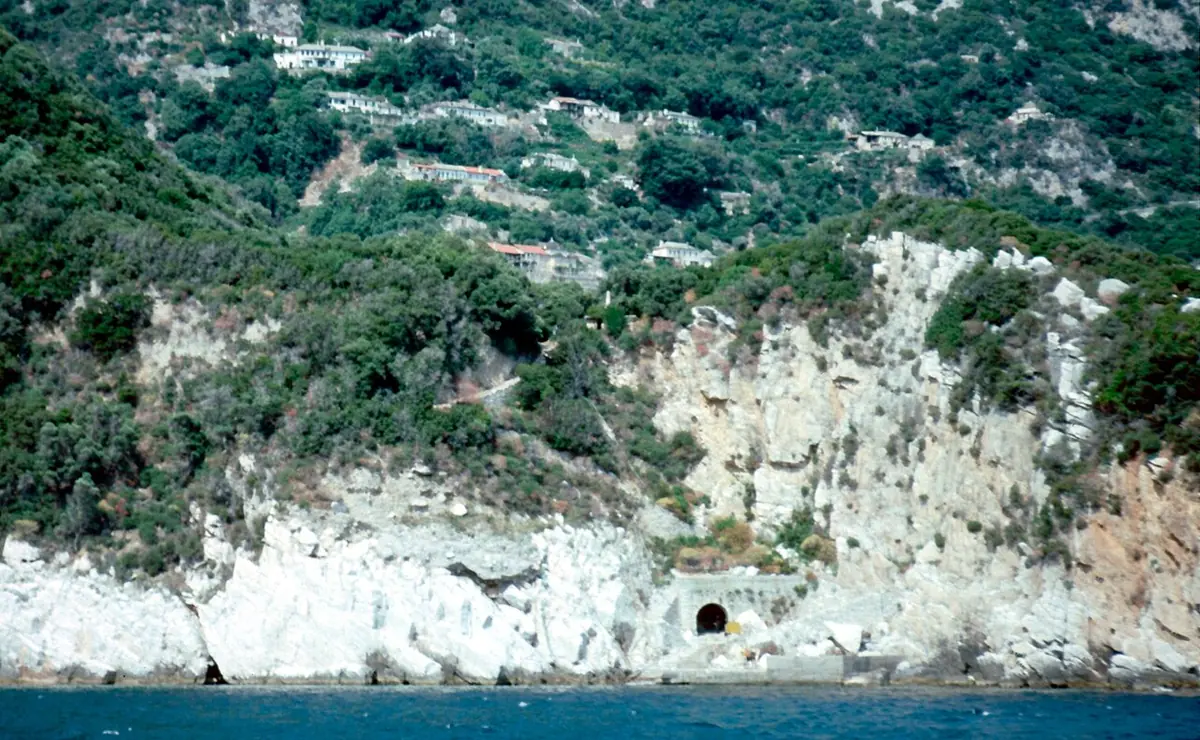
God's providence brought him to the hut of St. George at Kafsokalyvia, a skete of hermitages clinging to the cliffs at the southern end of the Athos peninsula. There he served two elders, Fr. Panteleimon and his brother in the flesh, Fr. Ioannikios, a priest, in complete obedience. He was tonsured a monk at fourteen with the name Nikitas and received the great schema two years later. In those years, the Church's lives say, God gave him the gift of clairvoyance: the ability to see into hearts, into illness, and into what was hidden from others.

A priest in the world
At nineteen he fell seriously ill and had to leave the Holy Mountain. He went back to Euboea and lived at the Monastery of St. Charalambos at Lefka. In 1926, at twenty, he was ordained a priest by Archbishop Porphyrios III of Sinai, who gave him the name Porphyrios. By twenty-two he was already a confessor, and he soon became an archimandrite.
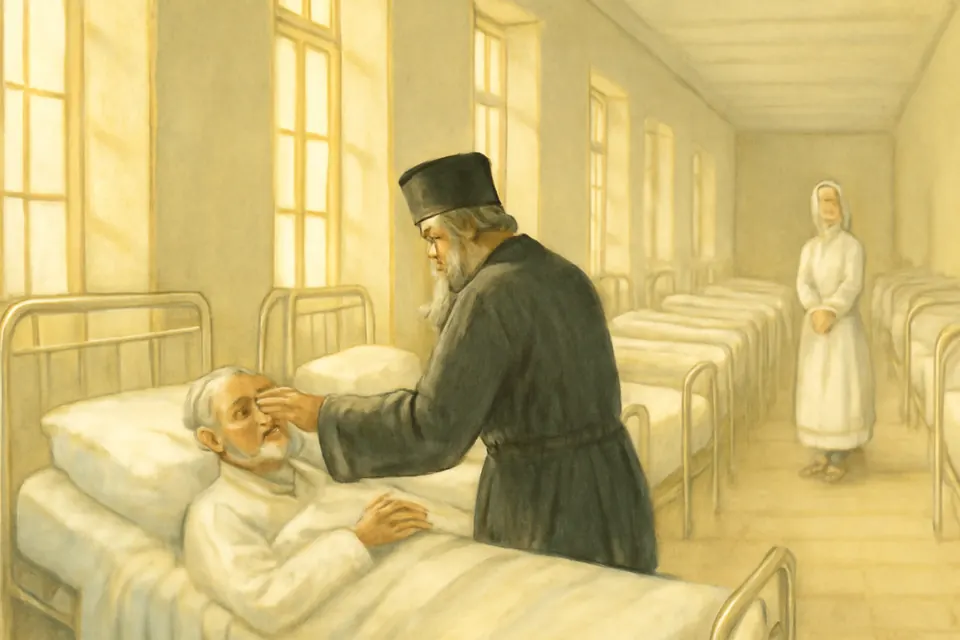
In 1940, on the eve of Greece's entry into World War II, he was sent to Athens as priest and confessor of the Athens Polyclinic, a large hospital in the center of the city. He served there for thirty-three years, and it is there that most of Greece came to know him: a quiet priest who prayed with the sick and the dying and saw more than he was told.
Milesi and the return to Athos
In 1979 he settled at Milesi, in Attica, to build a monastery. He lived at first in a trailer and then in a cell of concrete blocks, and in 1984, ill and almost blind, he moved into a room in the half-built convent. The cornerstone of the main church of the Holy Convent of the Transfiguration of the Savior was laid on February 26, 1990.
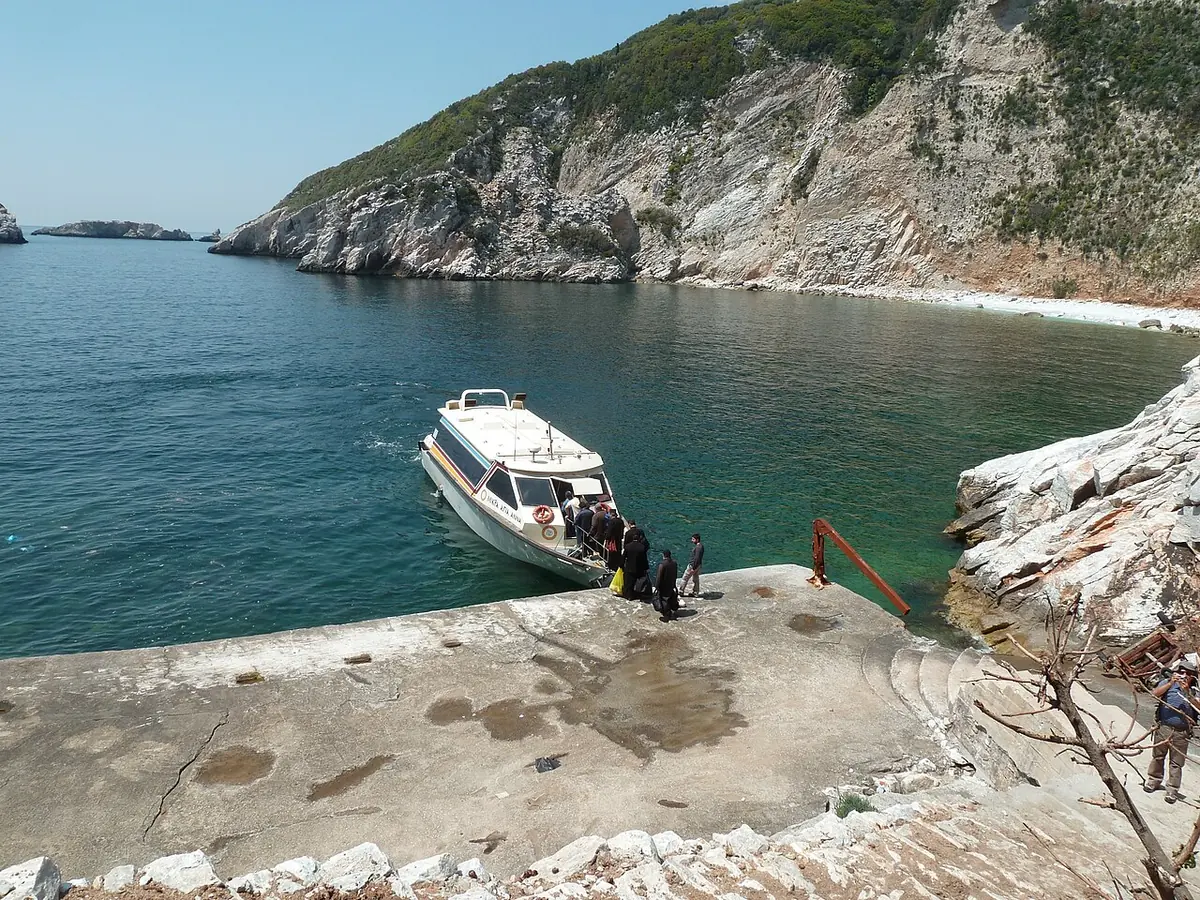
People often heard him say, "Now that I have grown old, I want to go and die up there." In June 1991 he returned to the hut of St. George at Kafsokalyvia, where he had been tonsured as a boy. He died there at 4:31 in the morning on December 2, 1991. His last words were the words of Christ's prayer: "that they all may be one."
The gifts and miracles of St. Porphyrios
The Ecumenical Patriarchate canonized Porphyrios for the holiness of his life and the devotion of the faithful who knew him. The many wonders told of him are reported, not formally approved: his clairvoyance, which visitors described again and again, and the healings his hymns praise him for. The OCA's life speaks only of the gift of clairvoyance and does not list miracles, and we have followed its restraint.
Symbols of St. Porphyrios of Kafsokalyvia in art
Icons of St. Porphyrios were painted after 2013 and are still new. They show him as an old monk with a full white beard in the black schema or the black hat and rason of a Greek priest-monk, often smiling, with a prayer rope in his hand or his right hand raised in blessing. Some icons give him a scroll with a short saying, or show him with the hermitage of Kafsokalyvia behind him. Because he died in 1991, photographs of him are well known in Greece, and his icons stay close to them.
Feast day and where he is honored
The Ecumenical Patriarchate set his feast on December 2 when its Holy Synod canonized him on November 27, 2013, together with St. Meletios of Lardos. On December 25, 2014, the Holy Synod of the Russian Orthodox Church added him to its calendar on the same day. He is honored at Kafsokalyvia on Mount Athos, at the convent he founded at Milesi, and in churches and chapels dedicated to him in Greece, Romania, the United States and beyond. See our feast days calendar for other saints of December.
Prayer to St. Porphyrios
The Greek Church has a service with hymns for his feast, and an akathist to St. Porphyrios is in use. The prayer he loved most was Christ's own prayer to the Father for his disciples: "that they all may be one" (John 17:21). Let us pray it with him for all Christians, and ask his prayers for the sick and for those who care for them in hospitals, for confessors, and for all who seek to see God's hand in their lives. Holy Father Porphyrios, pray to God for us.
Frequently asked questions
Who was St. Porphyrios of Kafsokalyvia?
Evangelos Bairaktaris, a poor shepherd boy from Euboea who ran away to Mount Athos at twelve, became the monk Porphyrios, and after illness forced him from the Holy Mountain served for decades as a priest and confessor in Euboea and Athens. He returned to Athos to die in 1991 and was canonized in 2013.
When is the feast of St. Porphyrios?
December 2, the day he died in 1991. The Ecumenical Patriarchate set it when it canonized him on November 27, 2013.
What were the last words of St. Porphyrios?
According to the OCA's life, his last words were the prayer of Christ, "that they all may be one" (John 17:21), which he loved and often repeated.
What book tells the life and teaching of St. Porphyrios?
Wounded by Love: The Life and the Wisdom of Saint Porphyrios (Denise Harvey, 2005), an anthology of his own words and letters, is the best-known book about him in English.
Keep exploring
Sources
- Orthodox Church in America: Saint Porphyrios, Wonderworker of Kavsokaliva. His childhood, flight to Athos at twelve, elders Panteleimon and Ioannikios, ordination in 1926, the Polyclinic, Milesi, his last words and death
- Orthodox Metropolis of Hong Kong and Southeast Asia: Canonization of Two New Saints by the Ecumenical Patriarchate (November 27, 2013). The Synod's decision and the feast of December 2
- OrthoChristian.com: The name of St. Porphyrios the Kapsokalivite has been added to the Russian Orthodox Church calendar (December 27, 2014)