The Martyrs of the Theban Legion
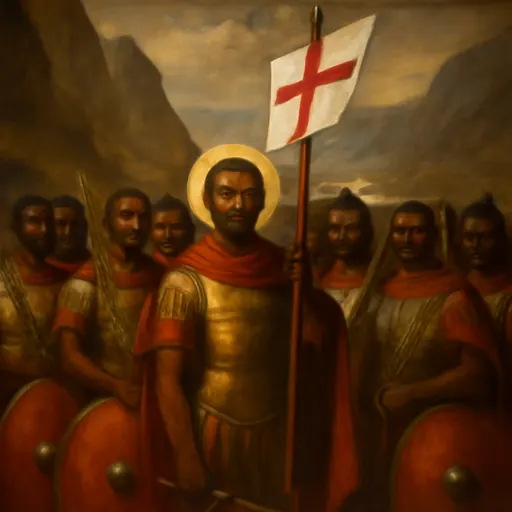
The Theban Legion was a Roman legion of Christian soldiers, raised in Egypt according to tradition, who were put to death with their commander St. Maurice at Agaunum in the Swiss Alps around 287 because they would not kill fellow Christians or sacrifice to the gods. The oldest account, by St. Eucherius of Lyon around 450, says they chose to be killed rather than to kill. We keep their feast with St. Maurice on September 22.
What was the Theban Legion?
The Theban Legion was a Roman legion of Christian soldiers who, according to the oldest account, let themselves be cut down rather than obey an order to kill their fellow Christians. Their commander was St. Maurice, and they died at Agaunum, a narrow pass in the Rhône valley of the Alps, now the Swiss town of Saint-Maurice. The date usually given is around 287, under the co-emperor Maximian, though writers have proposed every year from 286 to 303.
Their name points to the Thebaid, the region around Thebes in Upper Egypt, and tradition holds that the legion was raised there. That makes the Theban martyrs, with Maurice at their head, among the earliest African saints honored in Europe.
This page is about the legion as a whole: who its members were, where they are honored, and how much we can know. Maurice himself, the Holy Lance and the Black Maurice of German art are on his own page.
The oldest account: St. Eucherius of Lyon
Everything begins with a letter. Around 450, St. Eucherius, bishop of Lyon, wrote the Passion of the Martyrs of Agaunum for another bishop, Salvius, so that their memory would not be lost. He traced his account through Isaac, bishop of Geneva, back to Theodore, the bishop of the Valais who had first honored the martyrs about seventy years earlier. He had gone to Agaunum himself, where pilgrims already came in great numbers, and questioned people who could tell him the truth.
What happened at Agaunum
There was then in the army, Eucherius writes, "a legion of soldiers who were called Thebaeans." He explains that a legion in those days had 6,600 men. Maximian summoned them from the East for his campaign in Gaul. Camped near Agaunum, they were ordered to help in hunting down Christians, and they refused.
The emperor had every tenth man put to death. The rest still refused, so he ordered a second decimation. Then the survivors answered him together, in words Eucherius gives them: "We confess that we are Christians; we cannot persecute Christians." They added that they would "rather be killed than kill." Maximian sent the rest of his army to surround them, and they let themselves be killed without resistance, laying down their arms.
Eucherius names three officers: Maurice, the commander; Exuperius, the campidoctor or drill officer; and Candidus, the senator of the soldiers. The names of the rest, he says, are unknown to us but written in the Book of Life.

Victor the veteran
Eucherius adds a small story that has the ring of a real memory. A veteran named Victor, who was not part of the legion, came along the road after the massacre and found soldiers feasting on the spoils taken from the dead. He turned away in disgust. When they asked whether he was a Christian too, he answered that he was and always would be, and they killed him on the spot. Eucherius says he shares the martyrs' honor at the same place.
History and legend
How much of this can we trust? The Catholic Encyclopedia, writing in 1907, called Eucherius's account careful and noted that he added no miracles to the martyrdom itself. It also judged that the speeches were probably the bishop's own composition, and that his link between the massacre and the great persecution of Diocletian was doubtful. Critics since the Reformation have tried to shrink the legion to a handful of men. The same article answers that a massacre of a large unit is not incredible, though the troops at Agaunum may have been a detachment, a vexillatio, rather than a full legion of thousands.
This encyclopedia labels the details of the martyrdom traditional. What is certain is that soldiers were honored as martyrs at Agaunum by the episcopate of Theodore (369 to 391), that a basilica was built for them, and that their cult spread fast through the Latin West.

The miracles of the Theban martyrs
Eucherius tells of wonders at their shrine in his own day. All are labeled here as he gives them:
- The finding of the bodies: traditional. Eucherius says the martyrs' remains were revealed to Bishop Theodore, who then built them a basilica.
- The pagan carpenter: traditional. A workman who was not a Christian stayed behind alone in the unfinished basilica on a Sunday. He saw the martyrs standing in light, called on the name of Christ, and became a Christian at once.
- The healed wife of Quintus: reported. A paralyzed woman, wife of a man named Quintus, was carried to Agaunum. After she was brought into the basilica, Eucherius says, she walked back to her lodging on her own feet.
- Daily healings: reported. He adds that cures and the freeing of the possessed happened there every day.

The saints of the Theban Legion
Eucherius already knew of two members who died away from Agaunum: Ursus and Victor, killed near Solothurn on the Aare, in today's Switzerland. The Catholic Encyclopedia notes that later centuries produced several Passions of Theban soldiers who were said to have escaped the massacre and died for Christ in Germany and Italy. Those stories are later and less certain than Eucherius, so they too are traditional.
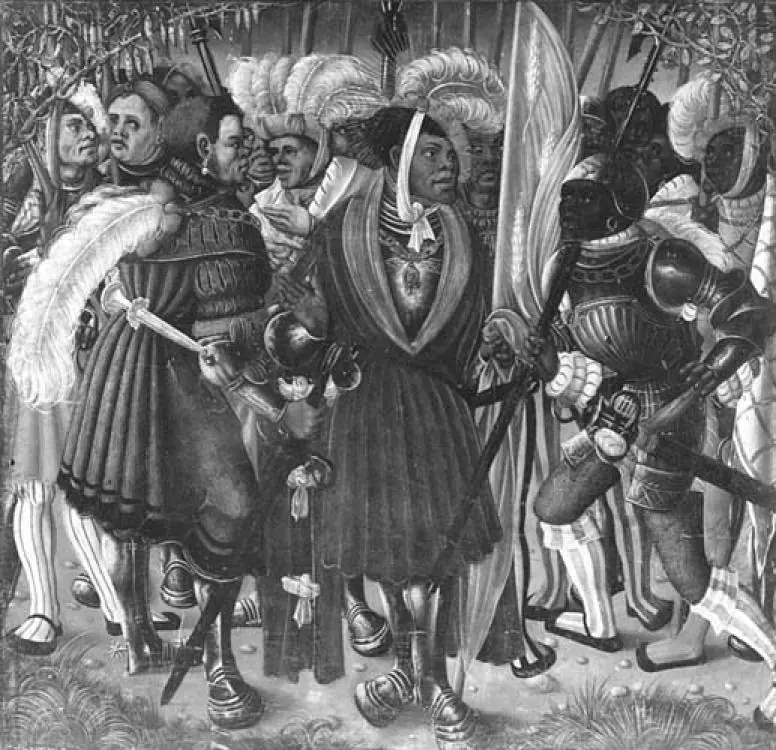
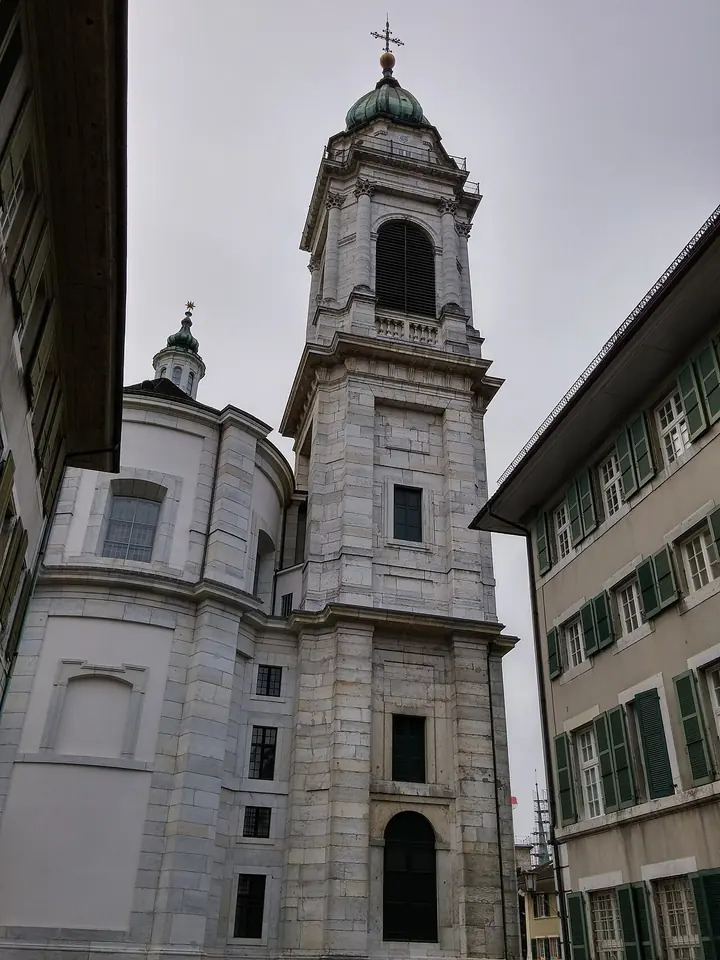
- Sts. Ursus and Victor, Solothurn: the patrons of the city, whose cathedral is dedicated to St. Ursus. Hans Holbein the Younger painted Ursus as an armored knight with a banner in his Solothurn Madonna of 1522.
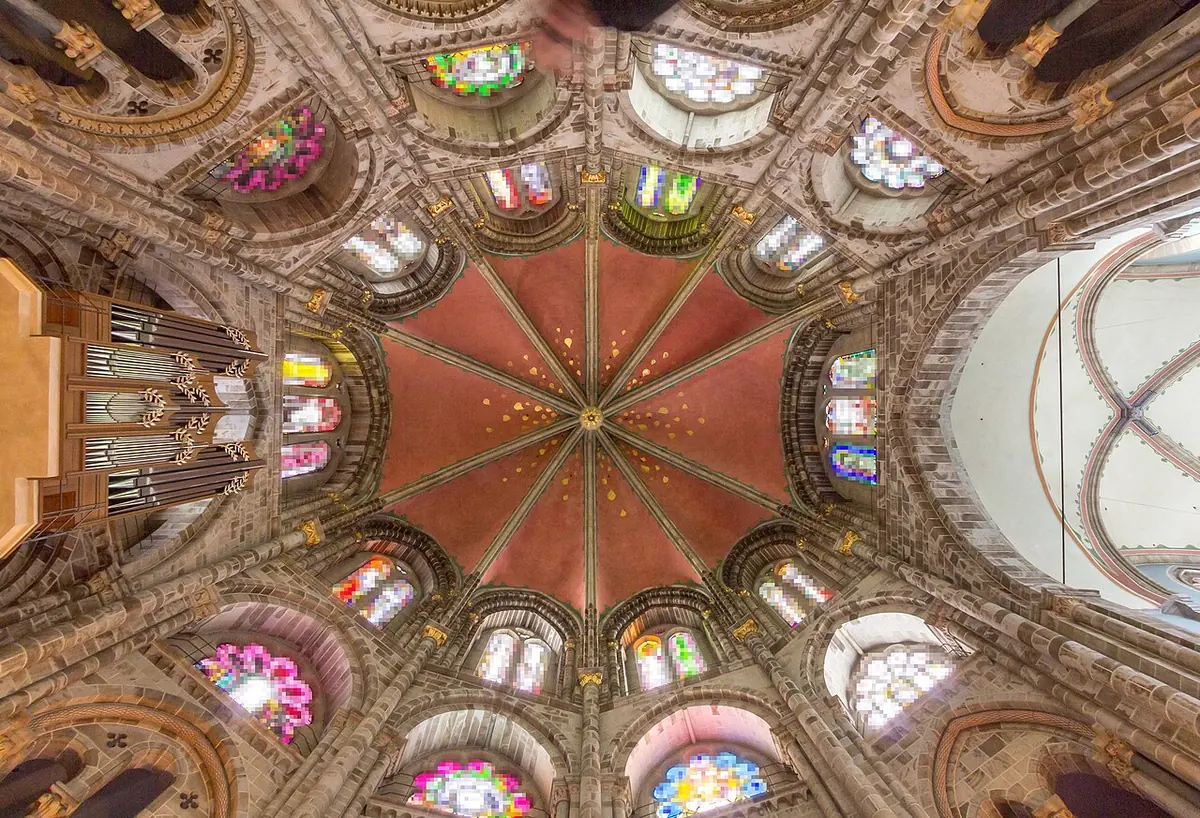
- St. Gereon and companions, Cologne: Gregory of Tours, in the late 6th century, counted a company of martyrs at Cologne among the Thebans, though he doesn't name Gereon. The older Roman Martyrology says Gereon died "with three hundred and eighteen others." His basilica, with its great ten-sided dome of 1219 to 1227, still stands.
- St. Victor, Xanten: the patron of the cathedral of Xanten on the lower Rhine.
- Sts. Cassius and Florentius, Bonn: honored at the Bonn Minster.
- Sts. Felix and Regula, Zurich: brother and sister, the city's patrons, with their servant Exuperantius.
- St. Alexander, Bergamo, and others in Piedmont and Lombardy: many towns of northern Italy honor a Theban soldier as their own.
Swiss tradition also tells of St. Verena, a young woman from Thebes who followed the legion north and later lived as a hermit and nurse at Zurzach.

Symbols of the Theban Legion in art
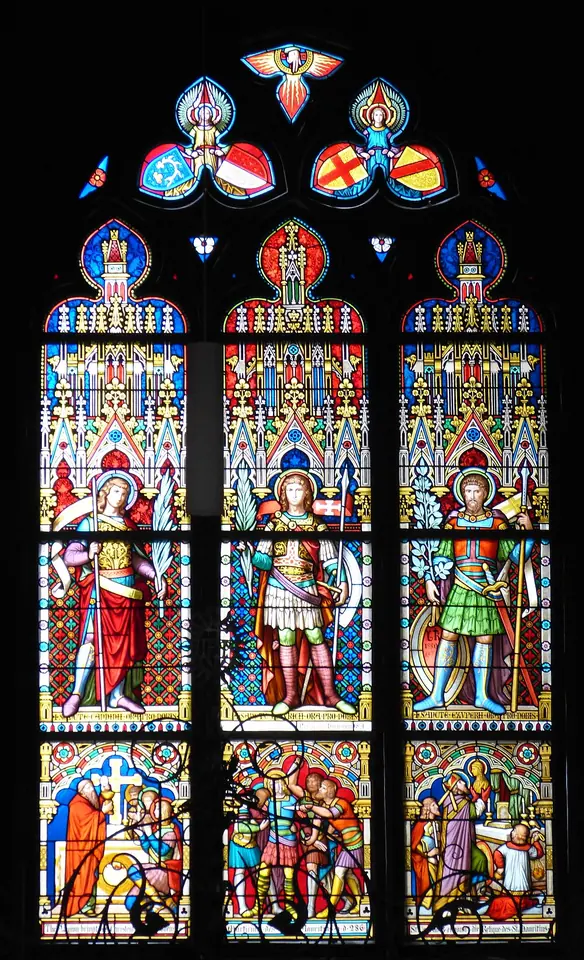
Western artists painted the Thebans as the soldiers of their own day, so they appear as Roman legionaries, as medieval knights in chain mail, or as Renaissance men-at-arms with plumed hats. To recognize them:
- A company of soldiers with halos: the legion is shown as a crowd, usually with Maurice in front.
- Banners with a cross: a white banner with a red cross, or a red one with a white cross, the sign of soldiers who serve Christ first.
- Palms of martyrdom instead of, or alongside, swords.
- Weapons laid on the ground: the moment of their refusal.
- St. Maurice as a Black African knight: in German art from the 13th century on.
- Saints carrying their own heads: in Zurich, Felix, Regula and Exuperantius are shown this way, a sign of their beheading.
Eastern icons, including new ones painted for Orthodox communities in Switzerland, show the martyrs as Byzantine soldier-saints in armor and cloaks, holding spears and shields, like St. George and St. Demetrius. Many painters, El Greco and Pontormo among them, chose the martyrdom itself; this page shows calmer images.
Where the Theban martyrs are honored
The heart of their cult is the Abbey of Saint-Maurice d'Agaune, in the Valais. Bishop Theodore built the first basilica against the cliff about 380. King Sigismund of Burgundy founded a monastery there in 515, with choirs singing the Divine Office without a break day and night, and the community has lived there ever since. The abbey keeps the relics of the martyrs and one of the oldest church treasuries in Europe.
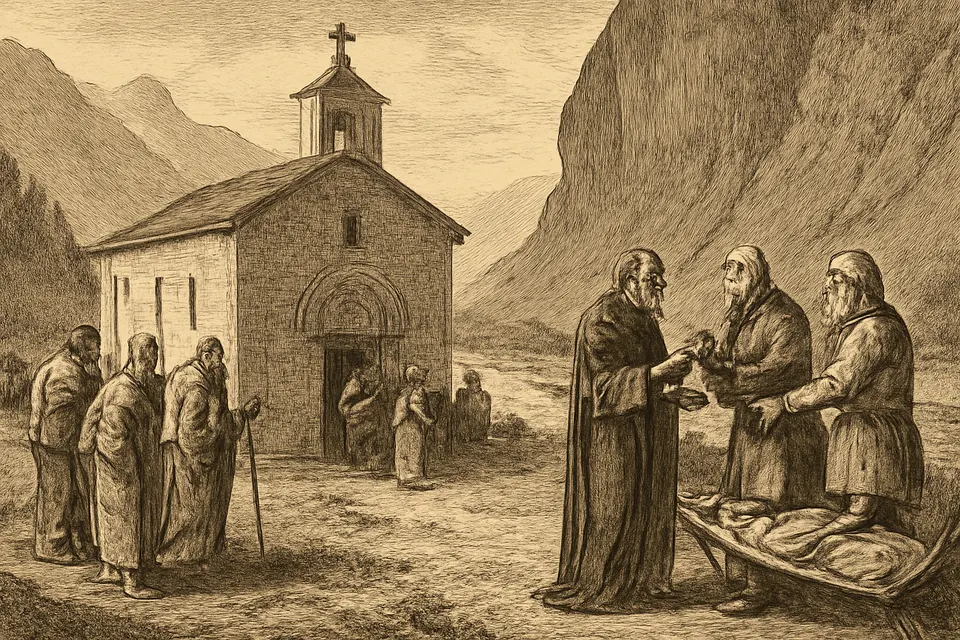
The feast is September 22, the day the Roman Martyrology remembers Maurice and his companions. It has not been on the General Roman Calendar since 1969, but the Swiss dioceses, the abbey and every place with a Theban patron keep it. You can find the feast on our feast days page.
In Cologne the Basilica of St. Gereon rises over the burial ground of the martyrs honored there. After a burial ground was opened in 1121, many of its bones came to be venerated as those of Gereon and his companions; we list them as claimed relics.
In Solothurn, the Baroque St. Ursus Cathedral is dedicated to the city's Theban patron.
Prayer to the martyrs of the Theban Legion
We have not found a traditional English prayer to the Theban Legion with a source we can cite, so we don't print one. The Church honors them in the Mass and Office of St. Maurice and his companions where their feast is kept, above all at Saint-Maurice.
We can ask their help in our own words, and their witness tells us what to ask. Let us pray through the intercession of St. Maurice and the martyrs of the Theban Legion for soldiers and all who serve under orders, that they may be faithful to their duty and never act against God's law. And let us ask them for the courage to say with them, when it matters: we would rather be killed than kill. You will find more soldier-saints on our page of warrior saints and the patron of soldiers on patron saint of soldiers.
Frequently asked questions
What was the Theban Legion?
A unit of the Roman army made up of Christians from the East, which tradition places in the Thebaid of Upper Egypt. St. Eucherius of Lyon wrote around 450 that the emperor Maximian had it decimated twice and then wiped out at Agaunum, in today's Switzerland, because its men refused to take part in killing Christians. Its commander was St. Maurice.
How many soldiers were in the Theban Legion?
Eucherius says a legion then had 6,600 men and that the whole legion died. The Catholic Encyclopedia thought the massacre itself believable but suggested the unit at Agaunum might have been a smaller detachment, a vexillatio, rather than a full legion. The exact number can't be known.
Is the Theban Legion story true?
The martyrs were honored at Agaunum by the 380s, and Eucherius gathered his account from a chain of witnesses about 150 years after the event. The Catholic Encyclopedia judged it careful and free of miraculous additions, but thought the speeches were his own composition. Since the Reformation the details have been argued over; this encyclopedia labels them traditional.
When is the feast of the Theban Legion?
September 22, with St. Maurice, in the Roman Martyrology. Saints whom later tradition counts as members of the legion have their own feasts, among them Sts. Ursus and Victor of Solothurn on September 30, Sts. Felix and Regula of Zurich on September 11, and St. Gereon of Cologne on October 10.
Which saints belonged to the Theban Legion?
Eucherius names Maurice, Exuperius and Candidus as its officers, a veteran named Victor who was killed beside them, and Ursus and another Victor who died at Solothurn. Later traditions add Gereon at Cologne, Victor at Xanten, Cassius and Florentius at Bonn, Felix and Regula at Zurich, Alexander at Bergamo and others, and Swiss tradition says St. Verena followed them from Egypt.
Keep exploring
Sources
- Eucherius of Lyon, Passion der Märtyrer von Acaunum (Bibliothek der Kirchenväter, Universität Freiburg Schweiz). German translation of the oldest account; source of the legion's size, the names, Victor the veteran and the shrine miracles (English ours)
- Catholic Encyclopedia (1907): Agaunum
- Abbaye de Saint-Maurice: 1500 ans d'histoire
- New Liturgical Movement: The Basilica of St Gereon in Cologne (Gregory DiPippo, 2024)
- Catholic Encyclopedia (1911): St. Maurice