St. Dimitry of Rostov, Compiler of the Lives of the Saints
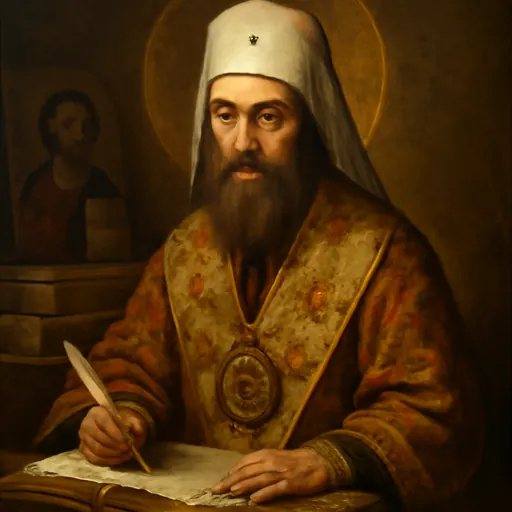
St. Dimitry of Rostov (1651–1709) was a Ukrainian-born monk, preacher and Metropolitan of Rostov who spent twenty years compiling the Lives of the Saints for every day of the year, still read across the Russian Church. He died on his knees in prayer, and his body was found incorrupt in 1752. We keep his feasts on September 21 and October 28.
Who was St. Dimitry of Rostov?
St. Dimitry of Rostov was a monk from Ukraine who became one of the most loved teachers of the Russian Church. Born Daniel Tuptalo near Kyiv in 1651, he spent most of his life as a preacher and abbot, and twenty years of it gathering the lives of the saints into one great collection for every day of the year. He finished it as Metropolitan of Rostov, died there in 1709, and was numbered among the saints in 1757.
Generations of Orthodox families have read his lives of the saints aloud at home. In a real sense, he taught Russia who its saints were. We keep his feasts on September 21 and October 28.

From Kyiv to the monastery
According to the Orthodox Church in America, Daniel was born in December 1651 at Makarov, not far from Kyiv, into a devout family. The Internet Encyclopedia of Ukraine dates his studies at the Kyivan Mohyla Academy to 1662–1665, where he learned Greek and Latin. On July 9, 1668, he took monastic vows at St. Cyril's Monastery in Kyiv and received the name Demetrius, in honor of the Great Martyr St. Demetrius of Thessalonica.
Archbishop Lazar Baranovych of Chernihiv ordained him a priest-monk in 1675. For years he preached in churches and monasteries across Ukraine, Lithuania and Belarus and served as abbot of several houses, among them monasteries in Baturyn, Chernihiv and the Kyiv Caves. His first book, The Bedewed Fleece (1680), collected the miracles of a wonder-working icon of the Mother of God at Chernihiv.
Twenty years with the saints
In 1684 Archimandrite Barlaam Yasinsky of the Kyiv Caves Lavra gave his former pupil a task that would fill the rest of his life: to gather the lives of the saints for the whole church year. The work, known as the Chetii-Minei or Reading Menaion, meant collecting old manuscripts, comparing Greek, Slavonic and Latin sources, and retelling each life in clear language for ordinary readers.
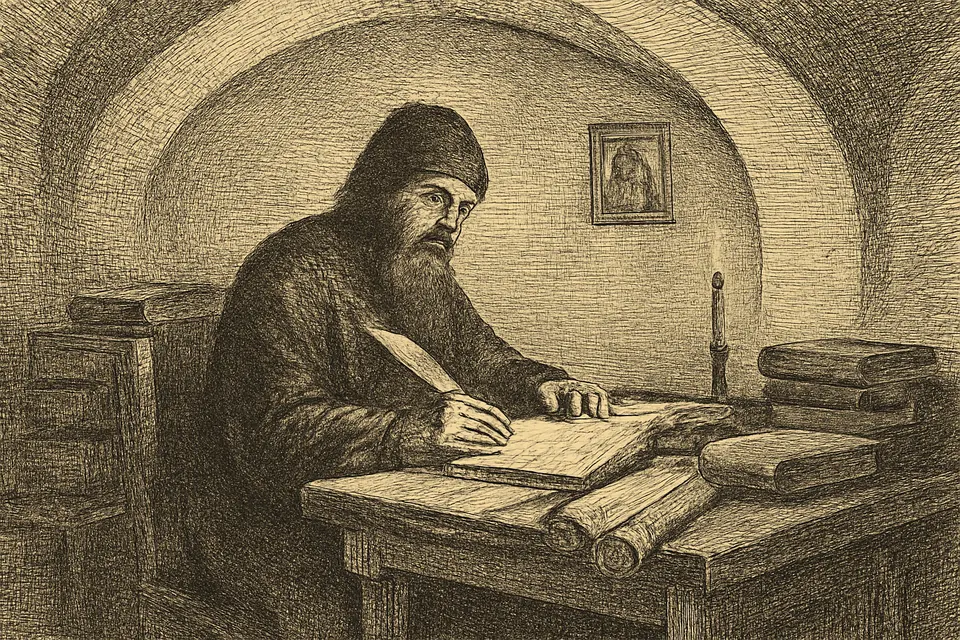
The Kyiv Caves Monastery published the volumes between 1689 and 1705, and at least ten more editions followed in the 18th century. The OCA notes that Dimitry himself said his soul was so filled with the saints while he wrote that they strengthened him in body and spirit.
Metropolitan of Rostov
His work brought him to the attention of Patriarch Adrian. In 1701 Tsar Peter I called him to Moscow, where he was consecrated on March 23 in the Dormition Cathedral of the Kremlin as Metropolitan of Tobolsk in Siberia. His health was too frail for Siberia, so on March 1, 1702, he took up the see of Rostov instead.
On his first visit to the Spaso-Yakovlevsky Monastery of St. James in Rostov, he pointed to a place on the right side of its church and said, "Behold my resting place, here I will settle for eternity." For seven years he traveled his diocese, preached, and worked to heal the split caused by the Old Believer schism, against which he wrote a long study. Bishop Alexander Mileant's life adds that, grieved by how little his priests and people knew, he founded a school in Rostov, cared for the boys like a father and taught them spiritual songs he had written himself.

He lived simply and ate little. On October 28, 1709, he was found dead on his knees before an icon of the Savior. The OCA says that when his rooms were opened, he owned almost nothing except books and manuscripts.
The uncovering of his relics
Dimitry had asked to be buried at the St. James Monastery. Against his wishes, the clergy and people of Rostov wanted him in the city's cathedral, but Metropolitan Stephen Yavorsky, his friend, who came for the funeral, had him buried in the monastery beside his predecessor, St. Joasaph. Because Stephen had to leave Rostov in a hurry, the grave was finished with only a rough wooden frame, and the saint was buried on November 25.
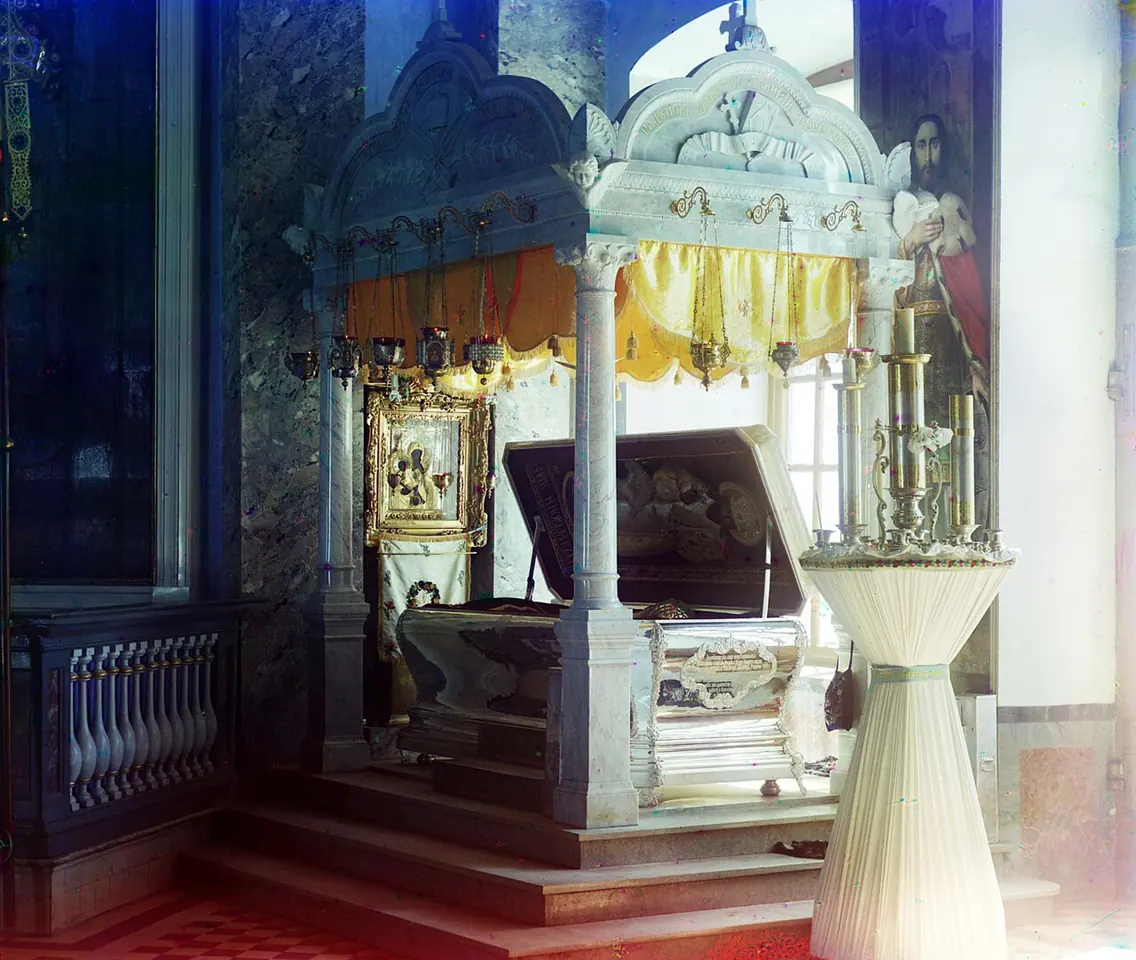
In 1752, during repairs to the monastery's church, workmen opened the damp grave on September 21. The oak coffin had rotted. The body of the saint, his vestments, his mitre and even his silk prayer rope were found whole.
- Approved: Healings followed at his relics. The Holy Synod sent Metropolitan Sylvester of Suzdal and Archimandrite Gabriel of the Simonov Monastery to examine the relics and verify the cures, and on their report the Synod numbered Dimitry among the saints in 1757.
Symbols of St. Dimitry of Rostov in art
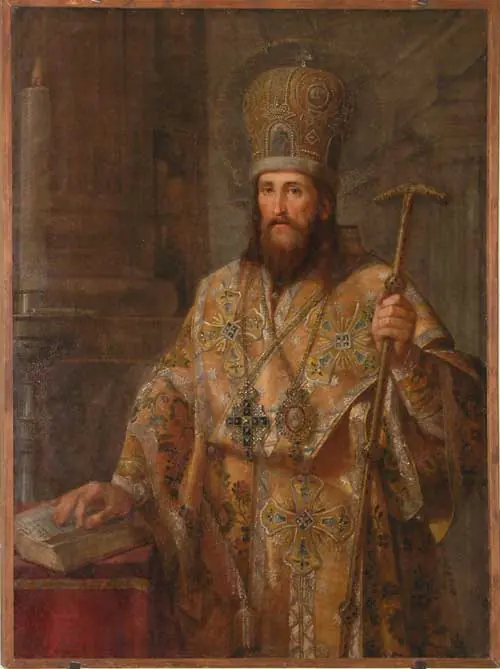
Icons and portraits show him as a bishop, usually in the white klobuk of a Russian metropolitan or a tall mitre, with the sakkos and omophorion of his rank. Because his life was given to writing, he often holds an open book or pen, or stands by a table piled with volumes, as in the Tretyakov portrait. Some icons place the towers and domes of the Rostov monastery behind him. His face is thin and dark-bearded, close to the early portraits painted soon after his death. The portrait below, by the academic painter Vasily Shebuev, came to the Rostov museum from the monastery itself in 1924.
Prayer to St. Dimitry of Rostov
The Orthodox Church honors St. Dimitry with a troparion and kontakion, given by the OCA with his lives for September 21 and October 28. Many of his own hymns were sung by Russian believers before the Revolution. Let us ask him to pray for writers, teachers and everyone who hands on the stories of the saints, and for all of us to love the friends of God as he did. Holy Hierarch Dimitry, pray to God for us.
Frequently asked questions
Who was St. Dimitry of Rostov?
Daniel Tuptalo, born near Kyiv in 1651, who became a monk in 1668 with the name Demetrius, served as abbot of several monasteries in Ukraine and Belarus, and from 1702 until his death in 1709 was Metropolitan of Rostov. He is best known for his Menaion of the lives of the saints.
What did St. Dimitry of Rostov write?
His great work is the Chetii-Minei, the lives of the saints arranged for daily reading through the year, published by the Kyiv Caves Monastery from 1689 to 1705. He also wrote The Bedewed Fleece (1680), sermons, spiritual hymns and plays, a chronicle of sacred history and a study of the Old Believer schism.
When is the feast of St. Dimitry of Rostov?
September 21, the uncovering of his relics in 1752, and October 28, the day he died. On the Julian calendar used by the Russian Church these fall on October 4 and November 10.
Where are the relics of St. Dimitry of Rostov?
At the Spaso-Yakovlevsky (St. James) Monastery in Rostov the Great, where he was buried in 1709 and where his incorrupt body was found during repairs in 1752.
Keep exploring
Sources
- Orthodox Church in America: Saint Demetrius (Dimitri), Metropolitan of Rostov. His tonsure on July 9, 1668, ordination in 1675, the Menaion begun in 1684, consecration in 1701, arrival in Rostov on March 1, 1702, and the few possessions found at his death
- Orthodox Church in America: Uncovering of the relics of Saint Demetrius (Dmitri), Metropolitan of Rostov. His choice of a burial place, the hurried burial of November 25, 1709, the uncovering on September 21, 1752, the Synod's commission and the decree of 1757
- Internet Encyclopedia of Ukraine: Tuptalo, Dymytrii. His studies at the Kyivan Mohyla Academy, the monasteries he led, The Bedewed Fleece (1680), the menaion's editions, his sermons, plays and other writings
- Bishop Alexander (Mileant): Prelate Dimitry of Rostov. The school he founded in Rostov, the hymns he composed, and his death on his knees in prayer