St. Maura of Troyes
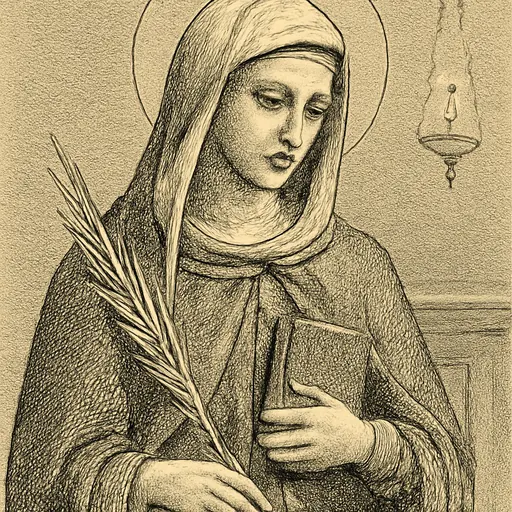
St. Maura of Troyes (about 827–850) was a young noblewoman of Troyes in Champagne who, by her prayers, won the conversion of her worldly father, then gave her family's wealth to the poor and her days to prayer and the service of the altar. She died at about twenty-three. Her feast day is September 21.
Who was St. Maura of Troyes?
St. Maura of Troyes was a young woman of the 9th century who lived her whole short life in and around Troyes, in Champagne, and became one of the beloved saints of that old diocese. She never entered a convent and never left home. She prayed, fasted, cared for her mother, gave away what she had, and made things for the altar of her church. She died on September 21, about the year 850, at about twenty-three.
The Catholic Encyclopedia lists her among the saints of Troyes as "St. Maura, virgin (827-850)." Alban Butler tells her story in his Lives of the Saints under September 21. He gives the year of her death as 830, which does not agree with the dates used in Troyes; we follow the later dates.
The life of St. Maura
A father brought back to God
Maura was born at Troyes into a noble and wealthy family. Butler writes that while she was still young she "obtained of God by her prayers the wonderful conversion of her father, who had till then led a worldly life." He died soon after, reconciled to God.
After that Maura lived "in the most dutiful subjection and obedience to her mother, Sedulia," and her example drew her brother Eutropius and the whole household to a deeper life. Most of the income of the family's large estate went to the poor.
Prayer, work and the altar
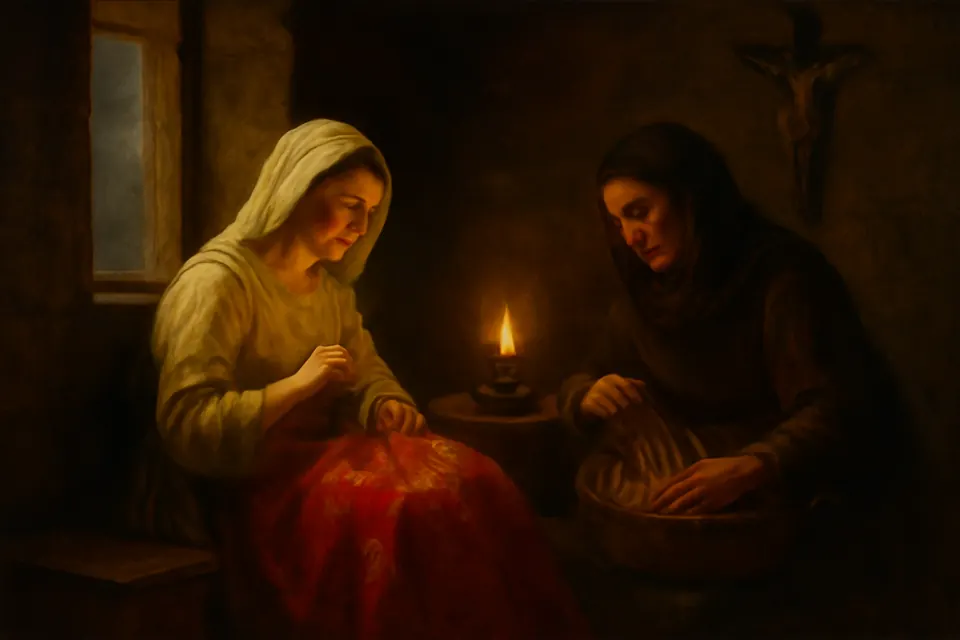
Her days had a fixed order. Butler says she spent almost the whole morning in church, praying and meditating on the life and Passion of Christ. The rest of her time went to caring for her mother, serving the poor, and work for the Church: she sewed sacred vestments, trimmed the lamps, and prepared the wax and other things needed for the altar.
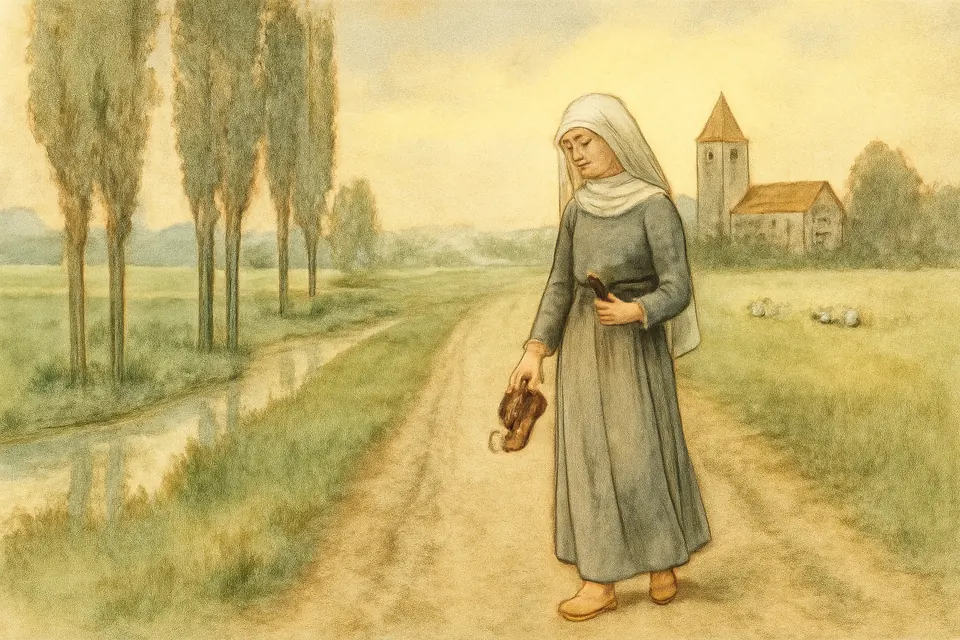
Every Wednesday and Friday she fasted on bread and water. On those days she also walked barefoot to the monastery of Mantenay, two leagues from the town, to pray in its church and open her soul to the abbot, her spiritual director, "without whose advice she did nothing."
"Thy kingdom come"
Those who knew her remembered her gift of tears: she seemed never to kneel to pray without weeping. Butler adds that she tried to hide the graces God gave her, because she feared praise. In her last illness she received the anointing of the sick and Viaticum with great joy, and she died while praying the Our Father, at the words "Thy kingdom come."
Her life and her biographer
Maura lived in the time of Bishop Prudentius of Troyes, himself honored as a saint, and Troyes tradition joins their names. Her life is credited to him, and in 1725 the Troyes scholar Remi Breyer published the lives of St. Prudentius and St. Maura together in one book. If Prudentius did write it, her story comes to us from a bishop who knew her and her city, which is rare for a lay saint of the 9th century.
Miracles of St. Maura
Butler says only that "God performed many miracles in her favour," without describing them. Those wonders are traditional: no list of them has come down to us, and no miracle of hers was ever formally examined. The best-documented sign of her holiness is the devotion that gathered at her tomb soon after her death.
Symbols of St. Maura in art
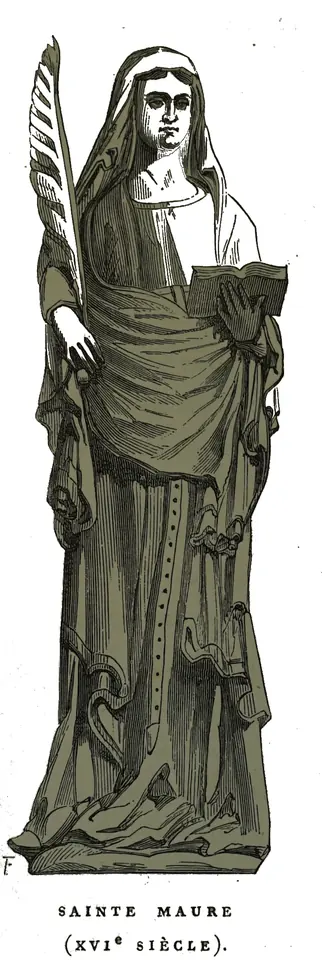
She is a saint of one region, so images of her are mostly in the churches of the Aube. The 16th-century statue in her village church, drawn by Charles Fichot for his survey of the monuments of the Aube, shows her typical form:
- The palm: here the sign of a holy virgin who won the victory over the world, not of martyrdom.
- A book: her life of prayer and her love of the word of God.
- The veil and long mantle: the dress of a consecrated young woman living at home.
- Candles, lamps or vestments (in some modern images): the work she did for the altar.
If you see a young woman with a palm and a book in a church near Troyes, it is very likely Maura.
Her tomb and feast day
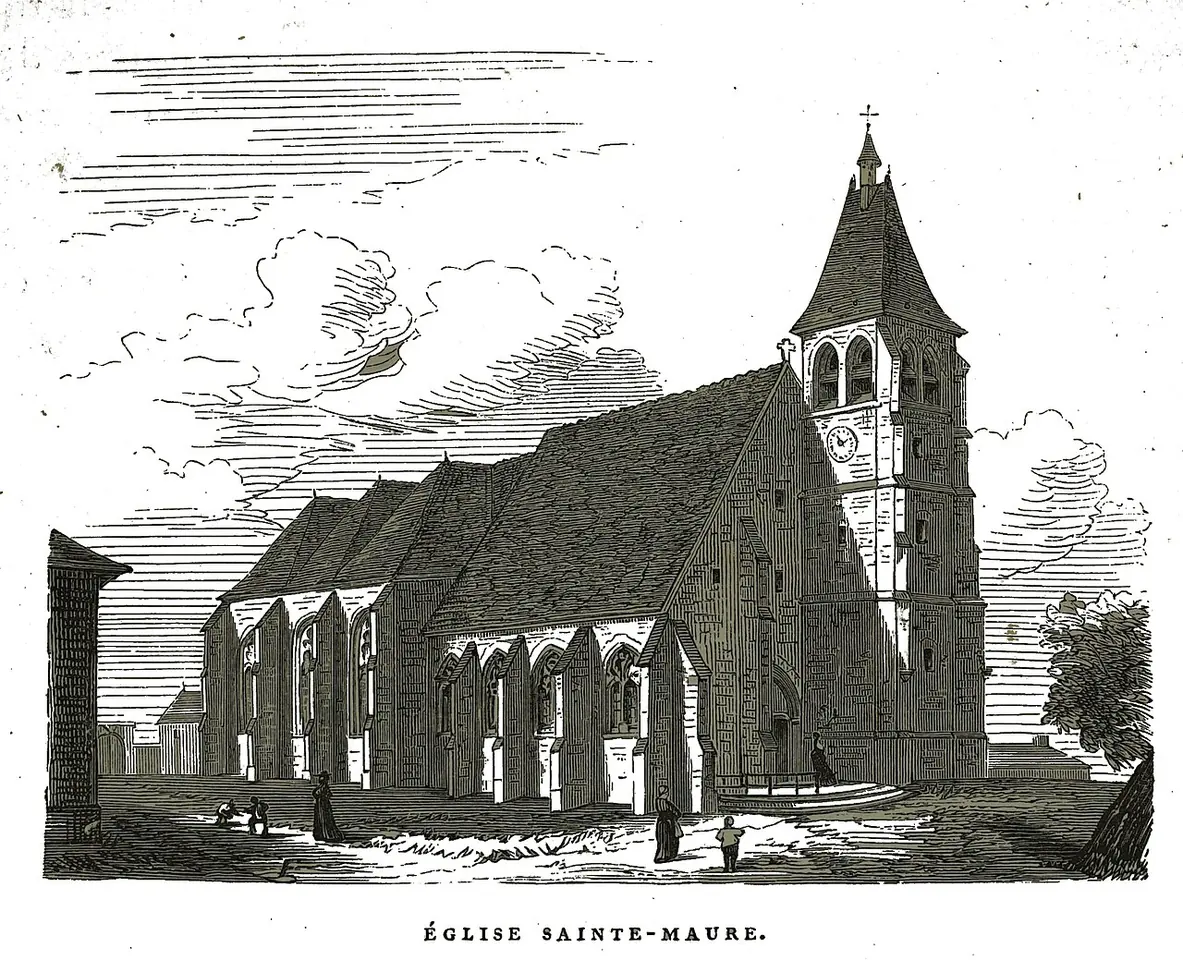
Her sarcophagus is kept in the church of Sainte-Maure, a village just north of Troyes that bears her name. Fichot drew it in 1884: a heavy stone coffin with a rounded lid and an iron bar across it. The church itself, rebuilt in the 16th century, is a classified historic monument. Local histories record that the monks of Saint-Loup of Troyes once led a yearly procession from the city to her tomb on her feast.
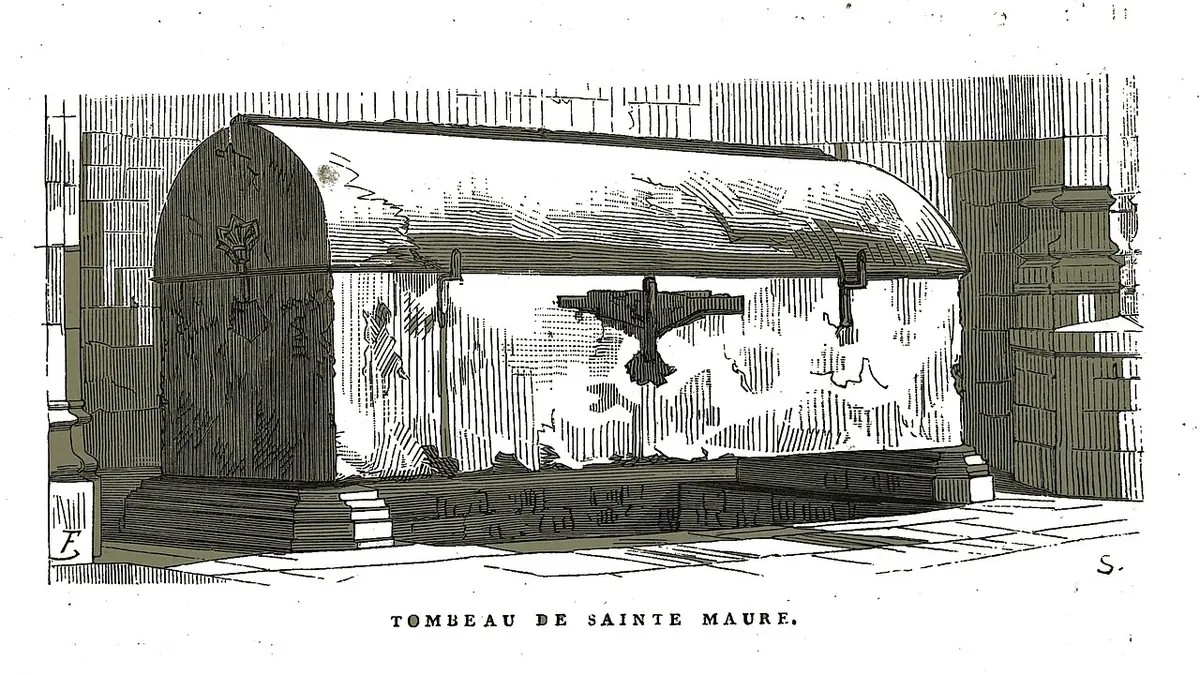
We keep her feast on September 21; some calendars of Troyes use September 22. See her neighbors on our feast days page.
Praying with St. Maura
No traditional prayer to St. Maura has come down to us. We can make her last words our own and pray the Our Father slowly, as she did. Let us ask her to pray for families where someone has wandered from God, as her father had, and for young people who want to give their lives to Christ in ordinary work at home.
Frequently asked questions
Who was St. Maura of Troyes?
A 9th-century laywoman of Troyes, in the Champagne region of France, who lived a consecrated life at home with her mother. She is remembered for her prayer, her fasting, her gift of tears and her care for the poor and for the altar of her church.
When is St. Maura's feast day?
September 21, the day of her death. Some local calendars of Troyes keep it on September 22.
Where is St. Maura of Troyes buried?
Her sarcophagus is kept in the church of the village of Sainte-Maure, just north of Troyes, which takes its name from her. The church is a listed historic monument.
Is she the same as St. Maura the martyr?
No. Several saints are named Maura, among them St. Maura, the Egyptian martyr honored with her husband Timothy, and St. Maura, a virgin martyr of Constantinople. Maura of Troyes was not a martyr; she died of illness.
Keep exploring
Sources
- Alban Butler, The Lives of the Fathers, Martyrs, and Other Principal Saints, vol. 9 (September), St. Maura, Virgin (September 21). Father's conversion, mother Sedulia, brother Eutropius, Wednesday and Friday fasts, the walk to Mantenay, the gift of tears, death at the words "Thy kingdom come"
- Catholic Encyclopedia (1912): Troyes. Lists "St. Maura, virgin (827-850)" among the saints of the diocese
- POP, Ministère de la Culture: Église Sainte-Maure (Mérimée PA00078226). The church of Sainte-Maure, 16th century, classified historic monument
- Wikipédia (French): Maure de Troyes. Only source found for the yearly procession from Troyes to her tomb; it cites Émile Socard, "Sainte Maure de Troyes et son tombeau" (1868), and Remi Breyer's 1725 lives of St. Prudentius and St. Maura