St. Ulrich of Augsburg (890–973): Bishop, Defender of Augsburg, First Saint Canonized by a Pope
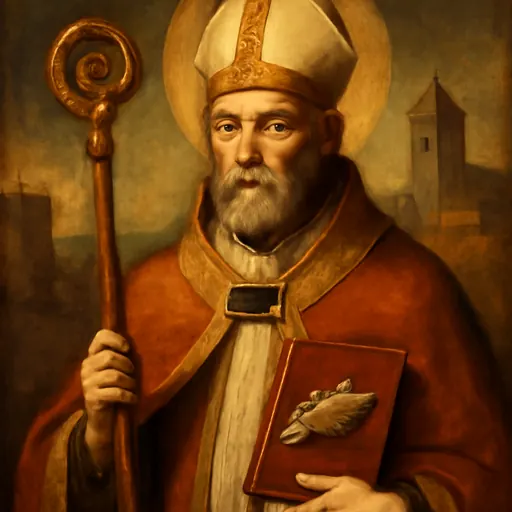
St. Ulrich of Augsburg (about 890–973) was bishop of Augsburg for fifty years, a reformer of his clergy and a builder of churches, who held his city against the Magyar invasion of 955. In 993 Pope John XV declared him a saint, the first canonization by a pope that we know of. His feast is July 4, and he is the patron of Augsburg.
Who was St. Ulrich of Augsburg?
St. Ulrich of Augsburg was a German bishop of the tenth century who led his diocese for half a century, rebuilt it after war, and was the first saint the Church knows to have been canonized by a pope. He became bishop in 923, defended Augsburg when the Magyars besieged it in 955, and died in 973 lying on a cross of ashes on the floor while his clergy sang the litany. Twenty years later, in 993, Pope John XV declared him a saint.
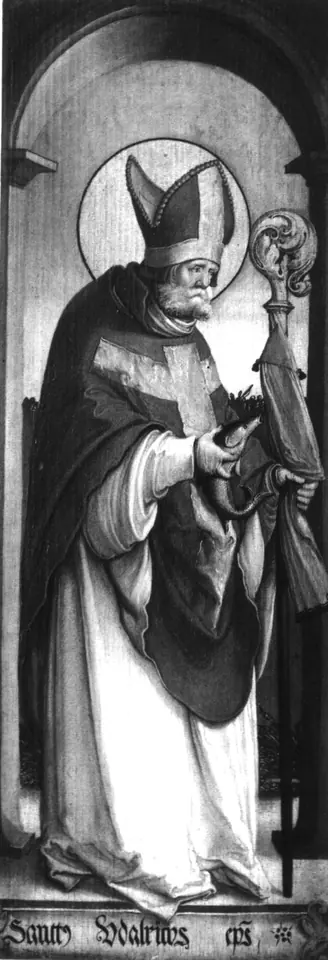
Our main sources are the 1912 Catholic Encyclopedia and the Ökumenisches Heiligenlexikon. Both draw on a life of Ulrich written within about ten years of his death by Gerhard, the provost of his cathedral, so we know him better than most saints of his century.
The life of St. Ulrich
Schoolboy at St. Gall
Ulrich was born about 890 to a noble Swabian family related to the dukes of Alamannia and the imperial house. The Heiligenlexikon places his birth at Wittislingen, near Dillingen; the older Catholic Encyclopedia says Kyburg, near Zurich. He was a sickly child. His parents sent him to the monastery school of St. Gall, where he did well and wondered whether to become a monk.
By 909 he was serving his uncle, Bishop Adalbero of Augsburg, as chamberlain. When Adalbero died in 910, Ulrich went home to manage the family lands. The Heiligenlexikon tells that he was offered the abbacy of St. Gall in 919 and turned it down on the advice of the recluse Wiborada, who foresaw another road for him.
Bishop of Augsburg
In 923 King Henry I named him bishop of Augsburg, and he was consecrated on December 28. He was strict and kind at once, the Catholic Encyclopedia says. He visited his parishes regularly, held synods, built churches so that country people could reach the sacraments, and asked as much of himself as of his priests. He lived like a monk and gave generously to the poor.
He was also a prince of the empire, loyal to Otto I. When Otto's son Liudolf rebelled in 953–954, Ulrich stood by the king and helped make the peace between father and son.

The siege of 955
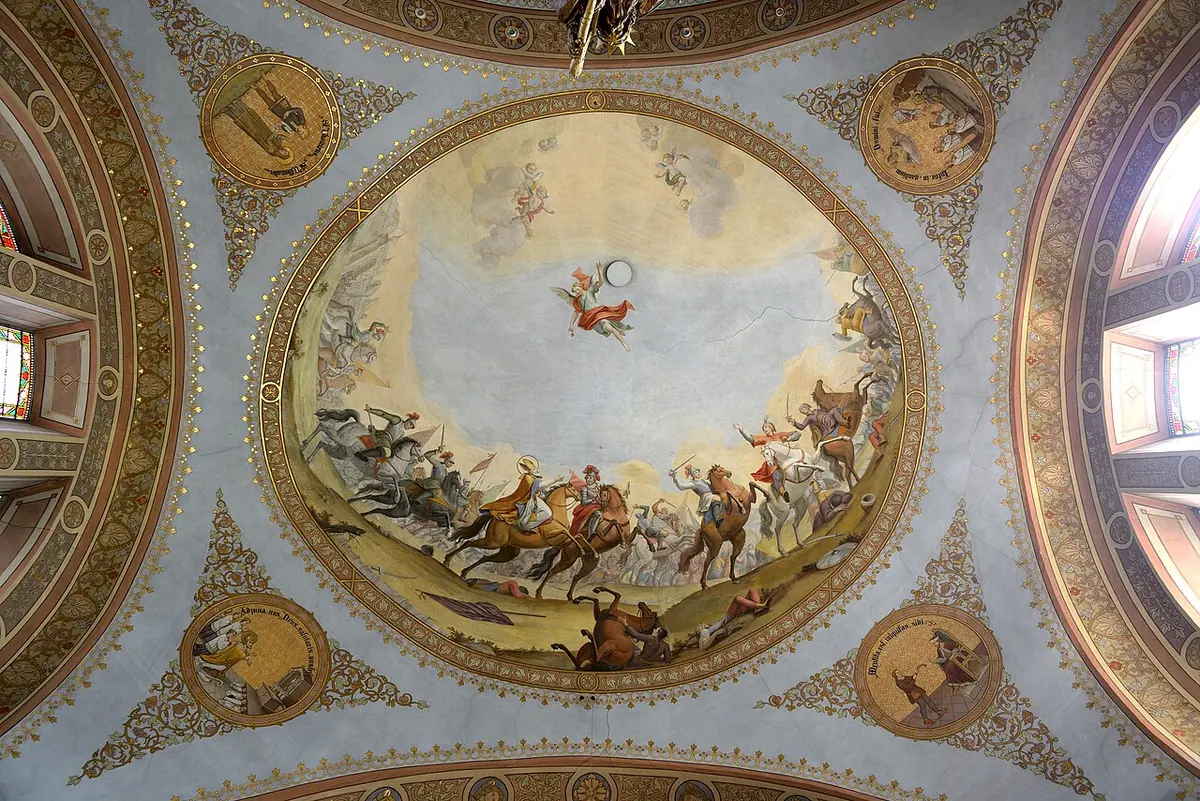
In 955 the Magyars, horsemen from the Hungarian plain, swept into southern Germany and laid siege to Augsburg. Ulrich had given the city stone walls in 926, and now he held it until King Otto arrived. On August 10, 955, Otto's army crushed the invaders on the Lechfeld, south of the city.
Later tradition tells that Ulrich rode out without armor, holding only a cross, and prayed his people to victory. The Catholic Encyclopedia says plainly that he did not fight in the battle itself. Afterward he rebuilt the ruined cathedral and the church of St. Afra, which he chose for his grave.
A death on the ashes
In 972, old and ill, Ulrich asked to retire to a monastery and leave the diocese to his nephew Adalbero, but a synod refused. At dawn on July 4, 973, he had ashes strewn on the floor in the shape of a cross, sprinkled with holy water, and was laid on it. A messenger arrived with greetings from Emperor Otto II as the sun rose. Then, while his clergy sang the litany, Ulrich died. Bishop Wolfgang of Regensburg, himself later a saint, buried him in St. Afra's church.
The miracles of St. Ulrich of Augsburg
- Healings at his tomb (reported). Gerhard's life and the Catholic Encyclopedia say many miracles happened at his grave, which quickly became a place of pilgrimage. These miracles were the reason for his canonization in 993.
- The goose leg that became a fish (traditional). Late one Thursday evening Ulrich and Bishop Conrad of Constance were still talking at table when, on Friday morning, a messenger arrived from a duke Ulrich had rebuked. Ulrich gave him the leftover goose leg as a tip. The duke unwrapped it to accuse the bishop of eating meat on a Friday and found a fish instead.
- The Mass with angels (traditional). When Ulrich was too weak to stand, the legend says, two angels brought chalice and paten so he could celebrate Mass, and he saw the hand of God blessing at the elevation. Szymon Czechowicz painted the scene in 1740.

Why St. Ulrich is the patron of Augsburg and of travelers
He is the patron of the city and Diocese of Augsburg, which he defended and rebuilt. In German tradition, according to the Heiligenlexikon, people also call on him as patron of winemakers, weavers, fishermen and fishmongers (the fish again), of travelers, and against eye trouble and floods. Springs called "Ulrich's wells," said to have risen at his prayer, were visited by people with sore eyes, and "St. Ulrich's wine" is still blessed and shared.
Symbols of St. Ulrich in art
- A bishop with miter and crozier, usually older and bearded.
- A fish, often lying on a closed book, from the fish legend.
- A cross held high, recalling the siege of 955. A reliquary cross made in 1494 in Augsburg holds what tradition calls his cross from the Lechfeld.
- A horse, for the battle scenes.
- A rat, in some German images.

Feast day, shrine and prayer
His feast is July 4. His tomb is in the crypt of the Basilica of Sts. Ulrich and Afra in Augsburg. In 1762 his bones were taken up, examined by doctors and, in 1764, laid in a Baroque shrine under a marble figure of the bishop. For other saints and their days, see our feast days and patron saints pages.

We know of no traditional English prayer to St. Ulrich. The Church honors him with the Mass and Office of a holy bishop on his feast. Let us ask him to pray for our bishops, for our cities in time of danger, and for all who travel: St. Ulrich, pray for us.
Frequently asked questions
When is the feast of St. Ulrich of Augsburg?
July 4, the day he died in 973. It is kept as an optional memorial in German-speaking countries and as a solemnity in the Diocese of Augsburg.
Was St. Ulrich the first canonized saint?
He is the first saint known to have been canonized by a pope in a formal act. Pope John XV declared him a saint at a Lateran synod on January 31, 993, twenty years after his death. Earlier saints were recognized by local bishops and the people. A few historians have questioned the surviving document; others defend it.
Why is St. Ulrich shown holding a fish?
From the fish legend. A messenger tried to catch him eating meat on a Friday with a goose leg Ulrich had given him, but when the duke unwrapped it, it had turned into a fish. The story is traditional, not historical, but the fish became his best-known symbol.
What is St. Ulrich the patron saint of?
Augsburg and its diocese first of all. In German tradition he is also invoked by winemakers, weavers, fishermen and travelers, and against eye trouble and danger from water.
Keep exploring
- Patron saint pages
- SailorsTravelersEyes
- Feast-day calendar
- Saints remembered in JulySaint of the dayWhat saint is my birthday?
- Relics
- Where the relics are kept (map)
- More
- Saints A to ZPatron saints A to ZExplore every section
Sources
- Catholic Encyclopedia (1912): St. Ulrich. His career, the Liudolf revolt, the siege of 955, his death on a cross of ashes, the canonization by John XV in 993
- Ökumenisches Heiligenlexikon: Ulrich von Augsburg. Birthplace, the life by Gerhard, the fish legend, the 993 synod date and doubts about the document, the 1764 shrine, patronages and feasts