Blessed Mario Ciceri, the Brianza Priest of the Young

Blessed Mario Ciceri (1900–1945) was a priest of the Archdiocese of Milan who spent his whole ministry as curate of Brentana di Sulbiate in the Brianza. People called him the priest of the young: he rebuilt the oratory, wrote to his boys at the front, and during the Second World War helped the hunted find hiding places. He died in 1945 after a hit-and-run accident on his bicycle and was beatified in Milan in 2022. We keep his memorial on June 14.
Who was Blessed Mario Ciceri?
Blessed Mario Ciceri was a parish priest of the Archdiocese of Milan who never held a title higher than curate. For twenty-one years he served one small parish in the Brianza, Sant'Antonino Martire in Brentana di Sulbiate, and he gave it everything: his days to the young, his nights to the sick, his money to the poor. In the dark years of the Second World War he risked his life to help people hunted by the Nazi and Fascist forces. He died in April 1945, two months after a cart struck him on his bicycle and the driver left him on the road. The Church beatified him in Milan Cathedral in 2022, and we keep his memorial on June 14.
The life of Blessed Mario Ciceri
A boy who wanted to be a priest
Mario was born on September 8, 1900, at Veduggio, a village north of Milan, the fourth of six children of Luigi Ciceri and Colomba Vimercati. The household was crowded: his father's brother lived with them too, with thirteen children of his own. His mother, a busy and devout woman, taught him to pray and to work.
At eight he told the parish priest he wanted to be a priest. The family had little money but agreed gladly, and Mario earned scholarships to pay for his schooling. He studied at the Gervasoni college in Valnegra, took the clerical habit in 1912 at the minor seminary of San Pietro in Seveso, and finished theology at the major seminary in Milan.

Cardinal Eugenio Tosi ordained him in Milan Cathedral on June 14, 1924. That same year he was sent to Brentana.
The priest of the young
The people of Brentana came to call him il prete dei ragazzi, "the priest of the kids." He brought the parish oratory back to life, fixed up its buildings, and opened it on weekdays as well as Sundays. Every morning before school he said a Mass for the schoolchildren. He was a good organist and a modest composer, and he formed four theater companies and ran music and singing classes himself. In 1926 the parish's youth branch of Catholic Action was founded, largely through his zeal.
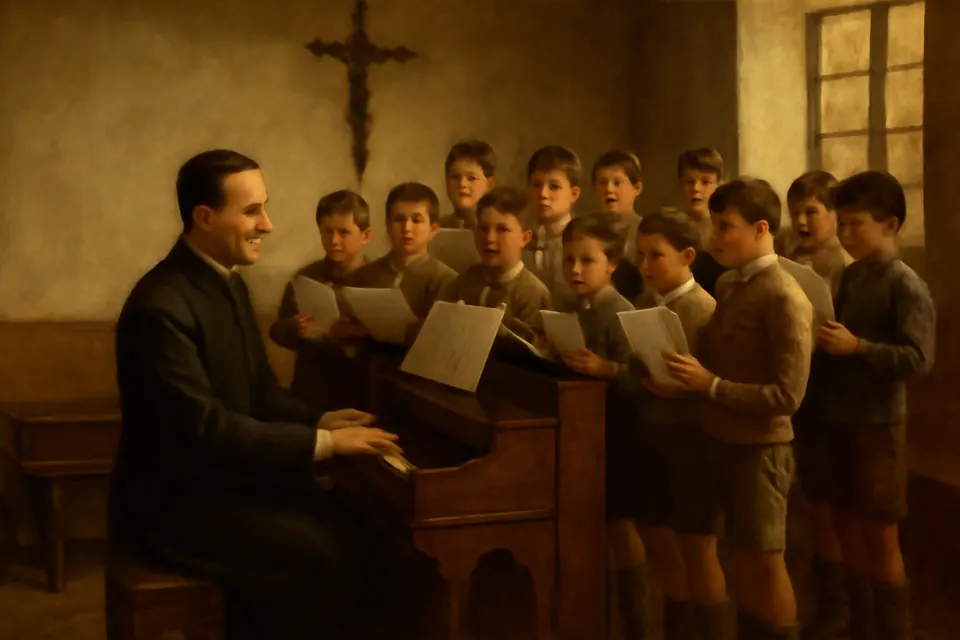
He never forced anyone back to church, the Dicastery's biography notes, but he never gave up on a young person who had drifted away. Several priestly vocations came from his oratory.
His prayer was simple: daily Mass, the daily Rosary, and a deep love for Our Lady. He had a Lourdes grotto built at the oratory, and there he commended the sick and the hopeless cases of the parish to her.
War, charity and risk
When war came, the young men of Brentana went to the front, and Don Mario went with them in the only way he could. He wrote them letters and founded a small parish bulletin, Voce amica ("A friendly voice"), to keep them in touch with home.
At home, he visited the sick constantly, bringing them money as well as the sacraments, and sat up whole nights at their bedsides when needed. He visited prisoners. He gave away what he had, quietly. And at great personal risk he helped soldiers, stragglers and victims of the war find safe hiding places. The Dicastery's summary of his life names those he aided: the needy, the young men at the front, Jews, and people wanted by the Nazi and Fascist forces.
The accident and his death
On February 9, 1945, he rode his bicycle to Verderio to hear confessions. On the way back a horse-drawn cart struck him, and its driver did not stop. He was found hours later, badly injured, and taken to the hospital in Vimercate. For two months he bore the pain and the useless treatments calmly.
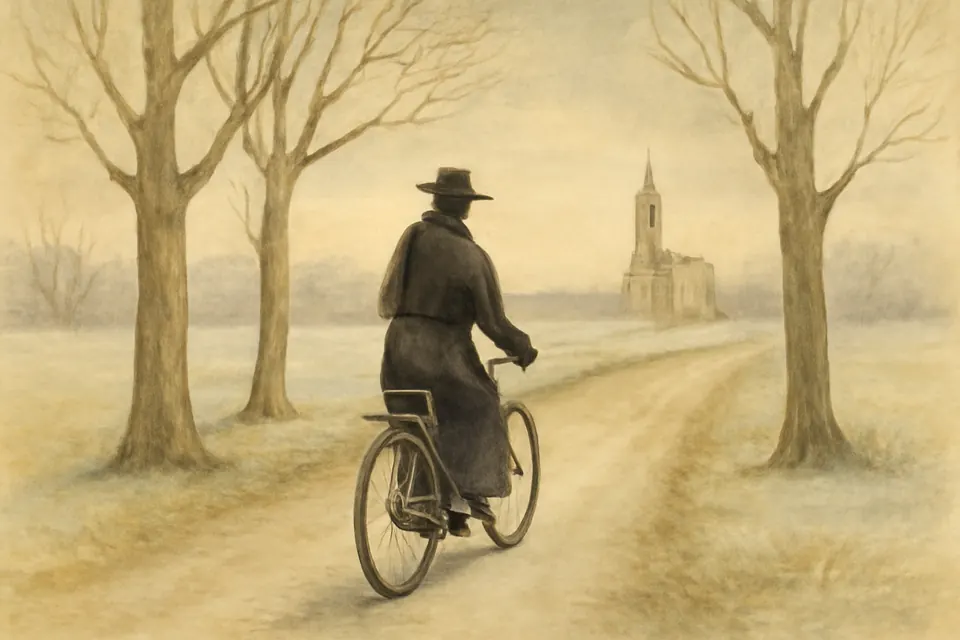
He died on April 4, 1945, three weeks before the Liberation of northern Italy, offering his life for the end of the war, for the soldiers' return home and for the conversion of sinners. Crowds from Brentana and the villages around came to his funeral on April 7, most of them the young people of his oratory.
The miracle of Blessed Mario Ciceri
- Approved: the healing of Raffaella Di Grigoli in Como. In the autumn of 1975, at seven years old, she was hospitalized at the Valduce hospital with a congenital disease of the colon. After a first operation on October 2 her condition kept getting worse, through two more operations, fever and malnutrition, until doctors judged her too weak to survive the surgery she needed. Her aunt organized a novena to Don Mario, and his sister gave the family a handkerchief that had belonged to him, which was placed under the child's pillow. Against every expectation, she grew strong enough for the operation of January 12, 1976, recovered, and went home on February 4. The medical board found the recovery rapid and scientifically inexplicable, and Pope Francis approved the miracle in 2020. In 2005 she became a mother herself.
At the beatification Mass in Milan Cathedral on April 30, 2022, it was Raffaella Di Grigoli who carried his relic to the altar.
Symbols of Blessed Mario Ciceri in art
Don Mario lived in the age of photography, and there is no old artwork of him. Devotional images and banners show him as his parishioners knew him:
- A black cassock and Roman collar, the dress of an Ambrosian parish priest of his time;
- A rosary, for his daily prayer and his love for Our Lady of Lourdes;
- Young people around him, for his work in the oratory;
- Sometimes a bicycle, the way he reached the sick and the confessional, and the way he met his death.
Feast day and where he is honored
We keep the memorial of Blessed Mario Ciceri on June 14, the day of his ordination, in the Archdiocese of Milan. His body rests in the parish church of Brentana di Sulbiate, where he served. See the feast day calendar.
Prayer to Blessed Mario Ciceri
We know of no traditional prayer to him that we can quote here. His own words, quoted by the Dicastery for the Causes of Saints, can be our prayer (in our translation from the Italian): "O Jesus, you take me gently by the hand and, through lessons I never knew before, you show me your goodness, your love, your mercy."
Let us ask Blessed Mario to pray for parish priests, for the young people in our oratories and youth groups, and for the sick who wait for a visit. Blessed Mario Ciceri, pray for us.
Frequently asked questions
Who was Blessed Mario Ciceri?
An Italian diocesan priest born at Veduggio, near Milan, on September 8, 1900. Ordained in Milan Cathedral on June 14, 1924, he was sent the same year as curate to the parish of Sant'Antonino Martire in Brentana di Sulbiate, where he served until his death on April 4, 1945.
What miracle was approved for Mario Ciceri's beatification?
The healing of a seven-year-old girl in Como in 1975. Raffaella Di Grigoli had a congenital disease of the colon and, after several operations, was too weak to survive the surgery she needed. Her family prayed to Don Mario and placed a handkerchief of his under her pillow. She recovered enough to undergo the operation, healed, and went home on February 4, 1976. Pope Francis approved the miracle in 2020.
When is the feast of Blessed Mario Ciceri?
June 14, the anniversary of his ordination. The Archdiocese of Milan keeps his memorial that day.
Where is Blessed Mario Ciceri buried?
In the parish church of Brentana di Sulbiate, the parish he served for more than twenty years.
Keep exploring
Sources
- Dicastery for the Causes of Saints: Mario Ciceri. His life, the decree on his heroic virtues (December 1, 2016), the 1975 healing in Como and the decree approving it, and the place of his tomb
- Chiesa di Milano: Armida Barelli e don Mario Ciceri sono Beati (April 30, 2022). The beatification in Milan Cathedral under Cardinal Marcello Semeraro, the relic carried by the healed woman, and the June 14 memorial