St. Paisius of Hilendar, Athonite Monk and Father of the Bulgarian Revival
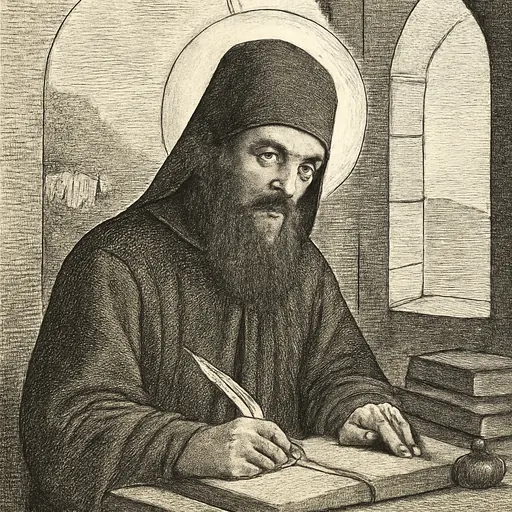
St. Paisius of Hilendar (1722–about 1773) was a Bulgarian monk on Mount Athos who in 1762 wrote the Slavonic-Bulgarian History to remind his people of their saints, kings and faith under Ottoman rule. He is honored as the father of the Bulgarian National Revival. The Bulgarian Orthodox Church glorified him in 1962; his feast is June 19.
Who was St. Paisius of Hilendar?
St. Paisius of Hilendar was an eighteenth-century Bulgarian monk of Mount Athos who wrote a short book that changed the history of his nation. In 1762 he finished the Slavonic-Bulgarian History, telling his people, who had lived under Ottoman rule for more than three centuries, that they had a past to be proud of: holy kings, a patriarchate of their own, and a long line of saints. The Orthodox Church in America says that "amid the darkness of foreign oppression the saint rekindled the lamp of Orthodoxy, lit formerly by Saints Cyril and Methodius."
Bulgarians call him the father of their National Revival. The Bulgarian Orthodox Church numbers him among its saints with the title Venerable.
The life of St. Paisius
Bansko and the call to Athos
Paisius was born in 1722 into a devout family, by the prevailing tradition in Bansko, a mountain town in the diocese of Samokov in southwestern Bulgaria. One of his brothers, Laurence, became abbot of the Hilandar Monastery on Mount Athos; another was known for his gifts to churches and monasteries. In 1745, at twenty-three, Paisius went to his brother at Hilandar and received the monastic tonsure there. He studied the Scriptures, grew in the monastic life and was ordained a priest.
Why he wrote
Mount Athos in the eighteenth century was a world of many peoples, and the History itself shows what moved him: it answers those who looked down on the Bulgarians as a people without a past, and it rebukes Bulgarians who were ashamed of their own name and tongue and preferred Greek as the language of learning. He began to gather everything he could find about the Bulgarian past: old chronicles, charters, lives of saints, and histories in Greek and other languages.
The History of 1762
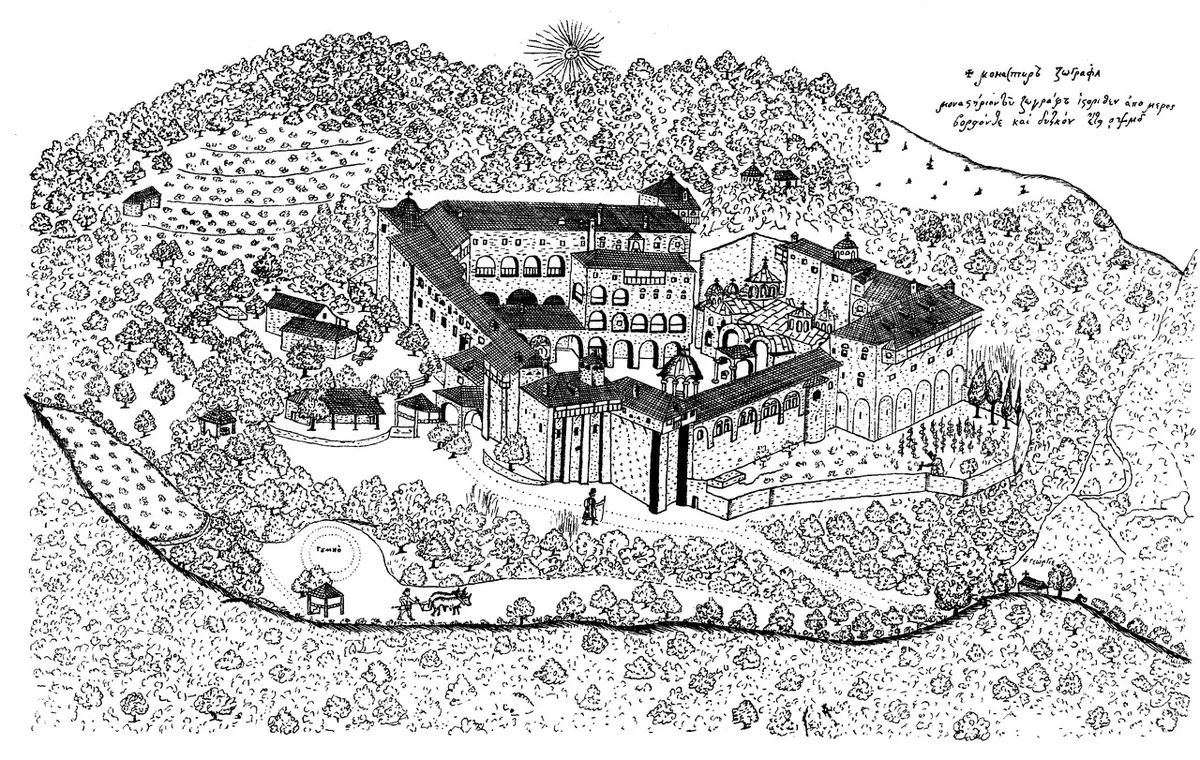
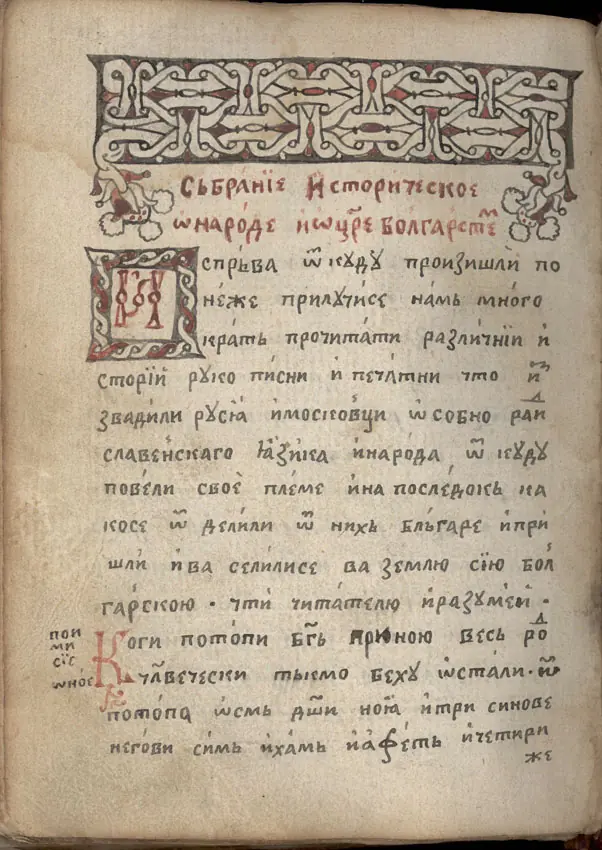
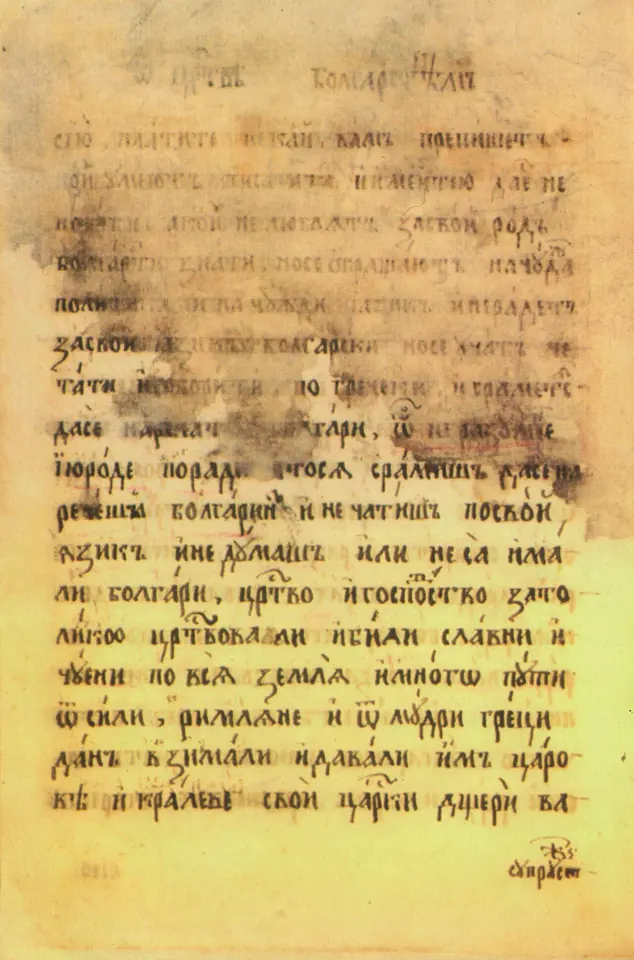
In 1762 he completed the Istoriya Slavyanobolgarskaya, the Slavonic-Bulgarian History. It tells of the Bulgarian tsars and their wars, of the Slavonic teachers Sts. Cyril and Methodius and their disciples, and of the Bulgarian saints, among them St. John of Rila. Paisius wrote it not as a cold chronicle but as a call to his people to know who they were and to love their language, their Church and their faith. He worked on it partly at the neighboring Bulgarian monastery of Zograf, which John Buchan's 1924 survey of Bulgaria names as his house.
Carried from village to village
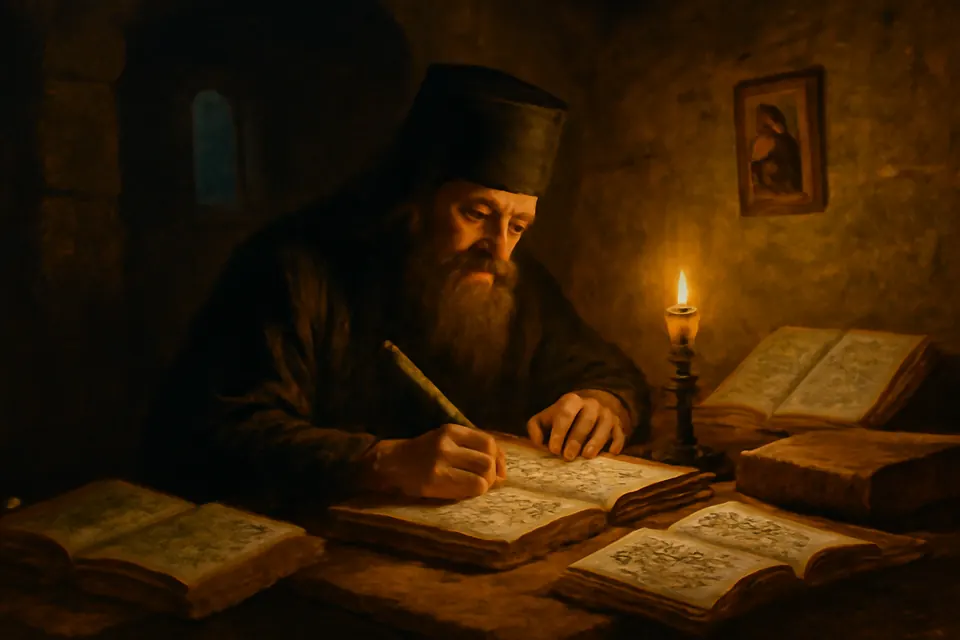
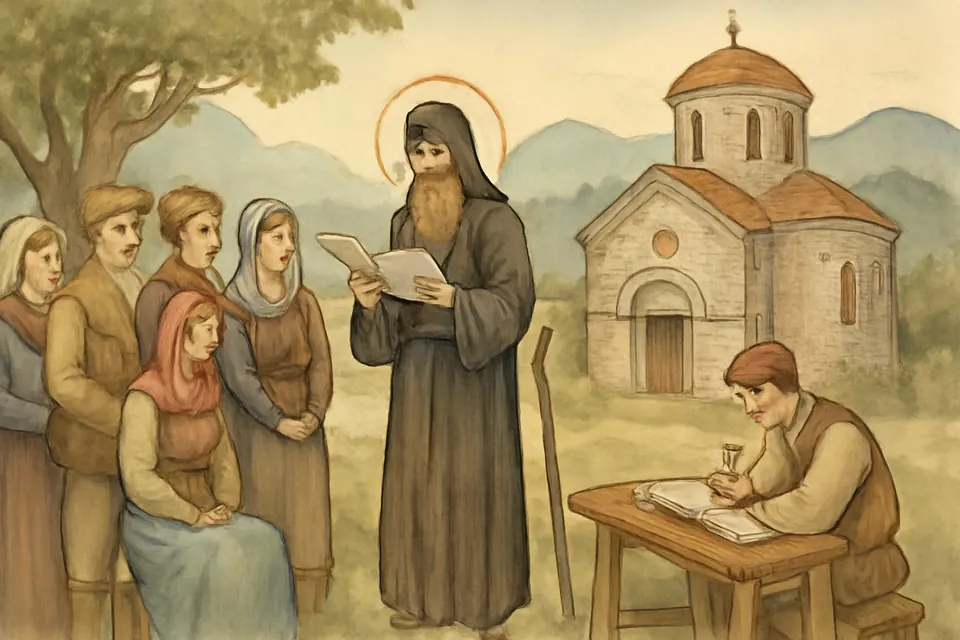
Paisius did not print his book; there was no Bulgarian press. He carried the manuscript through Bulgarian lands as a traveling monk, and people copied it by hand. The first known copy was made in 1765 by his pupil Sophronius, later Bishop of Vratsa, who continued his work. Many more copies followed, and the book was read aloud in villages and churchyards for generations.
His death
The Orthodox life says plainly that "the time and place of the saint's blessed end is unknown." Tradition holds that he died around 1773 near Stanimaka (today Asenovgrad), on a journey back toward Athos.
The miracles of St. Paisius
No miracles are recorded in the Orthodox life of St. Paisius, and we know of no reported miracle at a grave, since his grave is unknown. The Bulgarian Church glorified him for his holy life as a monk and priest and for the spiritual fruit of his work, which kept his people faithful to Orthodoxy.
Symbols of St. Paisius of Hilendar in art
No portrait of Paisius made in his lifetime survives, so every image is imagined. Icons painted since his glorification in 1962 show a monk in a black habit and hood, usually with a quill pen and the open manuscript of his History, sometimes with the monasteries of Mount Athos behind him. Monuments in Bulgarian towns show him the same way, pen in hand. When you see a monk holding a book with Cyrillic writing in a Bulgarian church, it is very often Paisius.
Feast day and glorification
On June 26, 1962, the Holy Synod of the Bulgarian Orthodox Church, under Patriarch Cyril, decreed that Paisius of Hilendar and Bulgaria be glorified as a saint and directed that his memory be kept on June 19, the day of St. Paisius the Great. The Orthodox Church in America notes that a state university in Plovdiv and many schools across Bulgaria bear his name. See more saints of mid-June on our feast days page.
Praying with St. Paisius
We have no English translation of his troparion that we can cite. His own life points the way: to love the faith our fathers handed on, and to pass it to those who come after us. Let us ask his help: holy Father Paisius, you labored with your pen so that your people might not forget God and His saints; pray for us, that we may never be ashamed of the faith and may hand it on whole to our children.
Frequently asked questions
Who was St. Paisius of Hilendar?
A Bulgarian monk born in 1722, by tradition in Bansko, who became a monk and priest at Hilandar Monastery on Mount Athos. In 1762 he finished his Slavonic-Bulgarian History, then carried it through Bulgarian lands where it was copied by hand and read aloud.
When is the feast of St. Paisius of Hilendar?
June 19, the day the Bulgarian Holy Synod chose when it glorified him on June 26, 1962.
What is the Slavonic-Bulgarian History?
Istoriya Slavyanobolgarskaya, a handwritten history of the Bulgarian people, kings and saints finished in 1762. It urged Bulgarians not to be ashamed of their language and Church. The first known copy was made in 1765 by Sophronius of Vratsa, and many more followed.
Where did St. Paisius die?
No one knows for certain. The Orthodox Church in America's life says the time and place of his death are unknown; tradition holds he died around 1773 on the road near Stanimaka, today's Asenovgrad.
Keep exploring
Sources
- Venerable Paisius of Hilandar, Bulgaria (Orthodox Church in America). His birth in Bansko in 1722, his brother Laurence, abbot of Hilandar, his tonsure in 1745, the History of 1762, his unknown end, and the decree of June 26, 1962 with the reason for the June 19 feast
- John Buchan, ed., Bulgaria and Romania (The Nations of Today, 1924). Father Paissi of Zograf and the first History of 1762, continued by his pupil Sophronius of Vratsa