Blessed Maria Candida of the Eucharist, Carmelite of Ragusa

Blessed Maria Candida of the Eucharist (1884–1949), born Maria Barba, waited almost twenty years for her family's consent before entering the Discalced Carmelites of Ragusa in Sicily, where she was prioress for most of 1924 to 1947. Her book The Eucharist made her known as a mystic of the Blessed Sacrament. John Paul II beatified her on March 21, 2004. Her feast is June 12.
Who was Blessed Maria Candida of the Eucharist?
Blessed Maria Candida of the Eucharist was a Sicilian Carmelite who spoke of her life as a "vocation for the Eucharist." Born Maria Barba in 1884, she knew at fifteen that God was calling her to the cloister, and she waited about twenty years for her family to let her go. She finally entered the Discalced Carmelite monastery of Ragusa in 1919, was its prioress for more than two decades, and wrote a book on the Blessed Sacrament that her order still treasures. She died on Trinity Sunday, June 12, 1949.
The life of Blessed Maria Candida
A judge's daughter in Palermo
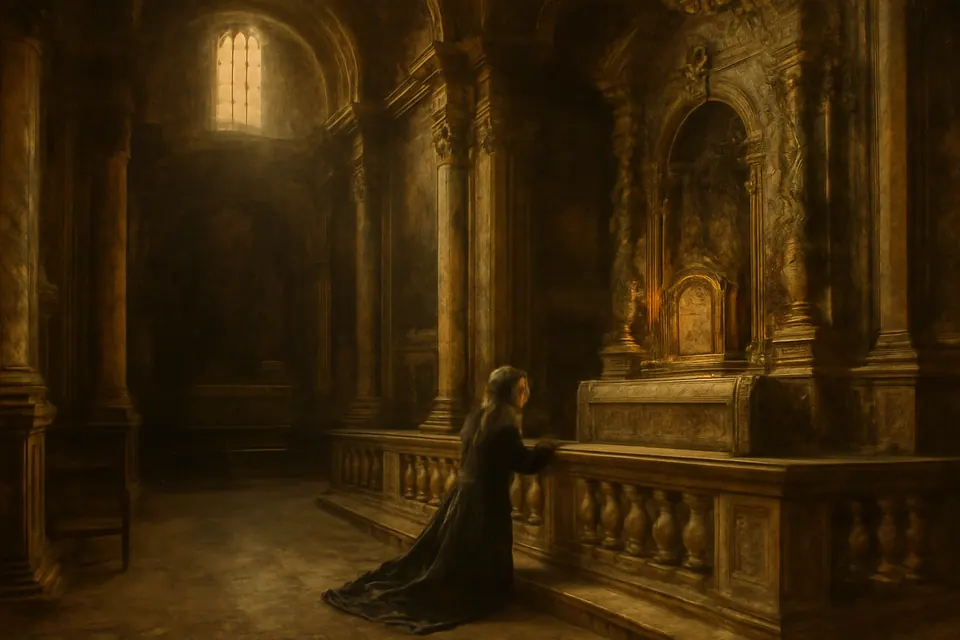
Maria Barba was born on January 16, 1884, in Catanzaro in Calabria, where her father, a judge from Palermo, was briefly posted. The family returned to Palermo when she was two, and she grew up there in a devout and comfortable home. From childhood she loved the Eucharist. The Vatican biography tells of her joy in receiving Communion and how, as a young woman, she spent long hours in adoration, especially on Thursdays, the day of the Last Supper.
Twenty years of waiting
At fifteen she felt called to religious life. Her family, though faithful Catholics, firmly opposed it. She obeyed and waited, not for a few months but for about twenty years, praying and receiving Communion as often as she could. Only on September 25, 1919, at thirty-five, did she enter the Teresian Carmel of Ragusa, in the southeast of Sicily. She took the name Maria Candida of the Eucharist, a name the Vatican biography calls in some ways prophetic.
Those twenty years matter for anyone who feels stuck. She did not run away from home, and she did not give up. She stayed, obeyed her parents, kept her prayer and her Communions, and let God choose the hour. When the door finally opened, she walked through it without looking back.

Prioress of Ragusa
Five years after she entered, in 1924, the sisters elected her prioress. Apart from a short break in the early 1930s she held the office until 1947. She taught her community to love the Rule of St. Teresa of Ávila, helped the Teresian Carmel spread in Sicily with a new foundation at Syracuse, and worked for the return of the Carmelite friars to the island. On November 1, 1927, she offered herself to God as a victim of love.

Her book on the Eucharist
On the feast of Corpus Christi in 1933, a Holy Year marking nineteen centuries since the Redemption, she began writing what the Dicastery for the Causes of Saints calls her little masterpiece of Eucharistic spirituality. Its title is simply The Eucharist. In it she looks at faith, hope and charity and at the three vows of religious life, and she finds each of them in the Blessed Sacrament. She wrote that she wanted "to be Mary for Jesus," and she did not separate the Mother from the Son. "Io non posso dividere Maria da Gesù," she wrote: "I cannot separate Mary from Jesus."
Her death
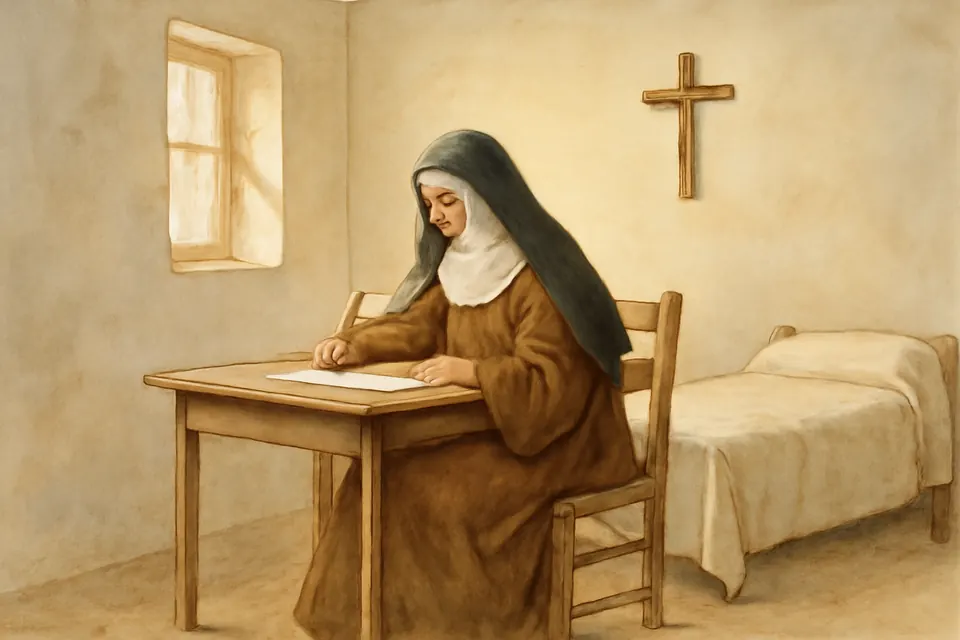
After several months of sharp physical suffering, she died in the Carmel of Ragusa on June 12, 1949, the Solemnity of the Most Holy Trinity. She was sixty-five.
Beatification
Pope John Paul II declared her heroic virtues in December 2000, and in April 2003 he approved a miracle attributed to her intercession, the approved miracle required for her beatification. He beatified her in Rome on March 21, 2004, with Luigi Talamoni, Matilde of the Sacred Heart and Piety of the Cross. In his homily he said: "She was an authentic mystic of the Eucharist; she made it the unifying centre of her entire life." Other graces told of her in Ragusa are reported favors, not yet judged by the Church.
Symbols of Blessed Maria Candida in art
Mother Candida lived in the age of photography, and images of her follow her photographs: a round, gentle face under the Carmelite veil.
- Carmelite habit: the brown habit and scapular, white mantle and black veil of the Discalced Carmelite nuns.
- Monstrance or Host: for the Eucharist that gave her her name and filled her life.
- Pen and notebook: for The Eucharist and her other writings.
Feast day and where she is honored
We keep her feast on June 12, the day of her death. She is honored above all in Ragusa, where the Discalced Carmelites keep her memory and her relics are brought out for veneration, and by the Carmelite family in Sicily. See more on our feast days page and our page on Eucharistic miracles.
Praying with Blessed Maria Candida
We have not found an official English prayer to Blessed Maria Candida, so we do not print one. She would send us to the tabernacle. Let us make a visit to the Blessed Sacrament, even for a few minutes on a Thursday as she did, and ask her to pray for us there: for those whose vocation is delayed or opposed by their families, for Carmelite nuns, and for all who want to love Jesus in the Eucharist with the heart of Mary. Blessed Maria Candida of the Eucharist, pray for us.
Frequently asked questions
Who was Blessed Maria Candida of the Eucharist?
A Sicilian Discalced Carmelite, born Maria Barba in Catanzaro in 1884 and raised in Palermo. She entered the Carmel of Ragusa in 1919, served as its prioress for over twenty years and wrote a meditation on the Eucharist that is still read.
When is the feast of Blessed Maria Candida of the Eucharist?
June 12, the day she died in 1949, which that year was Trinity Sunday.
What did Maria Candida of the Eucharist write?
Her main work, The Eucharist, which she began on the feast of Corpus Christi in 1933. It meditates on faith, hope and charity and on the vows of poverty, chastity and obedience, all seen in the light of the Blessed Sacrament.
Why did she wait so long to become a nun?
She felt called at fifteen, but her devout family firmly opposed her vocation. She waited about twenty years, until she entered the Carmel of Ragusa on September 25, 1919, at the age of thirty-five.
Keep exploring
Sources
- Maria Candida of the Eucharist (1884-1949), biography, Vatican. Birth in Catanzaro, the move to Palermo, the twenty years' wait, entry on September 25, 1919, the offering of November 1, 1927, prioress 1924 to 1947, the book of 1933 and her death on June 12, 1949
- Maria Candida dell'Eucaristia (1884-1949), Dicastery for the Causes of Saints. Beatification on March 21, 2004, the June 12 memorial and the quotation "Io non posso dividere Maria da Gesù"
- John Paul II, Homily at the beatification of four Servants of God, 21 March 2004, Vatican. "An authentic mystic of the Eucharist" and the three others beatified with her
- Maria Candida dell'Eucarestia, Postulation General of the Discalced Carmelites. Her "vocation for the Eucharist" and the return of the Carmelite friars to Sicily