St. Bessarion of Egypt
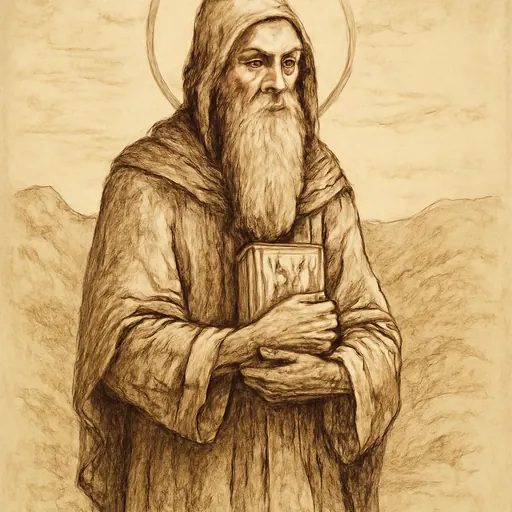
St. Bessarion of Egypt was a Desert Father of the fourth and fifth centuries. He wandered without a fixed cell, gave away his clothes and his last book for the poor, and was known as a wonderworker. The Orthodox Church keeps his feast on June 6; the Roman Martyrology lists him on June 17.
Who was St. Bessarion of Egypt?
St. Bessarion of Egypt was one of the Desert Fathers, the monks who went out into the wilderness of Egypt in the fourth and fifth centuries to seek God in prayer and poverty. He owned almost nothing, kept no fixed home, and gave away even his book of the Gospels to save a poor man. The Orthodox Church honors him as Venerable Bessarion the Wonderworker and keeps his feast on June 6. The Roman Martyrology remembers him on June 17.
He is not the Cardinal Bessarion of the fifteenth century, the Greek scholar who took his name.
What we know of his life
The old sources give no dates. Baring-Gould places him in the fifth century and draws on Palladius and the Lives of the Fathers of the Desert. Most of what we know comes from short stories told about him in the Sayings of the Desert Fathers, the collection of sayings and anecdotes the early monks handed down.
The life read in the Orthodox Church says Bessarion was born in Egypt and baptized young, and that he tried all his life to keep the grace of his baptism. He traveled to the holy places, visited Jerusalem and the monks of the Jordan wilderness, and studied how the monasteries lived. On his return he became a monk. The same life calls him a disciple of St. Isidore of Pelusium.
A monk with nothing but the Gospel
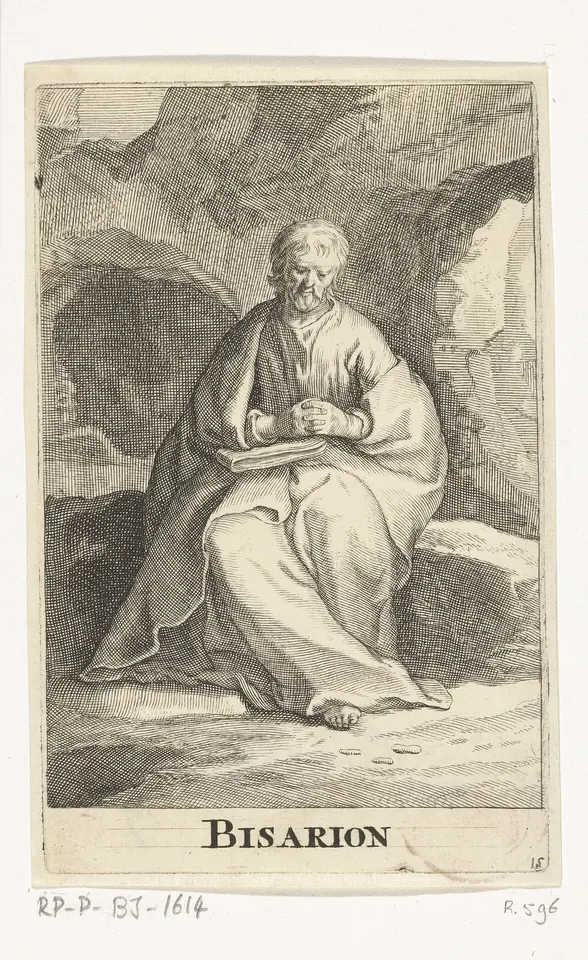
Baring-Gould tells the best-known story. Bessarion did not live in a hut or a cave like the other hermits. He wandered from place to place, and all he owned was a tunic, a cloak and a book of the Gospels. One day he found a dead beggar and wrapped the body in his tunic to bury it. Soon after, he met a naked man and gave him his cloak.
An official of the district, the Irenarch, found him in the desert with nothing on and asked who had robbed him of his clothes. "This Book," the hermit answered, holding up the Gospels. The official clothed him and sent him on his way. A few days later Bessarion sold the book itself to buy the freedom of a poor man who was about to be sold as a slave.
"I also am a sinner"
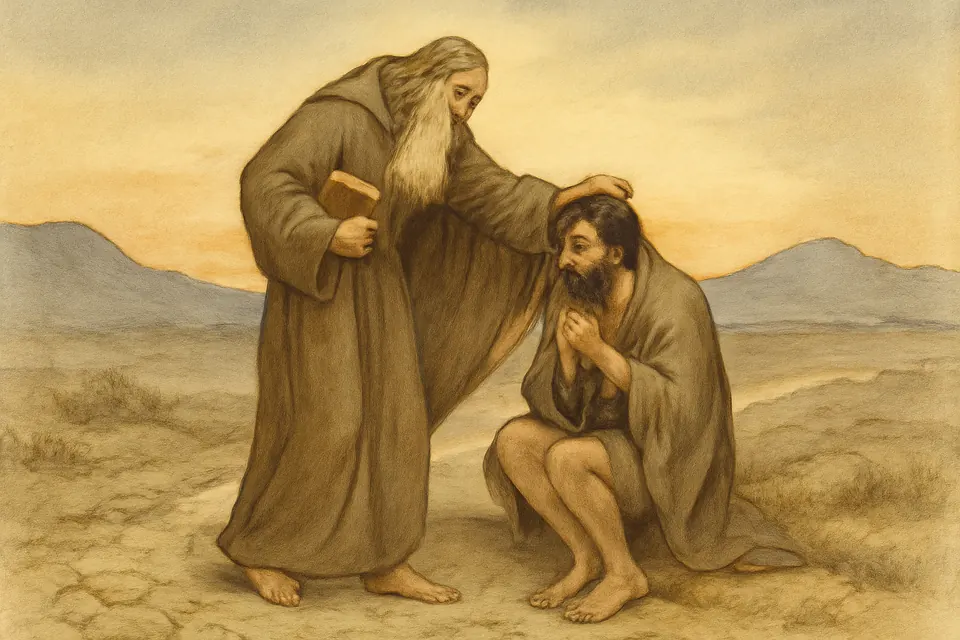
In time other monks gathered around him, and he became their abbot. Baring-Gould and the OCA life both keep the story that tells us most about him. One Sunday the priest at the altar ordered a brother out of the church because he had sinned. Bessarion stood up and went out with him, saying, in Baring-Gould's words, "I also am a sinner."

The miracles of St. Bessarion
The miracles told of Bessarion come from the desert tradition and the Orthodox life. All of them are traditional: they were handed down by the monks, not examined by any Church inquiry.
- Sweet water: when his disciple was suffering from thirst, he made bitter water sweet to drink.
- Rain: by his prayer God sent rain on a dry land.
- Crossing the river: he crossed a river as if it were dry ground.
- Casting out demons: he drove out evil spirits with a word, and did it privately so that no one would praise him.
The OCA life adds that he took a vow of silence, ate only once a week, sometimes went without food or drink for forty days, and once stood in prayer for forty days and nights without sleep. He never lay down to sleep but slept sitting or standing, and spent much of his life under the open sky.
He died in peace in old age. The place of his grave is not known.
Symbols of St. Bessarion in art
Bessarion appears mostly in Orthodox icons and in printed series of the Desert Fathers. Look for:
- An old monk with a long white beard: the desert elder, often barefoot.
- A book of the Gospels: the one thing he kept, and then gave away.
- Desert rocks or a cave: the wilderness where he wandered.
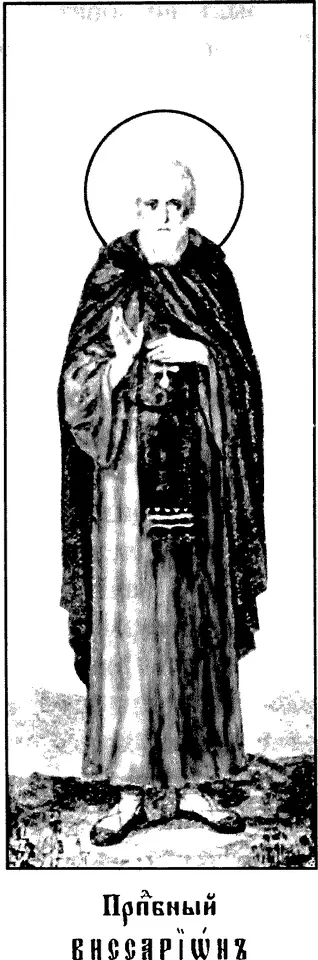
- A hand raised in blessing: in Russian and Greek icons, the gesture of a holy monk and wonderworker.
Feast day and prayer
The Orthodox Church keeps the feast of the Venerable Bessarion on June 6, and the Roman Martyrology names him on June 17. See the feast day calendar and our page on the Desert Fathers for his companions in the wilderness.
On his feast the Orthodox sing a troparion asking God's mercy "through the prayers of the venerable Bessarion," along with Hilarion the New, who shares the day. Let us ask him to pray for us when we judge others, and for all who are poor and in debt: St. Bessarion, pray for us.
Frequently asked questions
Who was St. Bessarion of Egypt?
An Egyptian monk and hermit of the fourth to fifth century, honored as one of the Desert Fathers. The Sayings of the Desert Fathers and the Greek service books remember his poverty, his humility and his miracles.
When is the feast of St. Bessarion?
June 6 in the Orthodox Church. The Roman Martyrology lists him on June 17.
Is St. Bessarion of Egypt the same as Cardinal Bessarion?
No. Cardinal Bessarion (1403–1472) was a Greek scholar and churchman at the Council of Florence who took the old monk's name. St. Bessarion of Egypt lived a thousand years earlier.
What miracles is St. Bessarion known for?
Tradition says he made bitter water sweet for a thirsty disciple, prayed down rain in a drought, crossed a river as if on dry ground and drove out demons quietly to avoid praise.
Keep exploring
Sources
- Orthodox Church in America: Venerable Bessarion, Wonderworker of Egypt. The Orthodox life, with his journeys, his fasts, his miracles, the church story, his sleeping standing up
- S. Baring-Gould, The Lives of the Saints, vol. 6 (June), 1914: S. Bessarion, Ab.. Feast dates East and West, the dead beggar, the cloak, the Irenarch and the Gospel book