Blessed Margaret Ball, Lady Mayoress of Dublin and Martyr
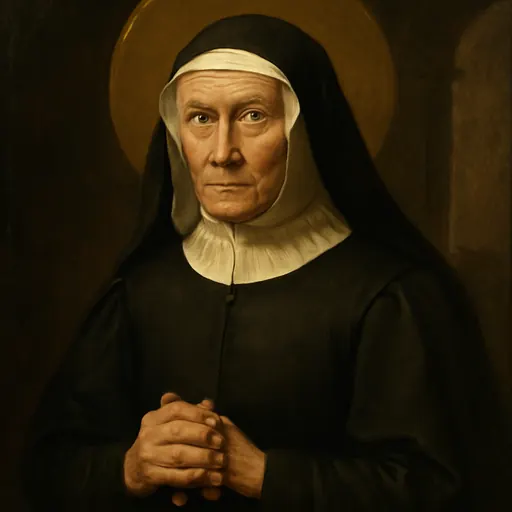
Blessed Margaret Ball (about 1515–1584) was a Dublin widow who kept priests and had Mass said in her house under Elizabeth I. Her own son had her arrested when he became mayor, and she died a prisoner in Dublin Castle. John Paul II beatified her on September 27, 1992, and her feast, with the Irish Martyrs, is June 20.
Who was Blessed Margaret Ball?
Blessed Margaret Ball was a Dublin widow who died in prison for the Catholic faith in 1584. Born Margaret Bermingham in County Meath about 1515, she married a Dublin merchant, Bartholomew Ball, and was Lady Mayoress of the city in his year of office. In the reign of Elizabeth I she kept a priest in her house so that Mass could be said there. Her eldest son, Walter, who had joined the Established Church, had her arrested when he became mayor of Dublin, and she died in the dungeons of Dublin Castle after some three or four years.
Pope John Paul II beatified her in Rome on September 27, 1992, with sixteen other Irish martyrs. In his homily he called her "a woman of extraordinary integrity" who suffered "the agony of being betrayed through the complicity of her own son."
The oldest account of her life is a short chapter by David Rothe, Bishop of Ossory, printed in 1619, only thirty-five years after her death. Rothe calls her Eleanor Birmingham, using her maiden name in the Irish way. Myles O'Reilly translated it in 1869, and the details below follow him.
The life of Blessed Margaret Ball
A Meath girl in a Dublin household
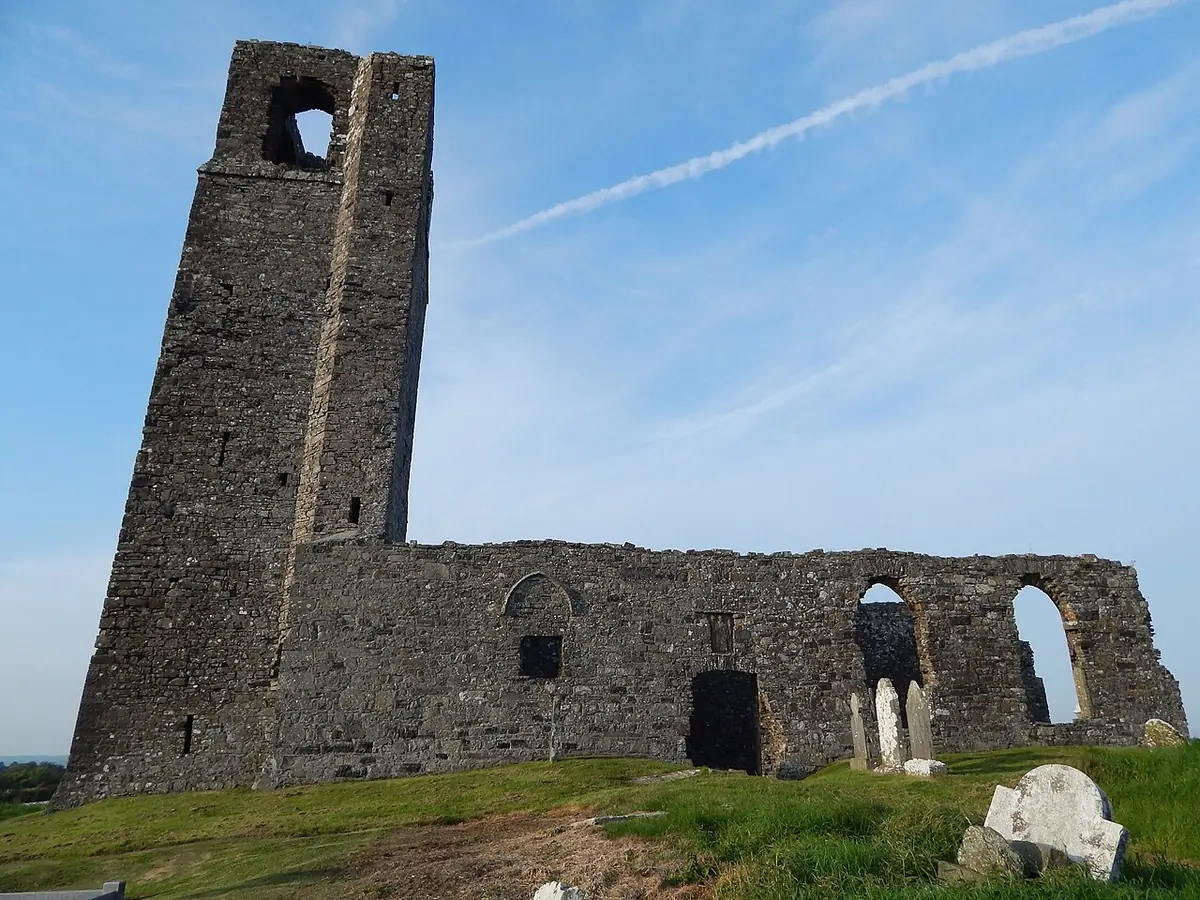
Margaret came from the country near Skryne, in County Meath. Young, she married Bartholomew Ball, an alderman of a wealthy Dublin family, and moved to the city. The couple had several children. Bartholomew later served a term as mayor of Dublin, so for a year Margaret held the place of first lady of the city.
A widow who kept the Mass
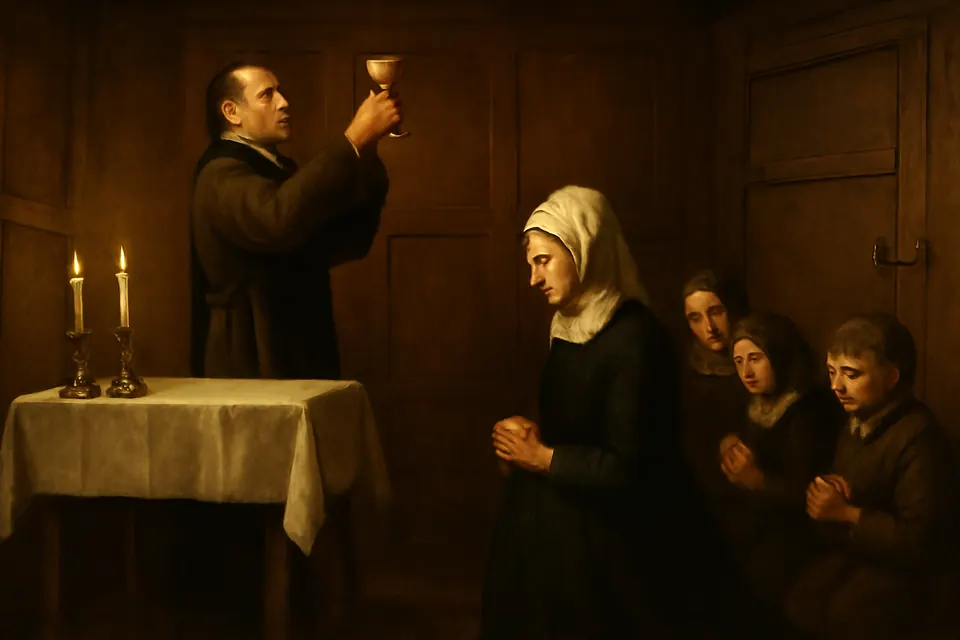
After Bartholomew died, Margaret ran a large household on her own. Rothe describes a woman of steady prayer: morning and evening prayers, and every day some hours set aside "to the reciting of the rosary and penitential psalms." She heard Mass on every feast and, when she could, every day. To make that possible in a time when the Mass was outlawed, she kept a Catholic priest in her home and paid for his food, clothing, lodging and a yearly stipend.
She also taught. Noble families sent their daughters to her to be brought up in the faith, and Rothe compares her to St. Macrina, the grandmother who taught St. Basil his catechism.
The first arrest
Margaret was denounced more than once. In the end, Rothe writes, officers arrested her while she was hearing Mass and took the priest with her, still in his vestments. Both were hurried before the viceroy and the council. The priest was paraded through the streets in his vestments to be laughed at, and the chalice and paten were taken. Margaret spent a long time in prison until friends paid and pleaded for her release. Once free, she went straight back to her prayers and gave even more to the poor.
A mother's grief
Her heaviest cross was her eldest son, Walter. He had taken the new religion and made a career by it in the city. Margaret prayed for him day and night and asked every priest and bishop she met to pray for him too. Rothe says it seemed "as if St. Monica were again alive," praying for Augustine; see St. Monica. Unlike Monica, she did not see her son come home to the faith.
Carried to Dublin Castle
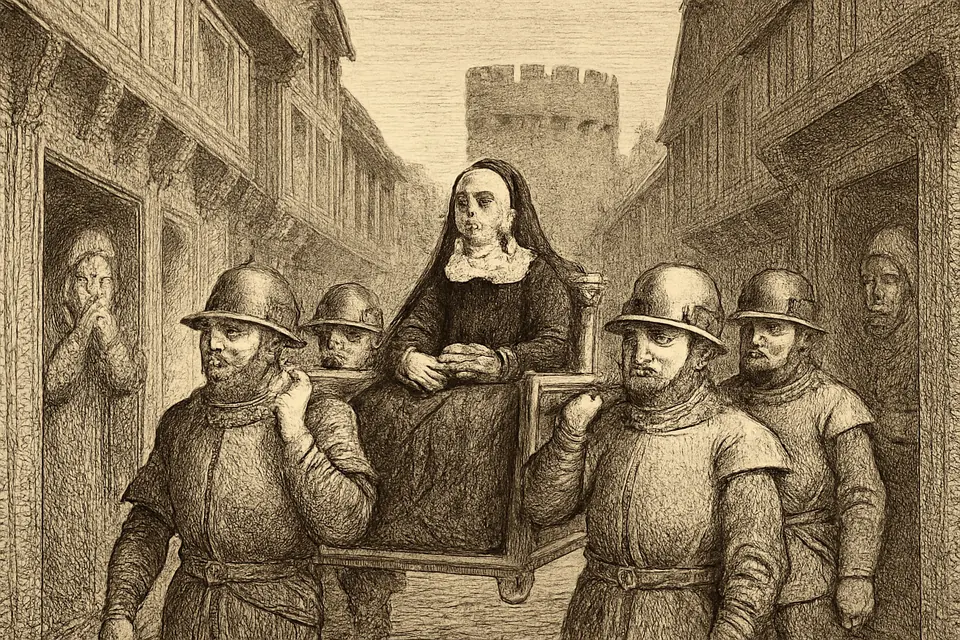
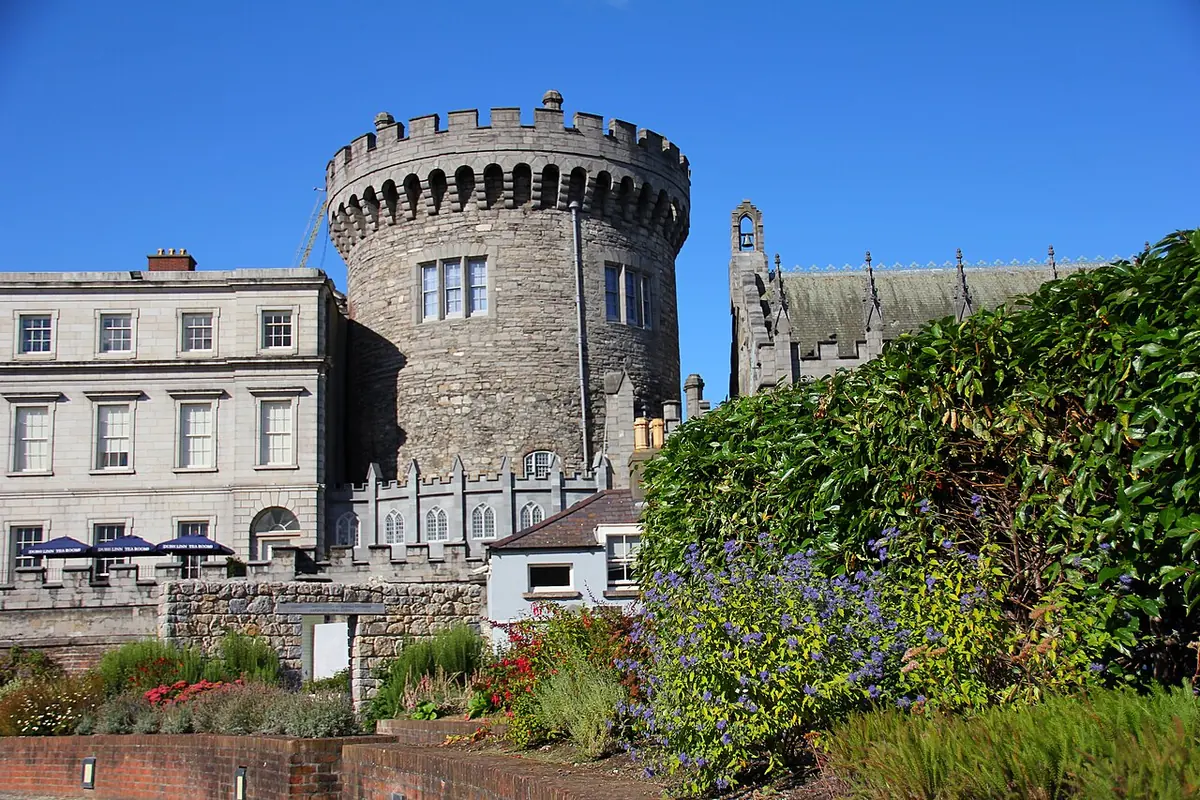
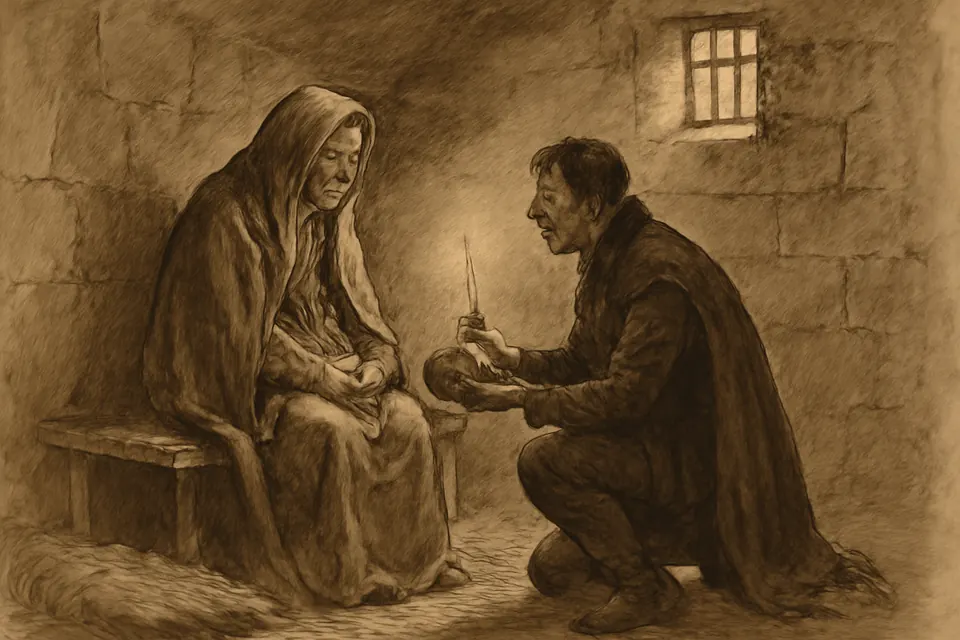
Walter Ball was mayor of Dublin in 1580. That year he had his mother arrested. She was old and crippled and could no longer walk, so, in Rothe's words, "he had her carried to prison in a chair." She was held in Dublin Castle. She could have gone home by conforming. She would not.
Her younger son Nicholas, later mayor himself, is remembered for visiting her and bringing food and other comforts, though he could not win her release. Margaret died in prison, Rothe says, "about the year 1584," leaving "a sweet odor of constancy, longanimity, and unspotted faith."
Her cause and her memory
Rothe wrote about her in 1619 as one of a handful of examples of the women who suffered for the faith in Ireland. For centuries she was remembered by Dublin Catholics. Her cause was joined to that of Archbishop Dermot O'Hurley and other martyrs of the penal times, and on September 27, 1992, Pope John Paul II beatified the seventeen together. Among them is Francis Taylor, a later mayor of Dublin married to Margaret's granddaughter, who also died in prison for the faith, in 1621. No miracle was required, as is the rule for martyrs, and no individual miracle is approved in her cause.
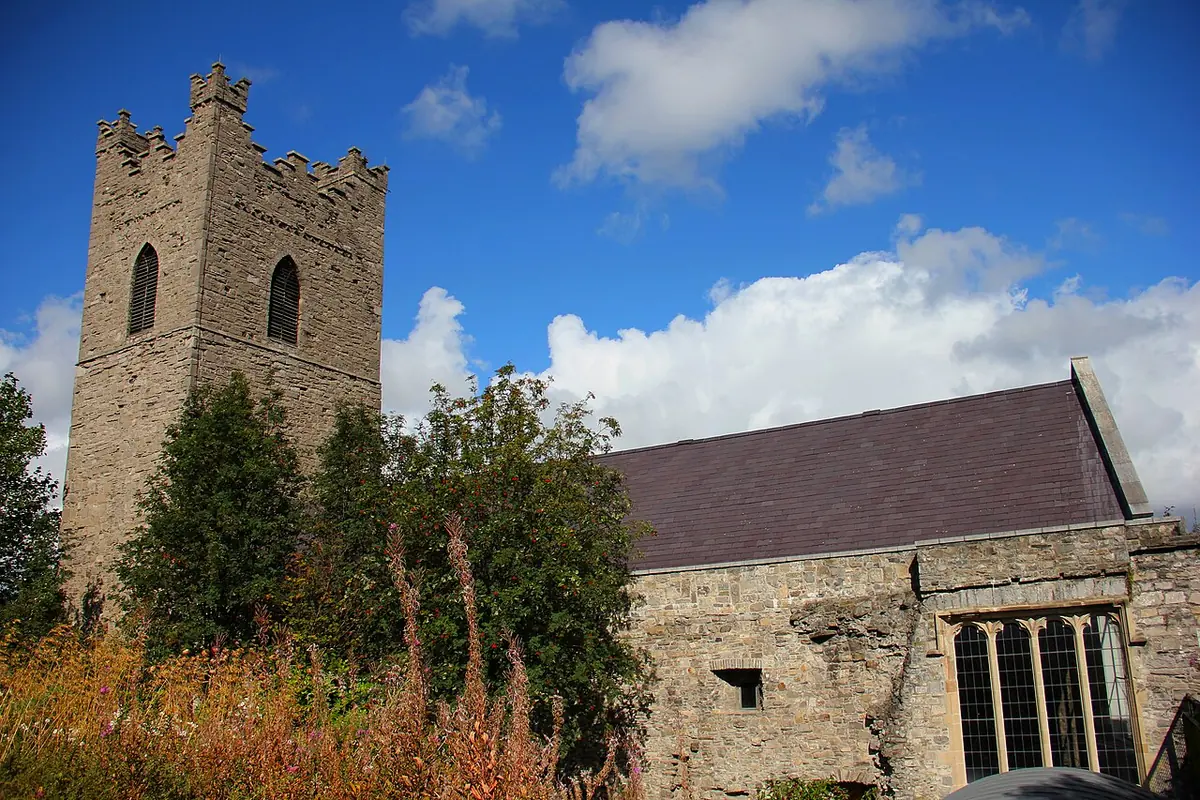
Tradition holds that she was buried at St. Audoen's Church in the old city, where the Ball family worshiped, but no grave is marked.
Symbols of Blessed Margaret Ball in art
There is no portrait of Margaret Ball from her lifetime. Modern images, such as the bronze statue outside St. Mary's Pro-Cathedral in Dublin, where she stands beside Francis Taylor, give her a few plain signs:
- Widow's dress and veil: a sober gown and linen headdress, for the widow who ran her house and kept the faith in it.
- Rosary: for the daily rosary Rothe describes.
- Martyr's palm: for her death in prison for Christ.
- Chair or litter: sometimes shown to recall how she was carried to the castle.
Feast day and where she is honored
We keep her feast on June 20 with all the Irish Martyrs, and in Ireland she is also remembered on January 30 with Blessed Francis Taylor. A church in Santry, north Dublin, bears her name, and her statue stands at the Pro-Cathedral. Find more Irish holy men and women on our Irish saints page and the feast days calendar.
Praying with Blessed Margaret Ball
We have not found an old prayer to Blessed Margaret Ball, so we do not print one. Let us ask her to pray for mothers and fathers whose children have walked away from the faith, for the elderly and the sick who suffer alone, and for all who are pressed to give up their conscience. Blessed Margaret Ball, pray for us.
Frequently asked questions
Who was Blessed Margaret Ball?
Margaret Bermingham, born in County Meath about 1515, married the Dublin merchant Bartholomew Ball, who became mayor of Dublin. As a widow she sheltered priests and kept the Mass in her house. Her son Walter, who had conformed to the Established Church, had her imprisoned in Dublin Castle, where she died about 1584.
When is the feast of Blessed Margaret Ball?
June 20, the shared feast of the seventeen Irish Martyrs beatified in 1992. In Ireland she is also remembered on January 30, with Blessed Francis Taylor.
Why is Margaret Ball called a martyr if she was not executed?
She died in prison because she would not give up the Catholic faith. The Church counts as martyrs those who die from the sufferings of imprisonment for the faith, and Pope John Paul II beatified her as one of the Irish Martyrs on September 27, 1992.
Was Margaret Ball really arrested by her own son?
Yes. David Rothe, Bishop of Ossory, wrote in 1619 that her eldest son, Walter, as mayor of Dublin, had her carried to prison in a chair because she could no longer walk. Records show Walter Ball was mayor in 1580.
Keep exploring
Sources
- John Paul II, homily for the beatification of the Irish Martyrs and others, September 27, 1992 (vatican.va). The beatification date and the Pope's words on Margaret Bermingham Ball and her son's betrayal
- Myles O'Reilly, Memorials of Those Who Suffered for the Catholic Faith in Ireland (London, 1869), pp. 112–115, translating David Rothe, De Processu Martyriali (1619). The oldest account: her daily rosary, the priest kept in her house, her first arrest at Mass, her care for girls' education, Walter's mayoralty (1580) and her death in prison about 1584
- Patrick Duffy, "Jan 30 – Bl Margaret Ball (d. 1584) and Bl Francis Taylor (d. 1621)," CatholicIreland.net. Her birth at Skreen, the January 30 commemoration in Ireland, the Santry church named for her