Pope St. Leo III, the Pope Who Crowned Charlemagne
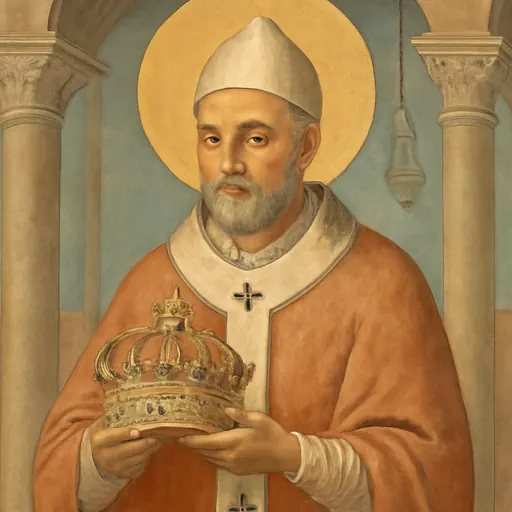
Pope St. Leo III was pope from 795 to 816. In 799 he survived an attack in Rome by men who tried to blind him and cut out his tongue, and fled to Charlemagne at Paderborn. On Christmas Day 800 he crowned Charlemagne emperor in St. Peter's, reviving the empire in the West. His memorial is June 12.
Who was Pope St. Leo III?
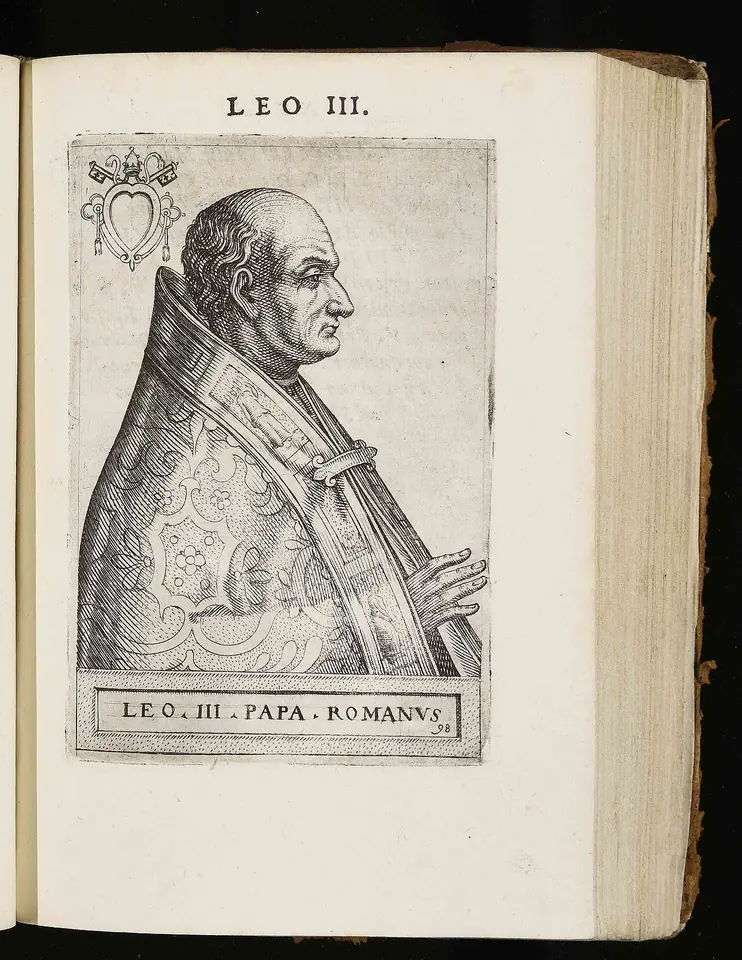
Pope St. Leo III was the bishop of Rome from 795 to 816, the pope who crowned Charlemagne emperor on Christmas Day in the year 800. He was a Roman, the son of Atyuppius and Elizabeth, and served as cardinal-priest of St. Susanna and probably as keeper of the papal treasury before he was elected. His reign began in turmoil and nearly ended in murder, and he came through it to shape Christian Europe for a thousand years. We keep his memorial on June 12.
He was elected on December 26, 795, the very day his predecessor Adrian I was buried, and consecrated the next day. The Catholic Encyclopedia suggests the haste was meant to keep the Franks from interfering in a Roman election. All the same, Leo at once sent Charlemagne, king of the Franks, the keys of St. Peter's tomb and the banner of the city, a sign that he looked on the king as protector of the Holy See.
The attack of 799
Leo had enemies in Rome among the relatives of the late pope. On April 25, 799, as he rode in the procession of the Greater Litanies, armed men fell on him. They threw him to the ground and tried to cut out his tongue and tear out his eyes, then left him bleeding in the street. That night he was carried to the monastery of St. Erasmus on the Caelian Hill.
- Reported: Leo recovered the full use of his eyes and tongue. The Catholic Encyclopedia says it came about "in what seemed quite a miraculous manner," and the Frankish court historian Einhard wrote as if the injuries had really been done. It was never formally examined.

Paderborn and the oath
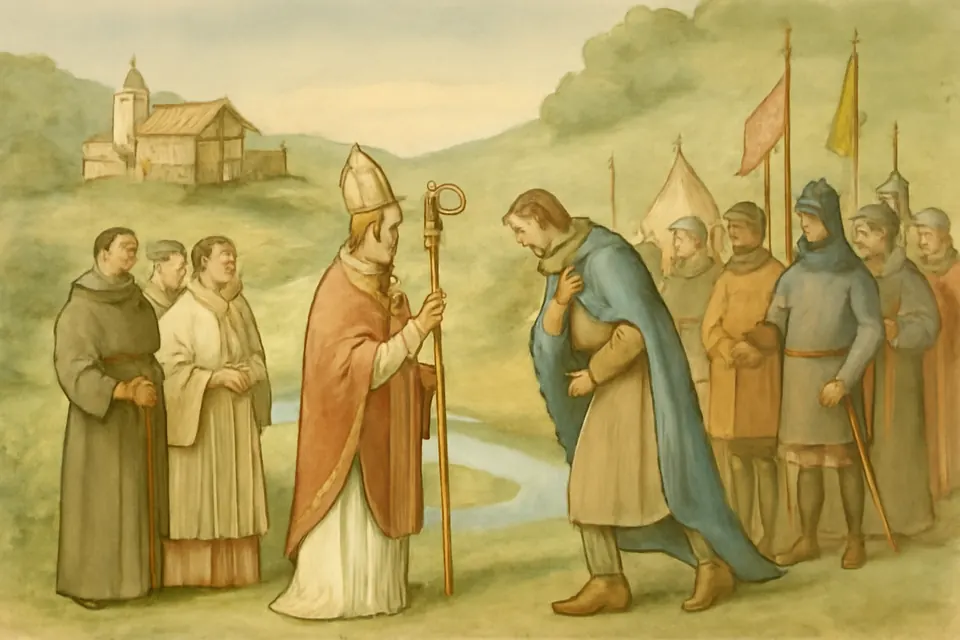
Leo escaped Rome and went north to Charlemagne, who received him with great honor at Paderborn in Saxony, at the springs of the Pader, where a great church already stood. His enemies had sent accusations ahead of him, but after a few months the king sent him home under escort, and the Romans met him with joy.
In late 800 Charlemagne came to Rome himself. The bishops gathered there declared that they had no right to judge the pope. Leo chose of his own will to swear an oath in St. Peter's that he was innocent of the charges, and he asked that the death sentence on his attackers be changed to exile.
The coronation of Christmas 800
On Christmas Day, after the Gospel at Mass in St. Peter's, Leo placed a crown on the head of Charlemagne, who was kneeling before the tomb of the Apostle. The Romans cried out, "To Charles, the most pious Augustus, crowned by God, the great and peace-giving Emperor, life and victory!" The empire in the West, gone since 476, was born again.
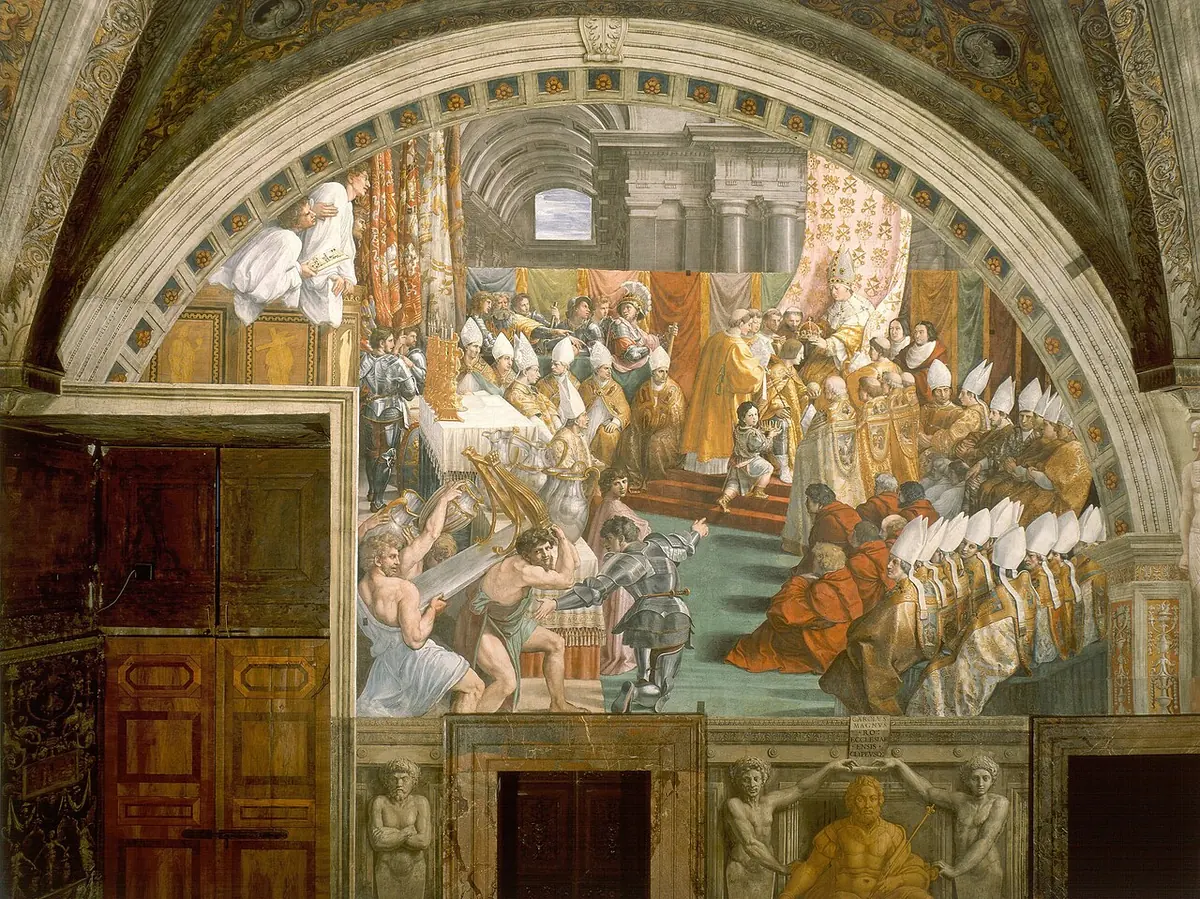
Einhard later wrote that Charlemagne disliked the title at first and said he would not have set foot in the church that day "if he could have foreseen the design of the Pope." Historians still argue about how much was planned and by whom. What is clear is that the act tied the Western empire to the blessing of the Church for a thousand years.

His later years
With gifts from the emperor, Leo helped the poor and restored churches in Rome and as far away as Ravenna, many of them decorated with mosaics. When Charlemagne pressed to have the word Filioque ("and the Son") added to the Creed, Leo agreed with the doctrine but advised against changing the Creed's words. His last years were troubled by new conspiracies in Rome. He died in 816 and was buried in St. Peter's on June 12. His relics lie there with those of St. Leo the Great, St. Leo II and St. Leo IV. The Catholic Encyclopedia records his canonization in 1673.
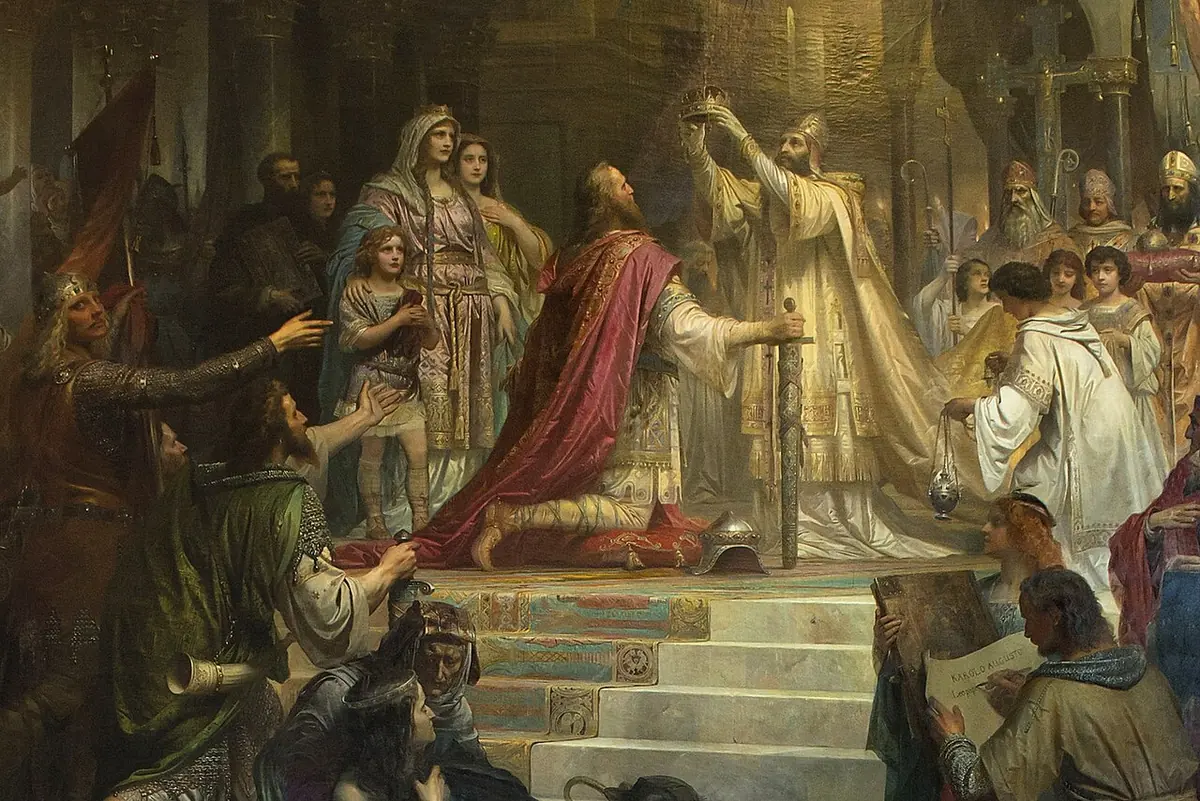
Symbols of St. Leo III in art
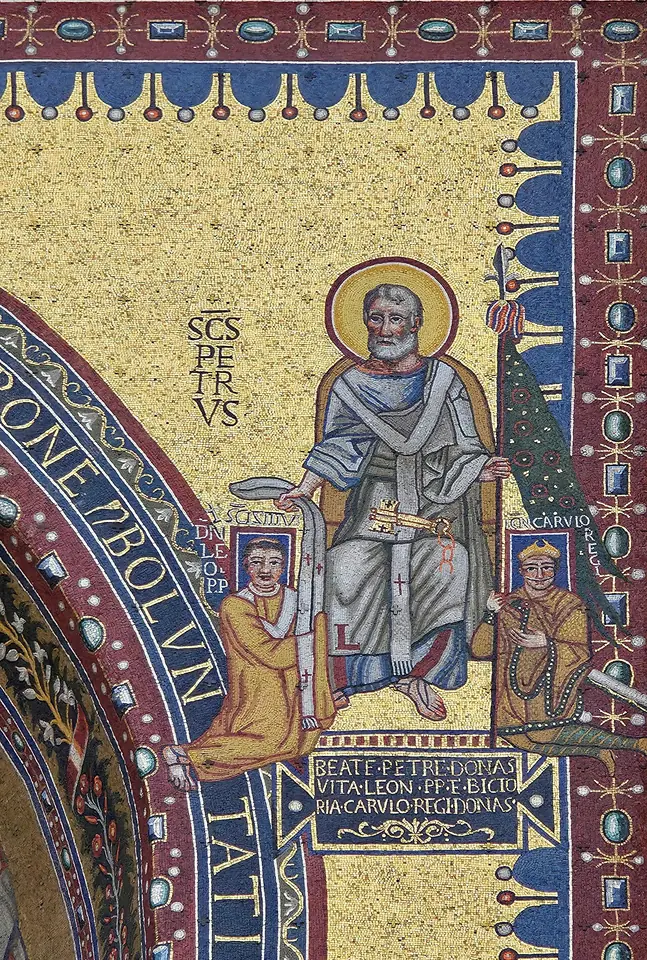
Leo III is almost always shown in one scene: the coronation of Charlemagne. Look for a pope holding a crown above a kneeling king. In the Lateran mosaic, a later restoration of the one Leo had made for his banquet hall, he kneels with Charlemagne at the feet of St. Peter, who holds the keys.
Feast day and prayer
We keep his memorial on June 12, the date given in the Roman Martyrology. He is not on the General Roman Calendar, so his day is kept in Rome and by those who love the history of the popes. There is no traditional prayer to him in common use. Let us ask St. Leo III, who forgave the men who tried to blind him, to pray for the pope and for all who suffer violence for the Church. Pope St. Leo III, pray for us.
Frequently asked questions
Who was Pope St. Leo III?
A Roman priest, cardinal of St. Susanna, elected pope on December 26, 795. He is remembered above all for crowning Charlemagne emperor on Christmas Day 800. He died in 816 and was buried in St. Peter's.
What happened to Pope Leo III in 799?
On April 25, 799, during the procession of the Greater Litanies, armed men attacked him, threw him to the ground and tried to tear out his eyes and cut out his tongue. Monks took him to the monastery of St. Erasmus on the Caelian Hill, and he recovered his sight and speech, which his contemporaries saw as a miracle.
Why did Leo III crown Charlemagne?
Charlemagne had protected the pope after the attack of 799 and came to Rome in 800 to settle the case against him. On Christmas Day, after the Gospel, Leo placed a crown on Charlemagne's head as he knelt in St. Peter's, and the Romans hailed him as emperor. The act created a Western emperor who would protect the Church.
When is the feast of St. Leo III?
June 12, the day he was buried in 816, as kept in the Roman Martyrology.
Keep exploring
Sources
- Catholic Encyclopedia (1910): Pope St. Leo III. His election, the attack of 799 and his recovery, the oath of 800, the acclamation, his burial, mosaics and canonization in 1673
- Einhard, Life of Charlemagne, ch. 28, trans. S. E. Turner (Internet Medieval Sourcebook). Charlemagne's words that he would not have entered the church had he known the Pope's plan
- Catholic Encyclopedia (1909): Filioque. Leo III's advice to keep the Filioque out of the Creed
- Hoher Dom zu Paderborn: Geschichte. The meeting of Leo III and Charlemagne at the springs of the Pader in 799